
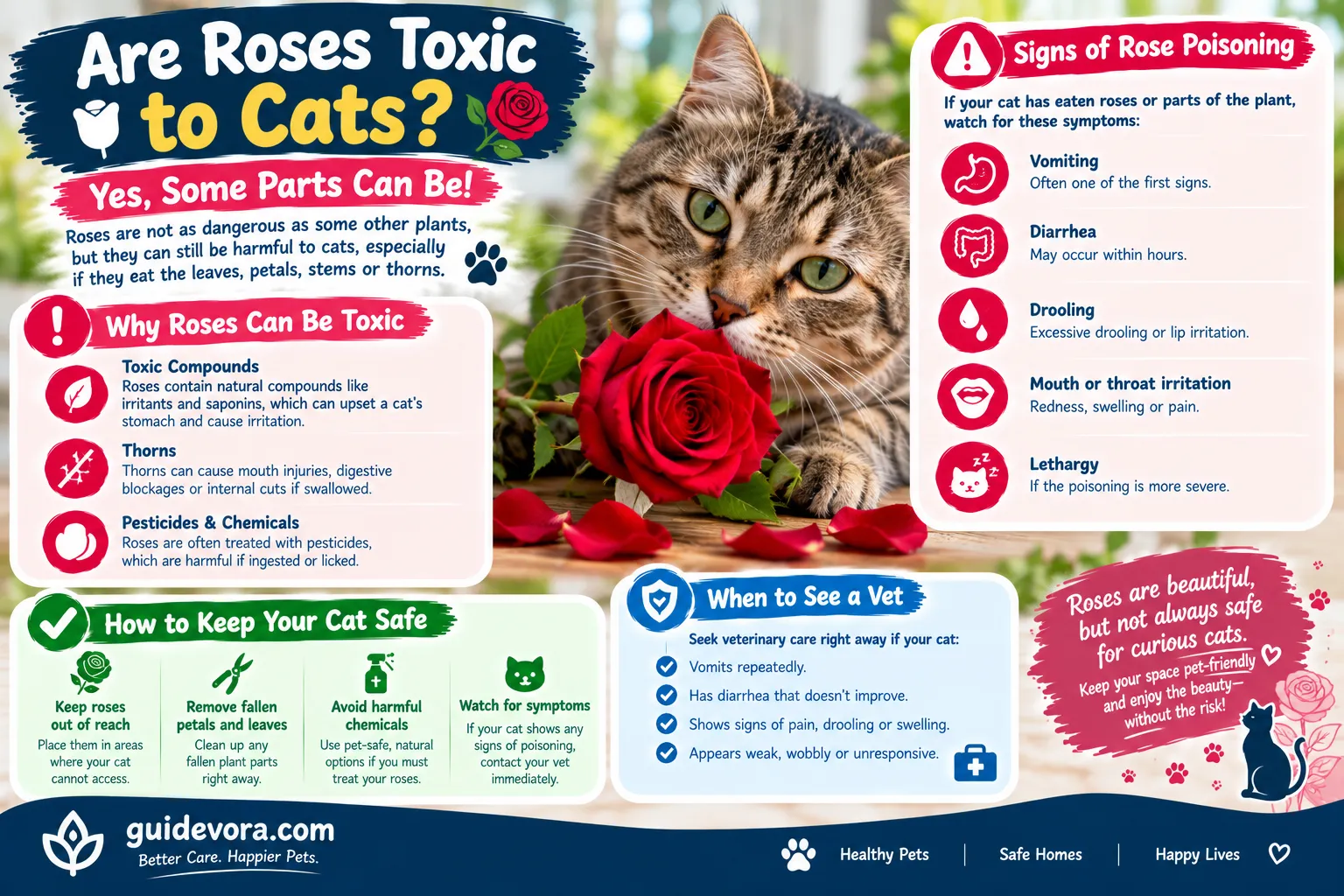
No — true roses (genus Rosa) are classified as non-toxic to cats by the ASPCA, with no toxic compounds identified in the plant at all. Petals, leaves, and stems won’t poison your cat. This applies to every type you’ll encounter: hybrid tea roses, garden roses, spray roses, mini roses, and climbing varieties.
That’s the reassuring, accurate headline — but it’s not the whole story, and the part that matters most for cat owners isn’t about roses at all. Keep reading.
What Happens If My Cat Eats Roses?
In the large majority of cases: not much. If your cat chews a petal, a leaf, or even a bit of stem, this isn’t an emergency. You might see mild, short-lived stomach upset (occasional vomiting or a loose stool) simply from eating plant material generally, not from any toxic compound in the rose itself.
The real risks with roses are mechanical, not chemical:
- Thorns — the actual hazard in a rose bouquet; a cat that bites into a thorny stem can injure their mouth, paws, or digestive tract. Strip thorns before arranging, or ask your florist to.
- Pesticide or preservative residue — florist roses are sometimes treated with chemicals that a genuinely rose-safe cat could still react to. Rinsing stems under cool water reduces this risk.
- What else is in the bouquet — this is the one that actually matters most, covered next.
What Is the Most Toxic Flower to Cats?
True lilies — including Easter, Tiger, Asiatic, Stargazer, and daylilies (Lilium and Hemerocallis species). This is worth stating as plainly as possible: every part of a true lily — petals, leaves, stem, pollen, even the water in a vase that held one — is extremely toxic to cats and can cause acute kidney failure from a very small exposure. This is a genuine, fast-moving veterinary emergency, not a “monitor and see” situation the way an untreated rose petal is.
This is exactly why the rose question matters so much in practice: rose bouquets are one of the most common places lilies get mixed in as a filler or accent flower, without the buyer necessarily realizing what they’re bringing home. If your cat eats any part of a suspected lily, don’t wait for symptoms — call your vet, the ASPCA Animal Poison Control Center (888-426-4435), or the Pet Poison Helpline (855-764-7661) immediately.
Are Roses Toxic to Dogs?
No — the same ASPCA non-toxic classification for roses applies to dogs as well. The same caveats apply too: thorns are a mechanical injury risk, and any pesticide or preservative treatment on florist roses is a separate consideration from the plant itself.
Are Carnations Toxic to Cats?
Yes, but only mildly — a meaningfully different category from lilies. The ASPCA lists carnations as causing mild gastrointestinal upset and mild dermatitis, not organ damage. This makes carnations a “manage it” flower rather than a “never allow it” one: worth keeping out of easy reach if your cat is a determined chewer, but not a reason to panic the way a lily exposure is.
Are Rose Leaves Toxic to Cats?
No — the ASPCA’s non-toxic classification for Rosa species covers the whole plant, not just the petals. Leaves carry the same thorn/mechanical consideration as stems, but no toxic compound.
Does the Color of the Rose Matter? (Pink, White, Red)
No. Petal color comes from pigmentation, not a different species or different chemical makeup — a white rose, a pink rose, and a red rose are all still Rosa, and the ASPCA’s non-toxic classification applies regardless of color. Color is a purely aesthetic distinction here, not a safety one.
Are Preserved Roses Toxic to Cats?
This deserves more caution than fresh roses, though it’s not a firm “yes, toxic” either. Preserved roses are typically treated with a glycerin-based preservation process and are sometimes dyed for color — the base rose material itself carries the same non-toxic classification, but the preservation and dyeing chemicals used aren’t standardized across products the way fresh-cut rose safety is. If you have a cat that chews plants and you’re displaying preserved roses, it’s reasonable to keep them out of reach as a precaution, the same way you’d treat any decorative item with an unknown chemical treatment.
Why Do Cats “Love” Roses?
Honestly, there isn’t strong evidence that cats are specifically drawn to roses the way they are to catnip or silvervine. Any interest your cat shows in a rose arrangement is more likely general feline curiosity — new object in the house, moving petals, interesting texture, or simply investigating something you clearly find interesting — rather than a specific attraction to roses as a plant. If your cat is fixated on chewing the arrangement, it’s usually about novelty and texture more than the rose itself.
Building a Cat-Safe Bouquet
If you want flowers in a home with cats, the practical approach:
- Roses, sunflowers, orchids, snapdragons, gerbera daisies, asters, and freesia are all commonly cited as non-toxic options that pair well together.
- Tell your florist directly: “no lilies, please” — this single instruction removes the biggest real risk in a mixed arrangement.
- Check every stem in a pre-made bouquet before it goes in a vase, since lilies and other toxic fillers (baby’s breath is mildly toxic too) are common in arrangements without being the “main” flower.
- Keep any bouquet’s vase water away from curious cats regardless of the flowers used — even non-toxic flower water can grow bacteria a cat shouldn’t be drinking.
Frequently Asked Questions
Are roses toxic to cats? No. The ASPCA classifies all true roses (Rosa species) as non-toxic to cats, with no toxic compounds identified in the plant. The real risks are thorn injuries and any pesticide or preservative residue on florist-bought stems.
What happens if my cat eats roses? Usually nothing serious — at most, mild, short-lived stomach upset from eating plant material. Thorn injury to the mouth or paws is a more likely concern than any toxic reaction.
What is the most toxic flower to cats? True lilies (Easter, Tiger, Asiatic, Stargazer, and daylilies). Every part of the plant, including pollen and vase water, is extremely toxic and can cause acute kidney failure in cats from a small exposure — this is a genuine emergency requiring immediate veterinary care.
Are roses toxic to dogs? No, the same non-toxic classification applies to dogs. Thorns remain a mechanical injury risk regardless of species.
Are carnations toxic to cats? Only mildly — they can cause mild stomach upset and skin irritation, but nothing close to the severity of true lily toxicity.
Are rose leaves toxic to cats? No, the ASPCA’s non-toxic classification for roses covers the whole plant, including leaves, not just the petals.
Final Thoughts
The honest headline here really is good news: roses are safe for cats, in every color and every part of the plant, with thorns being the main practical thing to manage. But the more important takeaway is what almost always travels alongside roses in a bouquet — check for lilies before anything goes in a vase, every time, since that’s the flower actually capable of seriously harming a cat, and it’s often hiding in plain sight in an otherwise perfectly safe arrangement.
This article is for informational purposes and doesn’t replace veterinary guidance for a suspected toxic plant ingestion.
Leave a Reply