
This corned beef and cabbage recipe gives you both ways to cook it — slow cooker and stovetop — with exact amounts, a timing table by brisket weight, and the food-safety facts that matter. A 3 to 4 pound brisket serves 6 to 8 people, needs about 8 to 10 hours on low in the slow cooker or about 3 hours simmering on the stove, and comes out tender enough to slice cleanly when you rest it and cut against the grain.
Corned beef and cabbage is the dish most American families cook for St. Patrick’s Day, and it is also one of the most forgiving meals you can make. The brisket wants a long, gentle cook, the vegetables go in near the end, and the whole dinner comes out of one pot. Whether you start it in the morning and forget about it until dinner, or simmer it on the stove on a weekend afternoon, this guide walks you through every step with nothing left to guess.
The short answer: Rinse a 3 to 4 pound corned beef brisket, cover it with water or broth, add the spice packet, and cook it low and slow — 8 to 10 hours on low in a slow cooker, or about 3 hours simmering on the stovetop. Add potatoes and carrots in the last 2 hours, cabbage in the last 30 minutes, rest the meat 10 to 15 minutes, and slice thinly against the grain.
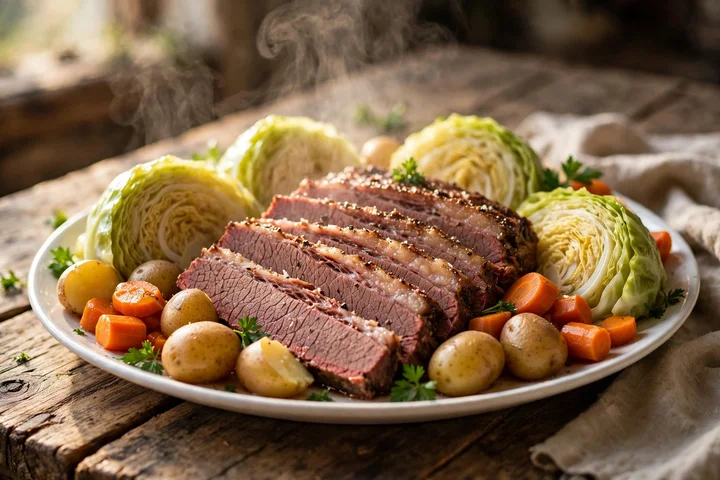
Key Facts
- Prep time: 15 minutes.
- Slow cooker time: 8 to 10 hours on low, or 5 to 6 hours on high.
- Stovetop time: about 3 hours for a 3 to 4 pound brisket (about 45 to 50 minutes per pound).
- Total time: 8 to 10 hours (slow cooker) or 3 to 3.5 hours (stovetop).
- Servings: 6 to 8 people from a 3 to 4 pound brisket.
- Safe internal temperature: 145°F with a 3-minute rest, per FoodSafety.gov — but cook until fork-tender for the right texture.
- Rest time before slicing: 10 to 15 minutes.
- Best cut: flat cut brisket, which slices evenly; point cut is fattier and shreds more easily.
- Leftovers: keep 3 to 4 days in the fridge, or freeze up to 3 months.
What Is Corned Beef?
Corned beef is beef brisket cured in a salt brine with pickling spices — coriander, mustard seed, peppercorns, bay leaves, and cloves. The word “corned” comes from the large grains, or “corns,” of salt once used to cure the meat. The brine gives the brisket its pink color, its salty-savory flavor, and its firm texture, and the spice packet tucked into the package is the same pickling spice blend.
Two things matter when you buy it. First, choose the flat cut if you want neat slices for serving; the point cut has more fat, tastes richer, and shreds rather than slices, which makes it better for sandwiches and hash. This corned beef and cabbage recipe uses the flat cut for clean slices, but the point cut works too if you prefer a richer, shreddier result. Second, check the weight: a 3 to 4 pound brisket is the sweet spot for a family dinner, fits in a 6-quart slow cooker, and serves 6 to 8 people at about half a pound of raw meat per person. A 5-pound brisket needs an 8 to 10 quart slow cooker or a very large stockpot, and it feeds 10 to 12.
Corned beef and cabbage is an Irish-American tradition rather than a dish from Ireland itself. In Ireland, the classic boiled dinner used bacon or ham; Irish immigrants in America found beef brisket cheap and plentiful, and the dish became the St. Patrick’s Day meal in the United States. That history is part of why it shows up at every March 17 table — and why it pairs so well with a full evening of celebration.
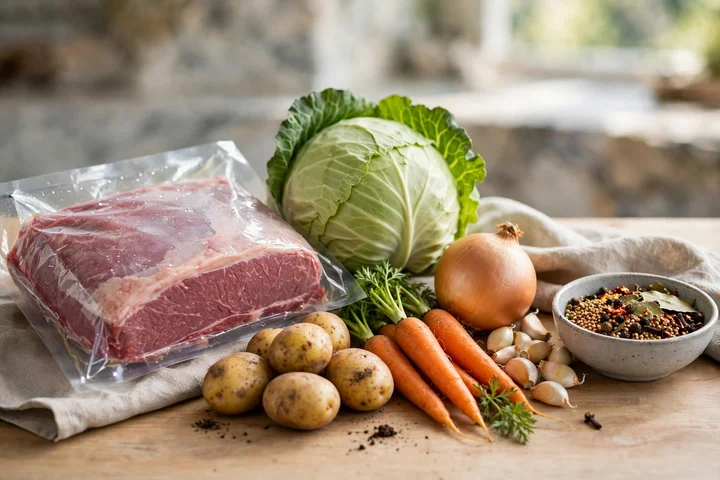
Ingredients
These amounts are for a 3 to 4 pound brisket serving 6 to 8 people. Scale the vegetables up for a larger brisket, but keep the spice packet and liquid amounts about the same — the brisket only needs to be covered, not drowned.
- 1 corned beef brisket (3 to 4 pounds), flat cut, with seasoning packet
- 1 small head green cabbage, cored and cut into 8 wedges
- 1.5 pounds small yellow or red potatoes, halved or quartered
- 4 to 6 large carrots, peeled and cut into 2 to 3 inch chunks
- 1 large yellow onion, peeled and quartered
- 4 cloves garlic, smashed
- 2 bay leaves
- 1 teaspoon whole black peppercorns
- 1 tablespoon brown sugar (optional, balances the salt)
- 4 to 6 cups water, or low-sodium beef broth, enough to cover the brisket
- 1 bottle (12 ounces) stout beer such as Guinness (optional, replaces part of the water)
- 2 tablespoons whole-grain or Dijon mustard, for serving
- Fresh parsley, chopped, for garnish
A note on the liquid: plain water works perfectly, and it is what most cooks use. Beef broth adds a little depth, and a bottle of stout adds a malty note that suits the dish. If you use beer, pour it in first and top up with water until the brisket is covered. Do not add extra salt — the brine already makes the meat salty, and the spice packet carries the flavor.
Timing Table: Stovetop vs. Slow Cooker
Cooking time depends on the weight of the brisket, not on the vegetables. Use this table to plan your day, and always check tenderness with a fork before you call it done.
| Brisket weight | Stovetop simmer | Slow cooker LOW | Slow cooker HIGH |
|---|---|---|---|
| 3 pounds | 2.5 to 3 hours | 8 hours | 5 hours |
| 3.5 pounds | 3 to 3.5 hours | 8 to 9 hours | 5 to 6 hours |
| 4 pounds | 3 to 3.5 hours | 9 to 10 hours | 5 to 6 hours |
| 5 pounds | 4 to 5.5 hours | 10 hours | 6 hours |
Add the potatoes and carrots during the last 2 hours in the slow cooker, or the last 30 to 45 minutes on the stovetop. Add the cabbage wedges during the last 30 to 60 minutes in the slow cooker, or the last 10 to 15 minutes on the stovetop — cabbage overcooks fast and turns gray and mushy if it simmers too long.
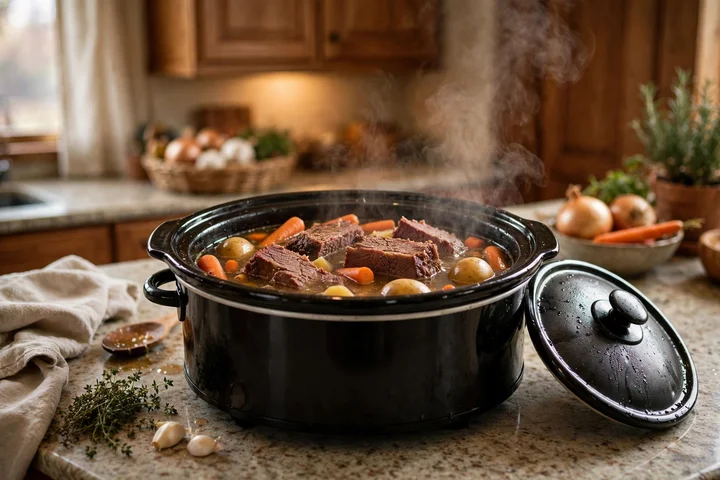
How to Make Corned Beef and Cabbage in the Slow Cooker
The slow cooker method is the easiest version of this corned beef and cabbage recipe: load it in the morning, and dinner is ready when you get home. Use a 6-quart slow cooker for a 3 to 4 pound brisket, or an 8 to 10 quart model for a 5-pound brisket.
Step 1: Rinse the brisket
Remove the brisket from its packaging and rinse it under cold running water. This washes off excess surface brine so the finished dish is seasoned, not salty. Pat it dry with paper towels. Open the spice packet and set it aside — it goes into the cooker with the meat.
Step 2: Load the slow cooker
Place the brisket in the slow cooker, fat side up. The fat melts as it cooks and bastes the meat from above. Scatter the quartered onion, smashed garlic, bay leaves, peppercorns, and the contents of the spice packet around it. Sprinkle the brown sugar over the top if you are using it. Pour in the water or broth — and the stout, if you are using it — until the brisket is just covered. It is fine if a corner of the meat peeks out; the lid and the steam will take care of it.
Step 3: Cook on low
Cover with the lid and cook on low for 6 hours. Do not lift the lid to check — every peek drops the temperature and adds about 30 minutes to the cooking time. After 6 hours, the meat should be starting to get tender when you poke it with a fork, but it will not be done yet.
Step 4: Add the potatoes and carrots
After 6 hours on low, add the potatoes and carrots, arranging them around the brisket. Replace the lid and cook on low for 2 more hours. The vegetables cook in the seasoned broth, which is what makes them taste like part of the dish instead of a side you boiled separately.
Step 5: Add the cabbage
Add the cabbage wedges during the last 30 to 60 minutes of cooking. Tuck them around the meat and vegetables, replace the lid, and cook on low until the cabbage is tender but still holds its shape — about 30 minutes for crisp-tender wedges, up to 60 minutes if you like them softer. Check the cabbage with a knife: it should cut easily but not fall apart.
Step 6: Rest and slice
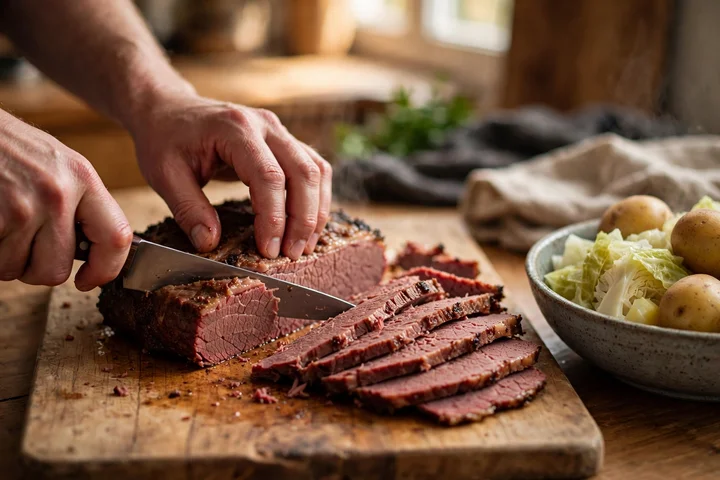
Transfer the brisket to a cutting board, cover it loosely with foil, and let it rest for 10 to 15 minutes. Resting lets the juices settle back into the meat so the slices stay moist. Slice thinly against the grain — look for the lines running through the meat and cut across them, not along them. Cutting with the grain makes even a perfectly cooked brisket feel tough and stringy. Arrange the slices on a platter with the cabbage, potatoes, and carrots, spoon a little hot broth over everything, and serve with mustard.
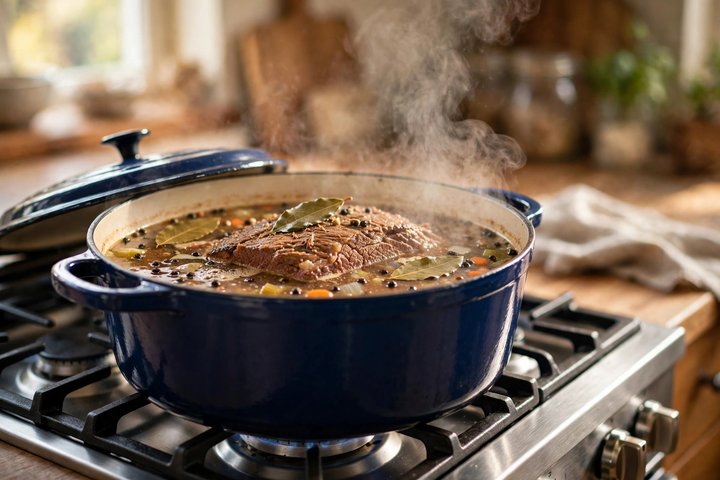
How to Make Corned Beef and Cabbage on the Stovetop
The stovetop method is faster — about 3 hours for a 3 to 4 pound brisket — and it gives you more control, since you can check the pot and adjust the heat. Use your largest Dutch oven or stockpot; a 7.5-quart Dutch oven is snug for a 4-pound brisket with vegetables, so go bigger if you have it.
Step 1: Rinse and load the pot
Rinse the brisket under cold water and place it in the Dutch oven or stockpot, fat side up. Add the spice packet, brown sugar, bay leaves, garlic, and peppercorns. Pour in enough water or broth to fully cover the brisket by about an inch. If you are using stout, add the bottle first and top up with water.
Step 2: Bring to a boil, then simmer
Set the pot over medium-high heat and bring the liquid to a boil. As soon as it boils, reduce the heat to low, cover the pot with a lid, and let it simmer gently. You want small bubbles breaking the surface, not a rolling boil — boiling makes the meat tough and the broth cloudy. Skim off any foam that rises in the first 20 minutes if you like a clearer broth; it is harmless either way.
Step 3: Simmer the brisket alone
Cook the brisket by itself for at least 2 to 2.5 hours, keeping it covered and checking every half hour that the liquid still covers the meat. Add hot water as needed to keep it submerged. A good rule of thumb is about 45 to 50 minutes of simmering per pound of brisket, so a 4-pound brisket needs about 3 to 3.5 hours total. Start checking tenderness after 2.5 hours: a fork should slide in with little resistance.
Step 4: Add the vegetables
Once the brisket is nearly tender, add the onion, carrots, and potatoes to the pot. Return the liquid to a simmer, cover, and cook for 30 to 45 minutes, until the vegetables are tender. Then add the cabbage wedges and simmer for another 10 to 15 minutes, until the cabbage is tender but still bright green and holding together.
Step 5: Rest, slice, and serve
Lift the brisket out onto a cutting board and let it rest for 10 to 15 minutes, covered loosely with foil. Meanwhile, lift the vegetables out of the pot with a slotted spoon and arrange them on a platter. Slice the brisket thinly against the grain, fan the slices on the platter, spoon over a little of the hot cooking broth, and serve with mustard on the side.
How to Tell When Corned Beef Is Done
Tenderness is the test that matters. A fork should slide into the thickest part of the brisket with almost no resistance, and a slice should bend without falling apart. If the fork meets resistance, give it another 30 minutes — brisket does not overcook easily, but it does undercook often, and an extra half hour is always better than tough meat.
Food safety has its own number. According to FoodSafety.gov’s safe minimum internal temperature chart, beef roasts are safe at an internal temperature of 145°F (63°C) with a 3-minute rest. A corned beef brisket cooked until fork-tender will be well past 145°F inside — usually around 200°F — because brisket only turns tender when its connective tissue breaks down at higher temperatures. So check the temperature if you want the food-safety confirmation, but trust the fork for the texture.
“Corned beef is done when a fork slides in like the meat is giving up — the thermometer confirms safety, but tenderness is what makes it worth eating.”
Serving Suggestions
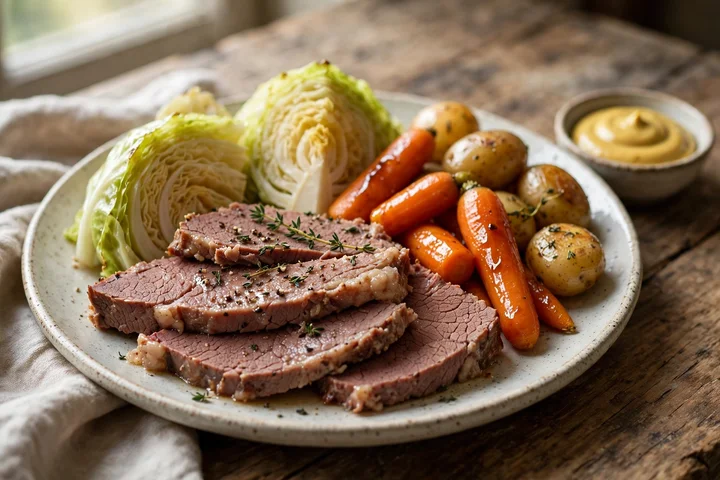
Serve the sliced brisket on a large platter with the cabbage wedges, potatoes, and carrots arranged around it, and spoon hot broth over the top so nothing dries out while it sits on the table. Whole-grain mustard is the classic partner — its sharpness cuts through the richness of the beef. Irish soda bread is the natural side if you want something to soak up the broth, and a simple green salad balances a plate that is otherwise all warm, soft, and savory.
For a party, set the platter on a buffet table and let guests serve themselves, with the mustard and bread beside it. This corned beef and cabbage recipe scales easily for a crowd: use a 5-pound brisket, double the vegetables, and keep the same spice packet and method. If you are hosting a full St. Patrick’s Day evening, our St. Patrick’s Day party ideas guide covers the games, drinks, and decorations that turn this dinner into a party. For cleanup afterward, the how to clean air fryer basket burnt grease guide is not the right tool for a Dutch oven — but the same hot-soapy-water-and-patience approach works on any pot, and a long soak handles the brisket pot overnight.
10 Tips for the Best Corned Beef and Cabbage
- Rinse the brisket. It takes thirty seconds and keeps the dish from tasting too salty.
- Cook it fat side up. The fat bastes the meat as it melts and keeps the top from drying out.
- Keep the simmer gentle. A rolling boil tightens the meat; small bubbles are what you want.
- Do not lift the slow cooker lid. Every peek adds about 30 minutes to the cooking time.
- Add the vegetables late. Potatoes and carrots in the last 2 hours, cabbage in the last 30 minutes — any earlier and they turn to mush.
- Cut the cabbage into big wedges. Small pieces fall apart; wedges with the core attached hold their shape.
- Rest before slicing. Ten to fifteen minutes under foil keeps the juices in the meat instead of on the cutting board.
- Slice against the grain. This is the single biggest difference between tender slices and chewy ones.
- Save the broth. It is seasoned, rich, and perfect for soup, for reheating leftovers, or for cooking the next batch of vegetables.
- Taste before you salt. The brine is salty enough; most cooks never add salt at all, and the mustard on the side adds all the sharpness you need.
Variations
- Beer-braised: Replace half the water with stout for a deeper, maltier broth.
- With colcannon: Serve the brisket over colcannon — mashed potatoes with cabbage and scallions — instead of plain potatoes.
- Glazed finish: After cooking, brush the brisket with a mix of brown sugar and mustard and broil it for 3 to 5 minutes for a caramelized crust.
- Spicy: Add a teaspoon of red pepper flakes or a sliced chili to the pot for a gentle heat.
- Smaller batch: A 2-pound brisket cooks in about 2 hours on the stovetop or 6 hours on low in the slow cooker; halve the vegetables and keep the same spice packet.
- Reuben sandwiches: The best use of leftovers — rye bread, sliced corned beef, sauerkraut, Swiss cheese, and Russian dressing, grilled until the cheese melts.
Storage and Reheating
Refrigerate leftovers within two hours of cooking. Sliced corned beef keeps 3 to 4 days in the fridge in an airtight container — store it with a little of the cooking broth poured over it so it stays moist. The vegetables keep just as long in a separate container. To reheat, warm the slices gently in a covered skillet with a splash of broth over low heat, or microwave them in short bursts with broth, covered, so they steam instead of drying out. Do not reheat the meat at high heat: it dries out fast.
For longer storage, freeze sliced corned beef in portions with a little broth for up to 3 months. Thaw overnight in the fridge and reheat gently the same way. The cabbage and potatoes do not freeze well — they turn soft and watery — so freeze only the meat and make fresh vegetables when you serve it again.
Leftover corned beef also makes the best hash: dice the meat, potatoes, and cabbage, fry them in a skillet with a little butter until crisp at the edges, and top with a fried egg. It is a better breakfast than the dinner was, and it uses up every last bit.
Frequently Asked Questions
How long does it take to cook corned beef and cabbage?
A 3 to 4 pound brisket takes 8 to 10 hours on low in the slow cooker, or about 3 hours simmering on the stovetop. Add the potatoes and carrots in the last 2 hours (slow cooker) or last 30 to 45 minutes (stovetop), and the cabbage in the last 30 minutes (slow cooker) or last 10 to 15 minutes (stovetop). Always check for fork tenderness before serving.
What temperature is corned beef done at?
Corned beef is safe to eat at an internal temperature of 145°F with a 3-minute rest, according to FoodSafety.gov. In practice, brisket is cooked until fork-tender, which happens well above 145°F — usually around 200°F — because the connective tissue needs high heat to break down. Use the thermometer for safety and the fork for texture.
Should you rinse corned beef before cooking?
Yes. Rinse the brisket under cold water before cooking to wash off excess surface brine. It takes thirty seconds and keeps the finished dish seasoned rather than salty. Do not rinse it after cooking — the flavor is in the meat by then, and the cooking broth is worth saving.
Why is my corned beef tough?
It is almost always undercooked, not overcooked. Brisket is a tough cut full of connective tissue, and it only turns tender after a long, slow cook. If a fork does not slide in easily, give it another 30 to 60 minutes. Slicing with the grain instead of against it also makes cooked brisket feel tough, so check the direction of the grain before you cut.
Can you cook corned beef and cabbage the day before?
Yes, and it often tastes better. This corned beef and cabbage recipe is a good cook-ahead dish: cook the brisket and vegetables, let everything cool, and refrigerate them separately — the meat in a little broth. Reheat the slices gently in broth on the stove, and warm the vegetables in the broth too. The flavors meld overnight, and party day becomes a simple reheat instead of a full cook. If you are planning the full celebration, the Thanksgiving stuffing guide uses the same cook-ahead logic for holiday meals, and a slice of Christmas cookies makes a fine dessert after a heavy March dinner.
Leave a Reply