
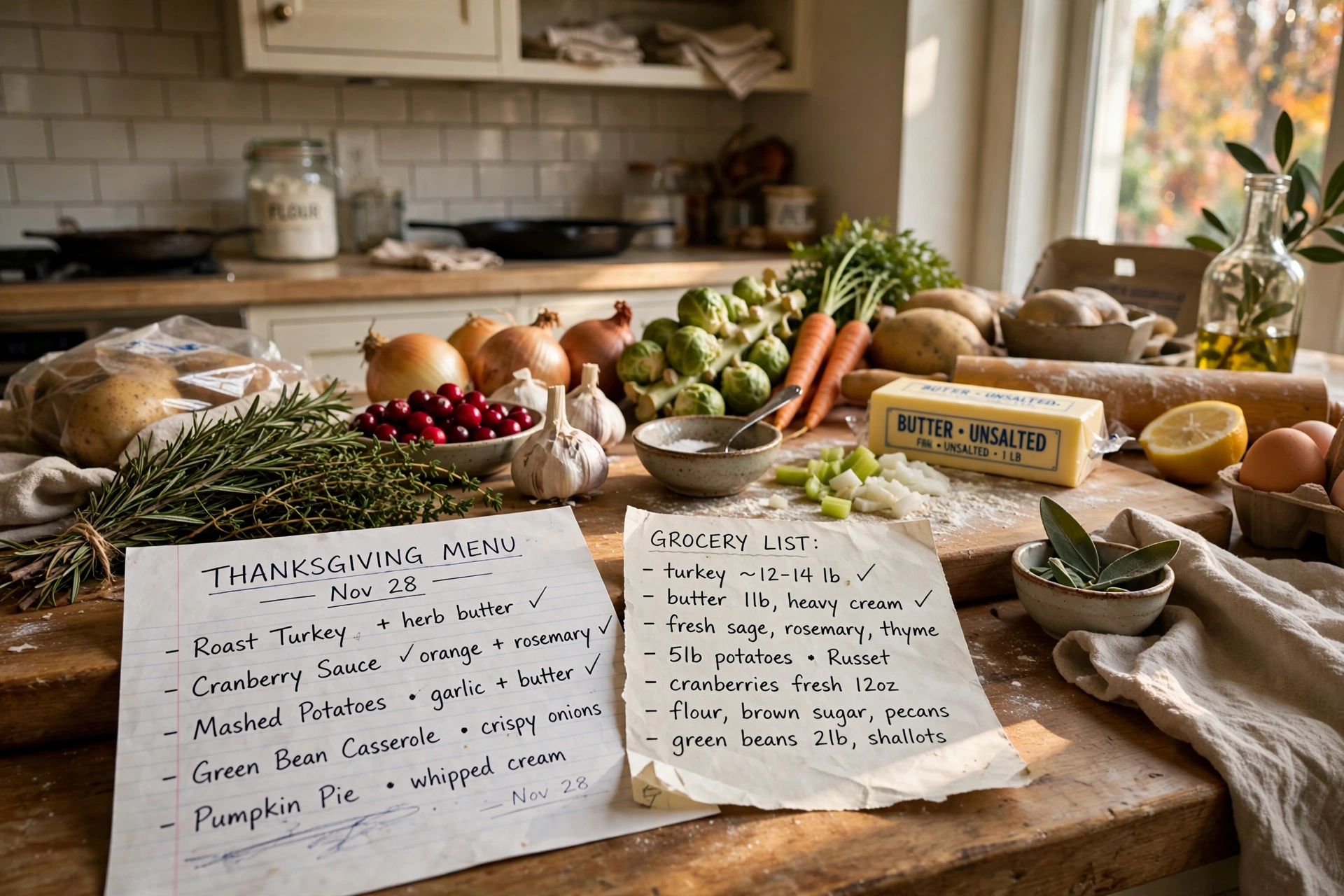
Planning your first Thanksgiving dinner comes down to four things: knowing how many people are coming, deciding what to cook, buying the right amounts, and working backward from dinner time. This guide walks you through each step in order, so nothing gets missed and you actually enjoy the day.
Give yourself at least two to three weeks of lead time, and most of the work can be spread across a few calm days instead of one frantic Thursday morning.
Decide Your Guest Count
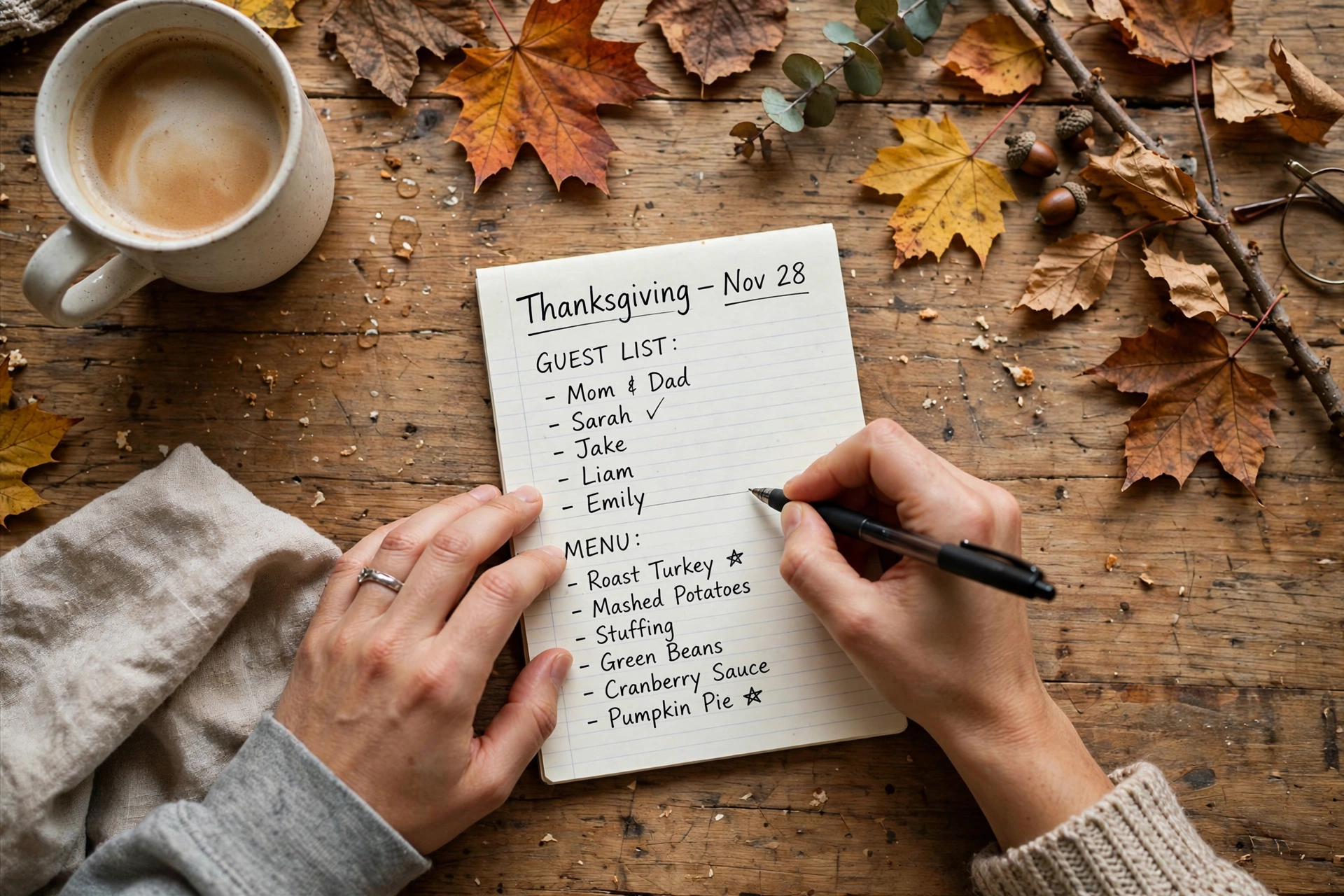
Everything in your planning flows from one number: how many people will sit at the table. Get a firm headcount as early as possible, because it determines your turkey size, how many side dishes you need, and how much seating and table space to prepare.
How to get a reliable headcount
Send invitations or a group message at least three weeks out, and ask for a yes or no by a firm date — about ten days before the holiday. Follow up politely with anyone who has not answered by your deadline, because “maybe” makes planning impossible.
Count children under ten as roughly half an adult serving for side dishes. For the turkey itself, count everyone — leftovers are part of the plan.
Dietary considerations to ask about
When you collect RSVPs, ask one short question: “Any dietary needs I should know about?” Just flag the big three:
- Vegetarian or vegan guests: Plan one substantial meat-free main, such as a stuffed squash or mushroom-and-lentil loaf, so nobody feels like an afterthought.
- Common allergies: Nuts, dairy, and gluten are the most frequent. Label dishes and keep at least one or two options safe for each affected guest.
- Religious or cultural restrictions: A quick question now avoids an awkward moment at the table.
You do not need to rebuild the whole menu around one restriction. A separate gravy, a dairy-free side, or a clearly labeled dessert is usually enough.
Set Your Dinner Budget
Thanksgiving dinner can cost as little or as much as you let it. Set a budget before you shop so the menu stays realistic.
Main expense categories
Break spending into four buckets:
- The turkey (or main course): Typically the biggest line item. Fresh costs more than frozen; heritage or organic costs more still. A frozen turkey, thawed properly, makes a perfectly good centerpiece.
- Groceries for sides and desserts: Produce, dairy, bread, and baking supplies. Costs creep up through small impulse buys, so a written list matters.
- Beverages: Decide in advance — roughly one bottle of wine per three to four adults, plus sparkling cider and coffee. Asking guests to bring a bottle is completely normal.
- Supplies and extras: A disposable roasting pan if you do not own one, extra butter and stock (you always need more than you think), candles or a tablecloth. Keep this small — borrowed serving dishes beat bought ones.
Practical ways to keep costs down
- Buy the turkey early. Prices are usually lowest in the two weeks before Thanksgiving, when stores run loss-leader deals.
- Cook from scratch where it counts, buy where it does not. Homemade mashed potatoes and gravy are cheap and noticeably better; store-bought pie crust or dinner rolls are fine.
- Make it a potluck for sides. Ask two or three reliable guests to each bring one assigned side dish — this cuts both your grocery bill and your workload.
- Skip the fancy extras. A clean table, decent lighting, and good food are what people remember, not matching napkins.
A realistic budget for a home-cooked dinner for eight to ten people typically lands in the low hundreds of dollars. Write your number down before you make the shopping list.
Create Your Menu
A good Thanksgiving menu is balanced, not enormous. Aim for: one main course, four to six sides, one or two desserts, plus bread and drinks. Ten sides do not make the meal twice as good — they make the kitchen twice as chaotic.
The main course
A whole roast turkey is traditional, but not mandatory. Choose what fits your skill level and guest count:
- Whole turkey: Best for eight or more. Plan roughly 1 to 1.5 pounds per person if you want leftovers.
- Turkey breast: Easier and faster for four to six people, with less waste. Bone-in roasts more evenly than boneless.
- Alternatives: Roast chicken, glazed ham, or a stuffed butternut squash all work. Thanksgiving is about the gathering, not the bird.
Side dishes: pick a balanced mix
Build sides across categories so the plate has variety:
- Starchy (pick two): Mashed potatoes, sweet potato casserole, dinner rolls, stuffing/dressing, mac and cheese.
- Vegetable (pick two): Green beans, roasted Brussels sprouts, glazed carrots, roasted root vegetables.
- Fresh/acidic (pick one): Cranberry sauce (homemade takes fifteen minutes and beats canned), a simple green salad, or pickled vegetables. Something bright cuts through the richness of the rest of the plate.
Six well-made sides beat ten mediocre ones, and your oven will thank you.
Desserts
One or two pies are the standard: pumpkin plus apple or pecan covers most preferences. If you are not a baker, buy the pies — a good bakery pie beats a stressful homemade one. Add vanilla ice cream or whipped cream and you are done.
Portion guidance
Plan roughly 1/2 to 3/4 cup per person for each side dish — across six sides, that adds up to a full plate. One standard pie yields about eight slices, so plan one pie per eight guests (or two pies for variety regardless of count). For bread, two rolls per person is safe. When in doubt, round up slightly on the two or three most popular dishes — usually mashed potatoes and stuffing — rather than increasing every dish.
Make Your Shopping List
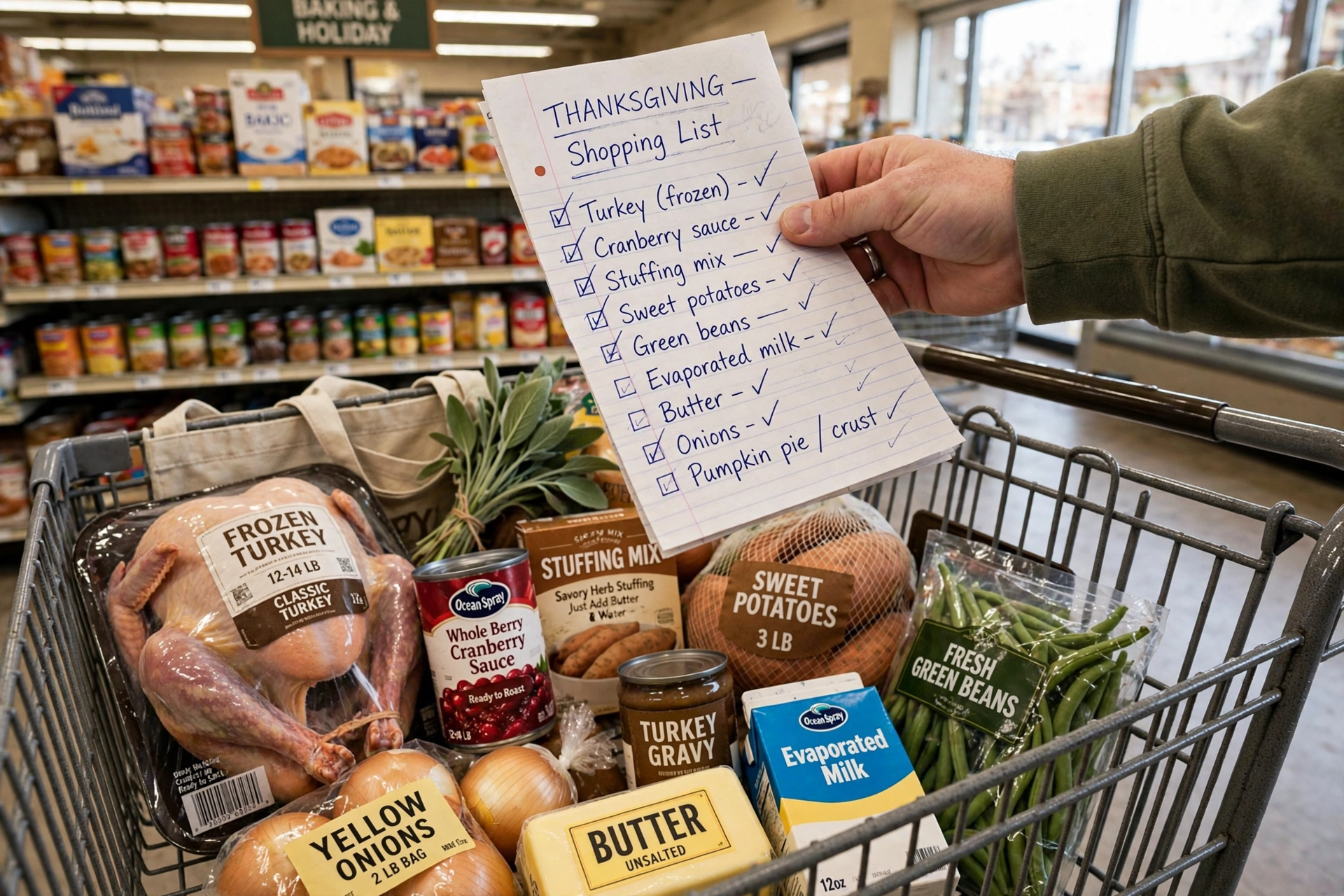
A written shopping list is the difference between one efficient trip and three panicked ones. Build it directly from your final menu, going dish by dish and writing down every ingredient with its quantity.
How to calculate quantities
Start from your guest count and work backward using the portion guidance above, then add a 10 to 15 percent buffer on core ingredients (potatoes, butter, stock, flour). Running out of butter on Thanksgiving morning is a rite of passage you can skip.
Group the list by store section — produce, dairy, meat, baking/pantry, frozen, beverages, supplies. This turns the list into a route through the store.
Shop in two trips
- Trip one (10 to 14 days before): Frozen turkey, pantry staples, baking supplies, beverages, and anything non-perishable. Grab sale items now.
- Trip two (2 to 3 days before): Fresh produce, dairy, bread, and herbs. Do a final check against your recipes before leaving the store.
For a detailed quantity breakdown by guest count, see our Thanksgiving shopping list guide, which walks through groceries dish by dish for parties of 4, 8, and 12.
Plan Your Cooking Schedule
The secret to a calm Thanksgiving is doing as much as possible before Thursday. Almost every dish has a “best made ahead” window.
Do an equipment check first
First-timers often discover gaps on the day itself. A week out, confirm you have: a roasting pan large enough for your turkey (a sturdy disposable one works), an instant-read food thermometer, a sharp carving knife, enough oven-safe dishes for reheating, aluminum foil, and a fat separator if you want smooth gravy. Borrow what you do not own — most of this gets used once a year.
Three to four days before
- Start thawing a frozen turkey in the refrigerator — a large bird needs several days (roughly 24 hours for every 4 to 5 pounds).
- Make cranberry sauce; it keeps up to a week refrigerated and tastes better after a day or two.
- Bake pies, or prepare pie dough and freeze it.
- Chop sturdy vegetables: diced onions, celery, and carrots for stuffing keep well in sealed bags.
One to two days before
- Assemble casseroles (sweet potato, green bean) and refrigerate unbaked.
- Make mashed potatoes; they reheat well with a splash of warm milk.
- Prep stuffing components, but keep bread and liquid separate until baking day for the best texture.
- Set the table, lay out serving dishes with sticky notes labeling what goes where, and chill beverages.
Thanksgiving morning
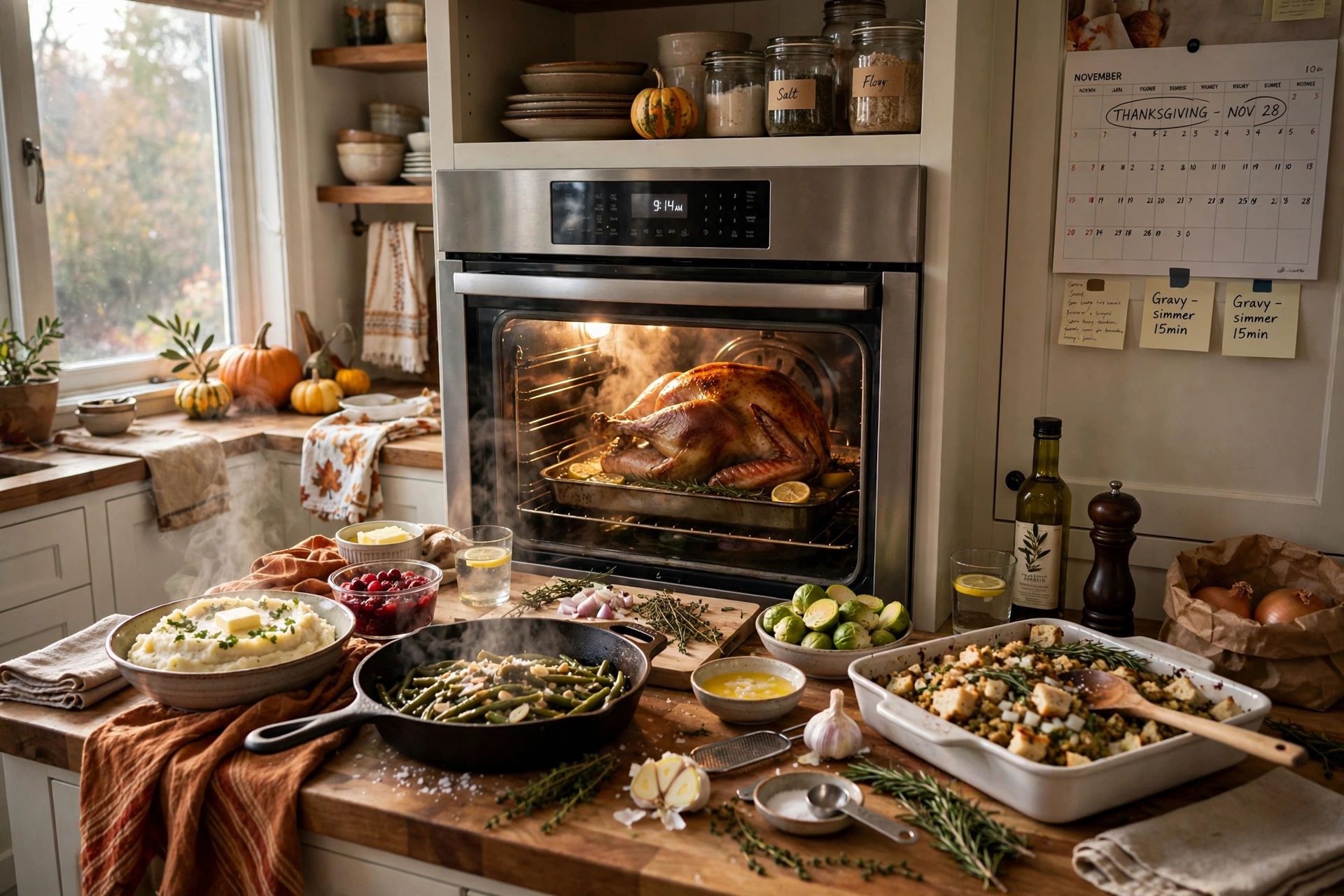
Work backward from your target dinner time. A typical whole turkey needs several hours in the oven plus at least 30 minutes of resting — and resting is not optional; it is when the juices redistribute. Write out your timeline the night before with actual clock times. Here is an example for a 4:00 PM dinner with a 14-pound turkey (about 3.5 hours roasting):
| Time | Task |
|---|---|
| 10:30 AM | Turkey goes in the oven; prep remaining sides while it roasts |
| 1:00 PM | Bake casseroles and stuffing, working around oven space |
| 2:00 PM | Turkey comes out; rest tented loosely with foil |
| 2:00–3:30 PM | Bake rolls; reheat sides and mashed potatoes |
| 3:30 PM | Make gravy from pan drippings; plate cold items |
| 4:00 PM | Serve |
Adjust the start time to your bird’s weight and your oven — the structure stays the same: turkey first, the resting window as your second oven shift, gravy last.
For a complete hour-by-hour plan, see our Thanksgiving cooking timeline, mapped to your dinner hour.
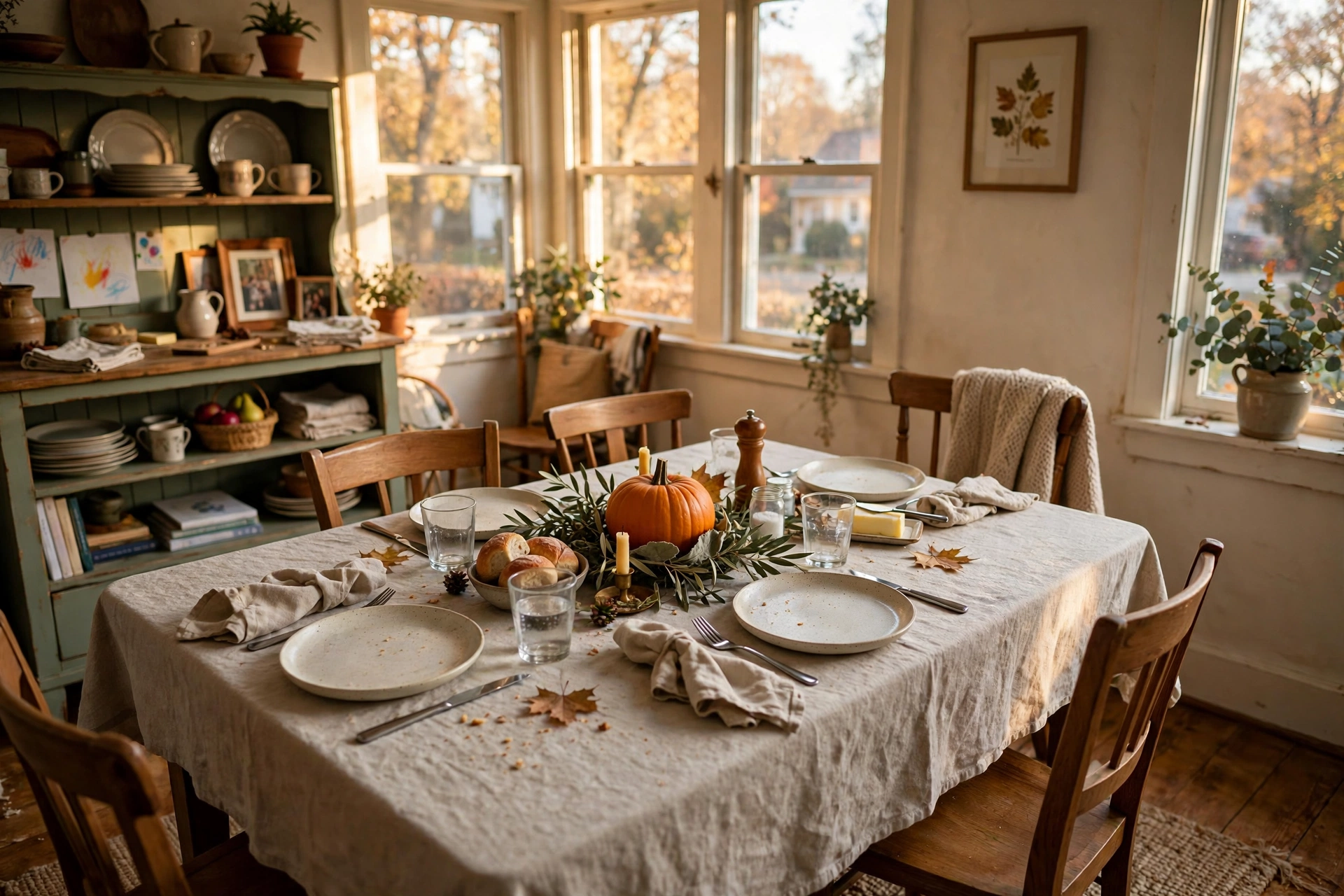
Set Up Your Dining Area
You do not need a dining room. You need enough flat surfaces, enough seats, and a logical flow from kitchen to table.
Seating and table space
Count seats, not chairs — a bench or a borrowed folding chair counts if it is comfortable for an hour. Allow about 24 inches of table width per person. If your table is too small, add a card table at the end under the same tablecloth — it looks intentional, not improvised.
Serving strategy
Decide in advance: family-style or buffet?
- Family-style (dishes passed around the table) suits up to about ten people and feels the most traditional.
- Buffet (dishes on a sideboard, guests serve themselves) is better for larger groups or small tables, and keeps the main table uncluttered.
Set out serving spoons, trivets, and a designated spot for each dish before guests arrive. Small labeled cards are a thoughtful touch, especially for guests with dietary restrictions.
Table preparation
A clean tablecloth or runner, napkins, water glasses, and one simple centerpiece — a bowl of fruit, candles, a few pinecones — are all you need. Set the full table the night before, including serving pieces, so Thanksgiving morning is about cooking, not hunting for the gravy boat.
Keep drinks at a separate station — a side table with water, wine, and glasses — so people can refill without reaching across the dinner.
Common Planning Mistakes
Most Thanksgiving disasters come from the same handful of errors. All of them are avoidable.
Underestimating oven time and space
The turkey occupies the oven for hours. The fix: casseroles and sides go in while the turkey rests, and no-oven sides (salads, cranberry sauce, slow-cooker dishes) take pressure off entirely. A slow cooker for mashed potatoes or stuffing is essentially a second oven.
Cooking a still-frozen turkey
A partially frozen turkey cooks unevenly and takes far longer than expected. Thaw in the refrigerator with real lead time — roughly 24 hours for every 4 to 5 pounds, so a 20-pound bird needs four to five full days.
Making everything from scratch on Thursday
Nobody awards points for suffering. Store-bought pie crust, bakery rolls, and canned stock are completely fine. Save your energy for the two or three dishes where homemade matters to you — usually the turkey, gravy, and one signature side.
Skipping the resting time
Cutting into a turkey straight from the oven means the juices run onto the cutting board instead of staying in the meat. Rest the bird at least 30 minutes (45 for a large one), tented loosely with foil. Use that window to finish gravy and reheat sides.
No food thermometer
Time-per-pound charts are estimates; ovens vary. The only reliable way to know the turkey is done — and safe — is a thermometer reading of 165°F (74°C) in the thickest part of the thigh, the USDA safe temperature for poultry. It is the cheapest insurance against both dry and undercooked meat.
Running out of key ingredients
Butter, stock, and foil always go faster than expected. Buy extra — an unopened box of stock in the pantry costs little and saves a grocery run.
Thanksgiving Dinner FAQs
How far in advance should I start planning Thanksgiving dinner?
Three weeks is comfortable for a first-timer: one week to finalize the guest list and menu, one week for the first grocery trip and borrowed equipment, and the final week for cooking prep.
What time should Thanksgiving dinner be served?
Late afternoon is traditional — between 3:00 and 5:00 PM works well. It gives you the full morning to cook and leaves the evening for leftovers and relaxing. Pick your time first, then build the cooking schedule backward from it.
How much turkey do I need per person?
Plan 1 to 1.5 pounds of whole turkey per person if you want leftovers. For ten guests, that means a 12 to 15-pound bird at minimum. A full serving-size chart by guest count is linked at the end of this guide.
Can I cook the turkey the day before?
You can, but reheated turkey is never as good as fresh. Better: do everything else ahead and roast the turkey on the day. If you must cook ahead, carve the meat off the bone, store it in its juices, and reheat gently covered with stock.
What should I do if the turkey is done too early?
Tent it loosely with foil and let it rest — it can safely rest up to about an hour. Use the extra minutes to finish sides. A turkey done early is a gift, not a problem.
How do I keep food warm if guests are late?
Hold covered side dishes in the oven at its lowest setting (around 200°F / 95°C). Avoid holding food at room temperature for more than two hours.
What is the single most important tip for a first-time host?
Write everything down — the menu, the shopping list, and the day-of timeline with clock times. On paper, Thanksgiving is just a sequence of steps you can check off one by one.
Continue Your Thanksgiving Planning
This guide covers the full process, but each step has its own detailed walkthrough:
- Thanksgiving Shopping List — groceries organized by guest count, so you buy the right amounts in one trip.
- Thanksgiving Cooking Timeline — an hour-by-hour schedule working backward from your dinner time.
- Thanksgiving Dinner Checklist — a printable preparation checklist covering the full three weeks.
Start with your guest list this week, and the rest follows naturally. Happy planning — and happy Thanksgiving.
Leave a Reply