
A Thanksgiving dinner on a budget is absolutely doable: the trick is deciding your total spend first, then building the menu around the cheapest high-impact dishes — the turkey, potatoes, and bread — instead of building a dream menu and hoping the bill works out.
Thanksgiving has a way of quietly expanding. One extra side becomes three, a nice bottle of wine becomes a case, and the grocery bill doubles between the first shop and the last. None of that is required for a dinner people love. Guests remember warmth, abundance on the table, and not feeling rushed — none of which have a price tag. What follows is a practical plan for hosting a full, generous Thanksgiving dinner while keeping costs firmly under control.
Key Facts
- Set your budget before you shop — a per-guest target (for example, $8–12 per person for food) keeps every decision simple.
- The turkey is your biggest single cost — frozen turkeys and store loss-leader sales are the cheapest route.
- Sides are where budgets die or thrive — potatoes, bread, and carrots cost a fraction of what guests think they cost.
- Shop the sales calendar — frozen turkey and canned goods go on sale weeks before Thanksgiving; buy then.
- Potluck halves the bill — most guests are happy to bring a dish when asked early and specifically.
How Much Thanksgiving Dinner Typically Costs
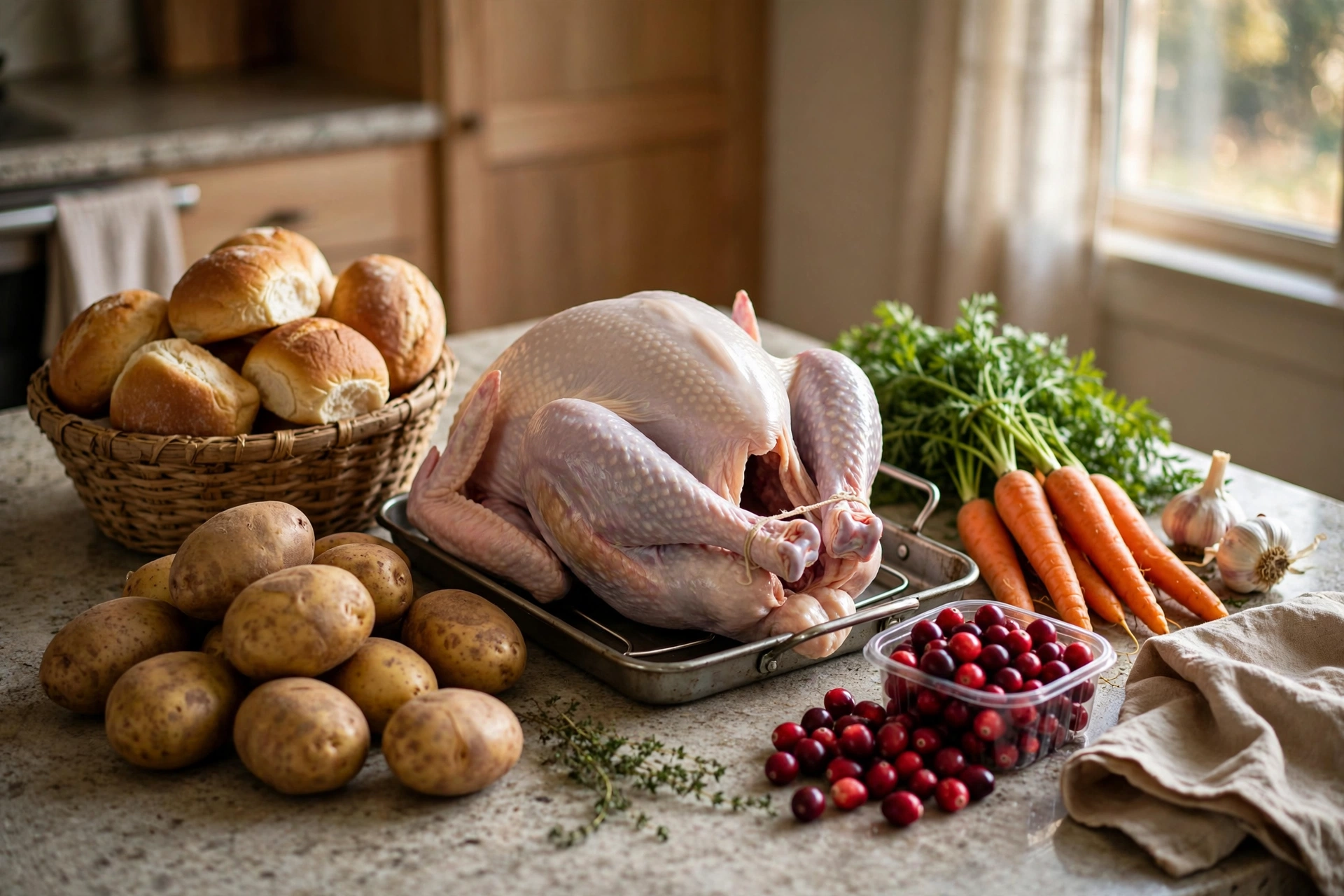
There is no single number for what Thanksgiving dinner costs, because the range is enormous. A no-frills dinner built on a sale-priced frozen turkey, store-brand sides, and homemade bread can come in at just a few dollars per person for the food itself. A premium dinner with a fresh heritage turkey, organic everything, and a wine pairing can cost several times that. Most home cooks land somewhere in the middle.
What drives the bill up is rarely the turkey alone. It is the extras: appetizers nobody asked for, three desserts when one would do, specialty ingredients used once, beverages, and last-minute panic purchases at full price. The good news is that every one of those is optional. A focused menu of one great turkey, four or five sides, one pie, and simple drinks is a complete Thanksgiving in every way that matters.
Rather than chasing a national average that may not match your store or your guest list, build your number from your own reality: count your guests, pick a per-person target you are comfortable with, and multiply. That becomes your budget, and the rest of this guide shows how to stay inside it.
“A budget is not a smaller Thanksgiving — it is the same Thanksgiving with the waste edited out.”
Set a Realistic Budget Before You Shop
The single most effective money move is also the simplest: decide the total before you buy anything. Pick a per-person figure for food — many hosts find $8–12 per person comfortable for a home-cooked dinner — and multiply by your guest count. Eight guests at $10 each is an $80 food budget. Writing that number down changes every shopping decision that follows.
Separate the food budget from the non-food budget. Decorations, paper goods, and beverages can quietly consume a third of the total if you let them. Give beverages their own small line (water, one batch drink, and whatever guests bring covers most needs) and decorate with what you own plus nature: pinecones, branches, candles, and a linen you already have cost nothing.
Build in a small cushion — 10 percent or so — for the one thing you will forget. There is always one thing. A cushion means the forgotten item is a footnote, not a budget crisis. For a complete planning framework that covers guests, timing, and the full week, see our guide to planning Thanksgiving dinner from the ground up.
Where to Spend vs. Where to Save
Not every dollar matters equally. Spend where guests actually notice, save where they do not.
Spend on the turkey. It is the centerpiece and the most-remembered dish. You do not need the most expensive bird — a basic frozen turkey roasted well beats a premium turkey roasted badly — but do not try to save your last few dollars here either. A dry, sad turkey defines the meal.
Spend on butter and seasoning. Good butter, fresh herbs, and proper salt cost very little in absolute terms and lift every dish they touch. This is the highest return-on-investment spending in the entire meal.
Save on everything decorative. Guests do not remember the napkin rings. They remember whether the food was hot and the host was relaxed.
Save on beverages. A big-batch drink — apple cider punch, spiced iced tea, a simple sangria-style pitcher — costs a fraction of individual bottles and looks generous on the table. Ask guests to bring wine or beer if they drink it; most are happy to contribute.
Save on appetizers. A small cheese plate, some crackers, and cut vegetables are plenty. Guests are about to eat the biggest meal of the year — do not fill them up (or your budget) beforehand.
Cheapest Turkey Options
The turkey is typically the largest single line item, so this is where smart shopping pays the most.
Frozen turkeys are the cheapest option. A standard frozen turkey is almost always less expensive per pound than fresh, and once thawed and roasted properly, most guests cannot tell the difference. Buy it early — frozen birds go on sale in the weeks leading up to Thanksgiving — and allow a full refrigerator thaw (about 24 hours per 4–5 pounds) so a budget frozen bird never becomes a food-safety gamble.
Watch for store loss leaders. Many supermarkets sell turkeys at or near cost in the week before Thanksgiving to get shoppers through the door. These are often the lowest prices of the year, sometimes tied to a minimum purchase. If your regular store runs this promotion, it is the single best turkey deal you will see.
Buy the right size, not the biggest. A giant turkey you cannot finish is money in the trash. Plan on roughly 1 to 1.25 pounds per person (more if you want generous leftovers), and use our turkey serving-size guide to match the bird to your guest count before you buy.
Consider a turkey breast. For small gatherings, a bone-in turkey breast can be cheaper overall than a whole bird you will mostly throw away — less waste means less money wasted. It also roasts faster and is harder to dry out.
10 Sides That Cost Under $1 Per Serving
Sides are the secret weapon of budget Thanksgiving. The cheapest ingredients in the store — potatoes, carrots, onions, bread, cabbage — are also the backbone of the classic menu. Here are ten sides that routinely cost under a dollar per serving when bought in season:
- Mashed potatoes. The undisputed champion of cheap sides. A bag of russets, butter, milk, salt. Nothing feeds a crowd for less.
- Roasted carrots. Whole carrots are among the cheapest vegetables available; roasted with a little honey or brown sugar, they taste like they cost five times more.
- Simple stuffing. Cubed day-old bread, onion, celery, broth, herbs. Store-bought boxed stuffing mix is even cheaper and genuinely good.
- Dinner rolls. A batch of homemade rolls costs very little in ingredients; even store-bought rolls are cheap per piece.
- Cranberry sauce from scratch. A bag of fresh cranberries, sugar, water, orange zest. Costs less than the canned version and tastes far better.
- Roasted sweet potatoes. Cut into chunks, tossed with oil and salt — no marshmallows or pecans required to be delicious.
- Green beans (simple). Fresh or frozen green beans sautéed with garlic. Skip the casserole’s canned soup and fried onions and the cost drops sharply.
- Cornbread. Cornmeal, flour, eggs, milk. A pan of cornbread feeds many for very little.
- Coleslaw or simple salad. Cabbage is famously cheap; a crunchy slaw adds freshness and color to a heavy table.
- Applesauce (homemade). In-season apples simmered with a cinnamon stick. A lovely, cheap addition that doubles as a palate cleanser.
Notice what is not on this list: anything requiring expensive cheese, nuts, or out-of-season produce. Those are the budget killers hiding inside otherwise cheap recipes.
Smart Swaps: Store Brands, Bulk Buys, Pantry-First
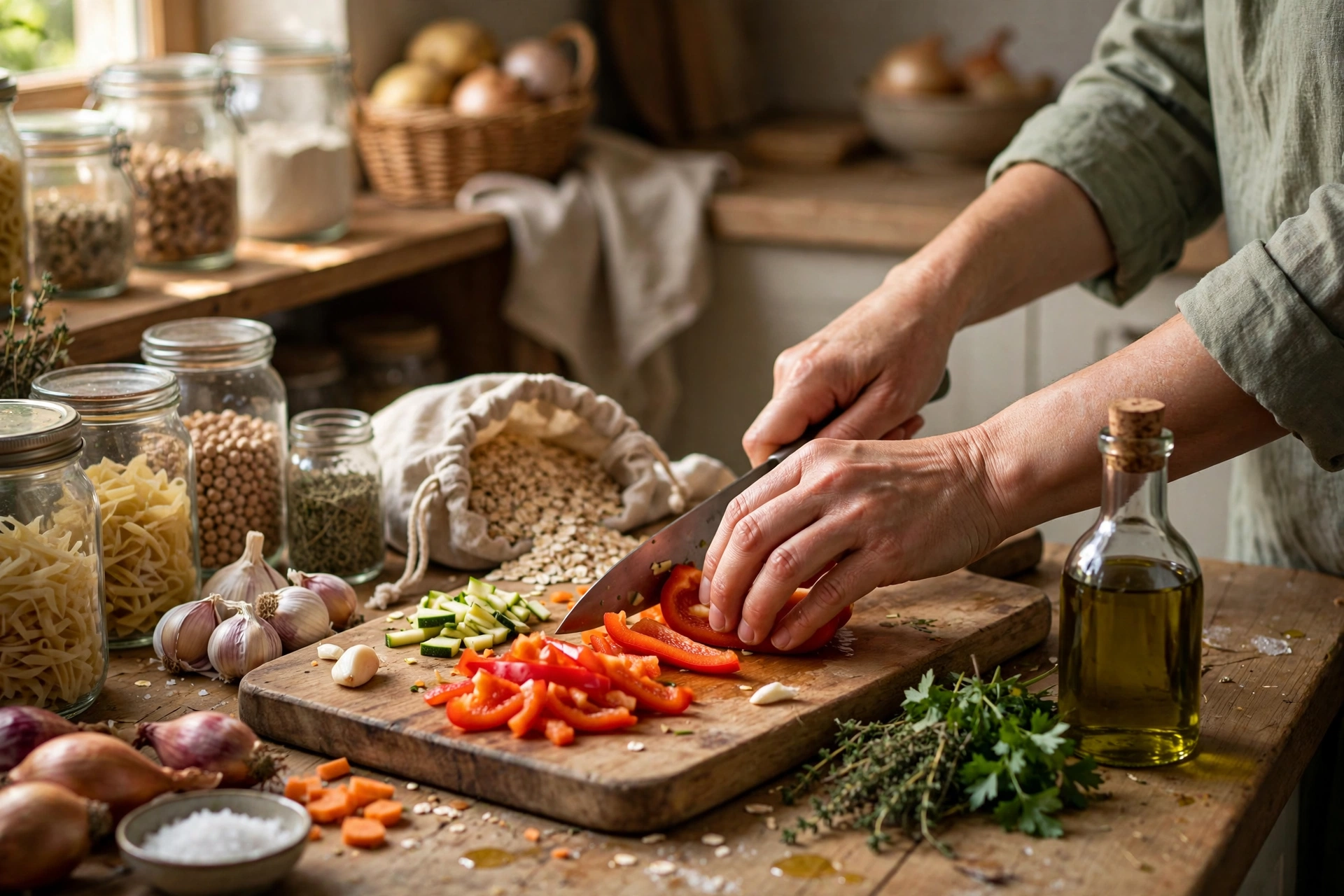
Go store brand for everything unbranded. Flour, sugar, butter, canned pumpkin, broth, frozen vegetables — store brands are typically identical in quality for baking and cooking staples. Save the name brands for nothing, honestly; in a blind taste test of a finished casserole, nobody can tell.
Buy in bulk where it makes sense. Potatoes, onions, carrots, and butter are cheaper in larger bags and you will use them all. Do not bulk-buy specialty items you will use once.
Cook pantry-first. Before writing the shopping list, inventory what you already own: flour, sugar, spices, canned goods, frozen vegetables, broth. Build the menu around ingredients you have, and buy only the gaps. Our Thanksgiving shopping list is organized by category, which makes it easy to check off what you already own before you spend a dollar.
Make instead of buy. Pie crust, whipped cream, cranberry sauce, gravy, and dinner rolls are all dramatically cheaper homemade than store-bought — and they are the items guests compliment most. The trade-off is time, so pick two or three to make from scratch and buy the rest.
Skip single-use ingredients. If a recipe calls for an expensive ingredient you will never use again — a specialty liqueur, an exotic spice — either skip the recipe or find a substitution. Every single-use purchase is a small budget leak.
“The cheapest ingredient is the one already in your pantry.”
Making It Potluck Without Awkwardness
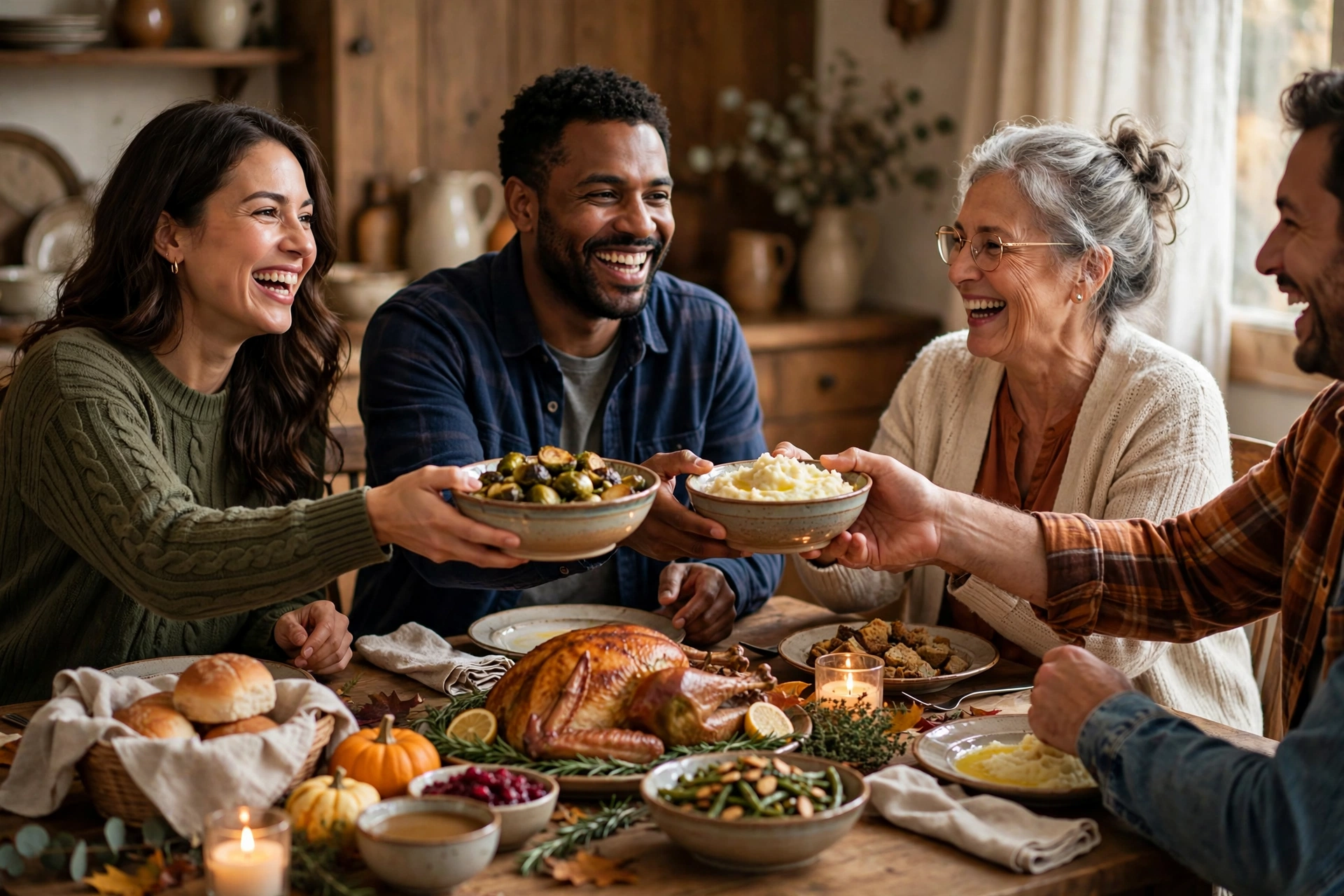
Potluck is the fastest way to cut your costs nearly in half, and most guests genuinely like contributing. The awkwardness people fear comes from vague asks, not from the concept itself. “Bring whatever” creates anxiety; “Can you bring the green bean casserole? Here’s the recipe I love” creates relief.
Ask early and specifically. Two to three weeks out, assign dishes by name: appetizers, a side, a dessert, a salad, drinks. Match the assignment to the person’s skill and enthusiasm — the baker gets pie, the busy friend gets store-bought rolls or wine.
You keep the turkey and gravy. As host, own the centerpiece and the one dish that depends on it. Everything else can travel.
Coordinate to avoid duplicates. A shared list — even a simple group text — prevents three mashed potato dishes. Confirm what everyone is bringing a few days before.
Provide the containers. If guests are bringing hot dishes, make sure you have oven space or warming options planned. Ask what temperature and time their dish needs so you can slot it into your Thanksgiving cooking timeline.
Thank people publicly. When you sit down, name who made what. It costs nothing and makes contributors feel like co-hosts rather than caterers.
When to Buy: Sales Timeline to Thanksgiving
Thanksgiving has one of the most predictable grocery sales calendars of the year. Shopping on this schedule — rather than all at once — captures the lowest prices:
3–4 weeks out (late October): Buy the frozen turkey the first time it goes on sale. Stock up on canned goods (pumpkin, cranberry sauce if not making fresh, broth, canned vegetables), flour, sugar, and butter — these hit their lowest prices well before the holiday rush.
2 weeks out: Buy wine, beverages, paper goods, and any non-perishables you missed. Frozen pie crusts and frozen vegetables are often on sale now.
1 week out: Buy potatoes, onions, carrots, apples, and other sturdy produce. Prices are still reasonable and everything keeps well.
2–3 days before: Buy fresh herbs, salad greens, dairy, and anything perishable. This is the most expensive shopping trip per item, so keep it small — by now you should own almost everything else.
Thanksgiving week loss leaders: Check your store’s weekly ad the week of Thanksgiving. Turkeys, butter, and canned pumpkin are classic doorbusters; if you already bought them, do not rebuy — but grab anything you still need at the sale price.
For Thursday, November 26, 2026, that means your turkey-buying window opens in late October — set a reminder now so you do not miss the first sale cycle.
Sample Budget Menu for 8 (No Fancy Prices Needed)
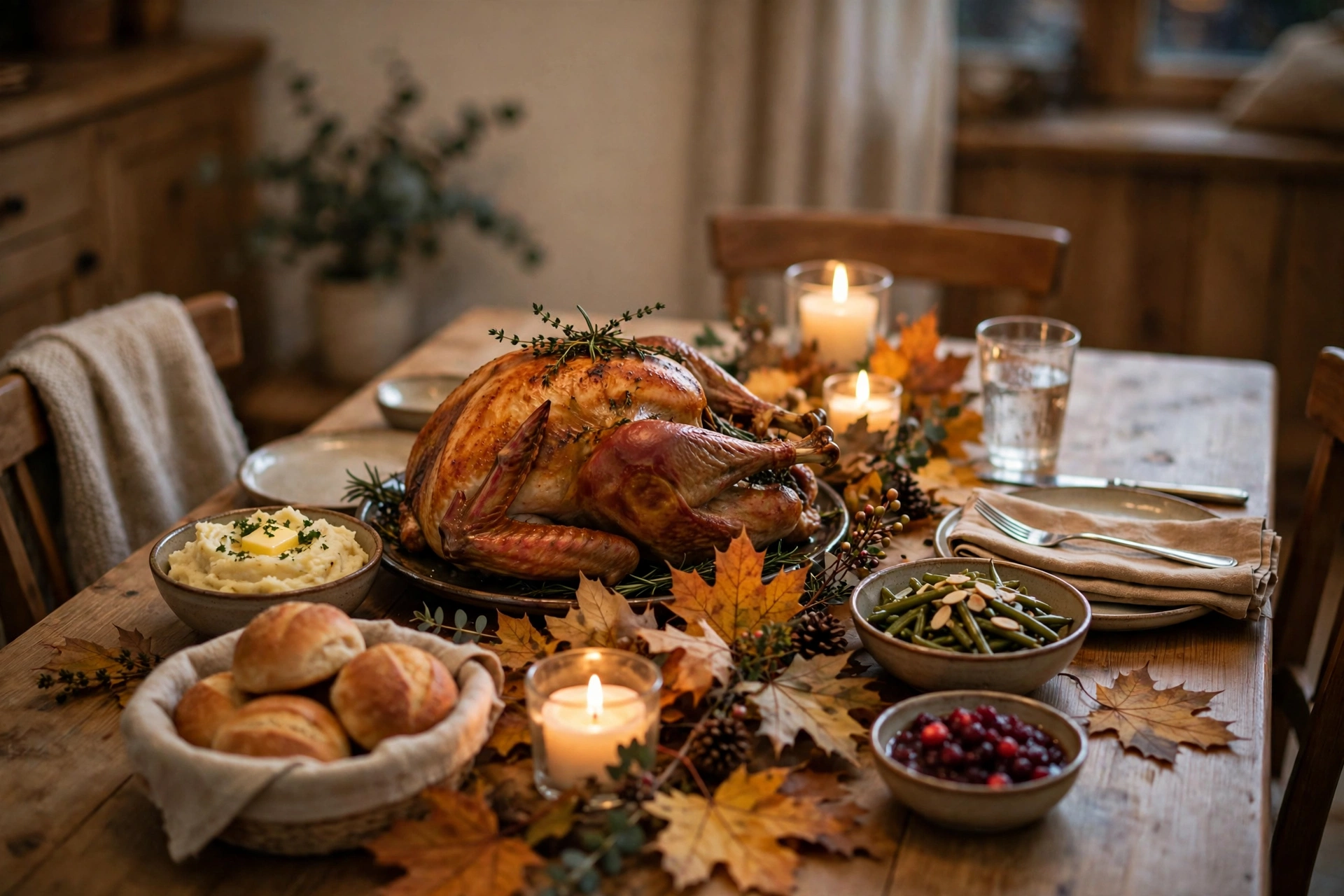
Here is a complete menu for eight that leans entirely on the cheap-and-classic dishes above. No invented prices — just the structure, with notes on where the savings come from:
- Turkey: One frozen turkey (right-sized for 8, not oversized) — the week’s loss-leader special.
- Gravy: From the pan drippings, thickened with flour — essentially free.
- Mashed potatoes: Russets, butter, milk — the cheapest crowd-pleaser on the table.
- Simple stuffing: Day-old bread cubes, onion, celery, broth.
- Roasted carrots: With a touch of brown sugar.
- Cranberry sauce: Homemade from a bag of cranberries.
- Dinner rolls: One batch, homemade or store-bought.
- Pumpkin pie: One pie, homemade crust, canned pumpkin, whipped cream from a carton you whip yourself.
- Drinks: Water, apple cider, and whatever guests bring.
That is a full, traditional, generous Thanksgiving dinner: a centerpiece bird, six sides plus gravy, pie, and drinks. Nothing about it reads as “budget” to the people eating it. The savings come from sale timing, store brands, right-sizing the turkey, and making the high-impact items from scratch — not from serving less food.
Frequently Asked Questions
How can I do Thanksgiving dinner cheap without it feeling cheap?
Focus on abundance of the classics rather than variety of the exotic. A table crowded with mashed potatoes, stuffing, carrots, rolls, cranberry sauce, and pie feels generous at any price. What feels “cheap” is scarcity — so make plenty of the inexpensive dishes.
Is a frozen turkey really as good as fresh?
For most guests, yes — once properly thawed and roasted, a frozen turkey is delicious. The key is giving it enough thaw time in the refrigerator (about 24 hours per 4–5 pounds) and not rushing it. Fresh turkeys cost more mostly for convenience and timing, not for a dramatic quality gap.
How far ahead should I start buying to save money?
Start 3–4 weeks before Thanksgiving with the frozen turkey and canned/dry goods when they first go on sale. Sturdy produce follows a week out, and perishables come last, 2–3 days before. Spreading purchases across the sales calendar is where the real savings happen.
Is potluck tacky for Thanksgiving?
Not at all — it is one of the most traditional ways to celebrate, and most guests prefer bringing something to arriving empty-handed. The key is asking early, assigning specific dishes, and thanking contributors. Awkwardness comes from vague requests, not from sharing the cooking.
What is the biggest waste of money at Thanksgiving?
Oversized turkeys nobody finishes, appetizers for guests about to eat a feast, specialty ingredients used once, and last-minute full-price panic purchases. Eliminate those four and most budgets fall into line on their own.
How do I keep track of spending?
Set the total budget first, then keep every receipt in one envelope or one phone note. Check the running total after each shopping trip against your per-person target. Catching a drift early — after trip one, not trip four — is what keeps the final number where you planned it.
Conclusion
A budget Thanksgiving is not a lesser Thanksgiving. It is the same holiday built on the dishes that were always the heart of it: a well-roasted turkey, potatoes, bread, and pie, shared with people you like. Set the number first, shop the sales calendar, lean on the cheap classics, and let guests contribute. The money you save is real — but the calm of a plan you can afford is worth even more. For food-safety guidance as you shop, thaw, and store, the USDA’s turkey basics and safe thawing guide is the authority worth bookmarking.
Leave a Reply