
The best Thanksgiving side dishes are the ones you can make ahead: mashed potatoes, stuffing, cranberry sauce, and casseroles all hold beautifully, which means the smartest strategy is choosing sides by when they can be prepared — not just by how they taste.
Ask people about their favorite part of Thanksgiving dinner and a surprising number will name a side dish before the turkey. Sides are where family traditions live — the specific stuffing recipe, the cranberry sauce debate, the casserole someone requests by name every year. This guide covers more than twenty classic options, grouped by category, each with a make-ahead note so you can build a menu that fits your oven, your schedule, and your sanity.
Key Facts
- Plan 4–6 sides for a classic table — more than that overwhelms the oven and the cook.
- Half your sides can be made 1–3 days ahead — cranberry sauce, pies, casseroles (assembled), and mashed potatoes all hold well.
- Balance the plate: pair rich dishes (mac and cheese, creamy casseroles) with bright ones (salad, roasted vegetables, cranberry).
- One oven strategy: bake sides during the turkey’s 20–30 minute resting window — see our Thanksgiving cooking timeline.
- Serve at safe temperatures — refrigerate perishable sides within 2 hours (USDA).
Potatoes: The Foundation
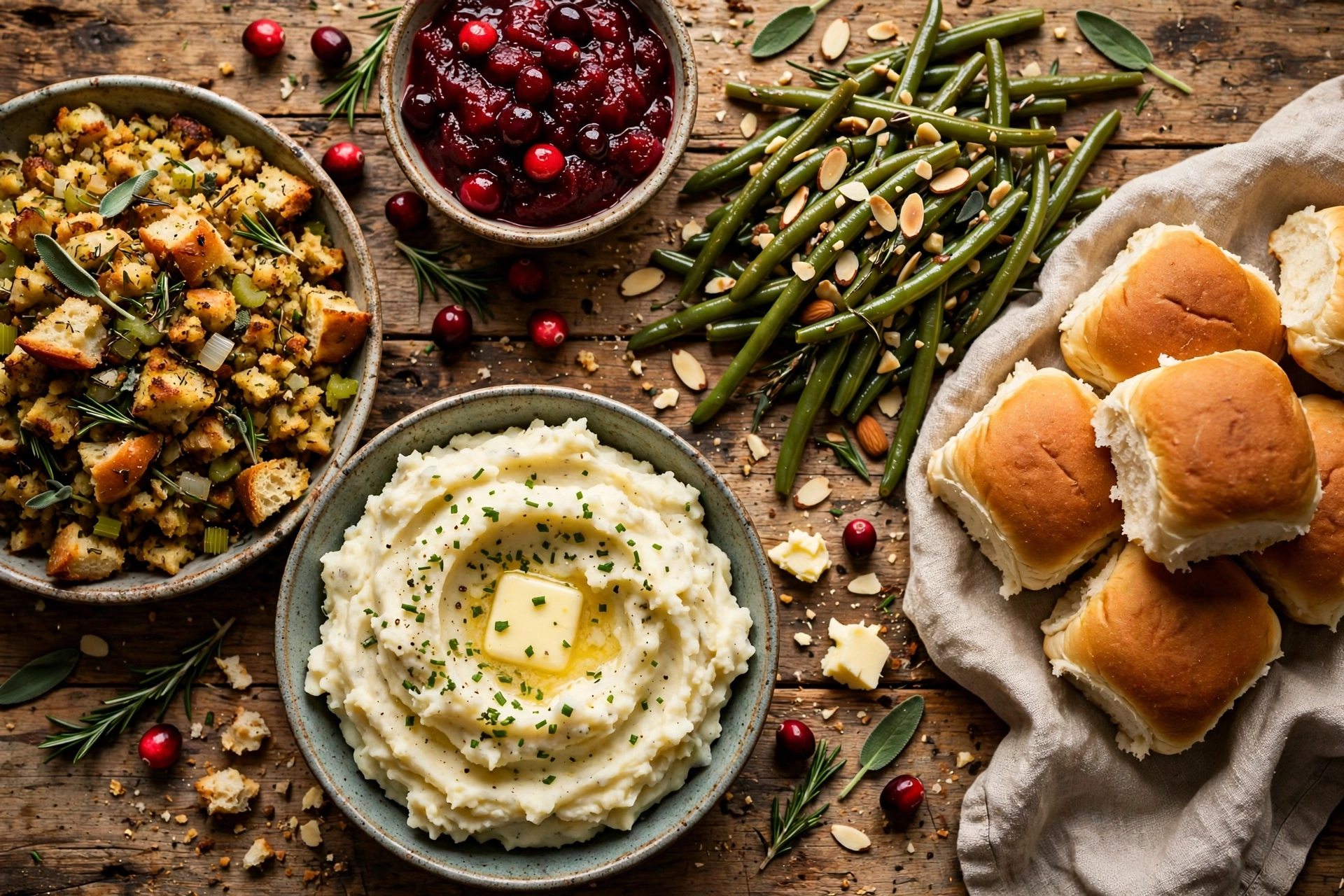
No Thanksgiving table is complete without potatoes in at least one form. They are cheap, crowd-pleasing, and endlessly adaptable.
Classic mashed potatoes. Russets or Yukon Golds, plenty of butter, warm milk, salt. The most-requested side in America for a reason. Make ahead: fully, 1 day ahead — reheat gently with warm milk and butter, or hold in a slow cooker on warm.
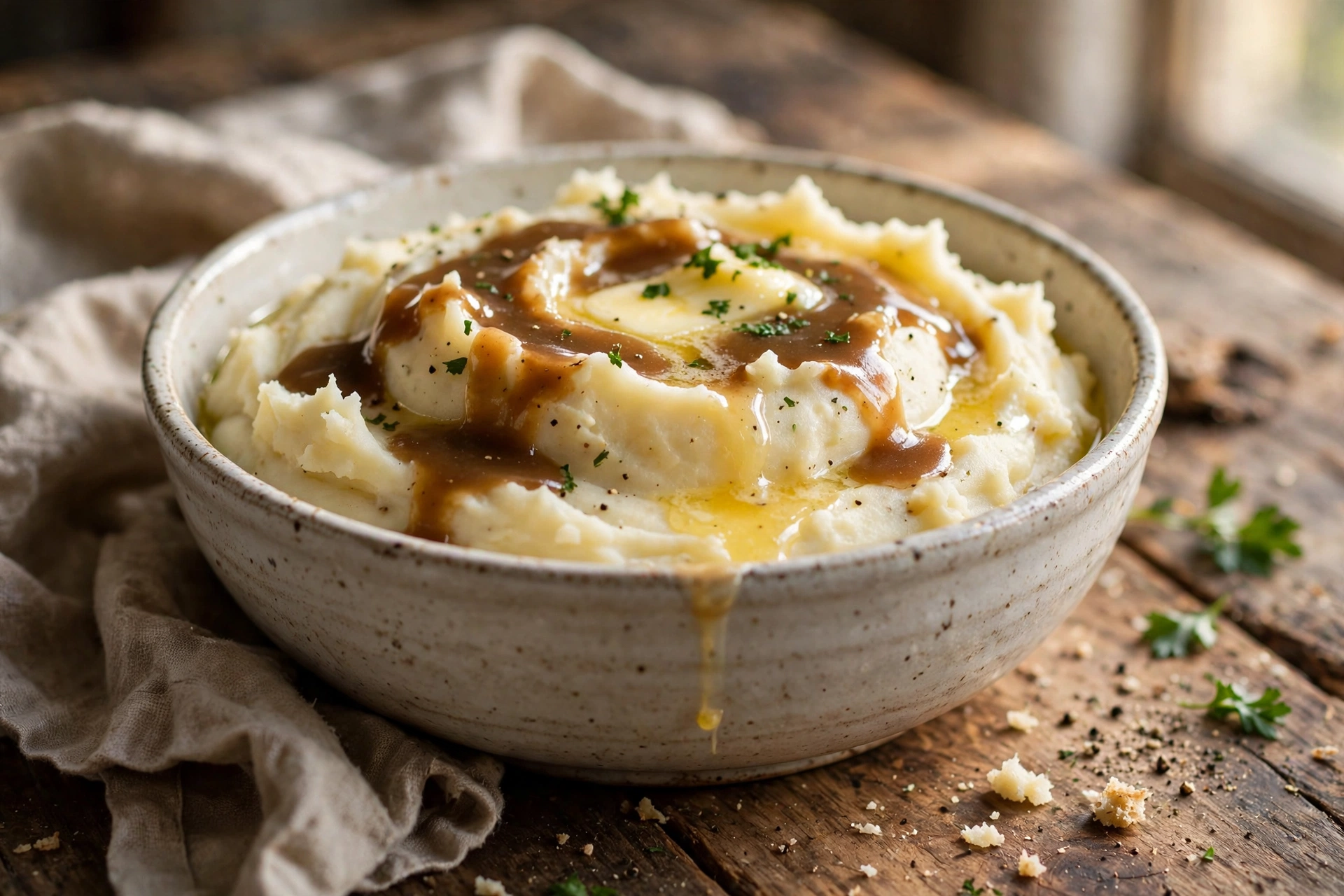
Roasted garlic mashed potatoes. Same base with a head of roasted garlic folded in. The roasting tames the garlic into something sweet and mellow. Make ahead: same as classic mash — roast the garlic a day ahead too.
Sweet potato casserole. Mashed sweet potatoes topped with pecans, streusel, or the classic marshmallow layer. Sweet enough to blur the line between side and dessert. Make ahead: assemble 1 day ahead, refrigerate unbaked; add the topping just before baking so it stays crisp.
Roasted sweet potato wedges. A simpler, less-sweet alternative — chunks tossed with oil, salt, and a pinch of cinnamon. Make ahead: cut the potatoes a day ahead and store in water in the fridge; roast day-of.
Scalloped potatoes. Thin slices baked in cream with garlic and cheese. Rich, impressive, and completely make-ahead friendly. Make ahead: assemble 1 day ahead; bake day-of, adding 10–15 minutes if going in cold.
Stuffing and Dressing
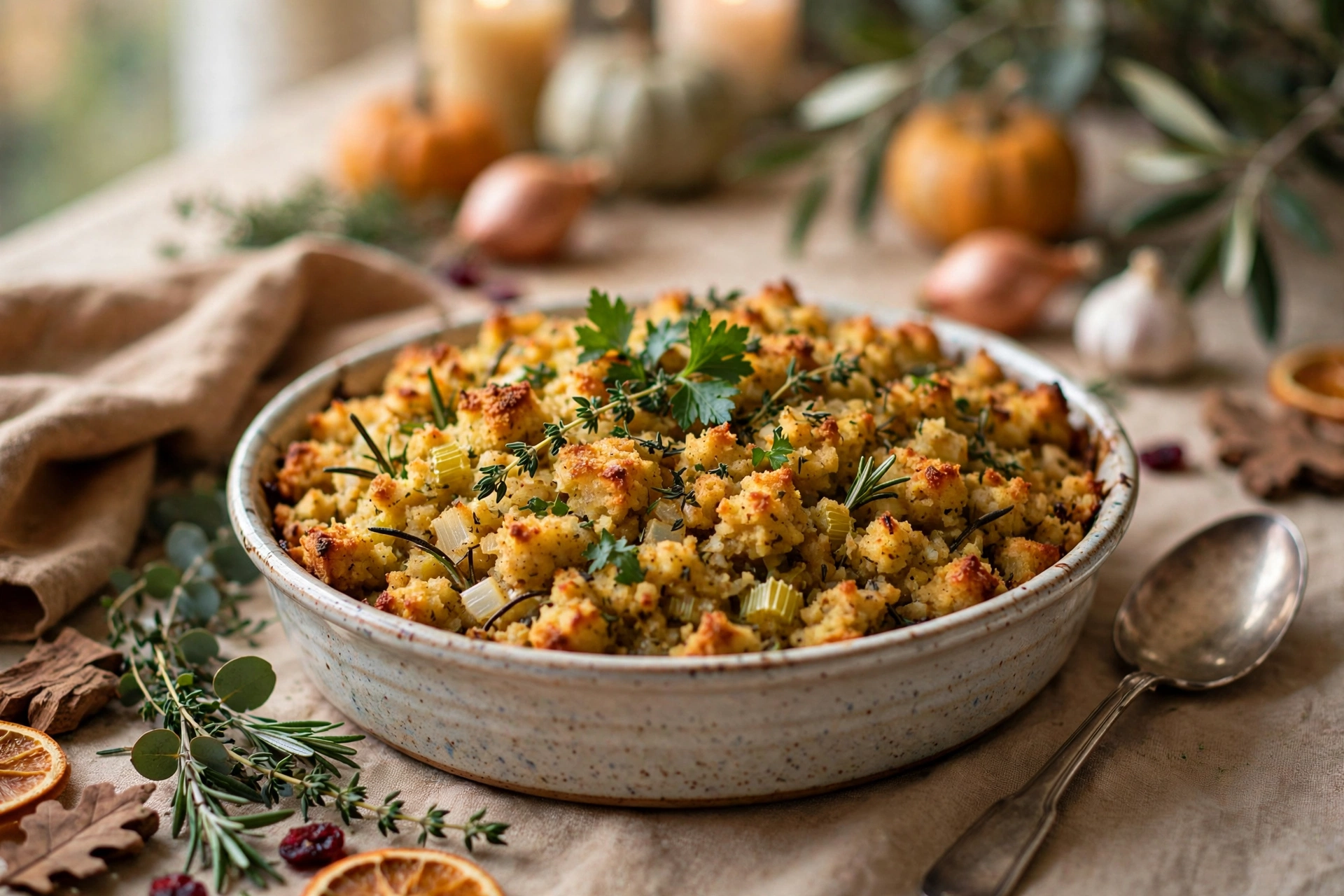
(Technically, “stuffing” cooks inside the bird and “dressing” bakes separately — but most families use one word for both. Bake it separately for food safety and crispier edges.)
Classic bread stuffing. Dried bread cubes, onion, celery, sage, thyme, and broth. The baseline against which all others are judged. Make ahead: combine dry ingredients 1 day ahead; add eggs and broth and bake day-of.
Sausage and apple stuffing. The classic base plus browned sausage and diced apple — sweet, savory, and substantial enough that some guests treat it as a main. Make ahead: brown the sausage and prep dry mix a day ahead; combine and bake day-of.
Cornbread stuffing. A Southern classic — crumbled cornbread instead of wheat bread, often with pecans. Slightly sweet, wonderfully textured. Make ahead: bake the cornbread up to 2 days ahead; assemble and bake day-of.
Mushroom and herb stuffing. A vegetarian-friendly option where deeply browned mushrooms provide the savoriness meat usually supplies. Make ahead: same dry-mix-ahead method as classic.
“Stuffing is the dish people argue about — which means it is the dish that matters most.”
Vegetables
Something green (or orange) keeps the table from becoming a beige blur — and gives the meal freshness and color.
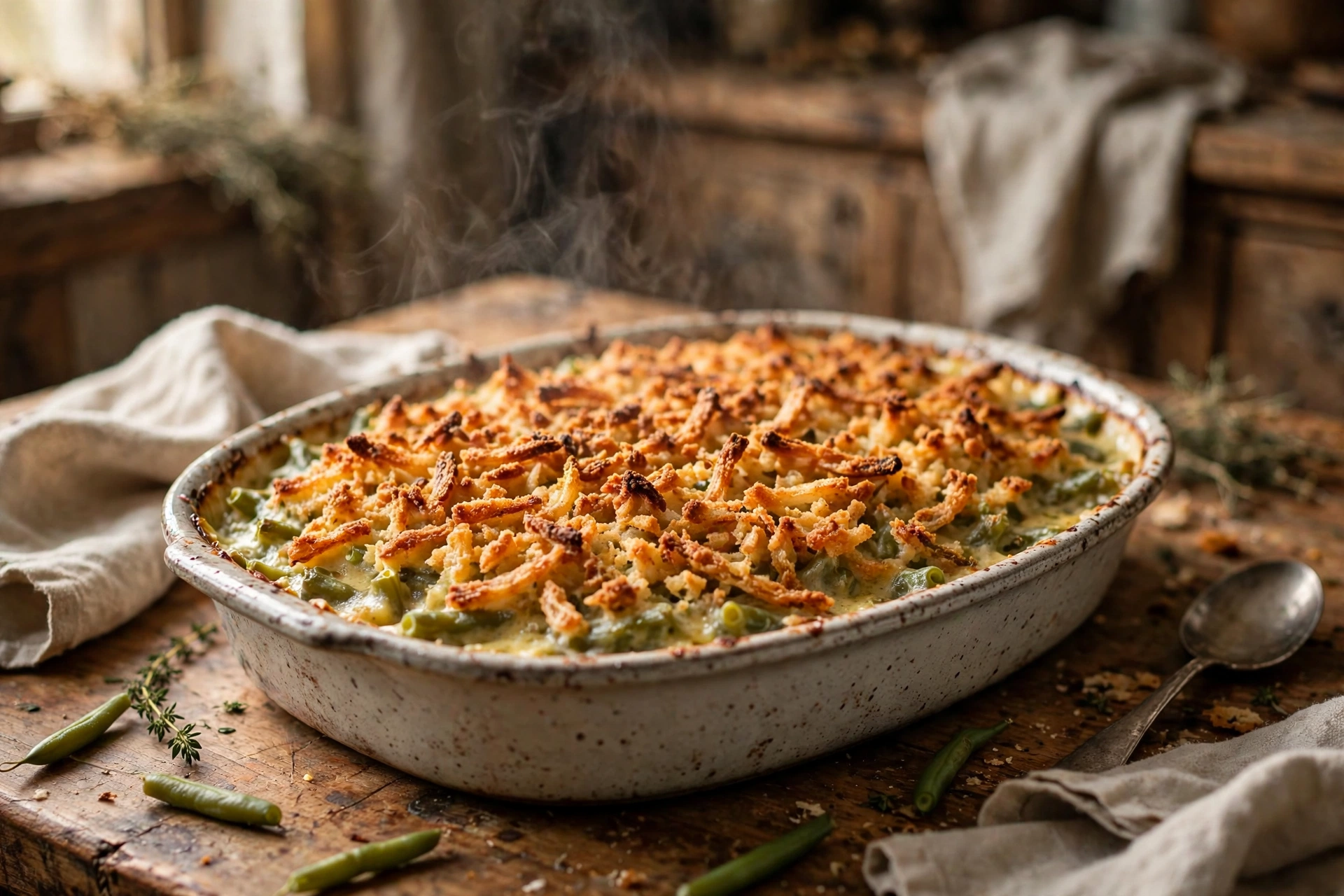
Green bean casserole. The 1950s classic: green beans, creamy mushroom sauce, crispy fried onions. Nostalgia in a baking dish. Make ahead: assemble 1 day ahead without the onion topping; add topping just before baking.
Roasted Brussels sprouts. Halved, tossed with oil and salt, roasted until the edges char. A drizzle of balsamic or a handful of bacon elevates them further. Make ahead: trim and halve a day ahead; roast day-of — they do not hold well.
Honey-glazed carrots. Whole or thick-cut carrots roasted with honey or brown sugar until caramelized. Simple, sweet, beautiful. Make ahead: peel and cut a day ahead; glaze and roast day-of.
Creamed corn. Sweet corn in a light cream sauce — a comforting, old-fashioned side that children especially love. Make ahead: fully 1 day ahead; reheats gently on the stove.
Roasted butternut squash. Cubes roasted with olive oil, salt, and sage until caramelized at the edges. Naturally sweet and gorgeous on the plate. Make ahead: cube a day ahead; roast day-of.
Cranberry: The Bright Counterpoint
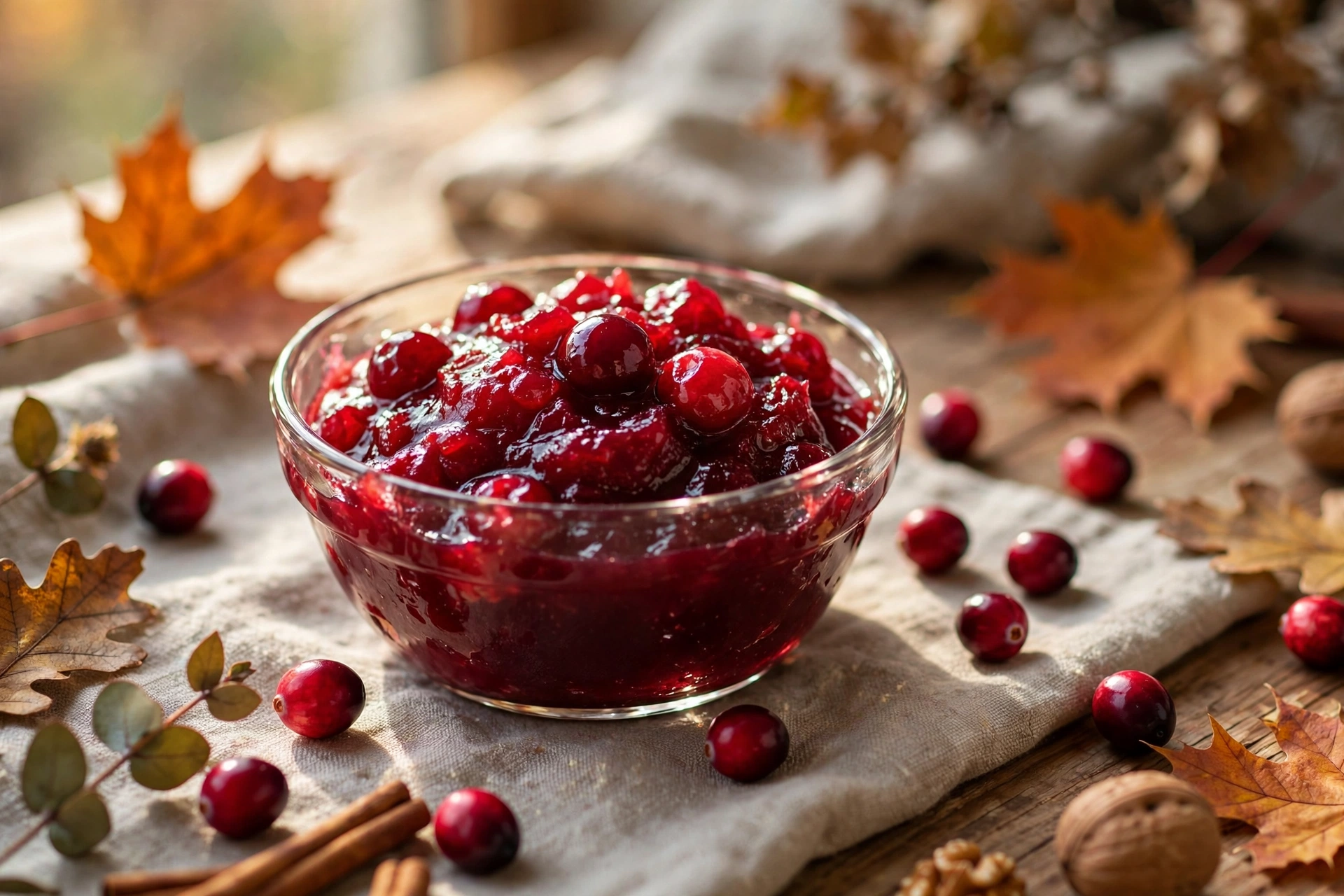
Cranberry is the acid and brightness that cuts through a rich, heavy meal. Do not skip it.
Classic cranberry sauce. Fresh cranberries, sugar, water, orange zest — simmered 10 minutes. Better than canned in every way and endlessly customizable. Make ahead: up to 1 week ahead; flavor improves as it sits.
Cranberry-orange relish. Raw cranberries pulsed with orange and sugar — brighter, fresher, and more textured than cooked sauce. Make ahead: 2–3 days ahead.
Spiced cranberry chutney. Cranberries simmered with apple, onion, vinegar, and warm spices. A more complex, savory-leaning option for adventurous tables. Make ahead: up to 1 week ahead.
Breads and Rolls
Bread is for gravy-mopping and sandwich-building — non-negotiable infrastructure.
Classic dinner rolls. Soft, buttery, pull-apart. Worth making from scratch if you have the time; excellent store-bought if you do not. Make ahead: bake 1 day ahead and rewarm, or freeze up to a month.
Cornbread. Slightly sweet, crumbly, perfect with butter and honey. Doubles as a stuffing base if you bake an extra pan. Make ahead: 1 day ahead; rewarm wrapped in foil.
Buttermilk biscuits. Flaky, tender, and fast — no yeast, no waiting. A strong choice when oven time is tight. Make ahead: cut and freeze unbaked up to a month; bake from frozen, adding a few minutes.
Casseroles and Comfort Dishes
The make-ahead backbone of the holiday — nearly all of these assemble a day early.
Mac and cheese. Baked with a crisp breadcrumb top, it is the side dish children remember forever. Make ahead: assemble 1 day ahead; bake day-of.
Broccoli-cheese casserole. Another nostalgic bake — broccoli in cheese sauce with a buttery cracker topping. Make ahead: assemble 1 day ahead; bake day-of.
Wild rice pilaf. Nutty, chewy, and elegant — a naturally gluten-free option that feels special. Make ahead: cook the rice 2 days ahead; sauté aromatics and combine day-of.
“The best side dish strategy is a calendar, not a recipe — half the meal should be finished before Thanksgiving morning.”
How to Choose Your Lineup
With twenty-plus options, curation matters more than collection. Aim for 4–6 sides and check these boxes:
- One potato dish (mashed is the safest crowd-pleaser).
- One stuffing/dressing (your family’s version — this one is personal).
- One green vegetable (green beans, Brussels sprouts, or a salad).
- One orange vegetable (sweet potatoes, carrots, or squash).
- Cranberry in some form (the meal needs its brightness).
- Bread (rolls, cornbread, or biscuits).
Then add one wild card — the mac and cheese, the dish a guest requested, the recipe you have been wanting to try. Six sides plus turkey, gravy, and pie is a full, generous table. For a smaller gathering, our small Thanksgiving dinner menu for 4–6 shows how to scale this thinking down, and our Thanksgiving dinner checklist helps you schedule every dish across the week.
Frequently Asked Questions
How many side dishes should I make for Thanksgiving?
Four to six sides is the sweet spot for most gatherings — enough variety to feel abundant without overwhelming your oven, your budget, or yourself. For very small groups, three well-chosen sides are plenty.
Which sides can I make ahead?
Cranberry sauce (up to a week), pies (2 days), mashed potatoes (1 day), and most casseroles assembled but unbaked (1 day). Breads can be baked a day ahead or frozen. Roasted vegetables are best fresh — prep the cutting ahead, roast day-of.
How do I keep sides warm while the turkey rests?
The turkey’s 20–30 minute resting window is your baking window — put casseroles and stuffing in the hot oven the moment the bird comes out. A 200°F oven works as a warming drawer, and slow cookers hold mashed potatoes and gravy beautifully.
What sides are naturally gluten-free or vegetarian?
Mashed potatoes, roasted vegetables, cranberry sauce, and salads are naturally both (check your broth). Cornbread stuffing can be made gluten-free with GF cornbread; mushroom stuffing made with vegetable broth covers vegetarians. Label dishes so guests with restrictions can navigate confidently.
How do I avoid running out of oven space?
Move dishes off the oven: mashed potatoes in a slow cooker, vegetables on the stovetop, salads and cranberry sauce served cool or at room temperature, breads reheated in the microwave. Only the turkey truly needs the oven to itself.
Are leftovers safe, and for how long?
Refrigerate all perishable sides within 2 hours of serving, in shallow containers. Most Thanksgiving sides keep 3–4 days refrigerated. The USDA’s leftovers and food safety guide covers storage times and reheating to 165°F in detail.
Conclusion
Side dishes are where Thanksgiving becomes personal — the recipes passed down, requested, and argued over. Choose four to six, make half of them ahead, balance rich with bright, and let the oven schedule (not ambition) set the menu. The turkey may be the centerpiece, but the sides are what people talk about on the drive home.
Leave a Reply