
One strand of greenery can make a whole house feel like Christmas. These christmas garland ideas cover every spot that matters — the mantel, the staircase, the front door, the windows and the table — with the lengths to buy, the way to hang each one without damage, and the costs to expect. Most of these looks take under an hour, and none of them needs a tree.
Key Facts
| Fact | Detail |
|---|---|
| Ideas in this guide | 25, in 5 groups of 5 |
| Best time to buy | Black Friday week, Nov 27–30, 2026 — the best prices of the season |
| How much to buy | About 1.5 times the width of the surface, for swags |
| Fresh garland life | 2–3 weeks indoors; mist it and keep it from heat |
| Faux garland cost | About $15–$40 for a 6-foot strand; $30–$70 for a dense 9-foot strand |
| DIY strand cost | From about $5 for popcorn, paper or felt |
| Best first spot | The mantel — one strand makes the room read as decorated |
| Light safety | No more than 3 sets of incandescent lights strung together (CPSC) |
| Take-down date | By Jan 6, 2027 (Epiphany), or Jan 31 at the latest |
| Christmas Day 2026 | Friday, December 25, 2026 |
What Is a Garland, and Which Kind Should You Buy?
A garland is a braid or strand of leaves, flowers or other material, hung on an object or laid in a place of honor. The word comes from the French “guirlande”, itself from the Italian “ghirlanda”, meaning a braid — and in Christian countries garlands are wrapped around Christmas trees and hung through the house as Christmas decorations. The Garland page at Wikipedia lists pine garland, popcorn and cranberry garland, tinsel garland and bead garland among the types people still hang today.
Before you buy anything, pick one of three kinds. Fresh garland — real fir, cedar or pine roping — smells like Christmas the moment it comes through the door. Its limits are time and place: in a heated room it looks best for two to three weeks, it drops needles, and it must never touch a heat source or flame. Buy it late, mist it, and put it where noses pass, like the mantel and the table.
Faux garland is the workhorse. A good one — mixed needle shapes, variation in the green, branches you can bend — goes up in November and comes back next year. Put faux where fresh would suffer: the staircase, the front door, high windows and the tree. DIY garland is the third kind, and it is not a compromise — dried orange, popcorn, paper and felt strands look handmade on purpose. The sensible house runs all three: faux for structure, fresh for scent, DIY for heart. That mix is why these christmas garland ideas work in every room of the house, not just on the tree.
The Mantel First
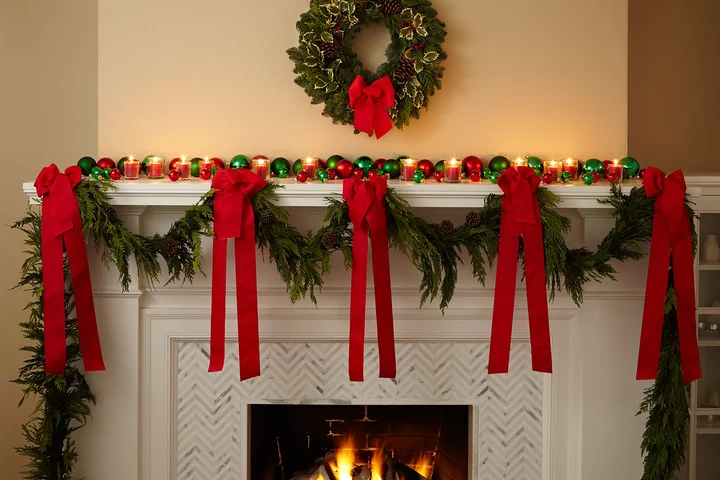
Start here. The mantel is the room’s natural focal point, it needs only one strand, and a garland there reads as decorated even if nothing else in the room is dressed yet. Lay the strand along the shelf and let it swag — dip in the middle, rise at the corners — rather than pulling it straight. A straight garland reads like a shelf edge; a swagged one reads as decorating.
1. A Classic Cedar Swag
A cedar garland is the workhorse of Christmas decorating for a reason. Its flat, feathery branches layer beautifully, it holds its shape for weeks, and the scent fills the room every time the fireplace warms up. Start with two 6-foot strands twisted together for fullness, drape them across the mantel with a gentle dip in the center, and let the ends trail slightly over the edges for a relaxed, gathered look. A concrete combination that always works: cedar garland, warm white lights, three cream pillar candles in brass holders, and two deep-red velvet stockings spaced evenly underneath.
2. A Flocked Mantel With Pinecones and Berries
Flocked garland gives you the fresh-snowfall look with zero mess and zero watering, which matters on a mantel above a working fireplace. Look for flocking that reads as frost, not dust, and for pinecones and berries wired in rather than glued on. Anchor both ends and the center, then layer fairy lights woven through and baubles in clusters of three. Keep the flocked strand away from open flame, and vacuum the hearth after you take it down — flocking sheds a little every year.
3. A Layered Double Garland
One strand can look thin on a wide mantel. Twist two inexpensive strands together and the result reads as one lush garland for half the price of a premium one. Mix a plain pine strand with a cedar or cypress strand so the needle shapes vary, fluff every branch tip outward, and tuck in a few real cedar sprigs, berry picks or ribbon for depth. Fullness comes from layering, not from price, and a doubled garland hides the shelf edge better than any single strand.
4. A Velvet Ribbon Woven Through Fir
A plain fir garland on the mantel becomes something special with one long ribbon. Weave a wide velvet ribbon loosely in and out of the branches — burgundy, deep green or cream all work — and let the tails hang at each end. The ribbon is the cheapest upgrade in this whole guide: one 10-yard bolt of wired velvet costs about the same as a takeout lunch and dresses a mantel, a staircase and a wreath. For more ways to use that ribbon, see our Christmas Bow Ideas guide.
5. A Magnolia Leaf Garland Over the Mirror
Magnolia leaves bring a Southern, old-fashioned feel that pine alone cannot. Their big glossy green tops and velvety brown undersides catch the light, and they pair beautifully with brass bells and gold ornaments. Sweep the strand across a mantel mirror or lay it along the shelf with a cluster of brass bells hanging at one end. Magnolia garland works best where it will not be handled much, because the leaves bruise if they are bent and re-bent.
The Staircase and Banister
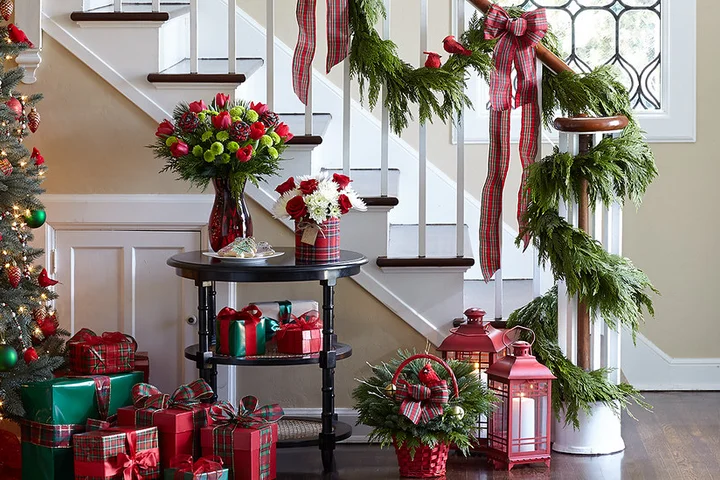
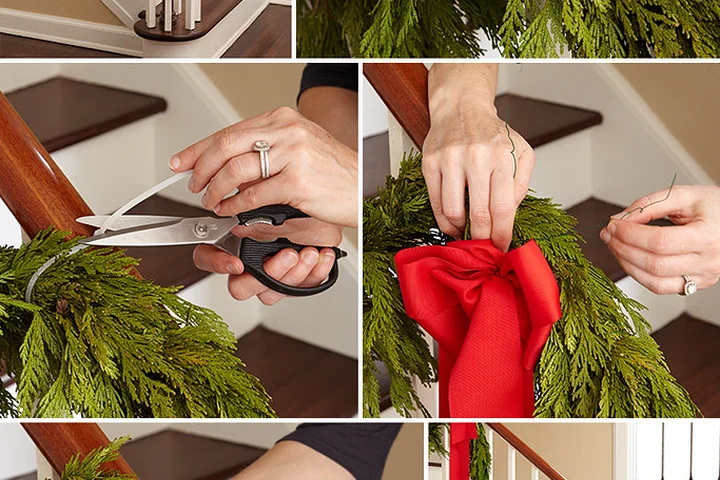
A staircase garland is where under-buying shows fastest. Measure the banister, then buy one and a half times that length for gentle swags, or twice it for deep magazine dips. Attach at every third or fourth baluster with floral wire, ribbon or padded ties — never bare wire on painted wood — and never block the handrail, which people still need to hold. Work top down, and finish at the newel post with one big moment: a bow, a bauble cluster or a lantern on the step below.
6. A Pine Garland With Red Berries on the Banister
This is the classic staircase look, and it survives because it photographs well from every angle. Wind the strand around the banister between the spindles until it looks full, then add red berry picks and pinecones in clusters of three. Secure the garland every two or three steps with zip ties or ribbon ties, and keep the strand on the outside of the rail so the handrail stays clear. If the staircase is the first thing guests see, this one idea does more work than any other in the house.
7. Brass Bells and Ribbon Bows on a Dark Wood Banister
On dark wood, green garland can disappear. Brass bells and wide ribbon bows fix that in one step. Hang a drop of pinecones, frosted sprigs and a string of brass bells from the newel post, and space velvet bows — burgundy, forest green or cream — along the rail. The bells catch the light and the bows give the eye a place to rest. This is the look to pick when your staircase is the backdrop for family photos.
8. A Flocked Garland on the Staircase
Flocked garland on a staircase reads as a snowy banister, and it holds up better than fresh greenery in a high-traffic spot. Choose a strand with lights already threaded through it, then add pinecones and a few white or silver baubles. Keep the swags even — a deep dip in the middle of each section, rising at each tie point — and finish the newel post with one oversized bow. Flocking sheds, so lay a runner or an old sheet on the stairs for the first day and shake the strand out over it.
9. A Eucalyptus and Berry Garland
Eucalyptus brings a softer, silvery green to a staircase that pine can make too dark. Mix a eucalyptus strand with a pine strand, add red berries and a few dried orange slices, and tie it with cream ribbon instead of red. The scent is gentler than pine, which suits houses where someone is sensitive to strong smells. Eucalyptus garland also dries well, so a strand that starts fresh in late November can stay up through New Year’s Day without looking tired.
10. A Beaded Garland on a Two-Story Rail
On a tall staircase, greenery alone can look lost. A wooden bead garland — natural wood, black and white, or painted gold — adds scale without weight, and it layers beautifully over a pine strand. Drape the beads in long, even swags and let them hang a little lower than the greenery so both layers show. Bead garlands are light, cheap and easy to store, which makes them the best choice for renters and for staircases that are hard to reach with a ladder.
Doors and Windows
The front door is the first garland anyone sees, and the windows are the ones the whole street sees at night. These christmas garland ideas for the outside of the house follow one extra rule: the garland must be outdoor-rated or faux, because fresh greenery dries out fast in wind and sun, and indoor lights must never go outside. Hang everything on removable hooks, ribbon or floral wire so January leaves no holes.
11. A Fresh Garland Framing the Front Door
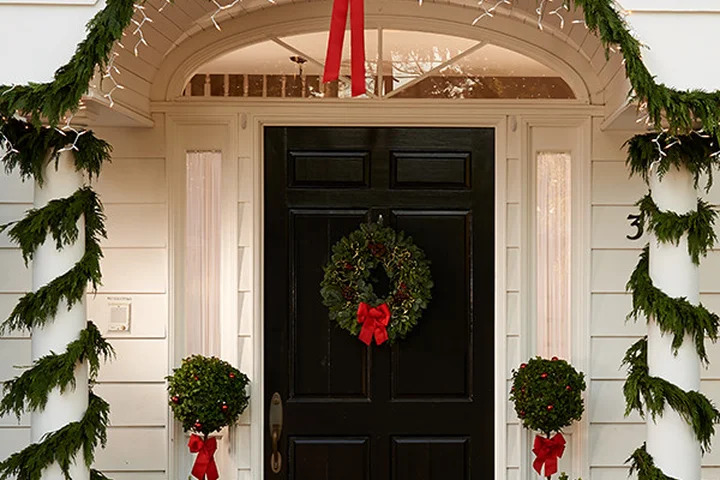
Start at the top center of the door frame and work down both sides, so the garland meets at the bottom in a neat point or hangs evenly at each side. A 9- to 12-foot strand fits most standard doors. Add a wreath at the center top and one oversized bow where the two sides meet, and the door looks finished from the street. For more porch looks that pair with this one, see our Christmas Porch Decorations guide.
12. A Pre-Lit Garland Around an Interior Doorway
An interior doorway is the easiest garland in the house: one strand, two hooks, ten minutes. Drape a pre-lit garland around the frame and let it swag gently at the top, with the ends hanging straight down each side. Warm white lights make a hallway feel welcoming at night, and the doorway garland is the one guests walk under, so it sets the tone for the whole visit. Keep the strand clear of the door itself so it never catches when the door opens.
13. A Eucalyptus and Pine Frame for the Front Door
Eucalyptus and pine together make a front-door frame that looks gathered rather than bought. The silvery eucalyptus softens the dark pine, and a few pinecones and a cream ribbon keep it from looking flat. Tie the two strands together first, then hang the combined garland as one piece — it is easier to handle and it looks fuller. This is the best door garland for houses with a covered porch, where the greenery stays out of the worst weather.
14. A Garland Across the Kitchen Window
A kitchen window garland gets seen from inside all day, so pick something you enjoy looking at while you cook. A dried orange and cinnamon strand is the classic here: the oranges glow in the light, the cinnamon smells warm, and the whole thing costs a few dollars to make. String dried orange slices, cinnamon sticks and a few star anise on twine, hang it with small clear hooks at the top corners, and let it catch the morning light. It also works over a sink window, where the steam keeps the oranges from drying out too fast.
15. A Putz-Style Garland on the Windowsill
Putz houses — the little painted cardboard and wooden houses from the Moravian tradition — sit beautifully in a windowsill garland. Lay a short pine strand along the sill, tuck three or four small houses into the greenery, and add a string of fairy lights behind them. At dusk the windows glow from the street, and from inside the houses look like a tiny village. Keep the lights low-wattage and the houses away from candles, because the cardboard ones are not fireproof.
The Table and Small Spots
Garland is not only for big surfaces. A short strand on a table, a shelf or a mirror can carry a whole room, and these are the spots where a $10 garland looks like a $100 one. Measure first, buy short, and let the garland do the work.
16. An Evergreen Centerpiece Down the Dining Table
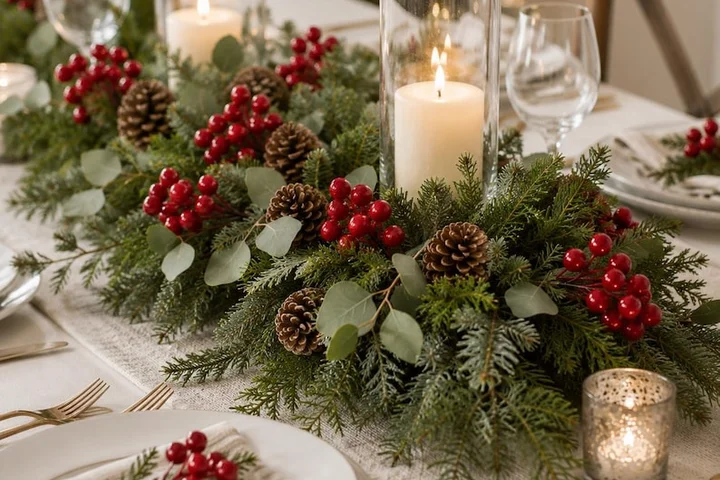
Lay a single strand down the center of the dining table and you have a centerpiece that takes five minutes and costs less than a bouquet. Weave in three pillar candles in brass holders, a few pinecones and a handful of red berries, and keep everything low so guests can see each other across the table. Fresh garland works best here because the scent is part of the meal, but keep it away from open flame — use flameless candles if the garland is dry, and never leave lit candles unattended.
17. A Wooden Bead Garland Along Open Shelves
Open shelves need something soft to break up the straight lines, and a wooden bead garland does it for a few dollars. Drape it along a shelf edge and let it pool slightly at one end, with a small pine sprig or a single ornament tucked beside it. Bead garlands come in natural wood, white, black and gold, so match the beads to the shelf hardware and the look stays intentional rather than random. This is the fastest garland in this guide: hang it in two minutes and move on.
18. A Garland Swept Across a Mirror
A mirror doubles whatever you hang on it, so a short garland there looks twice as full. Sweep a magnolia or eucalyptus strand across the top of a mirror and let the ends trail down each side. The reflection adds depth to a small room, and the greenery softens a hard frame. Use small clear hooks at the top corners and keep the strand light — a heavy garland will pull a leaning mirror forward.
19. A Garland on the Entryway Console
The entryway console is the first surface guests see inside, and a short garland there sets the tone. Lay a 6-foot strand along the back of the console, add a lantern at one end and a small stack of wrapped gifts at the other, and the entryway looks finished. This is a good spot for faux garland, because the console gets bumped by bags and coats all season and faux strands bounce back.
20. A Garland Around the Christmas Tree
A garland on the tree is the oldest Christmas garland of all, and it still works. Drape bead garland, popcorn garland or a thin ribbon garland in loose spirals from the top to the bottom of the tree, spacing each loop about a foot apart. Keep it light — a heavy garland pulls branches down — and put it on after the lights and before the ornaments, so the ornaments sit on top of it. For the tree itself, our Christmas Tree Ideas guide has 25 looks to pair it with.
DIY and Handmade Strands
Handmade garlands are the ones people photograph. They cost the least, they look the most personal, and they are the best project for a cold afternoon with kids. Make them early — most of them keep for weeks — and hang them where they will be seen up close.
21. A Dried Orange and Cinnamon Garland
Dried orange slices are the classic DIY garland, and they are hard to get wrong. Slice oranges about a quarter inch thick, bake them at 200 degrees Fahrenheit for two to three hours, flipping halfway, until they are dry and slightly curled. String them on twine with cinnamon sticks and a few star anise between the slices. The result smells like Christmas, glows in window light, and costs less than a coffee. Keep dried fruit garlands away from open flames, and store them flat in tissue paper so they last for next year.

22. A Popcorn and Cranberry Garland
Stringing popcorn and cranberries is one of the oldest DIY garlands in American homes, and it is still the best one for a tree. Pop plain popcorn, let it cool, and thread it on a strong needle with fresh cranberries — three or four pieces of popcorn, then a cranberry, then repeat. The white popcorn reads as snow against the green tree, and the red cranberries give it color. Make it the day you decorate, because popcorn garland dries out and cranberries soften after a few days. Keep it away from pets, who will eat it off the tree.
23. A Felt Ball Garland
Felt ball garlands are soft, colorful and impossible to break, which makes them the best garland for houses with small children. Buy a bag of felt balls in your color scheme — red and cream, pink and white, or a full rainbow — and string them on twine with a large needle. Hang the strand across a mantel, a bookshelf or a child’s bedroom door. Felt garlands weigh almost nothing, store in a sandwich bag, and last for years.
24. A Paper Chain Garland
A paper chain is the simplest garland in this guide and the one kids remember making. Cut strips of colored paper, loop them into rings and staple or glue each ring to the next. Use red, green and gold paper for a classic look, or kraft paper with a red ribbon woven through for a quieter one. A paper chain takes an afternoon to make and a minute to hang, and it is the best choice for a classroom party or a kids’ bedroom. Keep paper garlands away from candles and radiators.
25. A Pinecone and Dried Flower Garland
Gather pinecones, dried hydrangeas and a few sprigs of dried eucalyptus, and wire them onto a twine base in clusters. The result looks foraged rather than bought, and it suits houses that lean rustic or natural. Spray the pinecones with a clear sealer first so they do not shed, and bake gathered pinecones at 200 degrees for 30 minutes to kill any insects before you bring them inside. This garland stores well in a box and comes back year after year.
How Much Garland Do You Need?
Buy too little and the swags pull flat; buy too much and you have a strand with nowhere to go. Measure the surface first, then use this cheat sheet.
| Where to hang it | Garland you need | Hanging tip |
|---|---|---|
| Fireplace mantel | 1.5x the mantel width (a 6 ft mantel wants 9 ft) | Anchor at each end and the center; let the middle dip 6–10 inches |
| Staircase banister | Railing length + 30–50% extra (about 1.5 ft per step) | Secure every 2–3 steps with zip ties or ribbon |
| Front door frame | 9–12 ft | Start at the top center and work down both sides |
| Window or mirror | 6 ft | Small clear hooks at the top corners |
| Dining table | Table length + 1 ft | Keep it low so guests can see across |
| Entryway console | 6 ft | Lay it along the back of the console |
| Christmas tree | Tree height x 2, roughly | Spiral loosely, about a foot between loops |
How to Hang Garland Without Damage
Garland should come down in January without leaving a mark. Use zip ties, floral wire, removable clear hooks or ribbon ties. Never use nails, staples or strong tape on wood railings or painted mantels. On a mantel, hide removable adhesive hooks behind the greenery and let the stocking holders anchor the ends. On a staircase, tie at every third or fourth baluster and keep the strand clear of the handrail grip. On a door frame, use removable hooks rated for the weight — a fresh garland is heavier than a faux one, so check the rating before you buy. Test every hook by pulling down on it before you hang the garland, not after.
What to Buy and When
Black Friday week is the best time to buy garland. These christmas garland ideas cost the least in Black Friday week, when stores cut prices on faux greenery and the selection is still full — by mid-December the good strands are gone. Fresh garland is different: buy it late, about a week before Christmas, so it still looks fresh on the day.
If you are buying faux, check three things in the store: mixed needle shapes, variation in the green, and branches you can bend. A strand that fails any of the three will look flat on the mantel. Plan on spending about $15–$40 for a 6-foot faux strand, $30–$70 for a dense 9-foot strand, and about $3–$5 per foot for fresh cedar roping. A DIY strand — popcorn, paper, felt or dried oranges — costs from about $5 in materials.
Keep these christmas garland ideas beside you when you compare prices, so you buy the right lengths the first time.
Light Safety and Storage
Lights make garland glow, and they are also the part that needs care. The Consumer Product Safety Commission advises stringing no more than three sets of incandescent lights together, and outdoor lights must be rated for outdoor use — indoor lights must never go outside. Use GFCI outlets for any outdoor strand, check every set for frayed wires before you hang it, and turn lights off when you leave the house or go to bed. Keep garland away from open flames and hot radiators, and keep dried fruit and paper garlands away from candles entirely.
When Christmas is over, take garland down by January 6, 2027 (Epiphany), or by January 31 at the latest. Shake faux garland out, coil it loosely, and store it in a breathable bag or a labeled bin — never in a sealed plastic bag, which traps moisture and invites mold. Store dried orange and felt garlands flat in tissue paper. Label each bin with the room it belongs to, so next November you hang it in minutes instead of hunting through the attic.
These christmas garland ideas are easiest to reuse when every bin is labeled by room.
Frequently Asked Questions
How much garland do I need for a mantel?
Buy about one and a half times the mantel width. A 6-foot mantel wants about 9 feet of garland, so the strand can dip in the middle and rise at the corners. A straight strand pulled tight across the mantel reads like a shelf edge; a swagged one reads as decorating. These christmas garland ideas all use the same 1.5-times rule, so measure once and buy once.
Should I buy fresh or faux garland?
Buy faux where it must last all season — the staircase, the front door, high windows and the tree. Buy fresh for the mantel and the table, where the scent matters and you can mist it. Fresh garland looks best for two to three weeks in a heated room, so buy it about a week before Christmas. Many houses run both: faux for structure, fresh for scent, DIY for heart.
How do I hang garland without damaging the wall?
Use removable adhesive hooks rated for the weight, ribbon ties or floral wire — never nails, staples or strong tape on wood or paint. Anchor the mantel strand at both ends and the center, tie the staircase strand at every third or fourth baluster, and test every hook with a downward pull before you hang the garland. When you take it down, peel hooks off slowly and warm any stubborn adhesive with a hair dryer on low.
How long does fresh garland last indoors?
About two to three weeks in a heated room. Mist it every few days, keep it away from radiators and fireplaces, and buy it late — about a week before Christmas — so it still looks fresh on the day. Cedar holds up longest, pine drops needles fastest, and eucalyptus dries gracefully and can stay up through New Year’s Day. Compost fresh garland when it comes down; never burn it, because pine sap pops and sparks.
What is the cheapest way to make a garland look full?
Double it. Twist two inexpensive strands together, fluff every branch tip outward, and tuck in a few real cedar sprigs, berry picks or ribbon. Fullness comes from layering, not from price. A doubled $15 strand looks better than a single $40 strand that is too thin for the surface. These christmas garland ideas use the same trick on the mantel, the staircase and the tree.
When should I put garland up and take it down?
Put faux garland up in late November — Black Friday week is ideal, and the selection is best then. Put fresh garland up about a week before Christmas so it still looks good on the day. Take everything down by January 6, 2027 (Epiphany), or by January 31 at the latest, and store faux garland coiled loosely in a labeled bin so it is ready to hang next November.
Leave a Reply