
A successful Thanksgiving potluck starts with a clear plan: choose a host, assign menu categories with a signup sheet, pick dishes that travel well, and respect the 2-hour food safety rule. These Thanksgiving potluck ideas cover the whole system — 25 crowd-pleasing dishes across turkey, sides, salads, breads, desserts, and drinks, plus a printable signup sheet that keeps every guest and every dish organized.
A potluck turns the biggest cooking day of the year into a team effort. Instead of one person roasting the turkey, mashing the potatoes, baking the pies, and setting the table, every guest contributes a single dish. Done well, the result tastes just as festive as a fully hosted dinner — with a fraction of the cost and a fraction of the stress. This collection of Thanksgiving potluck ideas walks you through everything: the honest pros and cons, the signup-sheet organizing system, the best travel-friendly dishes, food safety timing, and the printable sheet itself.
Key Facts
- A Thanksgiving potluck for 10–15 guests needs roughly 10–12 dishes, plus bread and drinks.
- The host should always cook the turkey — it is the centerpiece and the hardest dish to transport safely.
- Assign categories, not specific recipes; guests bring their best version of each slot.
- Send the signup sheet 3–4 weeks before Thanksgiving and set a confirmation deadline one week out.
- Perishable food must not sit at room temperature for more than 2 hours — the standing food-safety rule.
Thanksgiving Potluck Ideas vs. Hosted Dinner: Pros and Cons
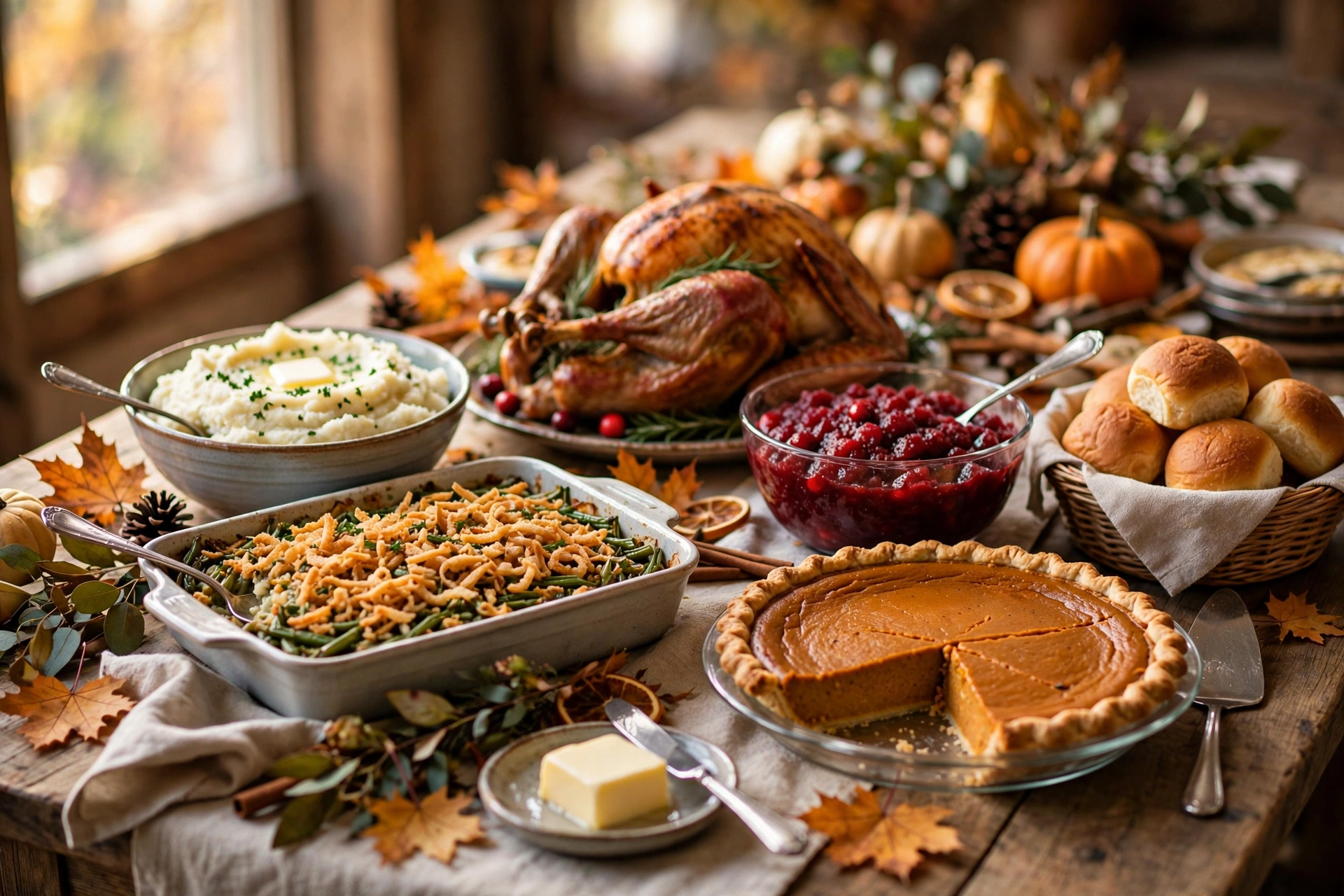
Before you commit to the potluck format, weigh it honestly against the classic hosted dinner. A potluck is not automatically easier — it trades one kind of work for another. Here is the real comparison.
Why a potluck wins
- Cost is shared. Feeding 12–15 people a full Thanksgiving dinner can easily run into the hundreds of dollars for one household. Split across guests, nobody feels the pinch.
- The workload is shared. Each guest cooks one dish they already know how to make, instead of one cook juggling a turkey, five sides, and two pies in a single oven.
- Variety explodes. Every family brings its signature dish — the aunt’s cornbread dressing, the neighbor’s cranberry salad — and the table ends up more interesting than any single cook could manage.
- No single-oven bottleneck. The classic hosted-dinner nightmare is oven Tetris at 2 p.m. With dishes arriving cooked, the host’s oven only handles reheating.
- Guests feel ownership. People enjoy a meal more when they contributed to it. A potluck feels communal in a way a served dinner does not.
Where a potluck can go wrong
- Coordination overhead. Without a system, you get three green bean casseroles and no dessert. The signup sheet in this guide exists to kill this problem.
- Uneven quality. One guest’s experimental dish might flop. Assigning categories (not judging recipes) keeps standards self-regulating — people bring what they are good at.
- Food safety risk. More cooks and more car rides mean more chances for food to sit too long. The timing rules later in this guide are non-negotiable.
- Staggered arrivals. Dishes show up at different times. Solve it with arrival windows on the signup sheet — hot dishes arrive within 30 minutes of serving time.
“A potluck is not a lesser Thanksgiving — it is a shared one. The only thing it requires that a hosted dinner does not is a good list.”
Verdict: for groups of 8 or more, these Thanksgiving potluck ideas almost always produce a better evening — more food, more variety, less burnout for the host. The rest of this guide is the operating system that makes it work.
These thanksgiving potluck ideas work best with a clear system: assign categories, set deadlines, and confirm the week before.
How to Organize a Thanksgiving Potluck: The Signup-Sheet System
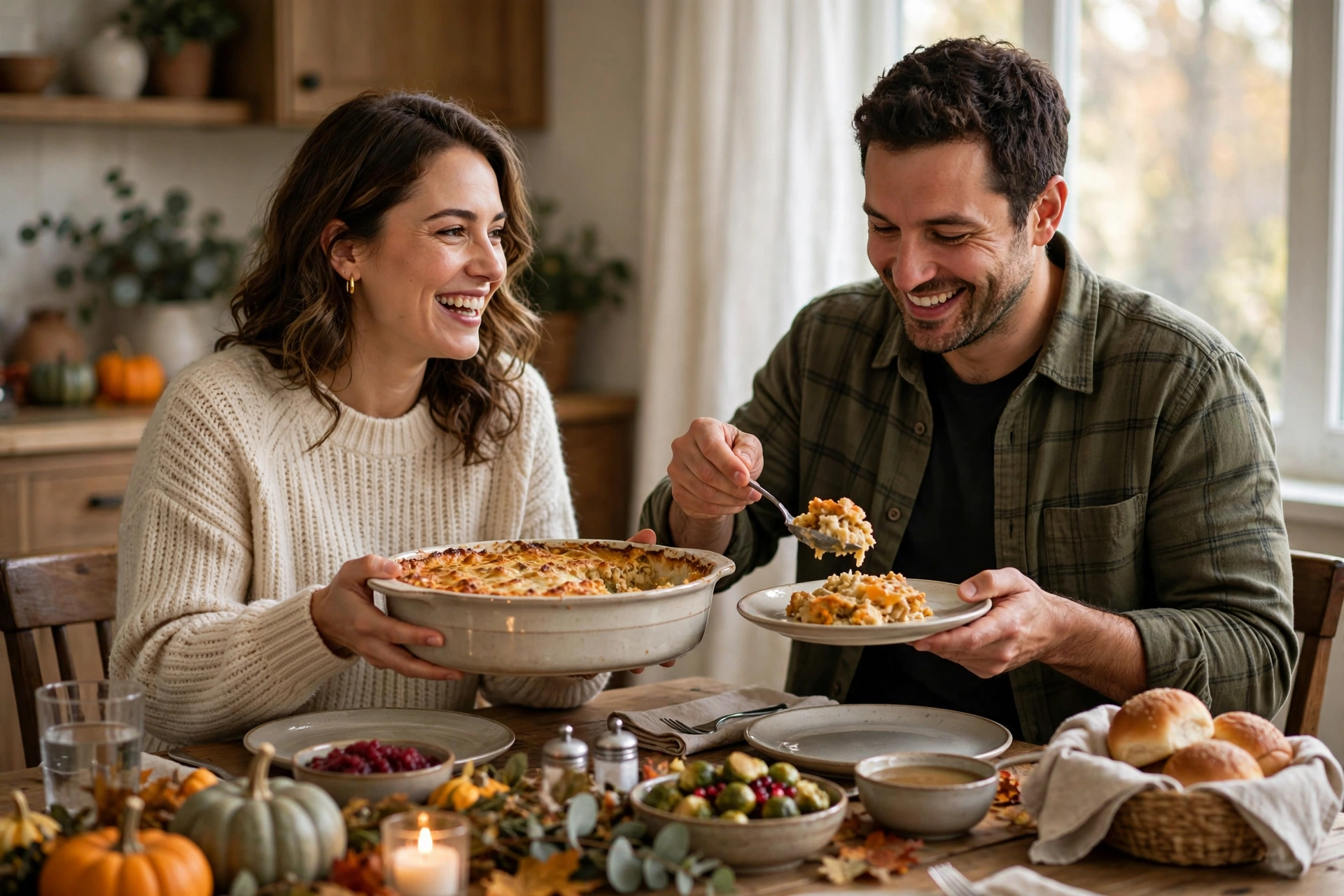
Every failed potluck has the same cause: no system. Every great one has the same solution: a signup sheet with categories, deadlines, and confirmations. Here is the exact process for turning Thanksgiving potluck ideas into a real plan, in order.
Step 1: Lock in the host and headcount (4 weeks out)
One household hosts. That person provides the venue, the turkey, the table setup, plates, napkins, serving utensils, ice, and coffee or tea. Everyone else brings food. Get a firm headcount now — the number of guests determines how many dish slots you need. A good rule: one dish slot per 1–2 guests, so 12 guests means 8–10 assigned dishes plus the host’s turkey.
Step 2: Build the menu framework (3–4 weeks out)
The host defines the categories and how many slots each one gets — for example: 5 sides, 2 salads, 2 breads, 4 desserts, 2 drinks. This is the skeleton of the meal. Do not assign specific recipes; assign slots. “Side dish (serves 10)” lets a guest bring their legendary mac and cheese instead of a recipe they have never tried. If you are also working through the bigger planning picture, our Thanksgiving dinner planning guide covers guest counts, timelines, and budgeting that apply just as well to a potluck.
Step 3: Send the signup sheet with a deadline (3 weeks out)
Share the sheet — the printable one at the end of this article works on paper, or copy it into a group chat or shared document. Each guest claims one slot and writes in the specific dish, how many it serves, and any notes (needs 20 minutes of oven time, arrives at 2:30, contains nuts). Set a signup deadline of two weeks before Thanksgiving. First-come, first-served keeps it fair; the host fills any unclaimed critical slots (especially a second dessert or extra side).
Step 4: Confirm everything one week out
This is the step most people skip, and it is the one that saves the meal. One week before, message every guest: “Still good for the sweet potato casserole, serves 12, arriving by 2?” Confirm oven-time requests with the host, flag duplicates, and reassign if someone had to cancel. A five-minute check-in beats a missing-dish surprise on the day.
Step 5: Run the day-of timeline
Give guests arrival windows, not a single arrival time. Cold dishes and desserts can arrive up to 2 hours early; hot dishes should arrive within 30 minutes of serving. The host keeps a simple oven schedule — 15–20 minute reheat slots — so nothing collides. Serving utensils go out with each dish as it arrives, and every dish gets a small card naming it (and flagging common allergens like nuts or dairy).
“The signup sheet is the difference between a potluck and a gamble. Categories, deadlines, confirmations — that is the whole secret.”
Menu Categories to Assign for a Thanksgiving Potluck
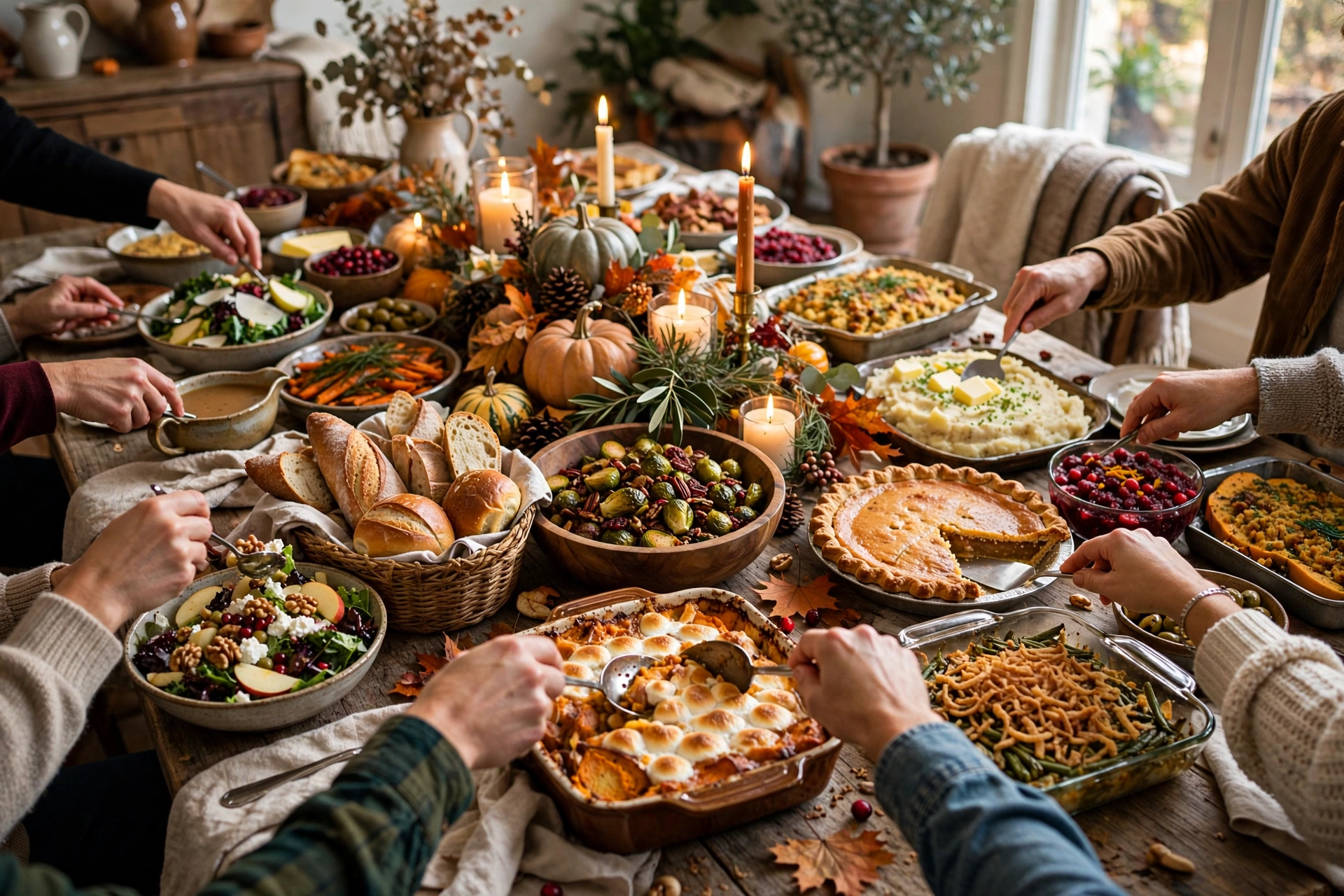
Here is the category framework behind these Thanksgiving potluck ideas, sized for 10–15 guests. Scale the slot counts up or down with your headcount — the proportions stay the same.
Turkey and main dish (host)
The host cooks the turkey. Full stop. A whole roasted bird is the centerpiece, the trickiest dish to time, and the worst thing to transport. The host may also add a second protein — a glazed ham or a vegetarian main like stuffed butternut squash — if the guest list is large or includes vegetarians. Assign 1 slot (host), plus 1 optional second main.
Sides (5 slots)
The backbone of the table. Aim for a mix of starches and vegetables: mashed potatoes, one stuffing or dressing, one green vegetable, one sweet casserole (sweet potatoes or corn), and one wild card. Five sides for 12–15 guests gives everyone generous portions with leftovers. Our Thanksgiving shopping list helps guests scale ingredients once they claim a slot.
Salads (2 slots)
One hearty autumn salad (kale, apple, pecans) and one make-ahead chilled salad (broccoli cranberry or a classic Waldorf). Salads travel perfectly cold and add freshness against all the rich food.
Breads and rolls (1–2 slots)
Dinner rolls plus one specialty bread — cornbread, Parker House rolls, or a rustic loaf. Breads are the easiest possible assignment, perfect for the guest who “can’t cook.” They reheat in the host’s oven in 10 minutes.
Desserts (3–4 slots)
Pumpkin pie is traditional and expected — assign it explicitly so it does not get forgotten. Then add variety: one nut pie (pecan), one fruit pie (apple), and one easy crowd-pleaser (bars, cheesecake, or a no-bake pie).
Drinks (2–3 slots)
One hot drink (mulled apple cider in a slow cooker), one festive cold drink (cranberry-orange punch), and optionally a sparkling water and garnish station. The host covers coffee and tea.
What the host always provides
Plates, napkins, cutlery, cups, serving utensils, trivets, ice, coffee and tea, and to-go containers for leftovers. Put this on the sheet too, under the host’s name, so guests do not duplicate it.
Thanksgiving Potluck Ideas That Travel Well: Dishes by Category
Not every great Thanksgiving dish survives a 30-minute car ride. The best Thanksgiving potluck ideas share three traits: they hold their temperature, they do not need last-minute assembly, and they look good served from the dish they traveled in. Here are 25 proven Thanksgiving potluck ideas.
Turkey and mains (host’s kitchen)
- Classic roast turkey. The host’s job. Roast it at home, rest it properly, and carve just before serving.
- Slow-cooker turkey breast. A smart second protein for big crowds — it cooks itself and stays warm in the cooker.
- Brown-sugar glazed ham. Feeds a crowd, slices beautifully at room temperature, and needs zero day-of work.
- Stuffed butternut squash. The vegetarian main that meat-eaters steal: roasted squash halves filled with wild rice, cranberries, and pecans.
Sides that survive the drive
- Mashed potatoes. Transport in a slow cooker on the warm setting with extra butter on top — they arrive perfect.
- Green bean casserole. The classic travels in its baking dish; add the crispy onions at the host’s house for maximum crunch.
- Sweet potato casserole. Marshmallow topping or pecan streusel both hold up; reheat 15 minutes at the host’s.
- Sausage and herb stuffing. Bake it at home, cover with foil, and finish uncovered at the host’s for a crisp top.
- Baked mac and cheese. A creamy bechamel-based version stays luscious; add a splash of milk when reheating.
- Roasted Brussels sprouts with bacon. Roast hot and fast, transport uncovered briefly so they stay crisp, and serve at room temperature.
- Corn pudding or corn casserole. Practically indestructible — sweet, custardy, and happy to sit warm for an hour.
- Honey-glazed carrots. Simple, colorful, and served at room temperature without any loss.
Salads (the easy cold wins)
- Harvest kale salad with apples and pecans. Kale actually improves as it sits in dressing — the rare salad that likes a commute.
- Cranberry-walnut spinach salad. Pack the dressing separately and toss on arrival; five minutes of work.
- Broccoli cranberry salad. A mayo-based make-ahead that is better on day two. Ideal potluck material.
Breads and rolls
- Fluffy dinner rolls. Bake ahead, transport in a towel-lined basket, and warm 10 minutes at the host’s.
- Skillet cornbread. Travels in the skillet it baked in — rustic, sturdy, and perfect with gravy.
Desserts (all travel champions)
- Pumpkin pie. The non-negotiable. Bakes a day ahead, travels flat in its pie box, served at room temperature.
- Pecan pie. Sturdy, sliceable, and beloved — no refrigeration drama.
- Apple pie. A lattice-top apple pie is the prettiest traveler on the dessert table.
- Pumpkin cheesecake bars. Easier to transport and serve than a whole cheesecake, and they disappear fast.
- No-bake chocolate silk pie. Made ahead, chilled, transported in a cooler — zero oven time for anyone.
Drinks
- Hot apple cider. Simmered with cinnamon and cloves, transported in a slow cooker on warm. The house smells incredible when it arrives.
- Cranberry-orange punch. Mixed in a pitcher or drink dispenser, chilled in a cooler, garnished with orange slices.
- Sparkling water and garnish bar. Bottles of sparkling water plus cranberries, rosemary sprigs, and citrus wheels — festive with zero effort.
For the full day-of sequence — when each of these should be cooked, packed, and reheated — the Thanksgiving dinner checklist gives you a printable timeline that works for hosts and contributing guests alike.
Food Safety and Timing for Potluck Dishes
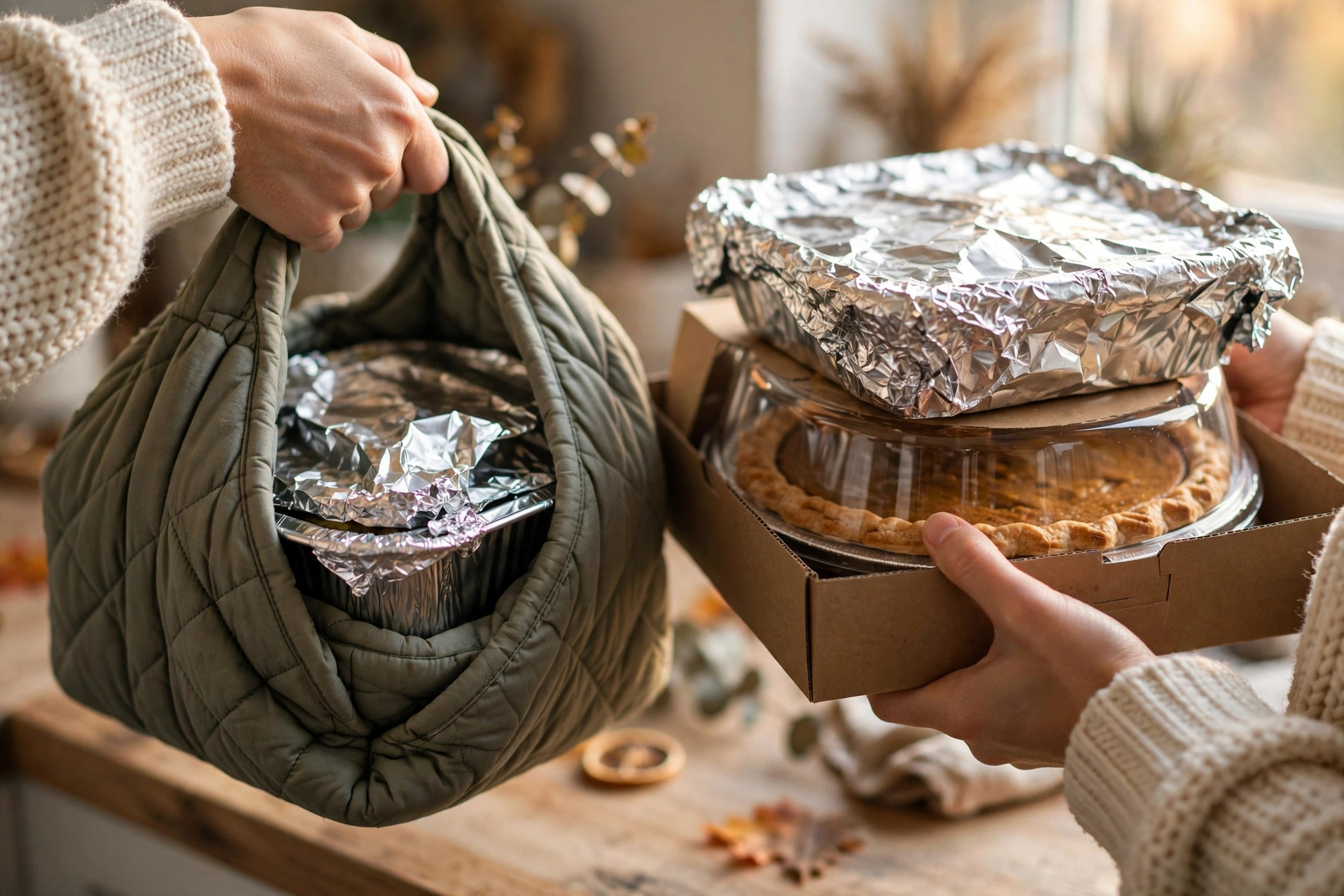
A potluck means food spends time in cars and on counters, which makes food safety the host’s most important job after the turkey. These rules keep every one of these Thanksgiving potluck ideas safe.
The 2-hour rule
Perishable food — turkey, stuffing, casseroles, mashed potatoes, gravy, salads with mayo, dairy-based desserts — must not sit at room temperature for more than 2 hours total. That clock includes transport time, counter time before serving, and buffet time. When the 2 hours are up, refrigerate or discard. The foodsafety.gov fall food safety tips dedicate a whole “Fall Potlucks” section to this rule and to keeping hot foods hot and cold foods cold — it is the single best reference to share with your guests.
Keep hot foods hot, cold foods cold
- Hot dishes (140°F and above): transport in insulated carriers or wrapped in towels inside a box. Slow cookers on the warm setting are the potluck MVP — the dish cooks, travels, and serves from one vessel.
- Cold dishes (40°F and below): transport in a cooler with ice packs. Salads, chilled desserts, and the cranberry punch ride cold the whole way.
- Room-temperature-safe dishes: whole fruit pies, breads, and roasted vegetables are the lowest-stress assignments — steer nervous cooks toward these.
Transport tips that prevent disasters
- Cook dishes in the pan they will be served from — fewer transfers, fewer spills.
- Place dishes on flat, level surfaces in the car (the trunk floor or a footwell), never on a tilted seat.
- Seatbelt the pie. It sounds like a joke until a sudden stop redecorates the back seat.
- Keep hot and cold dishes separated in the car so they do not warm or cool each other.
- Bring the serving utensil with the dish, already packed — hosts never have enough.
Reheating at the host’s house
Plan a simple oven rotation: most casseroles reheat at 350°F for 15–20 minutes covered with foil. Stagger arrivals so no more than two dishes need the oven at once, and reheat everything to 165°F internally. Anything that cannot wait for oven space — mashed potatoes in a slow cooker, salads, pies — fills the gaps in the schedule.
“The 2-hour rule does not care how good the cook is. Hot stays hot, cold stays cold, and the clock is always running.”
Printable Thanksgiving Potluck Signup Sheet
Here it is — the original asset that makes these Thanksgiving potluck ideas work in real life. Print this table (it uses simple styling that prints cleanly in black and white), fill in your categories and slot counts, and share it with your guests three weeks before Thanksgiving. Each guest claims a row, writes their name and dish, and notes anything the host needs to know.
| Category | Dish | Guest Name | Serves | Notes (arrival time, oven needed, allergens) |
|---|---|---|---|---|
| Turkey / Main (Host) | Roast turkey | |||
| Turkey / Main (Host) | Second main (ham / vegetarian) | |||
| Side Dish | ||||
| Side Dish | ||||
| Side Dish | ||||
| Side Dish | ||||
| Side Dish | ||||
| Salad | ||||
| Salad | ||||
| Bread / Rolls | ||||
| Bread / Rolls | ||||
| Dessert | ||||
| Dessert | ||||
| Dessert | ||||
| Dessert | ||||
| Drink | ||||
| Drink | ||||
| Drink | ||||
| Host Provides | Plates, napkins, cutlery, serving utensils, ice, coffee/tea, to-go containers |
How to use this sheet: print one copy for the fridge and share a photo of it in your group chat. Guests claim rows on a first-come basis and fill in the dish name, their name, servings, and notes. The host reviews it two weeks out for duplicates and gaps, then confirms every row one week before Thanksgiving. Blank rows are intentional — add or remove them to match your headcount.
Frequently Asked Questions
How many dishes do I need for a Thanksgiving potluck?
Plan one dish slot per 1–2 guests. For 10–15 guests, that means about 10–12 dishes: the host’s turkey, 5 sides, 2 salads, 1–2 breads, 3–4 desserts, and 2–3 drinks. Smaller groups of 6–8 can manage with 7–8 dishes by trimming desserts and salads.
Who should cook the turkey at a Thanksgiving potluck?
The host, always. The turkey is the centerpiece, the hardest dish to time, and the riskiest to transport. Guests handle everything around it. If the host truly cannot cook a turkey, assign a turkey breast to the most experienced cook in the group — never a whole bird to a guest with a long drive.
How far in advance should I send the potluck signup sheet?
Three to four weeks before Thanksgiving. That gives guests time to plan, shop, and claim the slots they want. Set a signup deadline two weeks out and do confirmation check-ins one week out — that final round of messages is what prevents day-of surprises.
What are the best Thanksgiving potluck ideas for dishes that travel well?
Casseroles, slow-cooker dishes, chilled salads, whole pies, and breads. They hold temperature, need no last-minute assembly, and serve from the dish they traveled in. Avoid anything that must be served immediately from the oven or assembled at the last second, like a delicate souffle or a dressed-to-order green salad.
How do you keep potluck food safe during transport and serving?
Follow the 2-hour rule: perishable food must not sit at room temperature for more than 2 hours total, including drive time and buffet time. Keep hot foods at 140°F or above in insulated carriers or slow cookers, and cold foods at 40°F or below in coolers with ice packs. Reheat dishes to 165°F at the host’s house.
What should the host provide at a Thanksgiving potluck?
The venue, the turkey, and everything that is not food: plates, napkins, cutlery, cups, serving utensils, trivets, ice, coffee and tea, and to-go containers for leftovers. The host also manages the oven reheating schedule and sets out dish labels with allergen notes.
Conclusion
These Thanksgiving potluck ideas prove a rare point: a potluck can be cheaper, easier, and more fun than a hosted dinner — as long as it is organized. Pick your host, send the signup sheet early, assign categories instead of recipes, choose dishes that travel well, and hold the line on the 2-hour food safety rule. Do that, and your table will be fuller, your kitchen calmer, and your guests prouder of the meal than any single cook could make them. Print the sheet, share it tonight, and enjoy the most relaxed Thanksgiving you have ever hosted.
Leave a Reply