
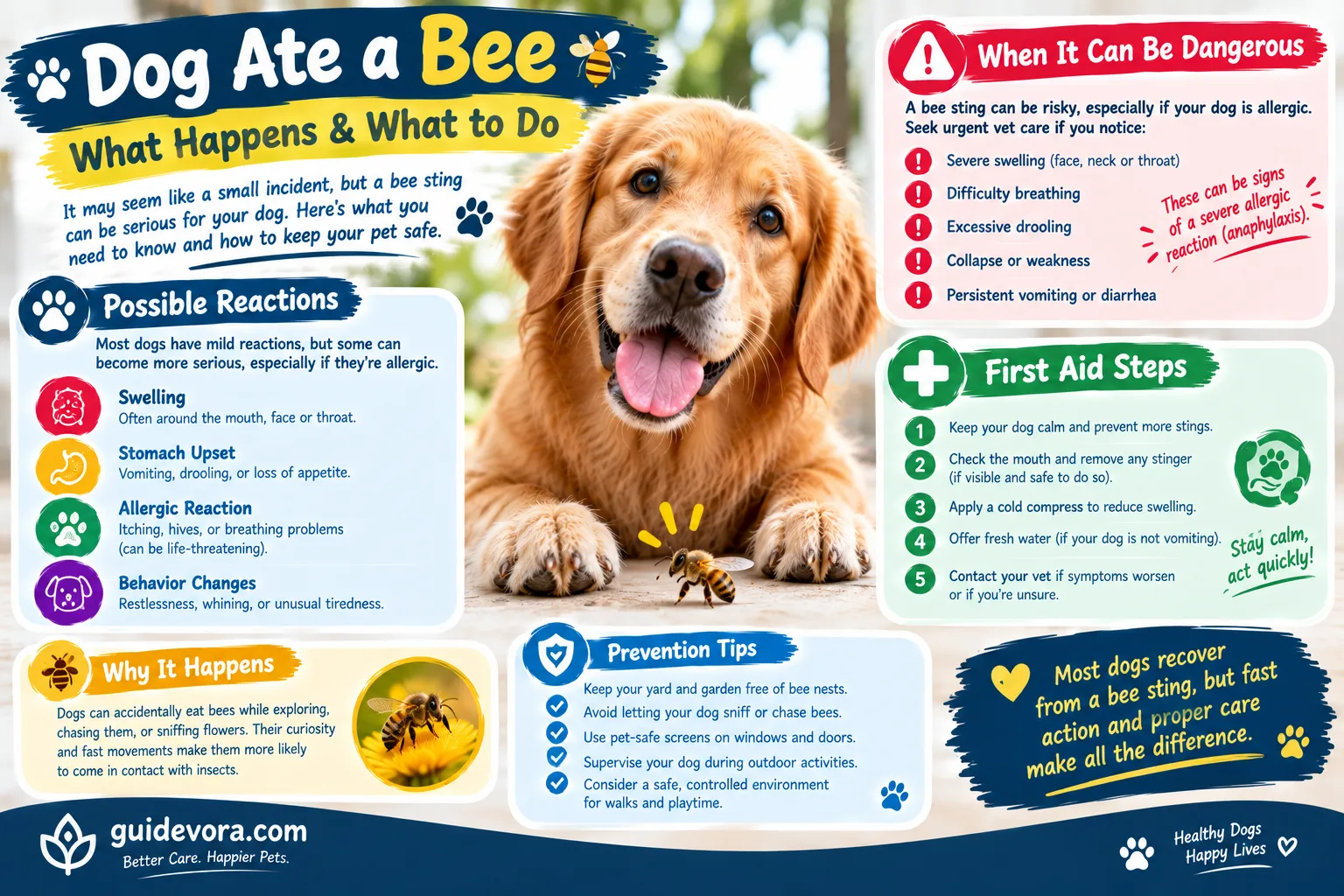
Most of the time, this ends better than it looks in the moment. A dog snapping a bee out of the air usually gets stung on the lip, tongue, or inside the mouth — uncomfortable and a little alarming to watch, but the large majority of dogs recover from a single sting with nothing more than mild, temporary swelling. The real question is knowing which signs mean “watch and wait” versus “go to the vet now” — here’s exactly how to tell the difference.
What Happens If a Dog Eats a Bee?
When a dog snaps at and swallows a bee, one of two things typically happens: the bee stings the inside of the mouth or throat on the way down, or it’s swallowed without stinging and simply gets digested. A sting inside the mouth is the version worth watching closely, because swelling in that location is closer to the airway than a sting on the paw or face.
Watch for:
- Drooling more than usual, or pawing at the mouth
- Visible swelling of the lips, tongue, or gums
- Reluctance to eat, or dropping food
- Coughing or gagging
Can eating a bee actually harm a dog? In most cases, no — a single bee, stung or swallowed whole, typically causes at most mild local swelling or brief stomach upset. The real risks are a sting located in the mouth or throat (because of proximity to the airway) and, separately, a genuine allergic reaction — which can happen regardless of where the sting occurred.
Why Do Dogs Eat Bees in the First Place?
It’s almost always prey drive, not confusion. A bee’s fast, erratic flight pattern triggers the same instinct that makes a dog chase a ball or a squirrel — it’s moving, and moving things get chased and often snapped at. Puppies and high-energy breeds tend to do this more, partly out of curiosity and partly because they haven’t yet learned that the outcome is unpleasant. Most dogs who get stung once become noticeably more cautious around buzzing insects afterward — a fast, memorable lesson.
Read More: Cat Stung by a Bee? Symptoms, What to Do, and Recovery Time
First Aid for a Bee Sting
- Locate and remove the stinger if visible — scrape it out sideways with a fingernail or a credit card edge rather than pulling with tweezers, which can squeeze more venom out of the sac.
- Apply a cold compress to the sting site for 10–15 minutes to reduce swelling and discomfort.
- Prevent licking or scratching at the area — an e-collar helps if your dog won’t leave it alone.
- Watch closely for the next 30–60 minutes, since this is the window in which a serious allergic reaction is most likely to show up.
- If the sting is inside the mouth, monitor extra closely regardless of severity, since swelling there is closer to the airway.
Should I Give My Dog Benadryl If He Ate a Bee?
Diphenhydramine (Benadryl) is commonly used for mild-to-moderate reactions, and most veterinary sources cite a general rule of thumb of 1 mg per pound of body weight. But there are three important caveats before you give any:
- Confirm the dose and frequency with your vet or a poison control line first — even though 1 mg/lb is a widely cited starting point, exact frequency guidance varies by source, and getting a real answer for your specific dog takes one phone call.
- Use plain diphenhydramine only. Products like Benadryl-D contain decongestants that are toxic to dogs — check the label for a single active ingredient.
- Don’t give Benadryl without vet approval if your dog has glaucoma, heart disease, or high blood pressure, or if this is their first time taking it — you won’t know how they’ll individually respond.
Benadryl helps with itching and mild-to-moderate swelling. It will not stop a true anaphylactic reaction — that requires emergency veterinary treatment, typically epinephrine, not an antihistamine at home.
Do I Need to Take My Dog to the Vet After a Bee Sting?
Not always — this genuinely depends on severity and location. Use this as a quick guide:
Home care is usually reasonable if:
- A single sting, away from the face, mouth, or throat
- Mild, localized swelling only
- Your dog is otherwise acting normal — eating, alert, moving fine
Go to a vet now if:
- Multiple stings occurred — enough venom can overwhelm even a non-allergic dog
- The sting is in or near the mouth, throat, or nose, especially with any swelling in that area
- You see difficulty breathing, widespread hives, or vomiting
- Your dog seems weak, disoriented, or collapses
- There’s any history of a severe reaction to a previous sting
The Real Emergency: Anaphylaxis
This is rare, but it’s the reason “just keep an eye on them” isn’t the complete answer for every sting. Anaphylaxis can develop within minutes and is a true, life-threatening emergency requiring immediate veterinary treatment (typically an epinephrine injection).
Signs of anaphylaxis in dogs:
- Rapid, severe swelling of the face, muzzle, or throat
- Difficulty breathing or labored breathing
- Pale or blue-tinged gums
- Sudden weakness or collapse
- Vomiting or diarrhea occurring rapidly alongside the above
Notably, a dog doesn’t need to have reacted badly to a first sting to have a severe reaction to a later one — allergic sensitivity to venom often develops after a prior exposure, not before it. A dog that shrugged off a sting last summer can still have a serious reaction to the next one.
Bee Stings vs. Wasp Stings — Does It Matter?
Somewhat. Bee and wasp venom contain different allergens, so a dog allergic to one isn’t necessarily allergic to the other. Bees typically leave a stinger behind (worth checking for and removing); wasps usually don’t, and can sting multiple times in one encounter. Both trigger the same underlying histamine response, so the first-aid and monitoring approach is the same either way.
Frequently Asked Questions
What happens if a dog eats a bee? Usually mild swelling in the mouth or brief stomach upset, if anything at all — most dogs handle a single bee without serious issue. Watch for drooling, pawing at the mouth, or reluctance to eat, and monitor closely if the bee stung inside the mouth given the proximity to the airway.
Should I give my dog Benadryl if he ate a bee? Plain diphenhydramine at roughly 1 mg per pound is a commonly cited dose for mild-to-moderate reactions, but confirm the exact dose and frequency with your vet first, especially if it’s your dog’s first time taking it. Benadryl doesn’t stop true anaphylaxis, which needs emergency veterinary treatment.
Do I need to take my dog to the vet after a bee sting? Not for a single mild sting away from the face with a dog acting normally — home monitoring is usually fine. Go to a vet for multiple stings, any sting in or near the mouth/throat, difficulty breathing, widespread hives, or collapse.
Can eating a bee harm a dog? In the large majority of cases, no serious harm results — mild local swelling or brief GI upset is the typical outcome. The exceptions are a sting located in the mouth/throat and a genuine allergic reaction, which can range from mild to life-threatening.
Why would a dog eat bees? Almost always prey drive — a bee’s fast, erratic movement triggers the same chase instinct as a ball or a squirrel. Most dogs learn to avoid bees after one sting.
Can bees be toxic to dogs? Bee venom isn’t “toxic” in the poisoning sense — the concern is an allergic reaction to it, which varies by individual dog and can worsen with repeated stings, plus the mechanical risk of a sting near the airway.
What’s the most toxic thing for a dog to eat? There’s no single answer, since toxicity depends on the substance and the dose relative to body weight — but xylitol (in sugar-free gum and some peanut butters), grapes/raisins, and certain mushrooms are among the most dangerous common household items, often causing serious harm in small amounts. This deserves its own dedicated deep-dive rather than a short answer here.
What is the meat you should never feed a dog? Raw or undercooked meat carries Salmonella and bacterial risk, and heavily processed meats (bacon, deli meats, sausages) are typically too high in sodium and fat for regular feeding and can contribute to pancreatitis. Cooked, plain, boneless meat is generally fine as an occasional addition — this topic also merits its own full article.
Final Thoughts
A bee sting is one of the more common minor incidents in dog ownership, and most of the time it resolves with nothing more than a cold compress and some monitoring. The two things worth actually paying attention to are location (mouth/throat stings need closer watching) and the first hour (that’s your window for spotting a true allergic reaction). Keep plain Benadryl on hand, know the 1 mg/lb rule of thumb, but treat “call the vet first” as the default for dosing and for anything beyond a single mild sting.
This article is for informational purposes and doesn’t replace veterinary guidance for a specific sting or allergic reaction.
Leave a Reply