
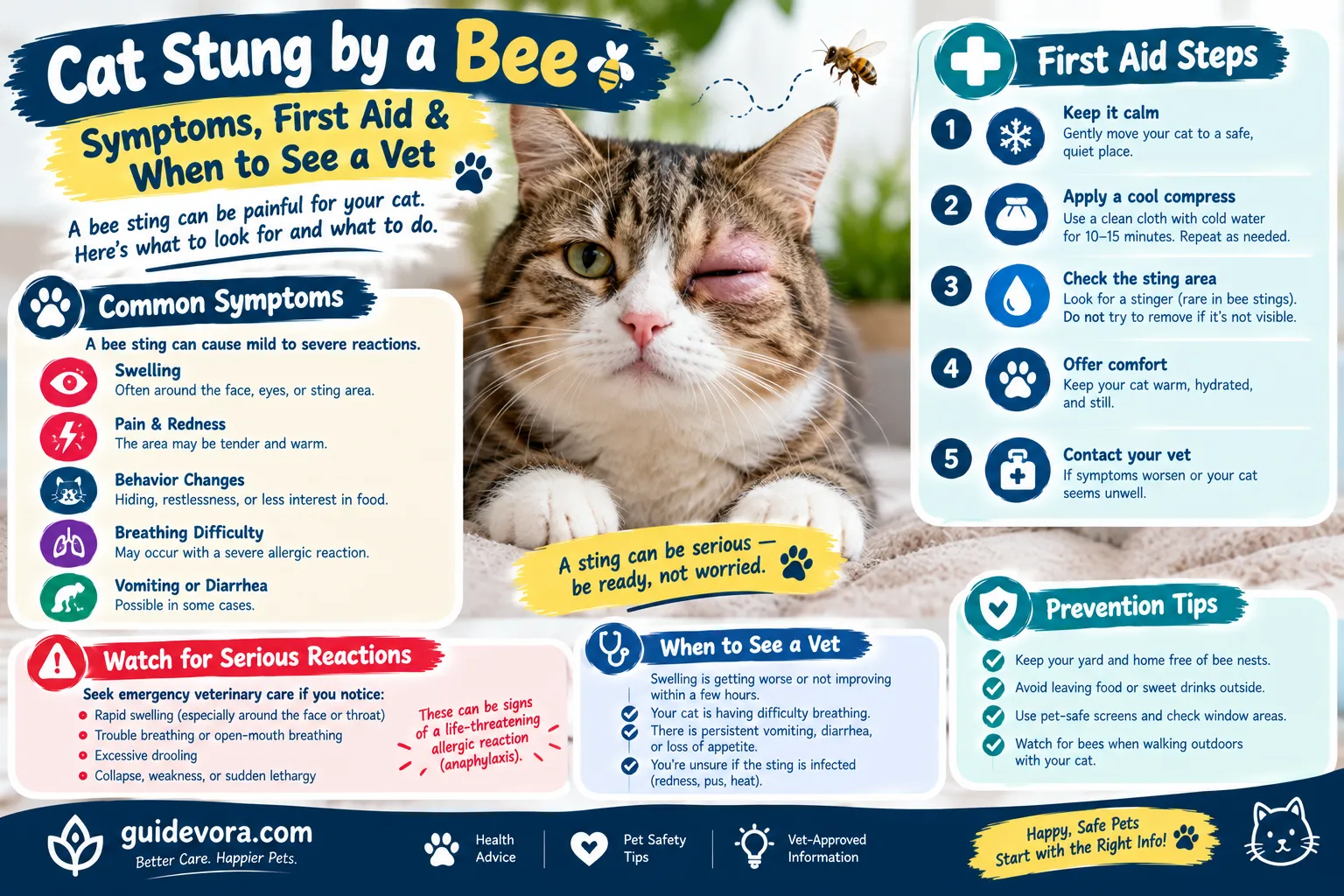
Bee stings in cats are common and, in the large majority of cases, more annoying than dangerous. A curious cat pawing at or pouncing on a bee typically gets stung on the face (usually near the nose) or a front paw — and most recover within a few hours with a bit of at-home first aid.
Should I Be Worried If My Cat Gets Stung by a Bee?
Generally, no — not for a single sting with normal behavior otherwise. Bee stings in cats are rarely severe or life-threatening. The situations that genuinely warrant more concern are specific, not general:
- Multiple stings — enough venom to affect even a non-allergic cat
- A sting inside the mouth or throat, because of proximity to the airway
- Any sign of a spreading or severe reaction, covered in the anaphylaxis section below
A single sting on the paw or face, with your cat otherwise acting normal — eating, moving around, alert — is the common scenario, and it’s the one that resolves on its own with basic care.
Relevent: Cat Not Peeing: Causes and Emergency Care
What Can I Give My Cat If He Gets Stung by a Bee?
At home, the standard first-aid approach is:
- Check for and remove the stinger if it’s a honeybee sting (honeybees leave the stinger behind; wasps generally don’t). Scrape it out sideways with the edge of a credit card — don’t pull with tweezers or fingers, which can squeeze more venom from the sac. A honeybee’s stinger can continue releasing venom for up to about 3 minutes after the sting, so removing it promptly matters.
- Apply a cold compress — an ice pack, cold towel, or even a bag of frozen vegetables — to the sting site to reduce swelling and discomfort.
- Prevent licking or scratching at the site, since that delays healing and can lead to infection; an Elizabethan collar (cone) helps if your cat won’t leave it alone.
- Keep fresh water available, and offer moist food if the sting is near the mouth and your cat seems reluctant to eat dry kibble.
- Watch closely for the first hour or two, since allergic reactions in cats typically show up within about 20 minutes but can be delayed for hours.
Can I Give My Cat Benadryl for a Bee Sting?
Yes, diphenhydramine (Benadryl) is commonly used for cats with mild-to-moderate reactions — but the dosing guidance genuinely varies more across veterinary sources for cats than it does for dogs, so treat this as a starting point to confirm, not a fixed number:
- Some sources cite 1 mg per pound of body weight, similar to the dog guideline
- Others cite a flat 12.5 mg per average-sized cat, given once, with reassessment afterward
- Frequency recommendations also vary (some sources say every 4–8 hours; others every 8–12) — this is exactly why a quick call to your vet before dosing matters more here than it might seem
Important cat-specific cautions:
- Use plain diphenhydramine only — check the label carefully for any additional ingredients. Pain relievers and decongestants are commonly added to human combination products and can be toxic to cats.
- Avoid liquid formulations that contain xylitol — some children’s liquid Benadryl is sweetened with it, which is dangerous for pets. A cut tablet or a xylitol-free liquid is safer; a pill pocket or a small amount hidden in food can help with administration if your cat won’t take a pill directly.
- Cats are generally more sensitive to medications than dogs, so confirming dose and frequency with your vet before the first dose is worth the extra few minutes, even for a seemingly mild sting.
How Long Does It Take for a Cat to Recover from a Bee Sting?
For most mild, uncomplicated stings, swelling and discomfort resolve within a few hours with basic first aid — this is the typical outcome for the common scenario of a single sting on the paw or face. Recovery takes meaningfully longer only in the less common case of a more significant allergic reaction requiring veterinary treatment, where hospitalization and monitoring can extend recovery over a day or more, depending on severity. If swelling hasn’t started improving within several hours, or you’re seeing symptoms beyond the sting site itself, that’s a reason to call your vet rather than continue waiting.
Signs of a Serious Allergic Reaction — Call a Vet Immediately
Most stings don’t progress this far, but knowing the signs matters because reactions can escalate quickly:
- Rapid or shallow breathing
- Significant swelling beyond the sting site, especially around the face, eyes, or throat
- Drooling
- A noticeable change in behavior, mood, or alertness
- Collapse or extreme weakness
- Hives — raised, dime-to-quarter-sized swellings, often on the head, chest, or back
Any of these warrants an emergency vet visit right away rather than continued home monitoring. For cats with a known history of a severe sting reaction, some vets prescribe an epinephrine auto-injector and walk owners through its use for future incidents.
Why Cats Get Stung, and When It’s Most Common
Cats are drawn to bees for the same reason they’re drawn to any small, fast-moving thing — it triggers a hunting instinct, not genuine understanding of what it is. Interestingly, cats are most likely to get stung in early spring and late autumn, when bees fly more slowly and sluggishly in cooler temperatures, making them easier for a cat to catch or swat successfully — in peak summer, a healthy bee is often simply too fast to catch.
Frequently Asked Questions
Should I be worried if my cat gets stung by a bee? Generally not, for a single sting with your cat acting normal otherwise — bee stings in cats are common and rarely serious. Multiple stings, a sting inside the mouth, or any sign of a spreading allergic reaction are the situations that warrant real concern and a vet visit.
What can I give my cat if he gets stung by a bee? A cold compress to reduce swelling, and diphenhydramine (Benadryl) if your vet confirms the dose — commonly cited around 1 mg per pound, though guidance varies by source. Check the stinger, remove it if present, and prevent your cat from scratching at the site.
Can I give my cat Benadryl for a bee sting? Yes, plain diphenhydramine (no added pain relievers, decongestants, or xylitol) is commonly used, but confirm the exact dose and frequency with your vet first, since dosing guidance for cats varies more across sources than for dogs and cats are generally more medication-sensitive.
How long does it take for a cat to recover from a bee sting? Most mild stings resolve within a few hours with basic first aid. Recovery takes longer, sometimes a day or more, only in the less common case of a significant allergic reaction requiring veterinary treatment and monitoring.
What does a bee sting look like on a cat? Typically a red, swollen area, most often on the face near the nose or on a front paw — the two most common contact points when a cat investigates or swats at a bee.
Is a bee sting on a cat’s paw different from one on the face? Not in terms of the venom reaction itself, but a facial sting, especially near the mouth or nose, warrants closer monitoring simply because of its proximity to the airway if swelling were to spread.
Final Thoughts
A bee sting is one of the more common minor mishaps in cat ownership, and the typical story ends the same way: a little swelling, a cold compress, a few hours of mild discomfort, and a cat who’s more cautious around buzzing insects afterward. The two things worth actually watching for are how many stings occurred and any sign of a broader allergic reaction — for everything else, a cold compress, confirmed Benadryl dose, and a bit of monitoring covers it.
This article is for informational purposes and doesn’t replace veterinary guidance for a specific sting or allergic reaction.
Leave a Reply