
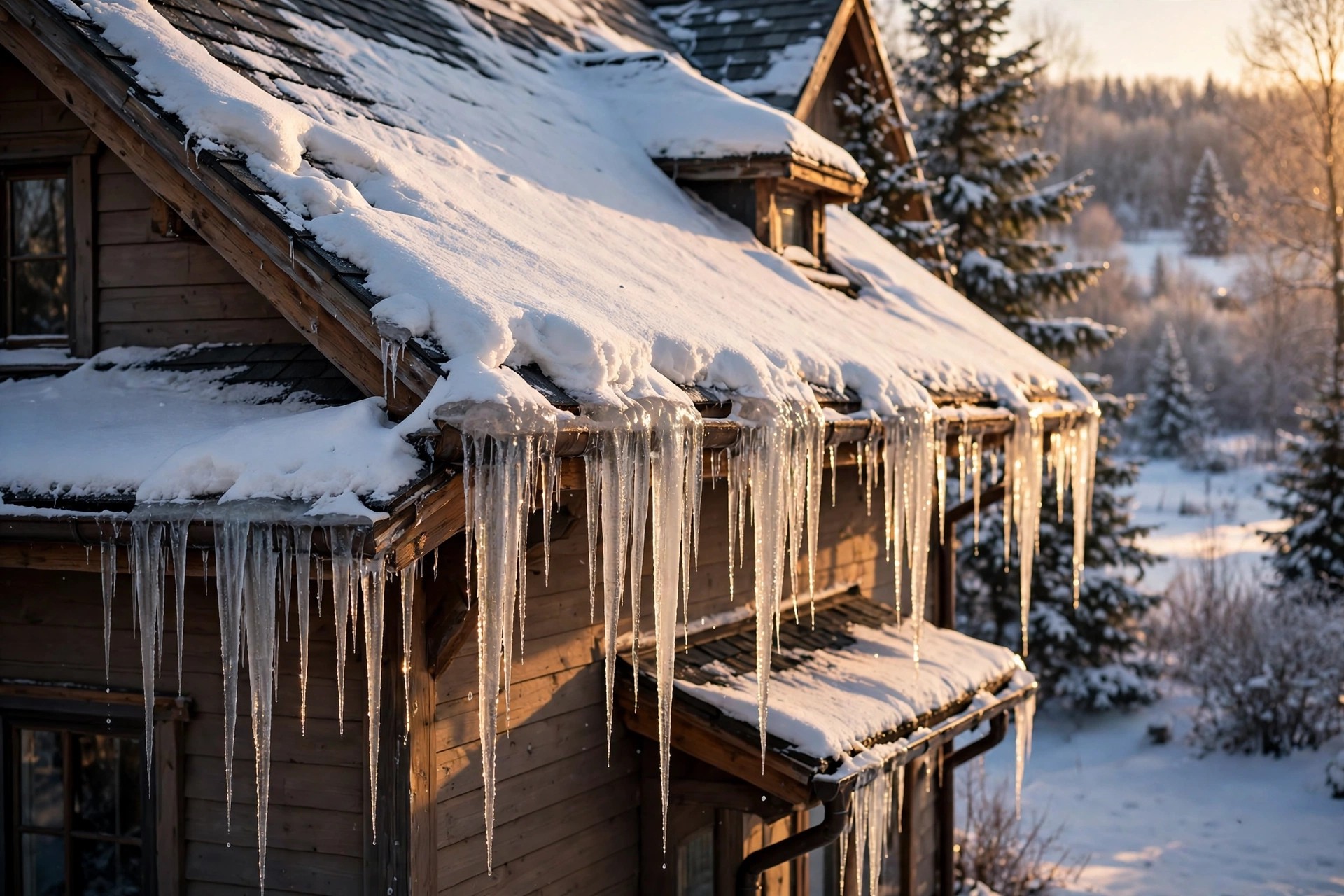
If you live somewhere with cold winters, learning how to prevent ice dams on your roof can save you from one of the most expensive and frustrating winter problems a homeowner can face. An ice dam is a ridge of ice that forms along the edge of a roof, usually at the eaves. It traps the water from melting snow behind it, and that trapped water can back up under the shingles and leak into your home, damaging ceilings, walls, insulation and paint. The good news is that ice dams are not random: they have a clear cause, and there are proven ways to stop them from forming.
Key Facts
- An ice dam is a ridge of ice at the roof edge that traps melting snow water behind it.
- They form when heat from the house melts snow on the upper roof, and the water refreezes at the colder eaves.
- Trapped water can leak under shingles and damage ceilings, walls and insulation.
- The long-term fix is better attic insulation and ventilation, not just removing the ice.
- Never climb onto an icy roof or use a hammer or axe to break up an ice dam.
- A roof rake, used from the ground, is the safest way to remove snow from the roof edge.
What Is an Ice Dam and Why Does It Form?
An ice dam starts with heat escaping from your home into the attic. Warm air rises through the ceiling, through gaps around lights, pipes and chimneys, and into the attic space. That warm air heats the roof from underneath, melting the snow on the upper part of the roof even when the air outside is well below freezing. The eaves are cold, because there is no warm house underneath them, so the water refreezes there and forms a ridge of ice.
As the cycle repeats, the ridge grows into a dam. Eventually the pooled water finds its way under the shingles, because shingles are designed to shed water running downwards, not water sitting and pushing upwards from below. Once it gets under the shingles, it can soak the roof deck, drip into the attic, stain ceilings and damage plaster, paint and insulation. Large, thick icicles combined with a ridge of ice along the roof edge are the classic warning signs, and water stains on an upstairs ceiling after a thaw mean a dam may already be leaking.
The Real Cause: Heat Loss and Poor Ventilation
It is tempting to blame the weather, but the real cause of most ice dams is heat loss from the house combined with poor attic ventilation. When the attic is warm, the roof becomes unevenly warm, and that is what creates the freeze-and-thaw cycle at the eaves.
Common sources of heat loss include thin or patchy attic insulation, gaps around recessed lights, unsealed openings where pipes and wires pass through the ceiling, and a poorly sealed attic hatch. Ventilation matters because it carries away the warm air that does get into the attic and keeps the roof deck at a more even temperature. A roof should have a balance of intake vents low down, usually in the soffits, and exhaust vents high up, usually at the ridge. Checking your attic ventilation is a key part of winter preparation, and our winter home maintenance checklist includes it alongside the other seasonal jobs.
How to Remove an Ice Dam Safely
If an ice dam has already formed and water is leaking into your home, you need to act quickly, but safely. The first step is to remove the snow from the roof, starting at the eaves and working upwards, using a long-handled roof rake from the ground. Removing the snow removes the source of the meltwater and stops the dam from growing. A roof rake is the right tool for this job: it lets you pull the snow down while standing safely on the ground.
Never climb onto an icy roof to clear snow or ice. Roofs are dangerously slippery in winter, and a fall can cause serious injury. Do not use a hammer, axe, chisel or any other sharp tool to break up an ice dam, because you are very likely to damage the shingles and create a leak that is worse than the one you are trying to fix.
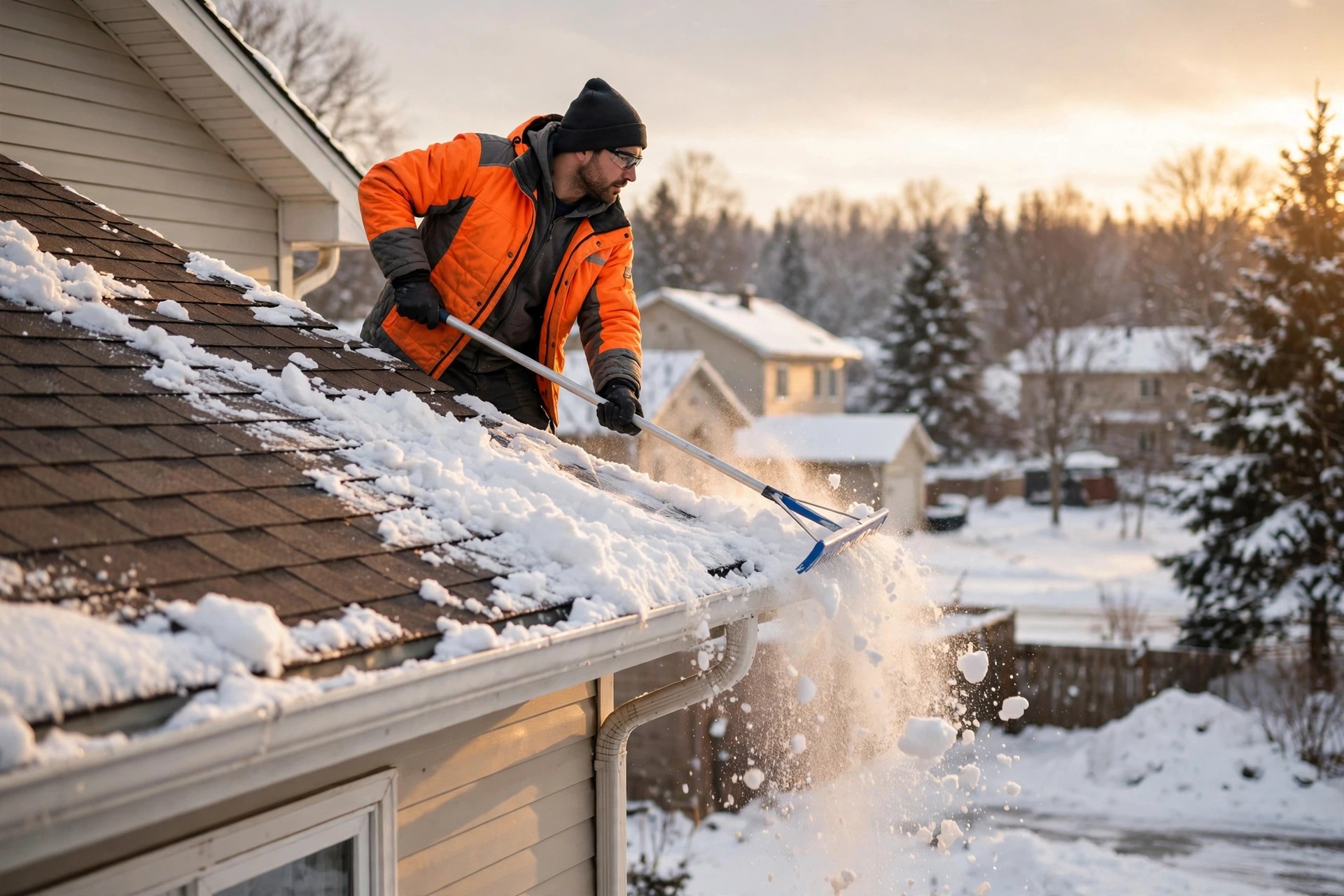
For a dam that is already causing a leak, the safest immediate fix is to create a channel through the ice so the trapped water can drain off. This can be done by placing a nylon stocking filled with calcium chloride ice melt across the dam, at right angles to the eaves, so that it melts a narrow drainage channel. Use calcium chloride, not rock salt, because rock salt can damage shingles and plants below. If the leak is serious, or the dam is very large, call a professional roofing contractor: roofers have steam equipment that can melt an ice dam safely without damaging the shingles.
Long-Term Prevention: Insulation and Air Sealing
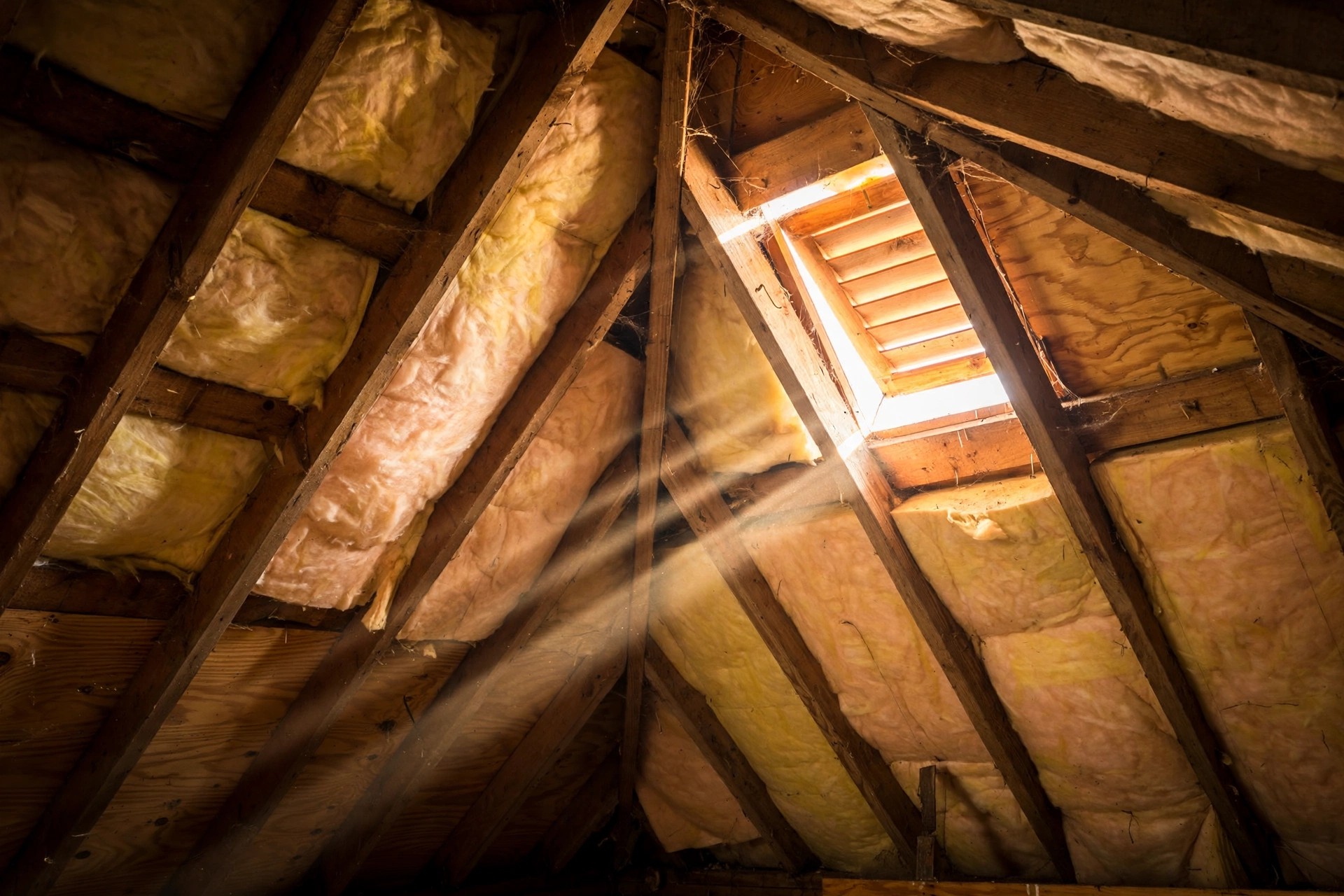
The permanent solution to ice dams is to stop the heat from reaching the roof in the first place, and that starts with insulation. Attic insulation should be deep and even, with no gaps, thin patches or compressed areas. The National Weather Service advises that attic insulation should have an R-value of at least R-30, with R-38 preferable in northern climates, and recommends consulting a reputable roofing or insulation contractor about improvements. If your attic insulation is thin, patchy or more than a couple of decades old, adding more is one of the best investments you can make in your home.
Pay attention to the areas that are easy to miss. The edges of the attic, where the roof meets the walls, often have thin insulation because the space is tight. The attic hatch or pull-down stairs should be insulated and weather-stripped like a door, because a bare hatch lets a surprising amount of warm air through. Air sealing matters just as much as insulation: before adding insulation, seal the gaps where warm air leaks into the attic, around light fixtures, plumbing vents, chimneys, ductwork and wiring holes. The National Weather Service’s guide to preventing roof ice dams explains the insulation and ventilation steps in detail and is a reliable reference for planning this work.
Long-Term Prevention: Ventilation
Insulation works best when it is paired with good ventilation. A ventilated attic stays close to the outdoor temperature, which keeps the roof surface evenly cold and stops the melt-and-refreeze cycle that creates ice dams. The standard approach is a continuous ridge vent along the top of the roof paired with soffit vents under the eaves, which allows cool air to flow in low and warm air to escape high.
Check that your soffit vents are not blocked by insulation. Baffles, also called rafter vents, are simple channels that hold the insulation back from the roof deck and keep the airflow path open. If your attic has no baffles, adding them is a cheap and effective improvement. Also check that bathroom and kitchen exhaust fans vent outside the house, not into the attic, because venting warm, moist air into the attic adds heat and can cause condensation and mould.
Other Ways to Reduce Ice Dams
Keeping gutters clean also helps. Clogged gutters trap water and ice at the eaves, which encourages dams to form. Clean the gutters in late autumn, after the leaves have fallen, and check that downspouts are clear and direct water away from the house. A metal roof, or a roof with a waterproof membrane under the shingles at the eaves, is more resistant to ice dam leaks, and both are worth considering when the roof is next replaced. Cold weather causes other household problems at the same time as ice dams: frozen pipes are a common companion problem, so read our guide on how to prevent frozen pipes and our guide on how to keep pipes from freezing as part of the same winter preparation.
Frequently Asked Questions
What causes ice dams on a roof?
Ice dams form when heat escaping from the house warms the attic and melts snow on the upper roof. The meltwater runs down to the colder eaves, refreezes, and builds into a ridge of ice that traps more water behind it.
Can ice dams damage my roof?
Yes. Trapped water can back up under the shingles and leak into the roof deck, attic and ceilings, causing stains, damaged plaster, ruined insulation and, over time, rot and mould.
How do I remove an ice dam safely?
Use a roof rake from the ground to remove snow from the roof edge, and use a stocking filled with calcium chloride laid across the dam to melt a drainage channel.
Will heating cables stop ice dams?
Heating cables can keep a drainage path open along the eaves, but they only treat the symptom. The permanent fix is better attic insulation, air sealing and ventilation, which stops the heat loss that causes the dam.
How much attic insulation do I need to prevent ice dams?
The National Weather Service advises an R-value of at least R-30, with R-38 preferable in northern climates. The insulation should be deep, even and free of gaps, especially around the edges of the attic.
Are icicles a sign of an ice dam?
Large, thick icicles combined with a ridge of ice along the roof edge and uneven snow melt are a warning sign.
Leave a Reply