
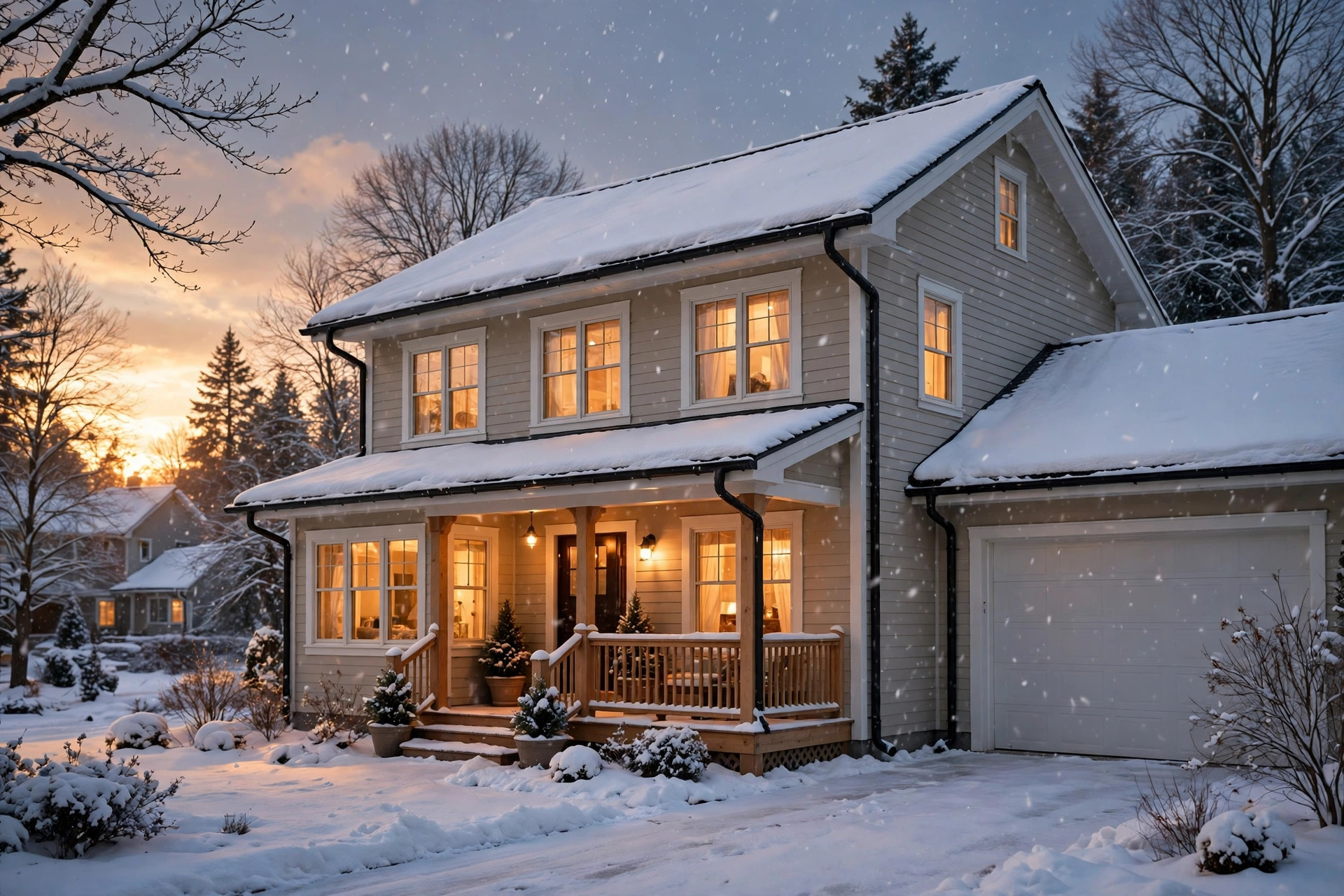
This winter home maintenance checklist covers 20 practical jobs to do before the cold weather arrives, grouped by heating, pipes, roof and gutters, draught-proofing, and safety. Doing them in autumn, while the weather is still mild, is far easier and cheaper than dealing with a burst pipe, a failed boiler or a leaking roof in the middle of a cold snap.
Key Facts
- Start winter preparation in autumn, before the first hard frost, when tradespeople are easier to book.
- A serviced boiler and bled radiators heat a home more efficiently and reduce the risk of a midwinter breakdown.
- Insulating exposed pipes is one of the cheapest ways to prevent burst pipes in freezing weather.
- Blocked gutters cause overflowing water, damp walls and, in freezing weather, ice dams at the roof edge.
- Draught-proofing doors and windows can noticeably reduce heat loss without major renovation work.
- Test smoke alarms and carbon monoxide alarms before the heating season, and replace batteries if needed.
- Know where your stopcock is, and how to turn the water off, before a pipe emergency happens.
Heating: Jobs 1 to 5
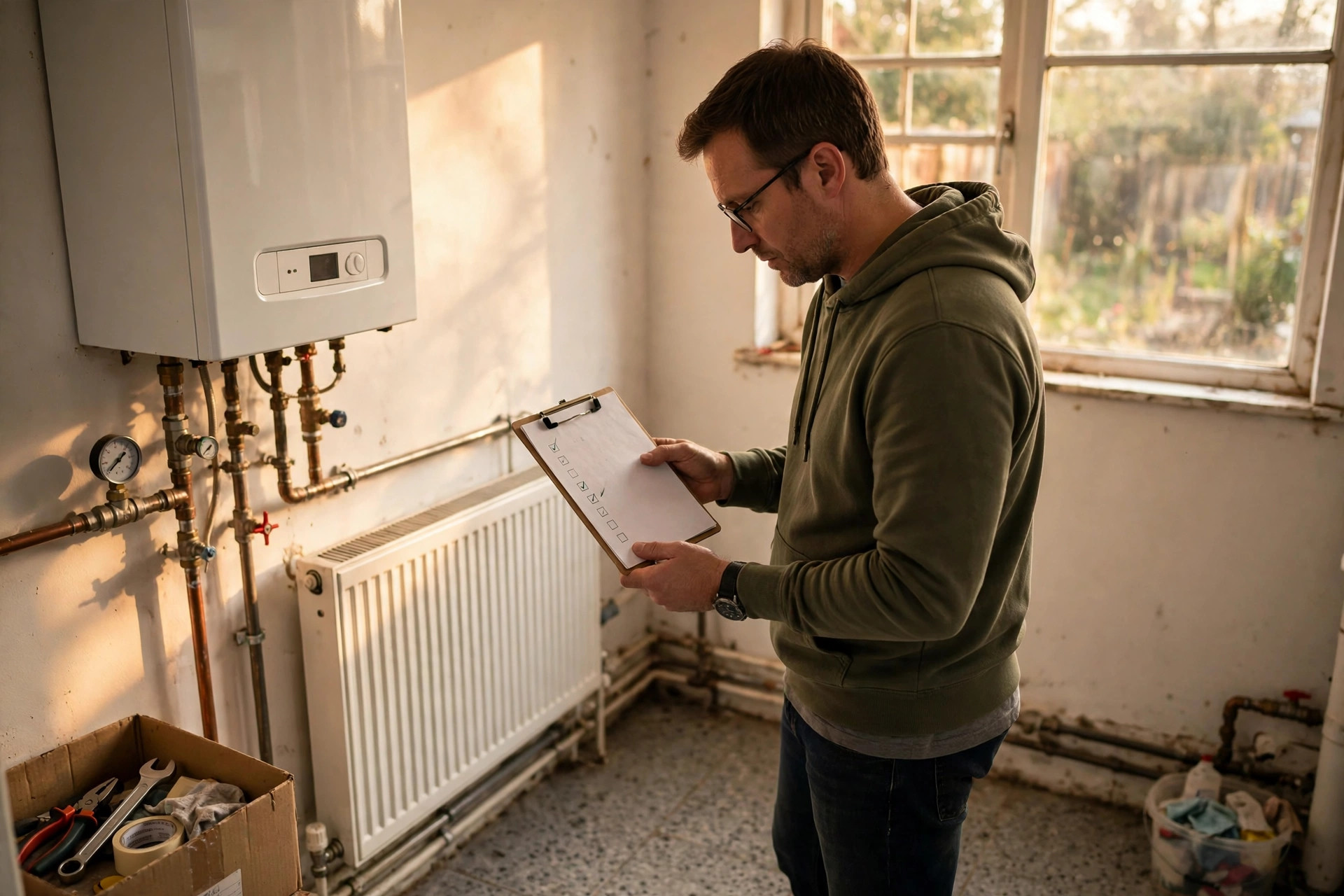
- Service your boiler or heating system. Book a qualified engineer before winter. A service checks for faults, cleans key parts and confirms the system is running safely and efficiently, and it is often a condition of a boiler warranty. If your boiler is old, ask honestly whether a replacement should be planned rather than forced by a January breakdown.
- Bleed your radiators. If a radiator is cold at the top and warm at the bottom, trapped air is the likely cause. Bleed it with a radiator key, keep a cloth handy for drips, and check the boiler pressure afterwards, topping it up if the manual advises it.
- Check thermostats and radiator valves. Test thermostats, timers and thermostatic radiator valves before you need them daily. Set living areas to a comfortable temperature, keep bedrooms slightly cooler, and free any valves stuck after a summer of inactivity.
- Clear space around radiators. Move furniture, curtains and drying clothes away from radiators so heat circulates into the room rather than being trapped behind a sofa. This simple change can make a room feel noticeably warmer without turning the heating up. For more low-cost warmth ideas, see our guide on how to keep your house warm without turning up the heat.
- Stock up on fuel if you use oil, wood or coal. Order early in autumn before prices rise and delivery slots fill up.
Pipes and Water: Jobs 6 to 9
- Insulate exposed pipes. Wrap pipes in lofts, garages, basements and outside walls with foam pipe insulation, which is cheap and easy to fit. Pay special attention to pipes near exterior walls and in unheated spaces, where freezing is most likely.
- Fix dripping taps and leaking joints. A small drip in summer becomes a bigger problem in winter, when water can freeze and expand in a damaged joint. Fix dripping taps, tighten loose joints and replace worn washers, and check under sinks for slow leaks that may have gone unnoticed.
- Find and test your stopcock. Make sure everyone in the household knows where the main stopcock is and that it turns freely. If a pipe bursts, shutting the water off in seconds can save thousands in damage. Label it if it is hidden, and test it gently rather than forcing a seized valve.
- Protect outdoor taps and hoses. Disconnect garden hoses, drain outdoor taps, and fit an insulated tap cover if you have one. Water left in an outdoor pipe can freeze, expand and crack the pipe or tap, and hoses stored outside can split in the cold.
Roof, Gutters and Outdoors: Jobs 10 to 13
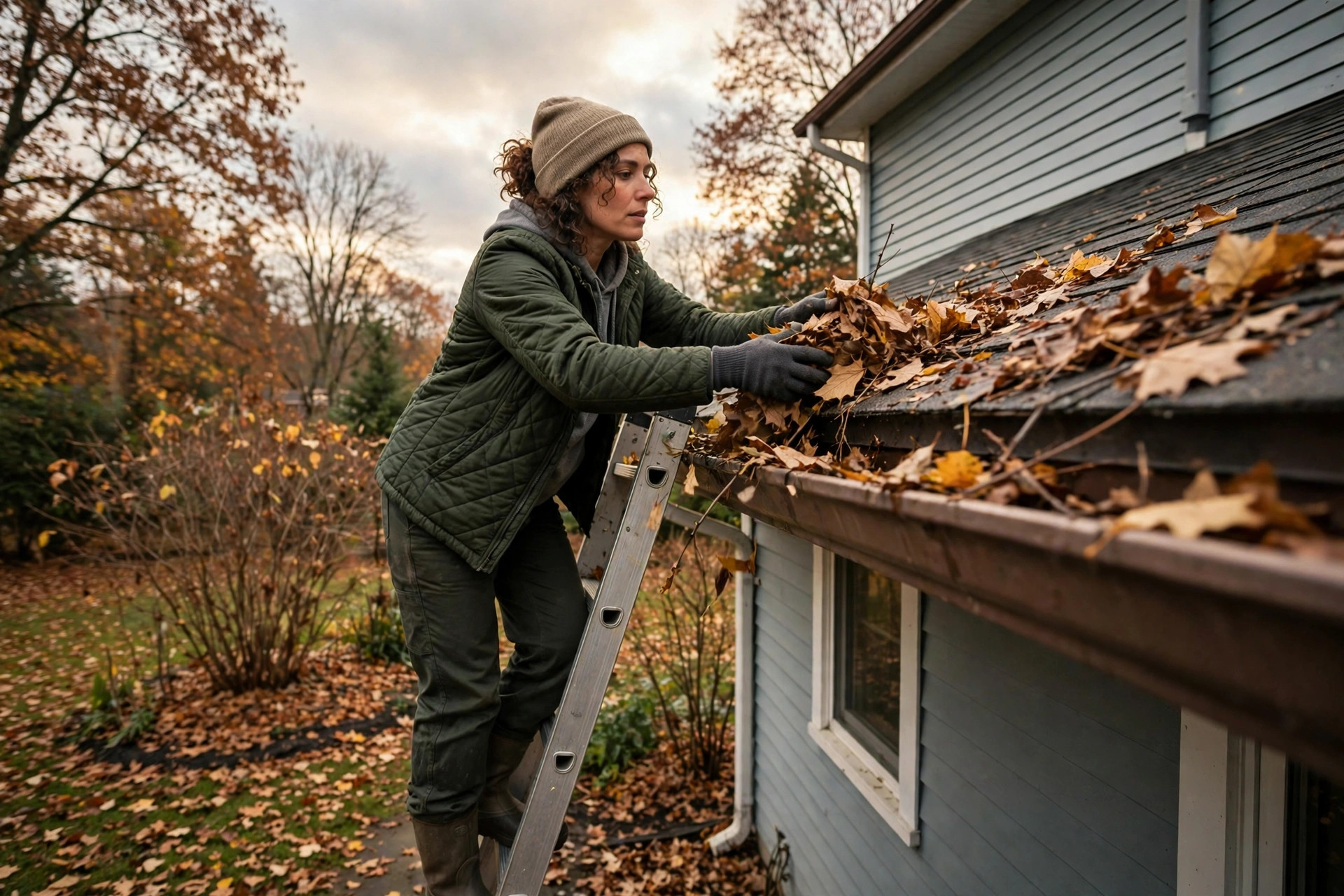
- Clear gutters and downpipes. Remove leaves, moss and debris from gutters and check that downpipes run freely. Blocked gutters overflow, soak walls and cause damp inside the home, and standing water in a gutter can freeze and damage the guttering itself.
- Inspect the roof from the ground. Stand back and look for slipped, cracked or missing tiles, damaged flashing around chimneys, and sagging sections. Binoculars help for a closer look without climbing. Roof repairs are much easier in dry autumn weather than in winter rain, so book a roofer promptly if you spot a problem.
- Trim overhanging branches. Cut back branches that overhang the roof, gutters or power lines. Heavy snow or strong winter winds can snap weak branches, damaging roofs, cars or fences. Use a professional for large trees or anything near power lines.
- Check paths, steps and outdoor lighting. Clear moss and leaves from paths and steps, which become slippery when wet or icy. Check that outdoor lights and security lights work, and replace any failed bulbs, so entrances and paths are safe on long winter evenings.
Draught-Proofing and Insulation: Jobs 14 to 17
- Draught-proof doors. Fit draught excluders around front and back doors, and check letterboxes and keyholes, which are common sources of cold air. Self-adhesive foam strips and brush strips are inexpensive and can be fitted in an afternoon.
- Seal window gaps. Check windows for gaps, cracked putty or worn seals. Apply sealant or new draught strips where needed, and consider heavy curtains for rooms that feel cold at night. Secondary glazing film is a low-cost option for single-glazed windows.
- Insulate the loft hatch and check loft insulation. Heat rises, so a poorly insulated loft wastes a lot of energy. Check that loft insulation is even and at a reasonable depth, and insulate the loft hatch itself, which is often overlooked. Do not block ventilation, and avoid compressing insulation, which reduces its effectiveness.
- Close off unused rooms sensibly. Keep rarely used rooms’ doors closed and radiators low, not off, to avoid damp and cold air leaking into the rest of the home.
Safety and Final Checks: Jobs 18 to 20
- Test smoke and carbon monoxide alarms. Press the test button on every smoke alarm and carbon monoxide alarm, replace batteries if needed, and check expiry dates. Carbon monoxide alarms are especially important in winter, when boilers, fires and stoves run for long periods.
- Service chimneys and check fireplaces. If you have an open fire or a wood-burning stove, have the chimney swept before the heating season. Soot build-up is a fire risk and can cause dangerous fumes. Check fire guards, keep flammable items away from the hearth, and store firewood in a dry, ventilated place.
- Prepare an emergency kit and a cold-weather plan. Put together torches, spare batteries, a phone charger, blankets, basic tools, pipe insulation, and the numbers of your heating engineer, plumber and insurer. Know how to turn off water, gas and electricity safely. A short plan, shared with everyone in the household, turns a stressful emergency into a manageable problem. Many of these jobs are small improvements in themselves, and our guide to small home improvements has more ideas for making a home warmer and easier to live in.
When to Call a Professional
Many jobs on this checklist are safe weekend tasks, but some belong to qualified tradespeople. Boiler servicing and any gas work must be done by a registered gas engineer, and electrical faults should go to an electrician rather than being improvised. Roof repairs, chimney sweeping and large tree work are safer with professionals who have the right equipment. Booking these jobs in autumn also means better availability and lower prices than an emergency call-out in midwinter.
Frequently Asked Questions
When should I start winter home maintenance? Start in early to mid-autumn, before the first hard frost. This gives you time to book engineers, buy materials and complete outdoor work in dry weather, rather than rushing repairs during a cold snap.
What temperature should I keep my home in winter? Most guidance suggests around 18 to 21 degrees Celsius for living areas, with bedrooms slightly cooler. Older people, young children and anyone with health conditions may need a warmer home. Consistent, moderate heating is usually more efficient than letting a home go cold and then heating it rapidly.
How do I stop pipes from freezing? Insulate exposed pipes, especially in lofts, garages and near outside walls. On very cold nights, keeping heating on low can help, but insulation and prompt repair of leaks are the most reliable protections.
Should I leave heating on all day in winter? It depends on your home and heating system. Many homes are comfortable with heating timed for mornings and evenings, while poorly insulated homes may benefit from low background heating. A programmable thermostat lets you test what works without wasting energy.
What should I do if a pipe bursts? Turn off the water at the stopcock immediately, turn off electricity if water is near electrics, open taps to drain the system, and call a plumber. Move valuables and furniture away from the water, and contact your insurer promptly to report the damage.
Do I really need a carbon monoxide alarm? Yes, if your home has gas, oil, wood or coal heating or cooking appliances, a carbon monoxide alarm is an essential safety device. Carbon monoxide is colourless and odourless, so an alarm is the only reliable warning. Test it regularly and replace it when it expires.
Leave a Reply