
“Happy Kwanzaa!” is the standard greeting, often paired with “Habari gani?” (“What’s the news?”) — answered with the principle of the day. Below are 25 wishes organized for cards, texts, toasts, and each of the seven days (December 26 –January 1), from warm and simple to meaningful and principle-rooted. Pick the tone that fits the person you’re writing to.

Key Facts
- Standard greeting: “Happy Kwanzaa!” — works for anyone, any day of the week.
- Traditional exchange: “Habari gani?” → answer with the day’s principle (“Umoja!”, “Kujichagulia!”, etc.).
- Best for cards: the principle-based wishes below — they show you know what the week means.
- Timing: any day Dec 26–Jan 1; the feast night (Dec 31) and New Year’s Day are the most common card-giving moments.
- Tone: warm, proud, community-minded — Kwanzaa greetings celebrate heritage and togetherness.
Quotable: “A Kwanzaa wish isn’t just ‘happy holidays’ — it’s a small promise to live the principles with the people you love.”
Classic Happy Kwanzaa Wishes (for anyone)
- Happy Kwanzaa! Wishing you seven days of light, love, and togetherness.
- Habari gani? May each candle bring your family closer this week.
- Wishing you a joyful Kwanzaa filled with unity, purpose, and pride.
- Happy Kwanzaa — may the seven principles guide you into a beautiful new year.
- Sending love and light for every night of Kwanzaa.
- May your kinara burn bright and your heart burn brighter. Happy Kwanzaa!
- Celebrating heritage, family, and community with you — Happy Kwanzaa!
- Wishing you peace, joy, and togetherness this Kwanzaa season.
Wishes by Principle (one for each day)
- Umoja (Dec 26): “Happy first day of Kwanzaa! May unity fill your home and hearts today and always.”
- Kujichagulia (Dec 27): “On this day of self-determination — may you define your own path and walk it boldly. Happy Kwanzaa!”
- Ujima (Dec 28): “Happy Kwanzaa! Grateful for a community that builds together — that’s you.”
- Ujamaa (Dec 29): “Wishing you prosperity shared and multiplied. Happy Kwanzaa!”
- Nia (Dec 30): “May your purpose be clear and your year be meaningful. Happy Kwanzaa!”
- Kuumba (Dec 31): “Happy Karamu! May your creativity make the world more beautiful tonight.”
- Imani (Jan 1): “Closing Kwanzaa with faith — in you, in us, in what’s ahead. Happy New Year!”
Short Texts & Social Captions
- Habari gani! 🕯️ Happy Kwanzaa!
- Seven nights, seven principles, one beautiful family. Happy Kwanzaa!
- Lighting the first candle tonight — Umoja. Happy Kwanzaa, everyone.
- Red, black, and green look good on you. Happy Kwanzaa!
- From our kinara to yours — Happy Kwanzaa!
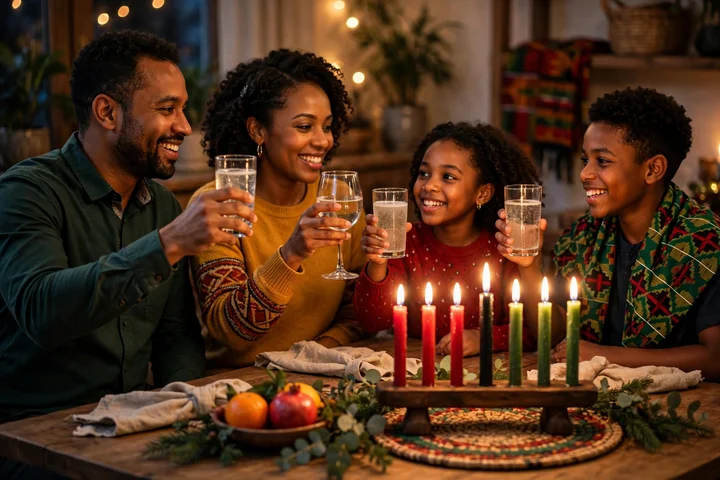
Toasts for the Feast Table
- “To Umoja — may we stay united in love and purpose. Habari gani!”
- “We light these candles for those who came before us and those who come after. Happy Kwanzaa!”
- “Seven principles, one family, endless gratitude. To Kwanzaa!”
- “May we leave this table — and this year — more beautiful than we found it. Kuumba!”
- “To faith in each other: Imani. Happy Kwanzaa, and Happy New Year!”
Greetings for Specific People
For elders and parents:
- “Thank you for the roots that hold us and the values that guide us. Happy Kwanzaa.”
- “Your life has been our Umoja — our unity. Honoring you this Kwanzaa.”
- “Habari gani? Grateful every day for the ancestors who made our today possible.”
For children:
- “Happy Kwanzaa, little one! Tonight we light the candle for [principle] — and you’re part of the story.”
- “Seven nights, seven candles, and you make every one brighter. Happy Kwanzaa!”
- “You’re our muhindi — our corn, our future. Happy Kwanzaa!”
For friends and coworkers:
- “Wishing you a meaningful Kwanzaa — unity, purpose, and joy to you and yours.”
- “Happy Kwanzaa! Hope the new year brings everything you’re working toward.”
- Keep it simple and warm; coworkers especially appreciate the classic “Happy Kwanzaa!” without added explanation.
For social media captions:
- “Day [1–7]: [Principle]. This is what the week is about. Habari gani! 🕯️”
- “From Umoja to Imani — seven days of intention. Happy Kwanzaa.”
- “The kinara is lit and the table is full. Happy Kwanzaa, family.”
Writing Your Own Kwanzaa Wish
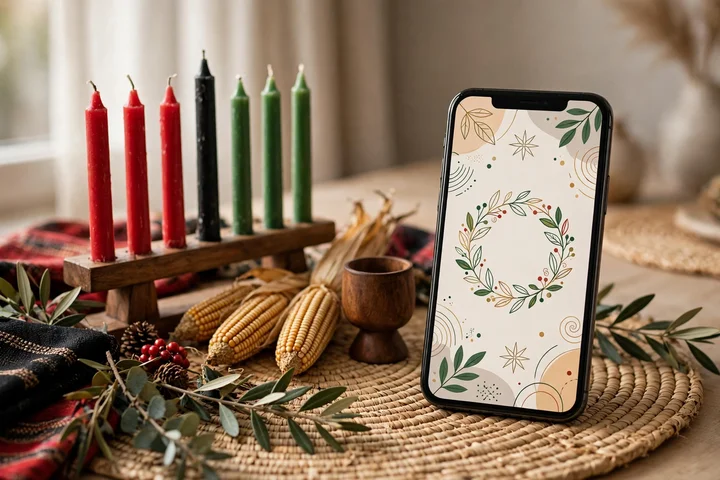
The 25 wishes above are ready to copy, but the ones people remember longest are the ones that sound like you wrote them. A good homemade Kwanzaa wish has three parts, and none of them is hard: a greeting, one specific detail about the person, and a principle or a hope for the year ahead. “Happy Kwanzaa, Auntie — thank you for the Sunday dinners that kept this family together. May Umoja fill your house the way you have filled ours.” That took one sentence of truth and one principle, and it beats any generic card.
Start with what you actually know. Did they start a business this year? That is Kujichagulia and Ujamaa — self-determination and cooperative economics — and a wish that names it will land harder than any store-bought verse. Did the family get through a hard year together? That is Ujima, collective work and responsibility. Pick the principle that matches their real year, not the one that sounds prettiest, and say why. One honest sentence outperforms three flowery ones every time.
If you are stuck, borrow the holiday’s own structure. The seven principles are a ready-made outline: unity, self-determination, collective work, cooperative economics, purpose, creativity, and faith. Choose one, attach it to a memory, and close with a hope. “This year showed us Nia — purpose — when we all pulled together for Dad. Next year, may that purpose carry you further than you expect.” You do not need poetry. You need one true thing and one kind hope. That is the whole recipe, and it works in a card, a text, or a toast. The Smithsonian’s National Museum of African American History and Culture has background on the holiday’s traditions if you want more context for your message.

What Not to Say
- Don’t call it “Black Christmas.” Kwanzaa isn’t a Christmas alternative — it’s a separate cultural celebration, and the comparison diminishes both.
- Don’t ask “is that a real holiday?” It is — since 1966, celebrated by millions. Ask what it means instead; you’ll get a better answer and make a better impression.
- Don’t lead with the greeting if you’re unsure of pronunciation. “Happy Kwanzaa!” is always safe. Attempt “Habari gani?” only if you can say it confidently (hah-BAH-ree GAH-nee) — effort is appreciated, butchering is not.
- Don’t make it about you. If you don’t celebrate Kwanzaa, a wish is lovely; a long story about your own holidays is not.
Timing Your Greetings
When you send a Kwanzaa message matters as much as what it says:
- December 24–25: early-bird texts are fine (“Kwanzaa starts tomorrow — Habari gani season!”), especially to family you’re coordinating with.
- December 26 (Umoja): the big greeting day — cards, calls, and the first round of texts. This is when “Happy Kwanzaa!” lands hardest.
- December 27–30: daily check-ins shine here — one principle-based wish per day keeps the week feeling alive, especially for long-distance family.
- December 31 (Karamu): toasts and feast-day messages; save your warmest, most celebratory wording for tonight.
- January 1 (Imani): closing wishes + New Year greetings combined (“Happy Kwanzaa and Happy New Year!”) — the natural finale.
One caution: don’t send all seven principle wishes in a single message on day one. The week is designed to unfold — let your greetings unfold with it.
How to Use Them
- Cards: pair a principle wish (#9–15) with a personal line — it reads as thoughtful, not generic.
- Texts: the short ones (#16–20) are built for messaging apps and social posts.
- Toasts: #21–25 work spoken aloud at the Karamu feast or any evening gathering — raise the Unity Cup with them.
- For kids’ cards: #1, #5, and #17 are simple enough for little ones to copy.
Want the full context behind the words? Read what Kwanzaa celebrates, the seven principles explained, and our beginner’s guide to the nightly celebration.

Longer Messages for the People Who Matter Most
Some people deserve more than a one-line wish. A parent, a mentor, a grandparent, or a friend who carried you through the year — for them, a few extra sentences say what a short text cannot. Here are two longer happy Kwanzaa wishes you can adapt, keeping the parts that fit and replacing the rest with your own details.
For a parent or elder: “Happy Kwanzaa, Mom. Seven candles, seven principles, and every one of them I learned at your table. You taught us Umoja by keeping this family close, and Imani by believing in us even when we doubted ourselves. This week, I am lighting a candle for you — and carrying your lessons into the new year. Thank you for everything, and happy new year.”
For a close friend: “Habari gani! This Kwanzaa I am thinking about everything we built together this year — the late nights, the shared meals, the plans that finally came true. That is Ujima, and I am grateful for it. May the coming year bring you the purpose of Nia and the creativity of Kuumba, and may we keep building together. Happy Kwanzaa, my friend.”
Notice what makes these work: they name a real memory, they tie it to one principle, and they end looking forward. Copy that shape and the words will follow.
Frequently Asked Questions
What do you say to wish someone a Happy Kwanzaa?
“Happy Kwanzaa!” is the standard greeting. The traditional exchange is “Habari gani?” (“What’s the news?”), answered with the principle of the day.
Is it okay to say Happy Kwanzaa if I don’t celebrate it?
Yes — it’s a warm, respectful greeting, and it’s appreciated. You don’t need to celebrate Kwanzaa to wish someone well during it.
What is Habari gani?
Swahili for “What’s the news?” — the traditional Kwanzaa greeting, answered with the day’s principle (Umoja, Kujichagulia, Ujima, Ujamaa, Nia, Kuumba, or Imani).
When do you send Kwanzaa cards?
Any time December 26–January 1. The most common moments are the first night (Dec 26), the Karamu feast (Dec 31), and New Year’s Day (Jan 1).
What should I write in a Kwanzaa card?
A principle-based wish plus one personal line is ideal — it shows you understand the holiday. The 25 wishes above are organized by day to make it easy.
Can I say “Happy Kwanzaa” and “Merry Christmas” to the same person?
Yes, if they celebrate both — many families do. Kwanzaa and Christmas are separate holidays, and plenty of people observe both. A combined greeting like “Merry Christmas and Happy Kwanzaa!” is perfectly fine when you know both apply.
What is the correct response to “Habari gani?”
Answer with the principle of the day — for example, “Umoja!” on December 26 or “Kuumba!” on December 31. If you are not sure which day it is, a warm “Happy Kwanzaa!” back is always acceptable.
Do Kwanzaa wishes need to mention the seven principles?
No. A simple “Happy Kwanzaa!” is complete on its own. Mentioning a principle adds a personal, thoughtful touch, but nobody expects it — warmth and sincerity matter far more than getting the terminology right.
Leave a Reply