
To celebrate Kwanzaa for the first time, set up the seven symbols before December 26 (a kinara with seven candles, a woven mat, fruit, corn, and a unity cup), then gather each evening from December 26 to January 1 to light one more candle, discuss that day’s principle, and share a meal. The full week takes about 15–30 minutes a night, plus a bigger feast on December 31. You don’t need to be an expert — the holiday was designed for ordinary families to practice, learn, and grow into.
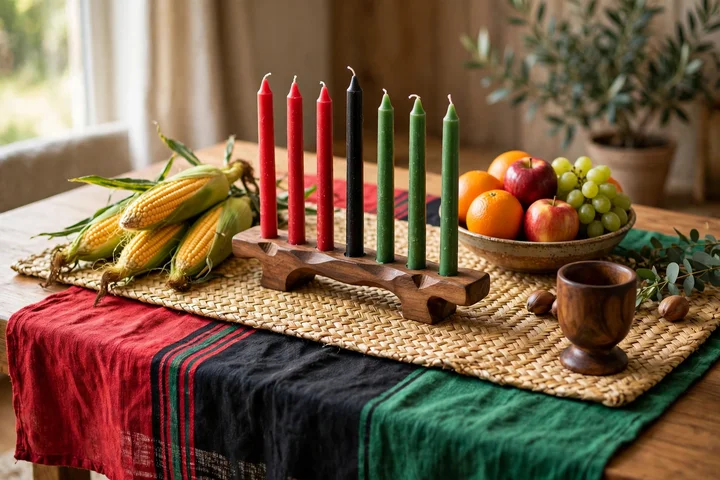
Key Facts
- 2026 dates: Saturday, December 26, 2026 – Friday, January 1, 2027.
- Time needed: 15–30 minutes each evening; longer on Dec 31 (Karamu feast) and Jan 1 (gifts + reflection).
- What to buy: kinara + 7 candles (1 black, 3 red, 3 green), a woven mat (mkeka), fruit, corn (one ear per child), a unity cup. Budget kits start around $25–40.
- The nightly ritual: greeting (Habari gani?), light the day’s candle, discuss the principle, share food or drink.
- Biggest nights: Dec 26 (first candle), Dec 31 (Karamu feast), Jan 1 (gifts + final candle).
- Faith requirement: none — Kwanzaa is cultural, not religious, and you can celebrate it alongside Christmas or Hanukkah.
Quotable: “You don’t need permission or perfection to start Kwanzaa — the first candle is the beginning of learning, not the end of it.”
Before December 26: What to Get
You can buy a Kwanzaa kit (many come with everything), or assemble the pieces yourself. Here’s the checklist:
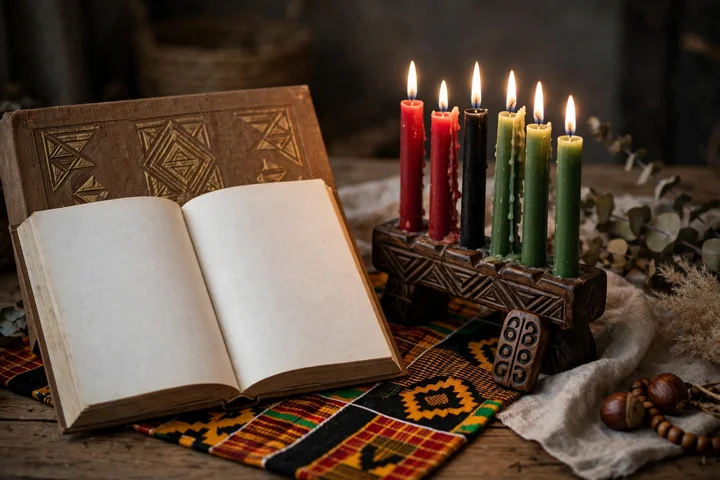
- Kinara — the seven-branched candle holder.
- Mishumaa saba — seven candles: 1 black, 3 red, 3 green.
- Mkeka — a woven mat (straw is traditional) as the base.
- Mazao — a bowl of fruit and vegetables (the crops).
- Muhindi — ears of corn, one for each child in the household (use one decorative ear if there are no children).
- Kikombe cha umoja — the Unity Cup, for the shared drink ritual.
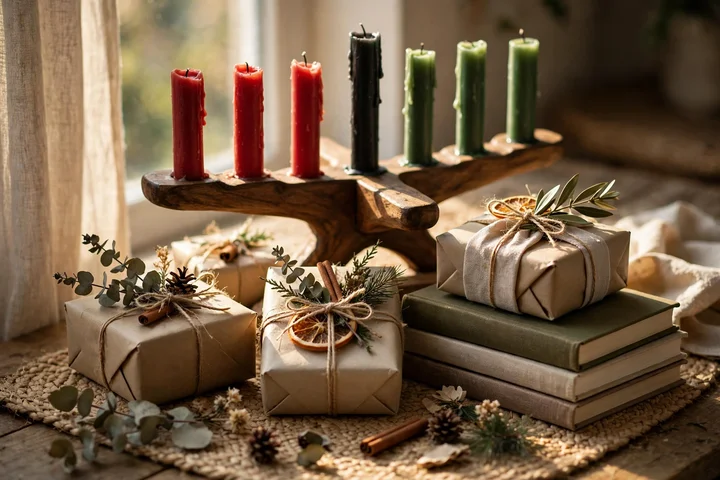
- Zawadi — gifts for January 1 (books and handmade gifts are the tradition).
- Red, black, and green cloth — for the table, optional but festive.
Place the mkeka first, then arrange everything on it — the kinara in the center, crops and corn around it. Our step-by-step kinara setup guide covers candle order and placement in detail. The Smithsonian’s National Museum of African American History and Culture has a good guide to the holiday’s history if you want the background behind the symbols.
The Nightly Ritual (15–30 Minutes)
Every evening of Kwanzaa, the household gathers — in person or on a video call — and follows the same simple pattern:
- Gather and greet. Someone asks “Habari gani?” (“What’s the news?”). Everyone answers with the principle of the day — “Umoja!” on December 26, and so on.
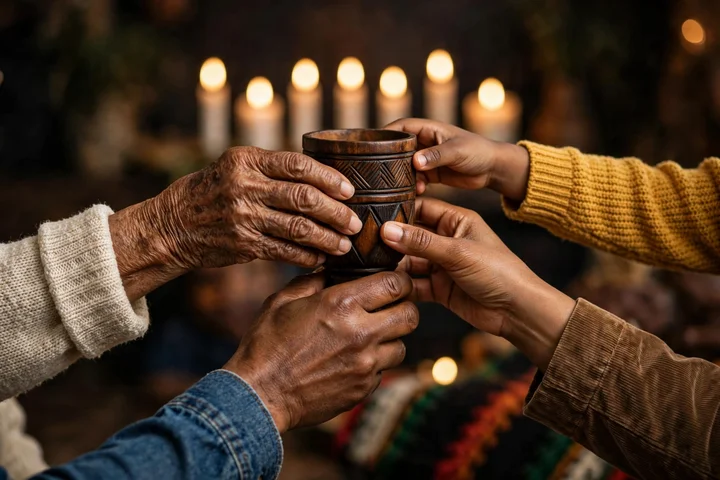
- Honor the ancestors. A brief moment: pour a little water or juice from the unity cup onto the earth (or into a plant), or simply speak the names of family members who came before you.
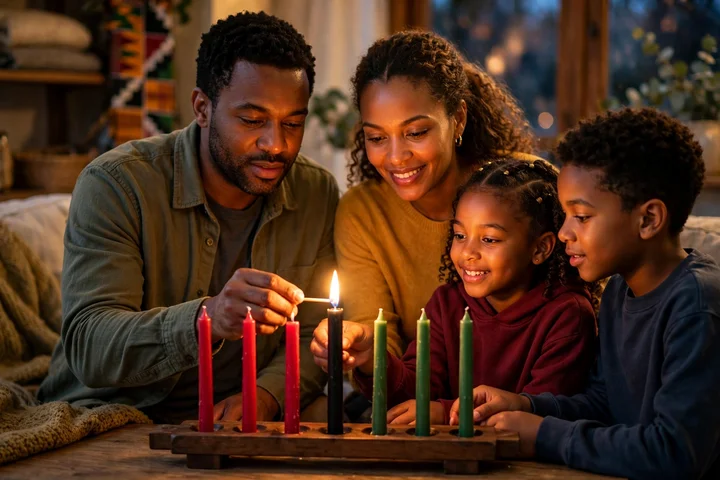
- Light the candle. Light the day’s candle on the kinara (black first, then alternating red and green — see the order below).
- Discuss the principle. Read the day’s principle aloud and talk about it. With kids: ask what it means to them. With adults: share a story, a quote, or a goal connected to it.
- Share. Pass the unity cup for everyone to sip, or share a snack or dessert together.
That’s it. The ritual is intentionally simple — the depth comes from the conversation, not the ceremony.
Your 7-Day Plan for Kwanzaa 2026
Day 1 — Sat, Dec 26: Umoja (Unity). Light the black candle. Theme the evening around family togetherness: share a meal, tell family stories, call relatives you haven’t spoken to in a while.
Day 2 — Sun, Dec 27: Kujichagulia (Self-Determination). Add the first red candle (far left). Talk about defining yourselves on your own terms — goals for the new year, names, identity, dreams. Good night for journaling or vision boards.
Day 3 — Mon, Dec 28: Ujima (Collective Work and Responsibility). Add the first green candle (far right). Do something together: cook as a family, clean up a shared space, volunteer, or help a neighbor.
Day 4 — Tue, Dec 29: Ujamaa (Cooperative Economics). Add the second red candle. Shop at a Black-owned business (in person or online), support a Black creator, or plan how the family can pool resources in the new year.
Day 5 — Wed, Dec 30: Nia (Purpose). Add the second green candle. Each person shares their purpose — what they’re here to do, what they’ll build, who they want to become. Write them down.
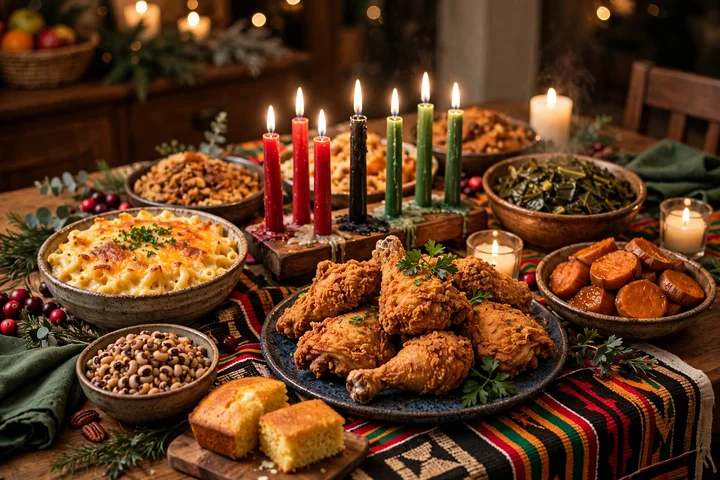
Day 6 — Thu, Dec 31: Kuumba (Creativity) + Karamu feast. Add the third red candle, then host the big feast: African and African-American dishes, music, dancing, storytelling, poetry. Invite extended family and friends — Karamu is the most social night of the week.
Day 7 — Fri, Jan 1: Imani (Faith). Light the final green candle — all seven now burning. Exchange zawadi (gifts), reflect on the week, and carry the principles into the new year.
Celebrating With Kids
Kwanzaa is one of the most kid-friendly holidays in the calendar, because participation is built in:
- Let children light (or pretend-light) the candles and answer “Habari gani?”
- Corn: the muhindi includes one ear per child — kids love having “their” symbol.
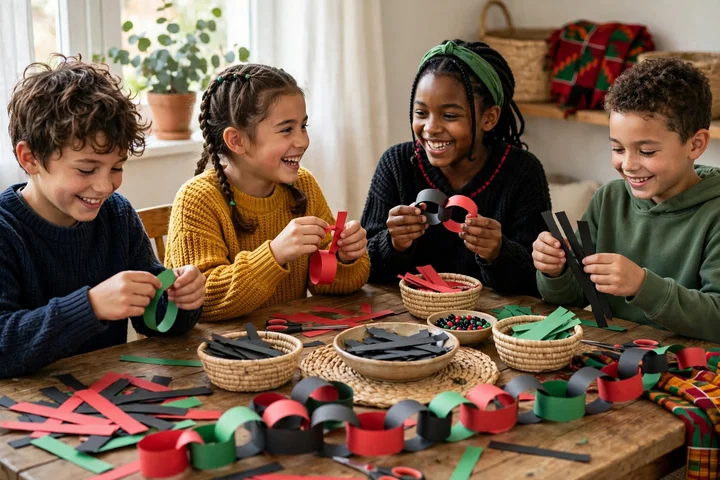
- Crafts: paper chains and banners in red, black, and green; handprint art; principle-of-the-day coloring pages.
- Stories: one short story or book about African heritage each night.
- The gifts on January 1 are traditionally books and handmade items — perfect for kids.
Another idea that works well: give each child one principle to “own” for the week — they lead that night’s discussion, choose the snack, or pick the story. It turns the holiday from something they watch into something they run, and the principles stick far better when kids get to teach them back.
Celebrating Away From Home or in a Small Household
If you live alone, in a dorm, or far from family, Kwanzaa still works — it just looks a little different. A single candle lighting each night, even on your own, counts as a real celebration: say the greeting out loud, read the principle, and spend a few quiet minutes thinking about what it means for your life. Video calls make the ritual easy to share across distance — set a nightly call time, light your candles together on camera, and take turns reading the principle aloud.
Many cities also host public Kwanzaa events at libraries, museums, and community centers, especially around the Karamu feast on December 31; joining one is a good way to learn the traditions firsthand and meet people who celebrate every year. If your household is just two people, split the nightly roles — one person greets, the other lights the candle — and let the conversation carry the evening. The size of the gathering never matters as much as the intention behind it.
Carrying the Principles Into the New Year
Kwanzaa ends on January 1, but the seven principles are meant to last all year. A simple way to keep them alive is to give each one a small, concrete job in the months that follow: January for Umoja, a weekly family dinner; February for Kujichagulia, a personal goal you define for yourself; March for Ujima, a shared project with neighbors or friends. Write the seven principles on a card and keep it somewhere you’ll see it — on the fridge, in a notebook, or as a phone background.
Some families revisit the list at the start of each season, asking what each principle looked like in practice and what they’d like to do differently. The point isn’t to repeat the ceremony; it’s to let the ideas shape ordinary decisions — how you spend, who you support, what you build, and how you show up for your community. That is the real measure of a first Kwanzaa: not how perfect the table looked, but how much of the week is still with you in February.
Common First-Timer Questions
Do I have to be African American to celebrate Kwanzaa?
No. Kwanzaa centers African-American heritage, but anyone can observe it respectfully. Approach it as a learner: read the principles, practice them sincerely, and you’re celebrating it right.
Can I celebrate Kwanzaa if I celebrate Christmas?
Yes. Kwanzaa is cultural, not religious — it doesn’t conflict with Christmas, Hanukkah, or any faith. Many families celebrate both.
What if I miss a day?
Light the candles you missed and continue. Kwanzaa is a practice, not a test — consistency matters more than perfection.
Do I need the exact right items?
No. A printed mat works as a mkeka, regular candles work if you can’t find the colors, and a favorite mug works as a unity cup. The symbols matter more than the shopping.
Where do I put the display?
A table or shelf in a central spot — living room, dining room — where the family naturally gathers. Keep candles away from curtains and kids’ reach when lit, as with any candles.
Frequently Asked Questions
How long does the nightly Kwanzaa ritual take?
About 15–30 minutes: greeting, ancestor honor, candle lighting, principle discussion, and a shared sip or snack. December 31 (feast) and January 1 (gifts) take longer.
What do you say on each day of Kwanzaa?
The greeting “Habari gani?” (“What’s the news?”) is answered with the day’s principle: Umoja, Kujichagulia, Ujima, Ujamaa, Nia, Kuumba, then Imani.
What should a first-timer buy for Kwanzaa?
A kinara with seven candles (1 black, 3 red, 3 green), a woven mat, fruit, corn, a unity cup, and gifts for January 1. Starter kits covering all of this run about $25–40.
Is Kwanzaa only for Black families?
It was created for the African-American community and centers Black heritage, but there is no rule against others celebrating it. Celebrate with respect and genuine engagement with the principles.
What happens on the last day of Kwanzaa?
January 1 (Imani/Faith): the seventh candle is lit, gifts (zawadi) are exchanged, and the family reflects on the week and the year ahead.
Can I celebrate Kwanzaa alone?
Yes. Light the candles, say the greeting, read the principle, and spend a few quiet minutes reflecting. You can also join a nightly video call with family or attend a public community event — solo celebration is still a real celebration.
What food do you eat during Kwanzaa?
There is no single required menu. Families typically serve African and African-American dishes — collard greens, black-eyed peas, sweet potatoes, fried chicken, mac and cheese, cornbread, and fruit — with the big shared feast (Karamu) on December 31.
When should I start preparing for Kwanzaa?
Mid-December is a good time to order a kinara and candles, since kits can sell out close to the holiday. Gather the fruit, corn, and gifts in the week before December 26 so the first night is calm, not a rush.
Need the right words for cards and toasts? Our Kwanzaa wishes and greetings has 25 messages for every day of the week.
Leave a Reply