How to Keep Your House Warm Without Turning Up the Heat (2026 Guide)
How to Keep Your House Warm Without Turning Up the Heat (2026 Guide)
By:
noman Team
Date:
Learning how to keep house warm without turning up the heat comes down to one principle: stop the warmth you already have from escaping, and aim it where you actually feel it. Sealing drafts, managing curtains, and warming people instead of empty rooms can make a home feel several degrees warmer with the thermostat untouched — and DOE-backed thermostat habits alone can shave as much as 10% a year off heating bills.
Key Facts
About 30% of a home’s heating energy is lost through windows, per the U.S. Department of Energy — curtains and window film are among the cheapest fixes.
Setting your thermostat 7–10°F lower for 8 hours a day (while asleep or away) can cut heating bills by up to 10% per year, according to the DOE.
In winter, the lower your indoor temperature, the slower your home loses heat — so every degree you don’t heat is money kept.
Reversing a ceiling fan to run clockwise at low speed pushes trapped warm air back down to living level.
Indoor humidity of 30–50% makes air feel warmer; dry winter air feels colder at the same temperature.
Heating people (layers, blankets, warm drinks) instead of empty rooms is the fastest free comfort upgrade.
Seal Drafts and Leaks: Keep the Warm Air You Already Paid For
Before anything else, stop the leaks. Cold air sneaks in — and warm air sneaks out — around window frames, exterior doors, attic hatches, electrical outlets on outside walls, and anywhere pipes or cables pass through. On a windy day, walk slowly around your home with the back of your hand near these spots; you will feel the drafts plainly.
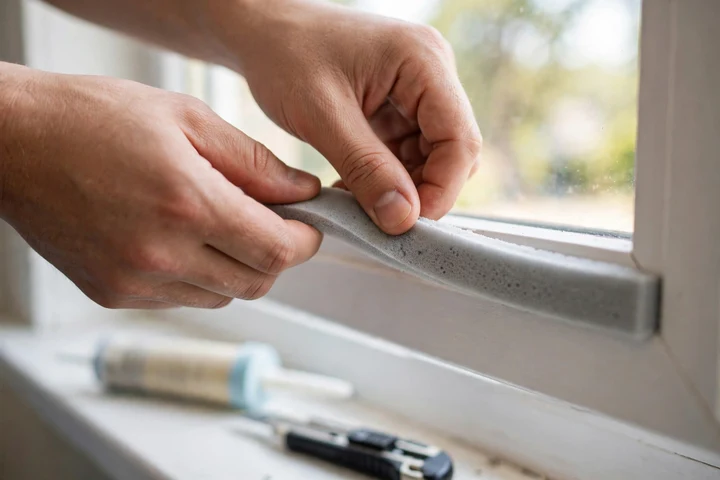
The fixes are cheap and fast: foam weatherstripping for doors and windows, caulk for stationary gaps, outlet gaskets for exterior-wall receptacles, and a draft stopper at exterior doors. These are classic small home improvements — a single afternoon’s work that keeps paying you back every cold month. The Department of Energy specifically recommends weatherstripping, caulking, and added insulation as low-cost ways to seal the “home envelope,” and notes that roughly 30% of heating energy escapes through windows alone.
The cheapest heat is the heat you already have. Most homes leak a surprising share of their warmth straight through gaps you can seal with a $5 tube of caulk.
How to Keep Your House Warm Without Turning Up the Heat Using Curtains and Sunlight
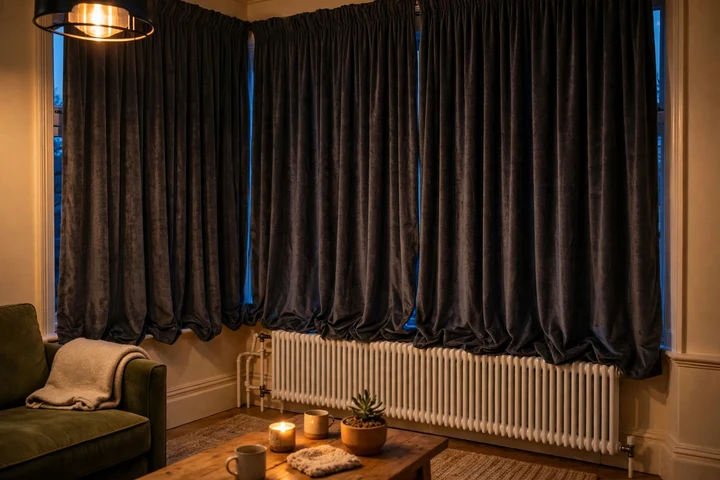
Windows are your biggest heat-loss surface — and your biggest opportunity. On sunny winter days, open curtains on south-facing windows for free solar heat; the moment the sun drops, close every curtain in the house to trap it inside.
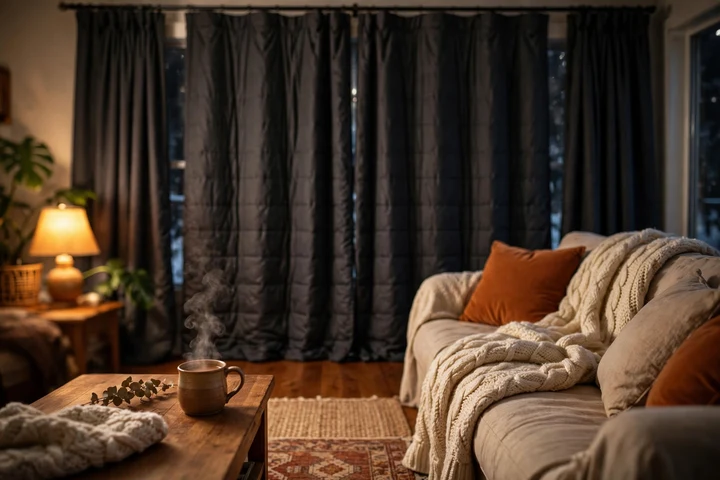
Heavy thermal curtains or insulated cellular shades create a dead-air barrier between cold glass and your room. For a nearly free upgrade, clear plastic window film sealed tightly to the frame cuts the chill radiating off single-pane glass. One caution: never fully seal rooms that need ventilation — bathrooms and kitchens need airflow to prevent moisture buildup.
Heat the People, Not the House
Here is the mindset shift that changes everything: your comfort depends on your body temperature, not the temperature of every cubic foot of air in the building. When the people are warm, the house doesn’t have to be.
Layer like a hiker — base layer, insulating middle, warm socks or slippers, since cold feet make your whole body feel cold. Swap cotton sheets for flannel, add a heavier couch blanket, and keep a throw within arm’s reach. Hot water bottles, heating pads, and warm drinks raise comfort immediately, and an electric blanket warming the bed costs a fraction of heating the whole bedroom all night. As the DOE puts it, dressing in warm layers “won’t cost a penny.”
Zone Your Home: Warm the Rooms You Actually Use
There is no reason to heat a guest room, formal dining room, or storage space to the same temperature as the living room where everyone gathers. Close the doors to unused rooms — and place draft stoppers at their bases — so warm air stays where people are. If your home has floor or wall vents, you can partially close one or two in rarely used rooms to redirect airflow toward living spaces, which makes the furnace’s job easier.
Two cautions: don’t close more than about a quarter of your vents or you’ll strain the system, and in freezing weather keep unused rooms above 55°F — a burst pipe costs far more than the heat you saved. For most homes, the practical version of zone heating is simpler: close interior doors, gather in one or two rooms in the evening, and let the furnace serve a smaller area.
Layer Rugs and Textiles for Instant Warmth
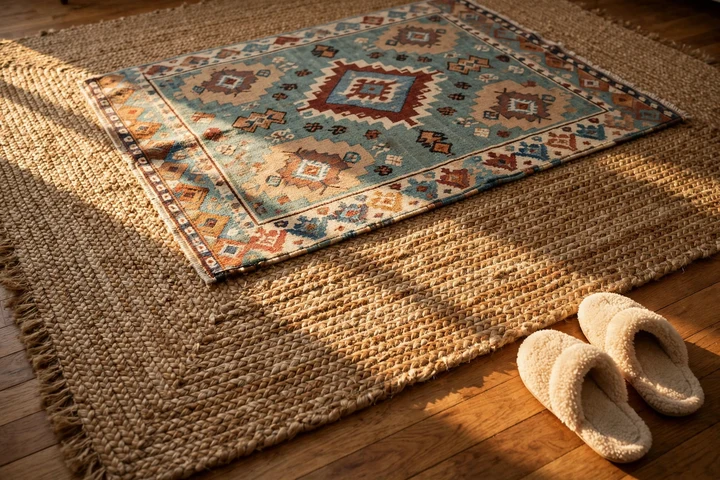
Bare hard floors are heat thieves: wood, tile, and laminate conduct warmth straight out of your feet, which is why a room can read 70°F yet feel chilly. A thick area rug — or two layered — breaks that conductive path and instantly changes how warm a room feels.
Focus on floors you touch: beside the bed, in front of the couch, and anywhere you stand still. Dense wool or cotton rugs insulate best, and the same principle applies upward — upholstered furniture, wall hangings, even full bookshelves add insulation to cold walls. More ideas in our roundup of simple ways to make your home more comfortable.
Reverse Your Ceiling Fans to Push Heat Down
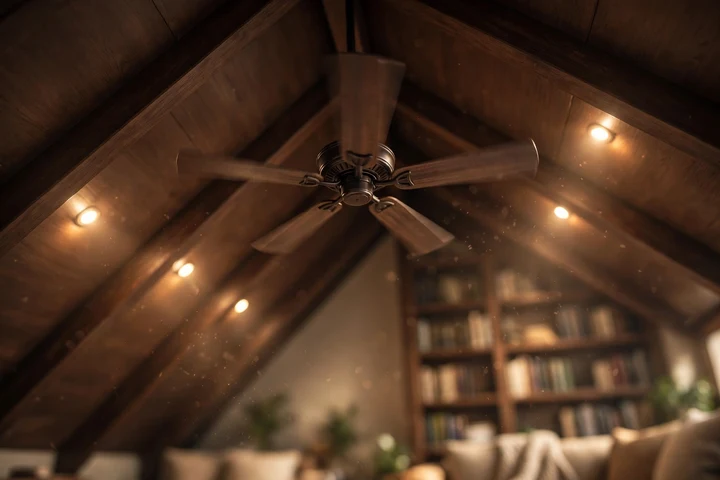
Warm air rises, so in rooms with ceilings over eight feet, a layer of paid-for heat sits up high where nobody feels it. Almost every ceiling fan has a direction switch on the motor housing — in winter, flip it so blades run clockwise (viewed from below) at the lowest speed.
That gentle updraft pushes ceiling-pooled warm air down along the walls and back into the living space — without summer’s cooling breeze. It takes under a minute, costs nothing, and the DOE lists fan circulation as a core heating hack because it spreads warmth room to room. Switch back to counterclockwise in summer.
Warm air rises and hides near the ceiling. A one-minute fan reversal brings it back down to where you live — free heat you already paid for.
Add Humidity: Moist Air Feels Warmer
Winter air is dry, and dry air feels colder because moisture evaporates off your skin faster. Raising indoor humidity to 30–50% makes 68°F genuinely feel like 68°F.
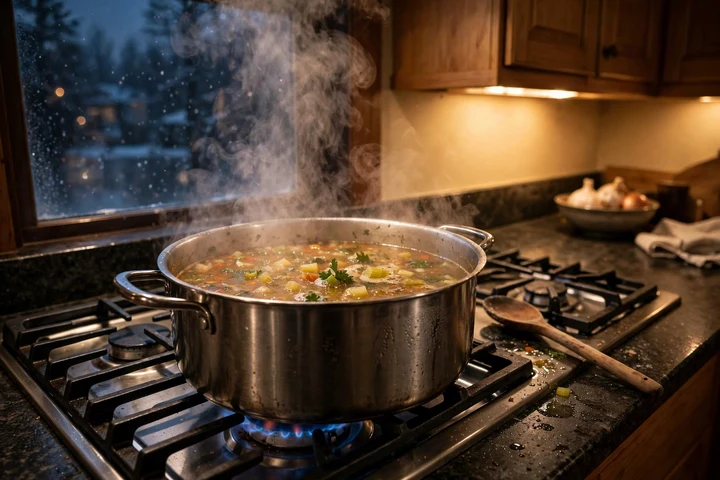
Skip the expensive whole-house humidifier at first: simmering soups, cooling bathwater in the tub, and indoor drying racks all add moisture free. If you buy a portable humidifier, get one with a built-in humidistat and clean it weekly — above 50% invites condensation and mold. A $10 hygrometer tells you where you stand.
Thermostat Strategy: How to Keep Your House Warm Without Turning Up the Heat
Pair everything above with a smarter thermostat setting: turn it back 7–10°F for 8 hours a day while asleep or away, and you can save as much as 10% a year on heating and cooling — on a $150-a-month winter bill, roughly $15 back monthly for doing nothing.
In practice, that means 68°F while you’re home and awake, then a programmed setback to 60–62°F overnight and while the house is empty — the longer the house sits lower, the less energy escapes. A programmable or smart thermostat automates the whole routine — set it once and the house is warm when you wake up and when you get home. One exception: if you heat with a heat pump, avoid deep setbacks that trigger the expensive auxiliary electric heat; check your manufacturer’s guidance and use a “smart recovery” thermostat designed for heat pumps.
Don’t forget the furnace: a clogged filter makes the whole system work harder — check it monthly and replace when gray. The DOE’s winter energy-saving guide also recommends recycling residual appliance heat: after baking, leave the oven door open once it’s off (never use it as a heater; keep kids and pets clear). It’s warmth you already paid for.
How Much Can You Actually Save?
The math is compelling: the thermostat setback alone is worth up to 10% of annual heating and cooling costs, and with ~30% of heating energy escaping through windows, basic curtains-plus-film on your worst windows cuts the load noticeably. None of this needs a contractor — weatherstripping, caulk, film, and draft stoppers total under $50 for a whole house.
Think of it as a stack: sealing and curtains cut escaping heat, the fan and humidity make the remaining heat feel warmer, zoning concentrates it where you are, and the setback banks savings overnight. Households layering all of them commonly see double-digit drops in winter bills — which pairs well with a Christmas on a budget plan too.
Frequently Asked Questions
What is the cheapest way to keep a house warm without turning up the heat?
Seal drafts first — weatherstripping, caulk, and door draft stoppers cost under $50 total and stop paid-for heat from escaping. Then close curtains at night, reverse ceiling fans to clockwise, and dress in layers so you can comfortably lower the thermostat.
What temperature should I set my thermostat to in winter?
The DOE recommends around 68°F while you’re home and awake. Set it back 7–10°F for at least 8 hours a day while asleep or away — that alone can cut heating and cooling costs by up to 10% a year. Keep unused rooms no lower than about 55°F to protect pipes.
Do curtains really help keep heat in?
Yes. The DOE reports that about 30% of a home’s heating energy is lost through windows, and calls window coverings one of the simplest fixes. Open curtains on south-facing windows during sunny days for free solar heat, then close them at night to trap it; thermal curtains or plastic film boost the effect.
Should my ceiling fan go clockwise or counterclockwise in winter?
Clockwise, at low speed. Viewed from below, winter mode is clockwise — it pushes warm air trapped at the ceiling back down into the room without creating a cooling breeze. Switch back to counterclockwise in summer.
Does a humidifier make a room feel warmer?
Indoor humidity of 30–50% makes the same temperature feel warmer because moist air slows heat loss from your skin. Free options: simmering food, cooling bathwater in the tub, indoor drying racks. Stay under 50% to avoid condensation and mold.
Is it cheaper to heat one room or the whole house?
Heating the rooms you use is cheaper — close doors and draft-block unused rooms so your furnace serves a smaller area. Just don’t close more than about a quarter of your vents (it strains the system), and keep any room with plumbing above 55°F in freezing weather.
Will turning my heat down at night really save money?
Yes: the lower the indoor temperature, the slower heat escapes, so a setback banks savings all night. The DOE finds 7–10°F lower for 8 hours daily saves as much as 10% annually on heating and cooling — a programmable thermostat does it automatically.
Can I leave the oven door open to heat the kitchen?
Only after cooking, with the oven off — let residual heat drift out rather than wasting it. Never use an oven as a primary heat source; it can produce carbon monoxide and is a fire and burn risk. Keep children and pets away from the open door.
The Bottom Line on Keeping Your House Warm Without Turning Up the Heat
You don’t need a higher thermostat to feel warmer — you need less escaping heat and smarter use of the warmth you have. Seal the drafts, run curtains on a day-night schedule, reverse the fans, add humidity, zone your living space, and let the thermostat drop while you sleep. Stacked together, these steps can trim up to 10% off heating bills while the house feels genuinely cozier. Start this weekend with the $50 sealing kit.


Leave a Reply