
If you’re wondering how to keep your dog calm during fireworks on New Year’s Eve, start eight weeks early: desensitize your dog to firework sounds, build a sound-dampened safe room, and combine calming aids like a pressure wrap, a pheromone diffuser, and vet-approved chews. Then stay home with your dog on the night itself and keep the routine normal.

If your dog trembles, paces, hides, or tries to bolt every time the sky lights up, you are not alone. Fireworks are one of the most common triggers of canine anxiety, and New Year’s Eve is the loudest night of the year in most neighborhoods — displays often run for hours, not minutes. The good news: starting now, in late October, gives you a full eight weeks to change how your dog experiences December 31st.
Key Facts
- Fireworks hit dogs through unpredictable noise, bright flashes, and vibrations — dogs hear frequencies humans cannot, which makes each boom far more intense for them.
- New Year’s Eve displays often last for hours around midnight, so preparation matters even more than for shorter holidays.
- Desensitization works best when started 6–8 weeks before the event — late October gives you a full runway to New Year’s Eve.
- The AKC recommends pairing low-volume firework sounds with high-value treats, keeping the dog “below threshold” so learning can happen.
- Comforting a frightened dog does not reinforce fear; calm, steady reassurance helps them feel safe.
- More dogs go missing on fireworks nights than any other time of year, so updated ID tags and microchips are essential.
Why Fireworks Terrify Dogs (and Why New Year’s Eve Is the Worst Night)
Dogs experience fireworks completely differently than we do. As veterinarian Dr. Judy Morgan explains in the AKC’s fireworks guide, dogs may react to the smell, the noise, and the flashes of light all at once — trembling, shaking, howling, and in severe cases becoming frantic. Dogs hear higher frequencies than humans, so every boom lands harder. Add the unpredictability — a dog cannot understand that the noise will stop — and you have genuine panic.
New Year’s Eve is uniquely tough. Unlike one scheduled display, NYE fireworks erupt across whole neighborhoods for hours before and after midnight. Your dog cannot escape to a quieter part of town, because there isn’t one. The dogs who cope best on December 31st are the ones whose owners started preparing in the fall.
How to Keep Your Dog Calm During Fireworks: The 8-Week Desensitization Plan
Desensitization — gradually exposing your dog to firework sounds at a low, non-scary volume while pairing them with good things — is the most effective long-term strategy for firework anxiety. The AKC’s behavior experts describe the method: play a firework recording softly, give a high-value treat, and slowly raise the volume over many sessions. The goal is counter-conditioning — turning the scary sound into a predictor of something great.
Starting in late October 2026 gives you roughly eight weeks until New Year’s Eve. Here is the week-by-week plan.
Weeks 1–2: Foundation (Late October)
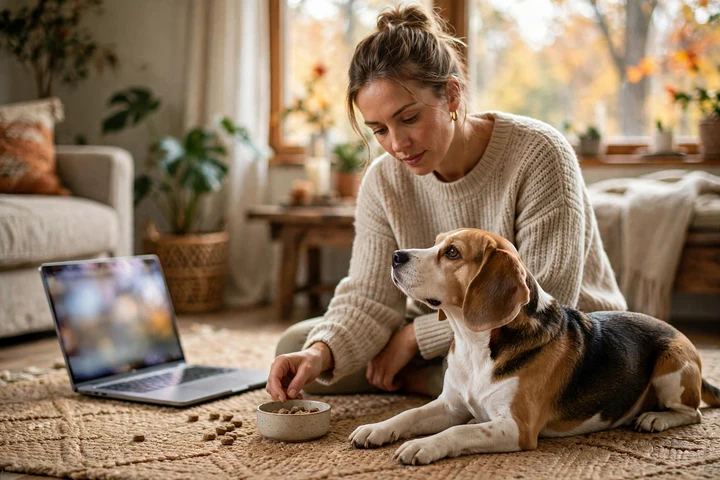
Set up a quiet training space with high-value treats — the AKC’s experts stress picking a treat desirable enough that the emotional response outweighs the fear — and a firework-sounds recording. Play it at barely-audible volume while your dog relaxes, and treat generously. Keep sessions to 3–5 minutes, once or twice daily. If your dog pants, paces, or leaves the room, the volume is too high. Experts call the comfort zone “below threshold,” and staying under it is the entire secret of the method.
Weeks 3–4: Building Positive Associations (Early November)
Raise the volume in small steps, always paired with treats or play. Vary the recording — different displays, different distances — so your dog generalizes the lesson. Now is also the time to introduce calming products: let your dog wear the pressure wrap during pleasant activities and plug in the pheromone diffuser in the training room, so both carry positive associations before they are needed.
Weeks 5–6: Raising the Challenge (Late November)
The volume should now be moderate — clearly audible but comfortable. Add mild unpredictability: vary the timing, train in different rooms, and practice while your dog is mildly distracted. If your dog regresses, drop back to the last comfortable volume for a few days. As the AKC’s experts put it, conditioning a dog to associate fireworks with good things takes time and multiple experiences. The AKC’s guide to keeping dogs calm during fireworks walks through the same counter-conditioning steps with expert quotes.
Weeks 7–8: Dress Rehearsal (December)
Run full rehearsals: realistic volume, in the actual safe room you will use on New Year’s Eve, with white noise on, the diffuser plugged in, and the pressure wrap worn. Practice your own calm behavior too — dogs read our body language constantly. End every session on a win, volume back down, with a jackpot of treats. By Christmas week, your dog should hear realistic firework sounds and look to you for a treat instead of the exit.
A calm dog on New Year’s Eve is built in October, not on December 31st.
Calming Products That Actually Help Dogs During Fireworks
No product replaces training, but the right aids take the edge off — especially combined with desensitization. These are the three categories veterinarians and behaviorists mention most.
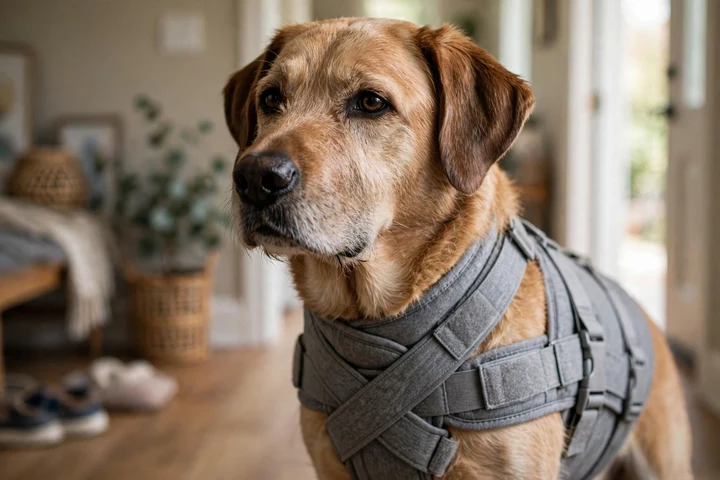
Pressure wraps (anxiety vests). The Thundershirt is the best-known: a snug vest applying gentle, constant pressure around the torso, like swaddling an infant. Scientific evidence is modest, but owner reports are extensive, and the AKC lists anxiety vests among options worth discussing with your vet. Introduce it weeks ahead during pleasant moments — never first on New Year’s Eve.
Pheromone diffusers. Adaptil diffusers release a synthetic version of the appeasing pheromone mother dogs produce. Plug it in a day or two before you need full effect, in the room where your dog will spend the evening.
Calming chews and supplements. Vet-approved calming chews (look for L-theanine, chamomile, or valerian root from reputable brands with NASC quality seals) help mildly anxious dogs settle. For severe anxiety, talk to your veterinarian well before the holiday about prescription options — the AKC notes vets can discuss true therapeutic treatments for dogs in genuine panic. Never give human medication without veterinary guidance.
One scent caution: some owners diffuse essential oils for calm, but many common oils are toxic to dogs. If you go this route, first check a reliable list of essential oils safe for dogs — and when in doubt, skip the oils and stick with the pheromone diffuser.
How to Keep Your Dog Calm During Fireworks on the Night Itself
Training and products do the heavy lifting in advance. On December 31st, run the plan:
1. Exercise early. A long afternoon walk or play session burns nervous energy — and keeps you indoors before the first booms.
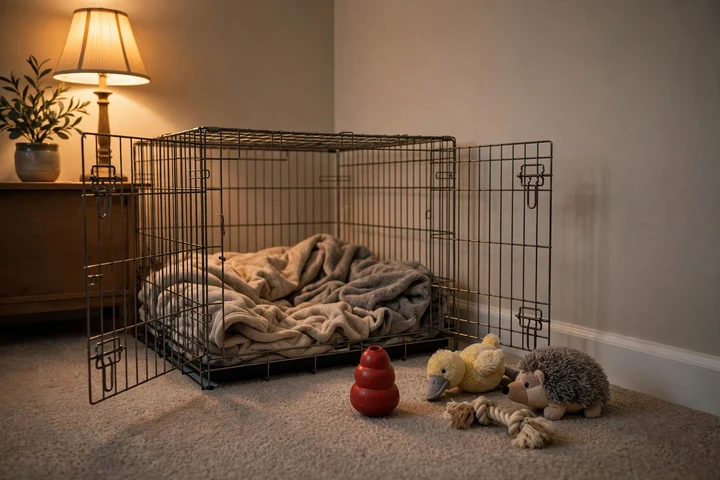
2. Set up the safe room. Choose an interior room away from windows. Close curtains, run a fan, TV, or white-noise machine, and set out the crate (door open) with familiar blankets. Our guide on how to make your home more comfortable for your dog has more setup ideas.
3. Feed and potty on schedule. Routine is reassuring. Take a final leashed potty break before dark — even in a fenced yard, since panicked dogs bolt. Double-check collar fit first.
4. Deploy the calming toolkit. Wrap on, diffuser running, white noise playing. Offer a frozen Kong or lick mat — licking is naturally calming, and a food puzzle gives an anxious brain a job. Keep a few ways to keep your dog entertained indoors in reserve in case one loses its appeal mid-evening.

5. Stay home — and stay calm. Your calm presence is the strongest signal that nothing is wrong. Keep your behavior boring: normal voice, normal routine.
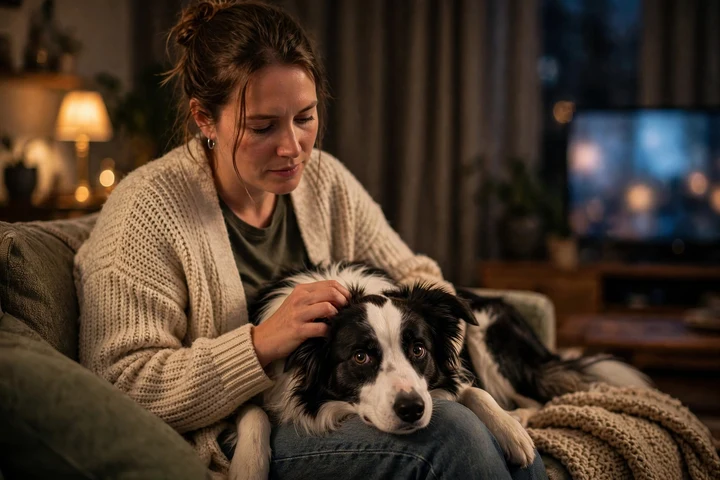
6. Comfort your dog the right way. You absolutely can and should comfort a frightened dog — the old “ignore them” advice is outdated. The key is how: calm, even tone, long slow strokes. What backfires is frantic, high-pitched reassurance (“It’s OK! It’s OK!”), which tells your dog something really is wrong.
7. Secure the exits. Doors, windows, and pet doors shut all evening — brief party guests, since arrivals are the top escape risk. Confirm ID tags and microchip registration are current before the night begins.
Comforting a frightened dog doesn’t reinforce fear — it reinforces trust.
What NOT to Do When Your Dog Is Scared of Fireworks
- Don’t take your dog to the fireworks. Not to watch from the car, not “just for a minute.” The AKC’s first rule: don’t take dogs to fireworks shows, and don’t leave them outside during them.
- Don’t punish fear. Scolding trembling or accidents teaches your dog the scary night also brings scary owners. Fear is an emotion, not disobedience.
- Don’t debut products on NYE. Anything new — vest, diffuser, chew — gets a trial run in November, not a first outing amid the booms.
- Don’t leave your dog alone if avoidable. If you must go out, use a trusted sitter who knows the plan.
- Don’t overdo reassurance. Calm petting, yes; hovering and shadowing every panicked move, no.
- Don’t assume one good year predicts the next. Noise sensitivity can develop or worsen with age — run the plan every year.
When to Call Your Vet About Firework Anxiety
Some dogs need more than training and calming aids. Call your veterinarian if your dog injures themselves trying to escape, refuses food during noise events, or pants and drools for hours after the sounds stop. Book weeks before New Year’s Eve, not December 30th: some medications need trial dosing, and your vet may want to rule out pain or cognitive issues that amplify fear. For severe cases, a certified animal behaviorist is another excellent resource — the AKC notes it is never too soon to start planning, even for next year.
The best fireworks plan for your dog has three parts: training, environment, and you.
Conclusion: Your New Year’s Eve Game Plan
Knowing how to keep your dog calm during fireworks comes down to starting early, stacking small advantages, and being the calm center of your dog’s loudest night. Desensitize from late October, introduce calming aids in November, rehearse in December — then on the night: exercise early, secure the house, set up the safe room, and stay home. Do that, and your dog has the best possible chance of sleeping through the celebration while you enjoy yours.
Frequently Asked Questions
Should I comfort my dog during fireworks, or will that reinforce fear?
Comfort them. Behavioral science is clear: you cannot reinforce an emotion like fear with comfort. Just keep it calm — steady voice, slow strokes — since frantic fussing signals that something really is wrong.
Do calming vests like the Thundershirt really work?
Results vary. Scientific evidence is limited, but many owners report real improvement, and behaviorists consider pressure wraps a reasonable low-risk tool — best introduced weeks early and combined with desensitization.
How long does firework desensitization take?
Most protocols run 6–8 weeks of short daily sessions. Starting in late October gives a full runway to New Year’s Eve; cramming it into the final week rarely works.
Can I give my dog Benadryl, melatonin, or CBD for fireworks anxiety?
Only under veterinary guidance. Dosing, interactions, and product quality vary enormously, and some products are unsafe for certain breeds or conditions. Ask your vet a few weeks before the holiday.
Why is my dog fine with thunder but terrified of fireworks?
Thunder builds gradually with pressure changes dogs sense in advance; fireworks are sharp, random, and paired with flashes and vibrations. Dogs can easily fear one and not the other.
What if I have to leave my dog alone on New Year’s Eve?
Use a trusted sitter who stays in the house, runs the safe-room setup, and follows your routine. Leave written instructions, keep white noise and the diffuser on, and secure every exit.
Are fireworks dangerous for dogs beyond the noise?
Yes. Burned debris can contain toxic chemicals, and unspent fireworks are a poisoning risk if chewed. Keep dogs leashed and away from display areas and debris for several days afterward.
When should I see a vet instead of just training at home?
If your dog injures themselves, escapes, refuses food, or panics for hours, that is beyond normal nervousness. Severe noise phobia is a medical issue, and prescription options exist that training alone cannot replace.
Leave a Reply