
You can celebrate Groundhog Day with kids by holding a prediction party on the morning of Tuesday, February 2, 2027 — watch Punxsutawney Phil together, make groundhog crafts, and play shadow games. It takes almost no planning: a cardboard burrow, a groundhog puppet, and a batch of groundhog cookies turn a minor holiday into a morning the kids will remember. Groundhog Day is Tuesday, February 2, 2027.
Groundhog Day is one of the easiest holidays to celebrate with children. It has a funny animal, a simple prediction, a morning event to watch, and a built-in science lesson about shadows and seasons. It is not a big holiday, which is exactly the point — it is a small, joyful excuse for a family morning in the middle of winter. Learning how to celebrate Groundhog Day with kids is about picking a few activities that fit your children’s ages and letting the groundhog do the rest.

Key Facts
- Groundhog Day is Tuesday, February 2, 2027.
- Punxsutawney Phil, the most famous groundhog, makes his prediction at sunrise (around 7:25 a.m. ET) in Punxsutawney, Pennsylvania.
- The legend: if Phil sees his shadow, six more weeks of winter; if he does not, spring comes early.
- Phil’s accuracy record is about 39% — a great way to teach kids that predictions are guesses, not guarantees.
- Groundhogs are also called woodchucks, and they are true hibernators — they sleep through winter in underground burrows.
- The holiday comes from a German tradition (Candlemas) brought to Pennsylvania by settlers in the 1700s.
The Legend: What Is Groundhog Day?
Groundhog Day comes from an old German tradition: on Candlemas (February 2), if an animal cast a shadow, winter would last six more weeks. German settlers in Pennsylvania in the 1700s brought the tradition with them, and the groundhog — common in the region — became the animal. In 1887, the first official trek to Gobbler’s Knob in Punxsutawney, Pennsylvania, made Phil famous, and the holiday has been celebrated there ever since. The Punxsutawney Groundhog Club publishes the official prediction each year at groundhog.org, and the event is streamed live so families anywhere can watch.
The honest version for kids: Phil’s prediction is a tradition, not a forecast. His accuracy is about 39% — worse than a coin flip, which makes it a wonderful, gentle way to teach children the difference between a fun prediction and a real weather forecast.
15 Groundhog Day Activities, By Age
Preschool (Ages 3–5)
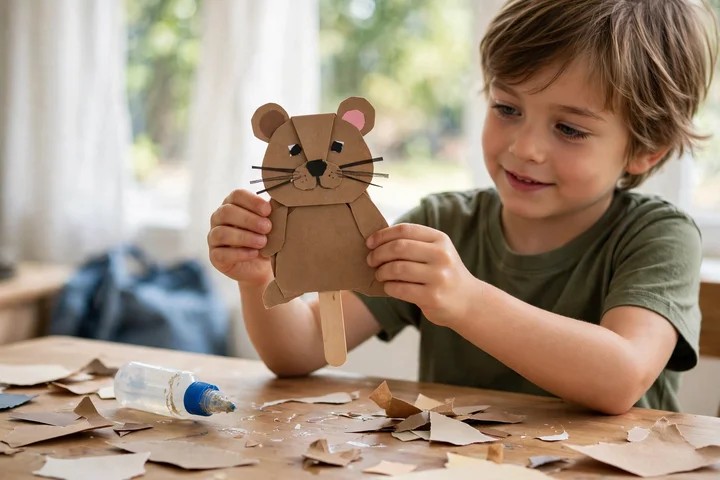
1. Pop-up groundhog puppet. Cut a groundhog shape from brown paper, glue it to a popsicle stick, and push it through a slit in a cardboard box “burrow.” The kids make Phil pop up and down, and you ask: did he see his shadow?
2. Shadow tracing. On a sunny morning, trace the children’s shadows on the sidewalk or on large paper with chalk. Do it again in the afternoon and compare — the shadow moved! This is the simplest version of the science behind the holiday.
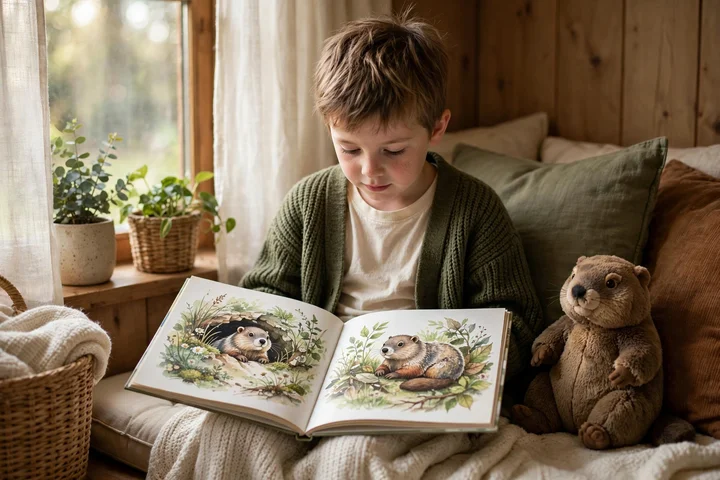
3. Groundhog story time. Read a groundhog picture book together. Our Thanksgiving books for kids list shows how to build a holiday book tradition, and the same approach works here: one or two groundhog books, read together in a blanket fort.
4. Burrow building. Build a burrow from couch cushions and blankets, and let the kids crawl in and out like groundhogs. Simple, physical, and exactly what a preschooler wants.
5. Groundhog mask. Cut a groundhog face from a paper plate, add ears and a snout, and let the kids wear it while they “predict” the weather. A photo of the whole family in groundhog masks is a keeper.
Ages 6–9
6. Prediction party. The morning of February 2, wake up early and watch Phil’s prediction live (or watch a recording). Before he appears, have everyone write down their prediction — shadow or no shadow — and their reason. Whoever guesses right gets to pick the day’s dessert.
7. Shadow science experiment. Use a flashlight and a toy animal in a dark room. Move the light and watch the shadow grow, shrink, and disappear. This is the actual physics behind the legend, and it is more memorable than any explanation.
8. Groundhog cookies. Bake sugar cookies, cut them into groundhog shapes (or circles with ears), and decorate them with chocolate icing. The kitchen version of the craft table, and the kids eat the results.
9. Woodchuck word games. How much wood would a woodchuck chuck? Teach the tongue twister, then have a contest — who can say it fastest without stumbling. The answer to the riddle, by the way, is a real scientific estimate: about 700 pounds of wood, according to wildlife researchers.
10. Weather journal. Start a simple weather journal on Groundhog Day: each day, the kids record whether it was sunny, cloudy, or snowy, and whether Phil was right. Six weeks later, count the results together. It turns the holiday into a six-week project.

Ages 10–12
11. Phil’s accuracy investigation. Look up Phil’s past predictions and compare them to the actual weather. At about 39% accuracy, the kids can do the math themselves — is Phil better than a coin flip? This is real data analysis, and it feels like detective work.
12. Make a groundhog movie. Film a short video: the kids write the script, build the set, and play Phil, the handlers, and the crowd. A phone camera and a cardboard burrow are all you need.
13. Design a groundhog habitat. Research what groundhogs actually eat and how their burrows work, then draw or build a model habitat. Groundhogs are herbivores that eat grasses, clover, and garden vegetables — which is why gardeners have strong opinions about them.
14. Plan a spring countdown. If Phil predicts an early spring, make a countdown calendar to the first day of spring (March 20, 2027). If he predicts six more weeks of winter, make a winter-bucket-list instead — and our Thanksgiving STEM activities show how to turn a seasonal theme into hands-on projects, which works just as well for a winter science countdown.
15. Groundhog Day movie night. Watch the 1993 film Groundhog Day together — it is rated PG and, for older kids, it is a funny, thoughtful introduction to the idea of living the same day over and over. Pair it with popcorn and a discussion: what would you do with a repeated day?
For a fast, high-energy round, the Thanksgiving minute-to-win-it games adapt easily to Groundhog Day: swap in groundhog-themed challenges (toss a stuffed groundhog into a burrow, balance a cookie on your forehead) and you have a party game set in five minutes.
Groundhog Day Food
Food is the easiest part of the celebration, and the kids can help with all of it:
- Dirt pie. Chocolate pudding in a pie crust, topped with crushed chocolate cookies “dirt” and a gummy worm or two. It looks like a groundhog’s burrow and tastes like dessert.
- Groundhog cookies. Sugar cookies shaped like groundhogs, decorated with chocolate icing and candy eyes.
- Shadow sandwiches. Cut sandwiches into groundhog shapes with a cookie cutter, or into sun and cloud shapes — eat the weather you predicted.
- Punxsutawney popcorn. A big bowl of popcorn for the prediction party or the movie night, with a little chocolate drizzle for the occasion.

The Prediction Party: A Simple Plan
If you do only one thing, do this: on the morning of Tuesday, February 2, 2027, gather the family before school. Have a prediction ballot ready — a piece of paper where everyone writes “shadow” or “no shadow” and signs it. Watch Phil’s moment (live stream or recording), cheer or groan together, then eat groundhog cookies for breakfast. The whole thing takes 20 minutes, and it becomes a family tradition by the second year.

Fun Facts About Groundhogs (To Share at the Party)
- Groundhogs are also called woodchucks, and “woodchuck” comes from a Native American word, not from wood.
- A groundhog’s burrow can be 30 feet long, with multiple rooms and exits.
- Groundhogs are true hibernators: their heart rate drops from about 80 beats per minute to about 5 during hibernation.
- They are excellent swimmers and climbers, despite their chunky build.
- Phil’s full name, according to the Punxsutawney Groundhog Club, is Punxsutawney Phil, Seer of Seers, Sage of Sages, Prognosticator of Prognosticators, and Weather Prophet Extraordinary.
FAQs About Celebrating Groundhog Day With Kids
When is Groundhog Day 2027?
Tuesday, February 2, 2027. Punxsutawney Phil makes his prediction at sunrise, around 7:25 a.m. Eastern Time, at Gobbler’s Knob in Punxsutawney, Pennsylvania.
What time does Punxsutawney Phil come out?
Around 7:25 a.m. Eastern Time on February 2. The ceremony starts earlier, with music and crowds, and the prediction itself happens at sunrise. If 7:25 a.m. is too early, watch a recording later in the morning — the kids will not mind.
Is Punxsutawney Phil’s prediction accurate?
About 39% of the time, according to the National Oceanic and Atmospheric Administration’s records — worse than a coin flip. It is a fun tradition, not a weather forecast, and that makes it a great teaching moment about predictions versus evidence.
What does it mean if the groundhog sees his shadow?
According to the legend, six more weeks of winter. If he does not see his shadow, spring will come early. The “shadow” is really about whether February 2 is sunny (clear sky, shadow visible) or cloudy (no shadow).
Can I watch Groundhog Day live with my kids?
Yes — the Punxsutawney event is streamed live each year, and recordings are widely available afterward. The official site at groundhog.org has details on the ceremony and the live stream.
What is a good Groundhog Day craft for preschoolers?
A pop-up groundhog puppet: a paper groundhog on a popsicle stick that pops out of a cardboard box burrow. It takes 15 minutes, uses supplies you already have, and the kids play with it all day.
Is the movie Groundhog Day appropriate for kids?
The 1993 film is rated PG, with some mild language and adult themes. It works well for ages 10 and up, and it is a fun, thoughtful way to extend the holiday into a movie night.
Why is it called Groundhog Day?
The holiday comes from a German tradition (Candlemas) brought to Pennsylvania by settlers in the 1700s. The groundhog was the animal available in the region, and in 1887 the first official prediction at Gobbler’s Knob made Punxsutawney Phil famous.

The Bottom Line
How to celebrate Groundhog Day with kids is simple: on Tuesday, February 2, 2027, hold a prediction party, watch Phil, make a craft, and eat groundhog cookies. Pick two or three activities that fit your children’s ages, let the shadow science spark a conversation, and remember that Phil is wrong more often than he is right — which is exactly what makes the morning fun.
Leave a Reply