
Thanksgiving stuffing is the savoury bread dish baked with butter, celery, onion, sage and broth — cooked in a separate casserole for the safest result, or inside the turkey if the centre reaches 165°F. This guide gives you the classic recipe for 8 to 10 people, the bread and broth choices that decide the texture, six variations, and the make-ahead timing that keeps it out of the way on Thanksgiving Day.

Key Facts
- What it is: cubed bread, butter, celery, onion, herbs and broth, baked until the top is crisp and the centre is moist.
- Stuffing vs dressing: the same dish — “stuffing” when cooked inside the bird, “dressing” when baked in a dish; most Americans now bake it separately.
- Safe temperature: 165°F at the centre, whether it cooks in the bird or in a casserole.
- Serves: the classic recipe below serves 8 to 10; allow about 3/4 cup per person.
- Thanksgiving 2026: Thursday, November 26 — this dish can be assembled the day before and baked on the day.
- Make-ahead: assemble up to 24 hours ahead, refrigerate, and bake on Thanksgiving Day.
Quotable: “Good Thanksgiving stuffing is not about a secret ingredient — it is about dry bread, enough butter, and a centre that actually reaches 165 degrees.”
What Is Thanksgiving Stuffing, Really?
Thanksgiving stuffing is bread, rebuilt. Day-old bread is cubed and dried so it can soak up broth without turning to mush, then it is tossed with butter-sautéed celery and onion, sage, thyme and parsley, and baked until the edges crisp. The result sits somewhere between bread pudding and a savoury cake: soft inside, golden on top, and rich enough to stand next to roast turkey without disappearing beside it.
The name causes more arguments than the recipe. In the American South, the dish is usually called dressing and is often made with cornbread. In the North, it is stuffing and is usually made with white bread. In practice the two words now describe the same food, and the real difference is where it cooks. If it cooks inside the turkey it is stuffing in the literal sense; if it cooks in a casserole it is dressing. Most food-safety guidance now favours the casserole, and most cooks have followed it, because a separate dish cooks evenly, browns better, and lets you make a vegetarian version without a second pan.
It also belongs to a bigger plate. Stuffing is one of the classic sides in our Thanksgiving side dishes guide, alongside mashed potatoes, green beans and cranberry sauce, and it is the side guests argue about most — which is exactly why it deserves its own recipe rather than a line in a menu plan.
The Classic Recipe (Serves 8 to 10)
This is the version most American families recognise: white bread, butter, celery, onion, sage and chicken or vegetable broth. It takes about 20 minutes of hands-on work and 35 to 45 minutes in the oven.
Ingredients:
- 1 loaf (about 1 pound) day-old white bread, cut into 3/4-inch cubes — about 10 cups
- 1/2 cup (1 stick) unsalted butter, plus more for the dish
- 2 cups diced yellow onion (about 2 medium onions)
- 2 cups diced celery (about 4 stalks)
- 2 cloves garlic, minced
- 1 tablespoon chopped fresh sage (or 1 teaspoon dried)
- 1 tablespoon chopped fresh thyme (or 1 teaspoon dried)
- 1/4 cup chopped fresh parsley
- 1 teaspoon salt, 1/2 teaspoon black pepper
- 2 large eggs, lightly beaten
- 2 to 2 1/2 cups low-sodium chicken or vegetable broth
- Optional: 1 cup chopped toasted pecans or cooked sausage, browned and drained
Method:
- Heat the oven to 350°F (175°C) and butter a 9×13-inch baking dish.
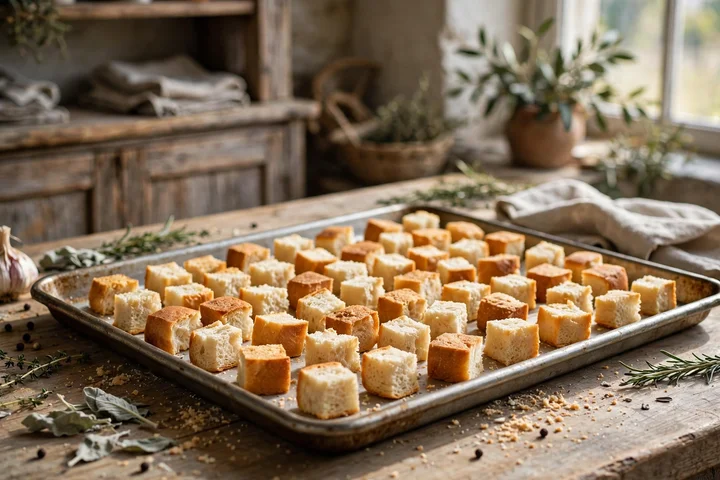
- Spread the bread cubes on a baking sheet and bake for 10 to 12 minutes, stirring once, until dry and lightly golden at the edges. Cool. Dry bread is the whole trick — fresh bread soaks up broth and collapses.
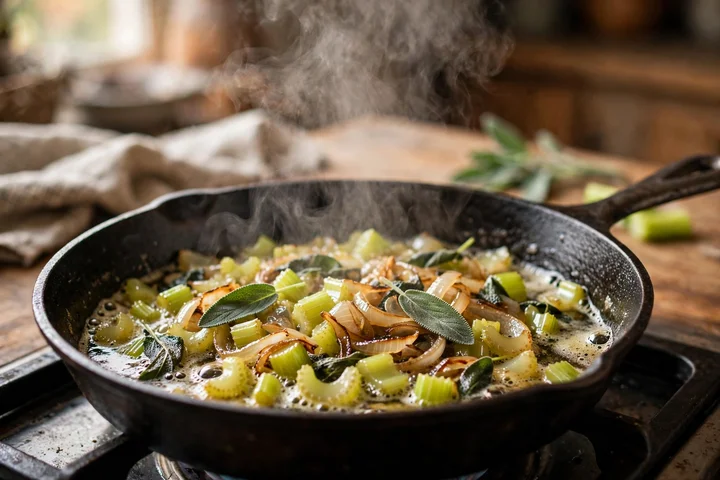
- Melt the butter in a large skillet over medium heat. Cook the onion and celery for 8 to 10 minutes until soft but not browned. Add the garlic and cook 1 minute more, then stir in the sage, thyme, salt and pepper.
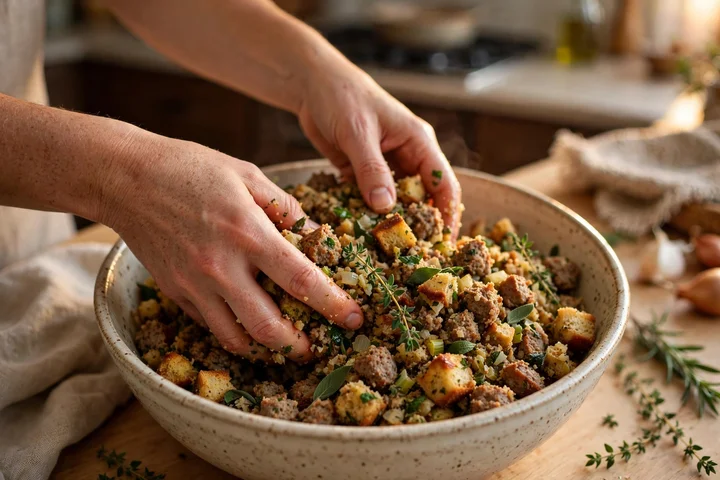
- Put the dried bread in a very large bowl. Pour the butter-vegetable mixture over it, add the parsley, and toss gently.
- Whisk the eggs into 2 cups of broth, pour over the bread, and toss again. The bread should be moist all the way through but not swimming — add the extra 1/2 cup of broth only if the cubes still look dry. If you are adding sausage or pecans, fold them in now.
- Transfer to the buttered dish, press lightly, and dot the top with a few small pieces of butter. Cover with foil and bake 25 minutes, then uncover and bake 15 to 20 minutes more, until the top is crisp and golden and the centre is hot.
Rest the stuffing for 10 minutes before serving. It slices better, and the steam settles so the first spoonful holds together instead of falling apart on the plate.
The Bread Decides the Texture
Bread is not a detail in this dish — it is the dish. White sandwich bread gives the softest, most classic result, and it is the safest choice if you are cooking for a crowd with mixed tastes. Sourdough adds a gentle tang and holds its shape better, which suits cooks who like a firmer, more structured stuffing. Challah or brioche makes it richer and slightly sweet, and it pairs well with sausage or apples. Cornbread makes a crumbly, Southern-style dressing that is drier by nature and needs a little more broth and an egg to bind it.
Whatever bread you choose, dry it first. Fresh bread contains too much water to absorb broth properly, and the result is gummy. Leave cubed bread out overnight on a baking sheet, or dry it in a low oven as the recipe above does. The cubes should feel dry and slightly hard at the edges before the broth goes in — that is what lets them drink up the liquid and still keep their shape.
Stale is a feature here, not a flaw. Bread that is two or three days old is ideal, and this is the best use for the end of a loaf that nobody wants for sandwiches. Freeze leftover bread cubes through the year in a bag labelled “stuffing” and you will never have to buy bread for this dish again.
In the Bird or in a Casserole?
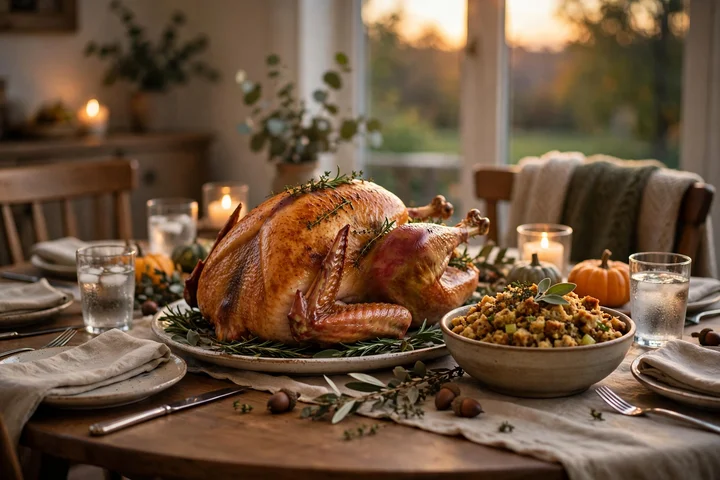
This is the one decision with a safety answer, not just a taste answer. Cooking stuffing inside the turkey can taste wonderful — the bread soaks up turkey drippings as it roasts — but it is also the riskiest way to cook it. The turkey can reach a safe temperature while the stuffing in the middle is still cooler, and stuffing is a dense, moist food where bacteria grow easily.
The official guidance is clear, and it is worth quoting plainly: the centre of the stuffing must reach 165°F, whether it cooks in the bird or in a dish, and the oven should never be set below 325°F for turkey. FoodSafety.gov’s Thanksgiving guidance explains the same point — stuffing cooked inside the bird takes longer, and the innermost part must be checked with a thermometer, not guessed from the turkey’s temperature. You can read the full guidance at FoodSafety.gov.
If you do stuff the bird, follow these rules: mix the wet and dry ingredients just before filling, never the night before; pack the stuffing loosely, about 3/4 cup per pound of turkey, so heat can reach the centre; and wait 20 minutes after the turkey comes out of the oven before removing the stuffing. A stuffed turkey also needs about 30 extra minutes in the oven compared with an unstuffed bird of the same size, so plan the whole dinner around that. Our how to roast a turkey guide has the timing tables for both stuffed and unstuffed birds.
For most hosts, the casserole wins. It cooks evenly, the top gets properly crisp, you can make a second vegetarian batch in the same oven, and there is no guessing about the centre temperature. If you miss the turkey-dripping flavour, spoon a little hot turkey stock over the stuffing before it goes in the oven — you get the taste without the risk.
Six Variations Worth Trying
Once the classic version works, stuffing is a forgiving place to experiment. Change one element at a time so you know what worked.
1. Sausage and sage. Brown 1 pound of mild Italian sausage, drain it, and fold it in with the bread. Reduce the butter by 2 tablespoons, since the sausage adds fat. This is the most popular variation in the United States, and it turns the side into something close to a main dish.
2. Cornbread dressing. Replace the white bread with the same weight of day-old cornbread, add an extra egg, and increase the broth by about 1/2 cup. Cornbread crumbles more, so handle it gently and expect a softer, more spoonable result.
3. Apple and walnut. Add 2 diced apples and 1 cup of toasted walnuts. The apples soften into the bread and add sweetness that balances the sage, and the walnuts keep their crunch. This version is excellent next to a simply roasted turkey.
4. Mushroom and herb (vegetarian). Replace the sausage with 1 pound of sliced mushrooms, cooked until browned, and use vegetable broth. Add extra thyme and a splash of soy sauce for depth. This is the version to make when vegetarians are at the table — and it is good enough that the meat-eaters will eat it too.
5. Oyster stuffing. A New England classic: fold in 1 cup of shucked oysters, chopped, with their liquor, and reduce the broth by 1/2 cup. The oysters add a briny richness that is traditional on the East Coast and divisive everywhere else — warn your guests before you serve it.
6. Gluten-free. Use a sturdy gluten-free loaf, dried the same way, and check that your broth is gluten-free. Gluten-free bread breaks down faster, so use slightly less broth at first and add more only if the cubes still look dry.

Make-Ahead Timing and the Thanksgiving Day Plan
Stuffing rewards planning more than almost any other Thanksgiving dish, because the work splits cleanly across two days. The day before, dry the bread, cook the vegetables, and assemble everything in the baking dish. Cover it tightly and refrigerate. On Thanksgiving Day, take the dish out of the fridge 30 minutes before baking so it is not ice-cold going in, and add 5 to 10 minutes to the covered baking time.
Do not assemble stuffing with raw egg and broth and leave it at room temperature, and do not stuff the turkey the night before — both are food-safety mistakes, not time-savers. The assembled casserole is safe in the fridge for up to 24 hours, and the baked dish holds in a warm oven for about 30 minutes if the turkey is running late.
Fit it into the day with the rest of the menu. The turkey needs the oven at 325°F or above and needs to rest for 20 to 30 minutes after it comes out — that resting window is the perfect time to bake the stuffing at 350°F and crisp the top. Plan the dinner backwards from serving time with our Thanksgiving dinner planning guide, and put stuffing in the “bake while the turkey rests” slot.
Troubleshooting: Dry, Soggy, Bland or Burnt
Too dry. The bread was over-dried, or there was not enough broth. Drizzle warm broth over the baked stuffing, cover with foil, and return it to the oven for 10 minutes. Next time, add broth until the cubes look wet but not pooled.
Too soggy. The bread was too fresh, or too much broth went in. Bake uncovered for 10 to 15 minutes longer to drive off moisture, and spread the stuffing in a wider, shallower dish next time so more surface can crisp.
Too bland. Stuffing needs more salt than you think, and more herbs than the recipe seems to ask for. Taste the mixture before the egg goes in — the cooked vegetables and bread should taste slightly over-seasoned at that point, because the broth dilutes the flavour. A little extra sage, a pinch of poultry seasoning, or a splash of stock will fix a flat batch.
Burnt top, cold centre. The oven was too hot, or the dish went in uncovered too early. Cover with foil for the first 25 minutes every time, and check the centre with a thermometer — it should read 165°F. A dark top with a cool middle usually means the dish was too deep; use a 9×13-inch dish rather than a tall casserole.
It tastes of nothing but bread. The vegetables were undercooked or too few. Celery and onion need a full 8 to 10 minutes in butter before they go into the bread, and the ratio matters: about 2 cups of each per pound of bread is the right balance.
How Much to Make, and What to Do with Leftovers
Allow about 3/4 cup of baked stuffing per person, and a little more if it is the dish your family fights over. A 9×13-inch dish serves 8 to 10; for 14 to 16 guests, make two dishes rather than one deep one, because a deep dish cooks unevenly and the top never crisps properly. For a small table of 4, halve the recipe and bake it in an 8×8-inch dish for 25 to 30 minutes.
Leftovers are one of the best parts of Thanksgiving, and stuffing keeps well. Refrigerate within 2 hours of serving, in shallow containers so it cools quickly, and use within 3 to 4 days. Reheat to 165°F — in the oven at 350°F with a splash of broth and a foil cover works best, and the microwave works in a pinch if you stir halfway through. Leftover stuffing also makes excellent next-day sandwiches, pressed into a patty and fried crisp, or folded into a breakfast hash with an egg on top.

Frequently Asked Questions
What is the difference between stuffing and dressing?
The same dish, different cooking place. Stuffing cooks inside the turkey; dressing bakes in a separate dish. Most cooks now bake it separately for food safety and better browning, whatever they call it.
What temperature should Thanksgiving stuffing reach?
165°F at the centre, measured with a food thermometer. This applies whether the stuffing cooks in the bird or in a casserole, and the oven should be set to at least 325°F.
Can I make Thanksgiving stuffing the day before?
Yes. Assemble it fully, cover and refrigerate for up to 24 hours, then bake on Thanksgiving Day. Let it sit at room temperature for 30 minutes first and add 5 to 10 minutes to the covered baking time.
What bread is best for Thanksgiving stuffing?
Day-old white bread is the classic choice. Sourdough holds its shape better, challah adds richness, and cornbread makes a Southern-style dressing. Whatever you use, dry the cubes first so they absorb broth without turning to mush.
Can I cook stuffing inside the turkey?
You can, but bake it separately for the safest result. If you do stuff the bird, pack it loosely, mix it just before filling, and check that the stuffing centre reaches 165°F — the turkey being done does not prove the stuffing is done.
How long does leftover stuffing keep?
Refrigerate within 2 hours and use within 3 to 4 days. Reheat to 165°F, adding a splash of broth to keep it moist.
Leave a Reply