
Winter solstice traditions celebrate the longest night of the year and the return of the sun — with fire, evergreens, feasting, and candles lit against the dark. In 2026 the solstice falls on Monday, December 21, at 3:50 PM Eastern Time. Below are 15 traditions, from the ancient Yule log and the sunrise at Stonehenge to Dongzhi dumplings and a candlelit dinner at home, with the history behind each one and exactly how to try it yourself.
Key Facts
- When: Monday, December 21, 2026, at 3:50 PM Eastern Time — the exact moment of the solstice in the Northern Hemisphere.
- What it is: the shortest day and longest night of the year; after it, the days slowly start getting longer again.
- Oldest traditions: burning a Yule log, bringing evergreens indoors, feasting, and watching the sunrise at Stonehenge or Newgrange.
- World festivals on the same night: Dongzhi in China, Shab-e Yalda in Iran, St. Lucia’s Day in Scandinavia, and Saturnalia in ancient Rome.
- Easiest way to celebrate at home: a candlelit dinner, a Yule log (real or decorative), and one quiet moment of reflection before the sun returns.
Quotable: “The winter solstice is the year’s darkest night — and the oldest human promise that the light is already on its way back.”
What Is the Winter Solstice?
The winter solstice is an astronomical moment, not just a date on the calendar. It happens when the Earth’s North Pole tilts farthest away from the sun, so the sun takes its lowest, shortest path across the sky. In the Northern Hemisphere that means the fewest hours of daylight all year — and the longest night. The exact time changes slightly each year; you can check the precise moment for your location at timeanddate.com’s December solstice page, which lists the solstice down to the minute for every time zone.
People have marked this turning point for thousands of years, and for a simple reason: it is the moment the year stops getting darker. After the solstice, every day brings a little more light. That is why so many winter solstice traditions are about fire and light — candles, bonfires, lanterns, and burning logs — and why so many of them survived by becoming part of Christmas. The evergreen tree, the mistletoe, the feasting, and the gift-giving all have roots in solstice celebrations that are older than Christmas itself, as our guide to why Christmas is celebrated explains.
The 15 traditions below are organised so you can mix and match: the first five are the ancient ones, the next five are rituals you can do at home tonight, and the last five come from festivals around the world and from family celebrations. You do not need all 15 — pick three or four, and the night will feel complete.
The Ancient Traditions
1. Burn the Yule Log
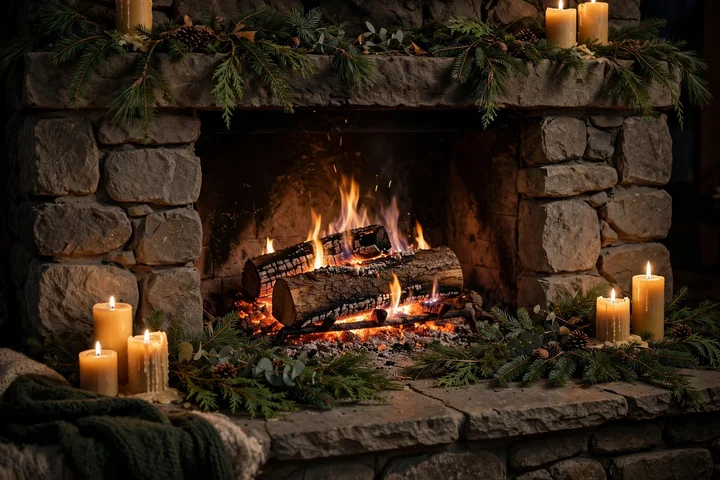
The Yule log is the oldest of all winter solstice traditions, and it comes from the Norse festival of Yule, a twelve-day midwinter feast. Families would bring a huge log — oak in England, birch in Scotland, cherry in France — into the house, decorate it with greenery, and burn it on the hearth. The fire was meant to welcome the sun back and to carry away the old year’s troubles; a piece of the log was saved to light next year’s fire, so the light never truly went out.
Today you can do the real thing if you have a fireplace or a fire pit: pick a thick log, let everyone in the house touch it and make a silent wish, then light it as the sun goes down. No fireplace? Make a decorative Yule log instead — a log dressed with holly, pinecones, dried oranges and three candles — and burn the candles through the evening. Children can drill three holes for the candles, one for the past, one for the present, and one for the future.
2. Bring Evergreens Indoors
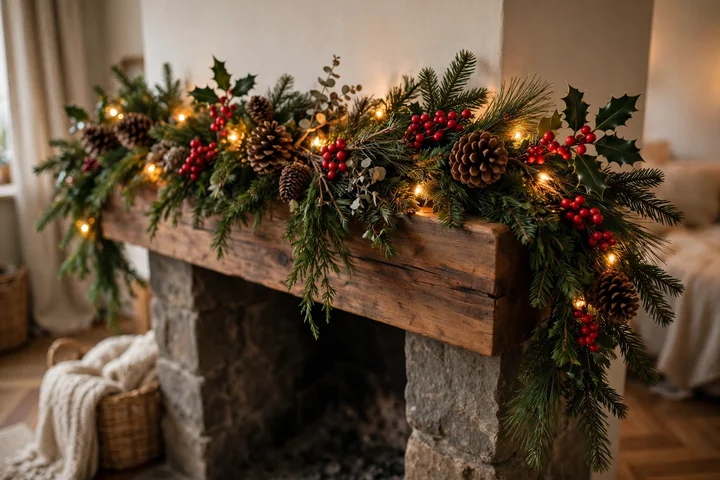
Holly, ivy, pine, fir and mistletoe stay green while everything else in the garden has died back, and that is exactly why our ancestors brought them inside. The evergreens were a promise that life continues through winter, and a bit of protection: sharp holly leaves were thought to keep unwelcome spirits out of the house.
This is the easiest of all winter solstice traditions to do well. Cut a few branches on a winter walk, or buy a bunch at the market, and arrange them on the mantel, around the door, and down the middle of the dinner table. Add pinecones, dried orange slices, and a few candles, and you have a centrepiece that costs almost nothing and looks like it took hours. The tradition is also the direct ancestor of the Christmas tree — the same instinct, the same greenery, just moved a few days later in December.
3. Watch the Sunrise at Stonehenge — or From Home
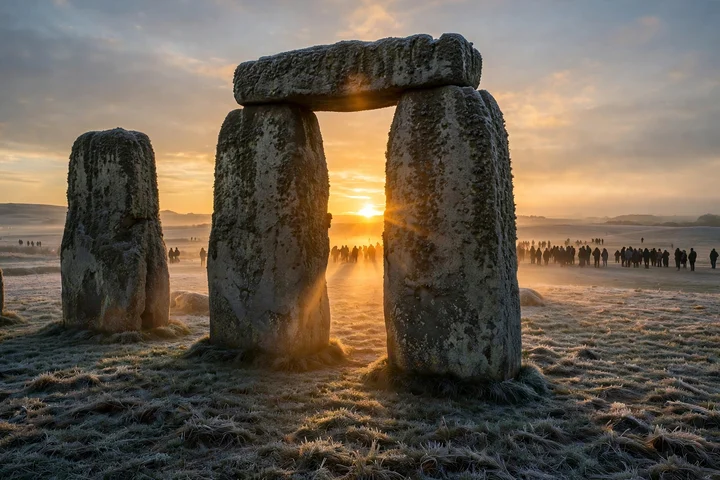
For thousands of years, people have gathered at Stonehenge on the winter solstice to watch the sun rise between its great stones. The monument is aligned to the movements of the sun, and on the shortest morning of the year the sunrise lines up with the stones in a way that still draws thousands of visitors. Newgrange in Ireland does something even more dramatic: a shaft of solstice sunlight travels down its long passage and lights up the inner chamber for a few minutes.
You do not need to fly to England to take part. English Heritage livestreams the Stonehenge sunrise every year, free, so you can watch it from bed with a hot drink. Or do the home version: set an alarm, step outside just before dawn on December 21, and watch the sun come up after the longest night. It takes ten minutes, costs nothing, and it is the most direct way to feel what the solstice actually is — the light coming back.
4. Light Candles on the Longest Night
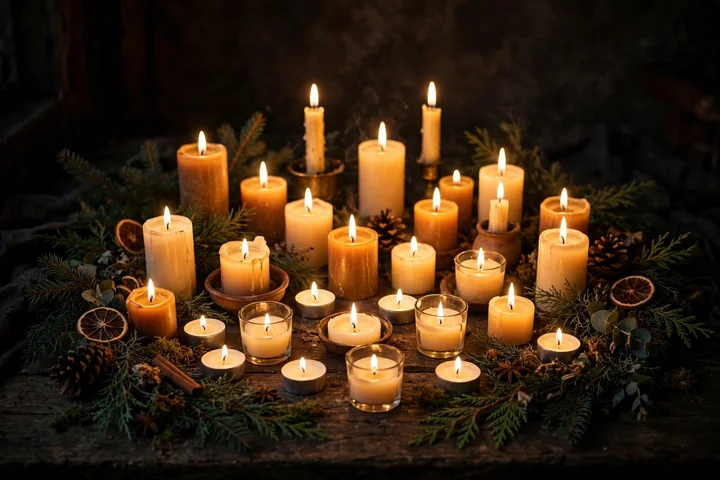
Candles are the heart of almost every solstice celebration, because the festival is, at its core, about light winning over darkness. In old pagan rituals the evening would begin in darkness — sometimes with people wearing drab, dark cloaks — and then candles and fires were lit all at once, with shouting, singing and music, as everyone threw off the dark outer layers to reveal bright red, white or gold clothes underneath.
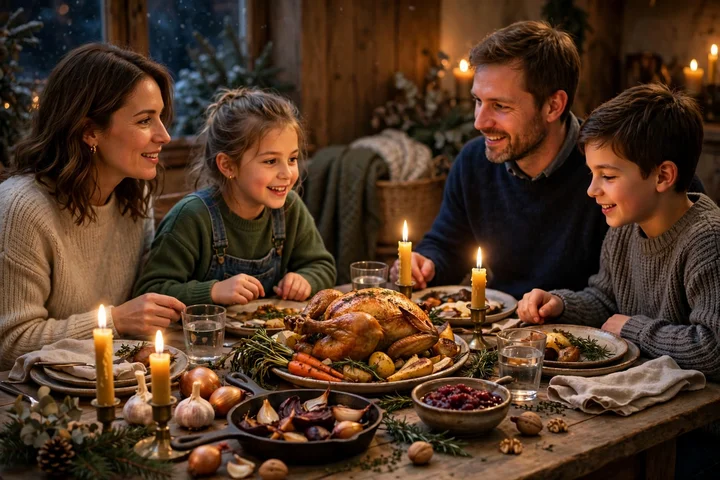
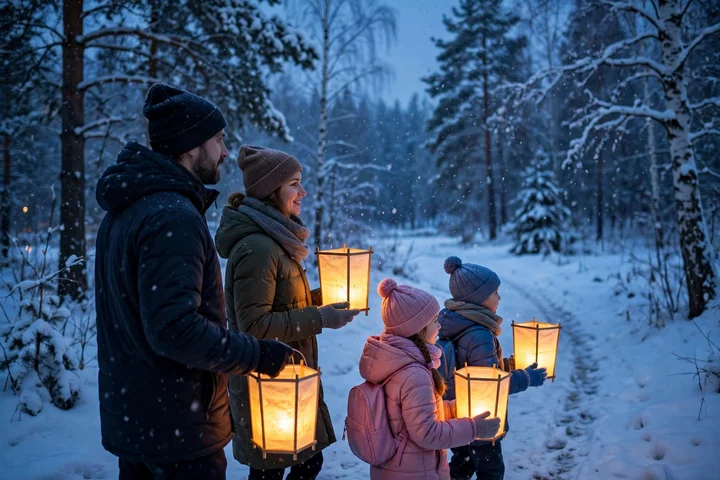
The home version is simple and powerful: at sunset on the solstice, turn off every electric light in the house and sit in the dark for a minute. Then light one candle, then another, until the room glows. Eat dinner by candlelight only. The contrast makes the light feel like an event rather than a background detail, and children remember it for years. Use sturdy holders, keep flames away from greenery, and switch to LED candles if small children or pets are at the table.
5. Feast by Firelight
Archaeologists digging near Stonehenge found piles of pig and cattle bones from huge Neolithic feasts held around the winter solstice, and the feasting never really stopped. The solstice was the moment to slaughter animals that could not be fed through winter, to open the stored food, and to eat together before the hardest months. Roast meats, root vegetables, stews, warm bread, mulled wine and wassail — the solstice table was always heavy, warm and shared.
Your feast does not need to be elaborate. A slow-cooked stew, roasted root vegetables, fresh bread and something warm to drink is enough, as long as it is eaten together, by candlelight, without phones on the table. Round foods suit the night best — oranges, round loaves, sun-shaped cookies — because they echo the shape of the sun that is about to return. Raise a toast at the start of the meal to the light coming back, and let everyone at the table name one good thing from the year that is ending.
Rituals to Try at Home
6. Hang the Mistletoe
Mistletoe was sacred to the Druids, who cut it with a golden sickle and believed it carried the life of the tree it grew on. Hanging it in the house at midwinter was a wish for happiness, fertility and protection — and the kissing tradition that grew from it is still going strong. It is one of the few winter solstice traditions that most people already do without knowing where it came from.
Hang a sprig over a doorway, not over the dinner table where it would shed berries into the food. Keep it away from small children and pets, because mistletoe berries are poisonous if eaten. A fresh sprig lasts about a week indoors; a good artificial one lasts for years and looks just as festive.
7. Go Wassailing
Wassailing is the solstice tradition of toasting — trees, friends, and the year ahead. In old orchard country, villagers would process through the apple orchards on the solstice or Twelfth Night, singing to the trees, pouring cider on their roots, and banging pots and pans to wake them up for spring. The word comes from the Old English “waes hael” — be healthy — and the drink, hot spiced cider or ale, took the same name.
The modern version is a wassail bowl: heat apple cider with cinnamon sticks, cloves, orange slices and a little brown sugar, and serve it warm in mugs. Gather everyone, raise the mugs together, and toast the year ahead. If you have fruit trees, take a mug outside, pour a little at the roots, and thank the tree — it is a small, slightly silly ritual, and that is exactly what makes it fun.
8. The 13 Wishes Ritual
The 13 Wishes is a modern ritual built on the old twelve nights of Yule. Write 13 wishes for the year ahead — one for each month, plus one extra — on separate slips of paper, and fold them into a jar or a small box. On each of the twelve nights after the solstice, draw one slip and burn it, releasing that wish to the year. The last slip, the one still in the jar after twelve nights, is the wish you must work for yourself in the coming year.
It takes five minutes to set up and gives the whole household something to look forward to each evening for nearly two weeks. Children can write wishes too — a new bike, a better grade, a trip — and the ritual works just as well with drawings as with words. Keep the slips somewhere visible so nobody forgets, and make the nightly burning a small ceremony rather than a chore.
9. Write and Burn: Release the Old Year
On a slip of paper, each person writes something they want to let go of — a fear, a grudge, a bad habit, a disappointment from the year — and something they want to welcome in. The papers are then burned, safely, in the fireplace, a fire pit, or a fireproof bowl. The idea is old and simple: fire transforms, and the smoke carries the intentions away.
Do this one early in the evening, before dinner, so the rest of the night feels lighter. Give everyone privacy while they write, and do not ask anyone to read their paper aloud — the burning is the point, not the sharing. Have a metal bowl, water nearby, and a clear spot to burn, and keep the papers small so they burn quickly and cleanly.
10. Stay Up for the Sunrise
The solstice vigil is one of the oldest traditions of all: stay awake through the longest night and greet the sun together in the morning. Druids and other pre-Christian groups are believed to have kept watch through the dark, and the practice survives today in families who make a sleepover of it — stories, warm drinks, games and music through the night, then outside just before dawn to watch the sun rise.
You do not have to stay up all night to honour the idea. Set an alarm for an hour before sunrise, wrap up warm, step outside with a hot drink, and watch the sky lighten. If the weather is bad, watch the Stonehenge livestream instead. Either way, the point is the same: you stayed, the night ended, and the light came back — and that is worth witnessing at least once.
Traditions From Around the World
11. Dongzhi: Eat Tangyuan in China
Dongzhi, which means “the arrival of winter,” is one of the most important festivals in China, and it falls on the winter solstice itself. Families gather to eat tangyuan — small glutinous rice balls in sweet soup — whose round shape and shared bowl symbolise reunion and the completion of the year. The festival is also a time to honour ancestors and to eat foods that bring warmth and balance as the days begin to lengthen.
You can try it at home with frozen tangyuan from an Asian supermarket, simmered in sweet ginger soup, or make a simple version with rice flour, water and a little sugar. Serve it as dessert after your solstice feast, and tell the family why the round balls matter — in a festival about the sun’s return, round food is never an accident.
12. Shab-e Yalda: The Longest Night in Iran
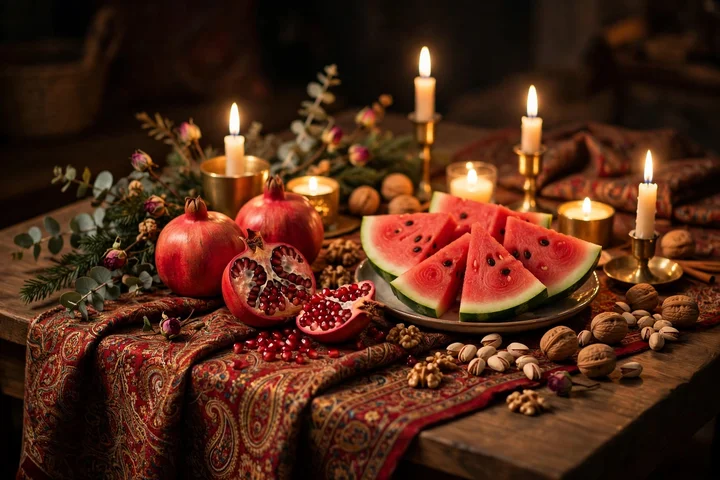
Shab-e Yalda, the “night of birth,” is the Iranian celebration of the longest night of the year, and it is one of the oldest festivals still celebrated anywhere — it predates Islam in Persia by centuries. Families stay awake until dawn, reading the poetry of Hafez, telling stories, and eating pomegranates and watermelon, whose red colour symbolises the dawn and the sun. The night is a vigil against the dark, and the food is chosen to look like the light that is coming.
A Yalda table is easy to set: a bowl of pomegranates, some watermelon if you can find it in December, dried fruit and nuts, and candles. Read a poem aloud, or simply tell stories and play games until late. The festival is a reminder that winter solstice traditions are not only European — the same night has been honoured, with the same foods and the same hope, on the other side of the world.
13. St. Lucia’s Day: A Festival of Light in Scandinavia
St. Lucia’s Day, on December 13, is close enough to the solstice to belong to it, and it is Scandinavia’s great festival of light in the dark season. A girl dressed as St. Lucia, wearing a crown of candles, leads a procession of attendants carrying lights and singing, and the household eats saffron buns called lussekatter, shaped like curled cats and coloured gold by the saffron.
Bake the buns — saffron, butter, milk and flour, shaped into S-curves with raisins at the ends — and serve them warm for breakfast on the solstice morning. Even without the procession, the golden buns and the candlelight carry the same message as every other tradition on this list: light, warmth and sweetness in the middle of the dark.
14. Saturnalia: The Roman Party That Became Christmas
Saturnalia was the Roman festival held from December 17 to 23, and it was the wildest midwinter party of the ancient world. Social order was turned upside down — slaves dined with masters, gifts were exchanged, gambling was allowed, and a mock king was crowned for the day. Many of its customs — feasting, gift-giving, candles, greenery and general merrymaking — passed directly into Christmas, and they are still with us.
You can borrow the spirit without the chaos: a gift exchange where everyone gives something small and handmade, a silly crown for the “king” of the evening, and one rule suspended for the night — dessert before dinner, or the children choosing the music. It is a reminder that winter solstice traditions were never solemn all the way through; they were parties, and the laughter was part of the ritual.
15. A Candlelit Dinner and the Holly King Story
End the night the way families have ended it for centuries: a candlelit dinner, and a story. The modern pagan tale of the Holly King and the Oak King tells how the Oak King wins back the throne on the winter solstice, and the days begin to grow longer — children love acting it out with crowns of holly and oak leaves. Tell it after dinner, with the candles still burning and the room warm, and let the youngest person at the table blow out the last candle.
If you want the night to flow into Christmas, it does so naturally — the solstice is December 21 and Christmas Eve is December 24, so the two celebrations share a week, a mood and a set of decorations. Our guide to Christmas Eve traditions picks up where this one ends, with 25 ways to make December 24 magical, and the two nights together make a full week of light in the darkest part of the year.
How to Plan Your Own Solstice Night
You do not need all 15 traditions — three or four, done well, are enough. Here is a simple plan that works for a family evening on December 21:
Afternoon: gather evergreens on a walk, decorate the mantel and the table, and bake something round — sun-shaped cookies, saffron buns or orange-slice garlands. Write the 13 wishes and put them in a jar.
Sunset: turn off the electric lights, light the candles, and burn the release papers in a fireproof bowl. Raise a toast of wassail to the year ahead.
Dinner: eat by candlelight — a stew or roast, root vegetables, fresh bread — and tell the Holly King story. Let everyone name one good thing from the year.
Late night: stay up if you can, or set an alarm for dawn. Step outside, watch the sun rise, and welcome the light back. Then sleep in — the days are getting longer from here.
If you are still planning the rest of the season, the Christmas traditions around the world guide shows how 15 countries celebrate the weeks after the solstice, and it is the best next stop once your solstice night is planned.
Frequently Asked Questions
When is the winter solstice in 2026?
Monday, December 21, 2026, at 3:50 PM Eastern Time. It is the shortest day and longest night of the year in the Northern Hemisphere.
What is the difference between the winter solstice and Yule?
The winter solstice is the astronomical moment when the sun reaches its lowest point. Yule is the traditional festival built around it — a twelve-day Norse celebration of feasting, fire and the sun’s return.
What are the oldest winter solstice traditions?
Burning a Yule log, bringing evergreens indoors, feasting, watching the sunrise at Stonehenge or Newgrange, and lighting candles on the longest night. All of them are thousands of years old.
How do you celebrate the winter solstice at home?
Light candles at sunset, eat a candlelit dinner, burn a Yule log or a decorative log with candles, decorate with evergreens, and watch the sunrise the next morning. Three or four traditions are enough for a full evening.
What is Dongzhi?
Dongzhi is the Chinese winter solstice festival, meaning “the arrival of winter.” Families eat tangyuan — round glutinous rice balls in sweet soup — which symbolise reunion and the completion of the year.
Is the winter solstice the first day of winter?
Yes, in the Northern Hemisphere the winter solstice marks the astronomical first day of winter. It is also the shortest day of the year, after which daylight slowly starts to increase.
Leave a Reply