
We celebrate Christmas to mark the birth of Jesus Christ — and over 1,700 years, that ancient feast absorbed Roman festivals, pagan solstice rites, and Victorian reinvention to become the world’s biggest holiday. Whether you celebrate it as a holy day, a family gathering, or simply the season of generosity, the m/eaning runs deeper than the shopping. Here is the full story: why December 25, where the traditions came from, and what Christmas means in 2026.
Key Facts
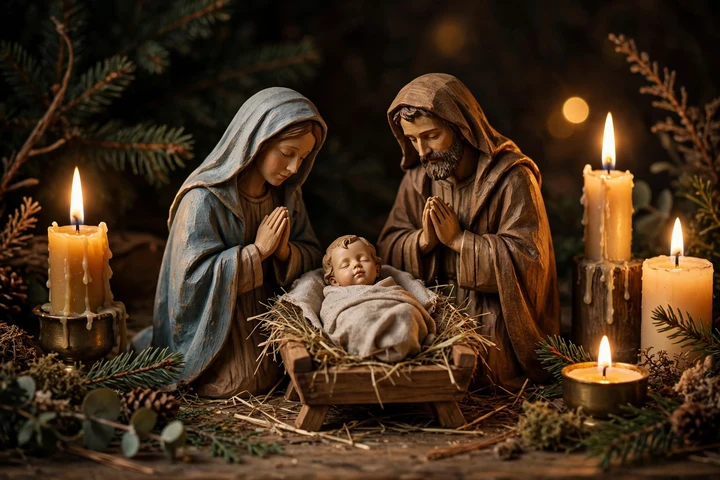
- The core meaning: Christmas celebrates the birth of Jesus Christ — the Nativity — observed by Christians on December 25.
- Why December 25: the date was set by the Roman church in the 4th century (the first recorded celebration was in Rome in 336 AD), near the winter solstice and the Roman festival of Saturnalia (see the Britannica overview of Christmas).
- Christmas 2026: Friday, December 25 — here’s the full date guide if you’re planning around it.
- Global reach: Christmas is celebrated in 160+ countries, by Christians and non-Christians alike, as a cultural and family holiday.
- The modern meaning: faith for some, family and generosity for all — the rare holiday that holds both at once.
The History: How December 25 Was Chosen
Nobody knows the actual date of Jesus’s birth — the Bible doesn’t give one. Early Christians didn’t celebrate birthdays at all. The December 25 date emerged in Rome in the 300s, and historians point to a practical reason: midwinter was already party season. The Romans celebrated Saturnalia (December 17–23), a week of feasting, gift-giving, and candles; Germanic peoples marked Yule around the winter solstice; the sun’s “rebirth” as days lengthened made it symbolically perfect for celebrating the birth of the “Light of the World.”
The first recorded Christmas on December 25 was in Rome in 336 AD. From there it spread across Europe, collecting local customs like snow on a rolling ball — evergreens from Germany, feasting from Rome, candlelight from the solstice itself.
Quotable: “Christmas is 1,700 years of human hope, layered like sediment — a Roman feast, a German forest, and a Bethlehem stable, all in one day.”

Where the Traditions Came From
The Christmas tree: Germany, 1500s–1600s. Devout Christians brought decorated trees into their homes; the custom went global when Queen Victoria’s illustrated family tree appeared in print in 1848. (See our Christmas tree ideas for the modern version.)
Gift-giving: Three threads braided together — the Magi’s gifts to the Christ child, the Roman Saturnalia exchange of presents, and the legend of St. Nicholas, the 4th-century bishop of Myra who secretly gave to the poor.
Santa Claus: St. Nicholas → Dutch “Sinterklaas” → 19th-century American reinvention. Clement Clarke Moore’s 1823 poem “A Visit from St. Nicholas” gave him reindeer; cartoonist Thomas Nast drew him at the North Pole; Coca-Cola’s 1930s ads fixed the red suit in the global imagination.
The Christmas feast: Medieval England’s great holiday tables, where even the poor ate meat — the ancestor of today’s Christmas dinner menu.
Carols: Wandering medieval singers, revived and sentimentalized by the Victorians. “Silent Night” was first performed on Christmas Eve 1818 in Austria.
What Christmas Means Today
Ask ten people and you’ll get ten answers — and they’re all true:
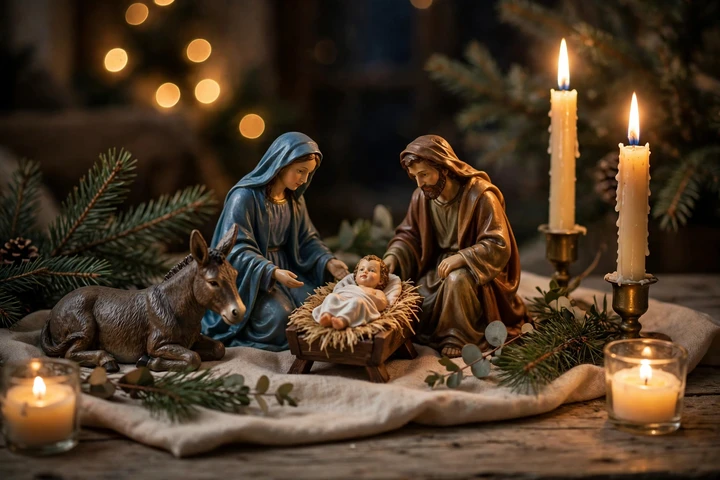
- For Christians: the celebration of the Incarnation — God entering human history as a child. Midnight Mass, nativity scenes, and Advent devotion anchor the season.
- For families: the year’s great gathering — the one day the whole scattered tribe comes home.
- For culture at large: the season of generosity — toy drives, charity galas, and strangers paying for each other’s coffee.
- For children: pure magic — and the adults who protect that magic are doing sacred work, whether they’d use that word or not.
Quotable: “Christmas works because it asks almost nothing and gives almost everything: show up, be kind, eat together.”
Why It Still Matters in 2026
In a year of screens and distance, Christmas remains stubbornly physical: real trees, real tables, real hugs. The holiday’s genius is that it scales — a quiet couple’s dinner and a forty-person feast are both “doing Christmas right.” The meaning isn’t in the spending; study after study finds people remember the togetherness, not the price tags. What the holiday asks is simple: pause, gather, give.
The season leading up to it matters too. Advent — the four weeks before Christmas — is the church’s season of preparation, and even secular families have adopted its rhythm: the countdown calendars, the gradual decorating, the slow build of anticipation. That deliberate slowness is the antidote to a rushed December. Christmas isn’t really one day; it’s a season that starts the moment you decide to pay attention.
Christmas Through the Centuries: A Timeline
- 336 AD — the first recorded Christmas. Celebrated in Rome on December 25, establishing the date the Western world still uses.
- Middle Ages — mystery plays and feasting. Christmas becomes a full twelve-day season; churches stage Nativity plays and lords host great holiday feasts for their households.
- 1640s — Christmas is banned. England’s Puritan Parliament outlaws Christmas celebrations as wasteful and unbiblical. Shops must stay open on December 25. The ban collapses with the monarchy’s restoration in 1660 — people missed their party.
- 1500s–1600s — the German tree. Devout German Christians bring decorated evergreens indoors, merging pagan winter greenery with Christian symbolism.
- 1823 — Santa gets his reindeer. Clement Clarke Moore’s “A Visit from St. Nicholas” (“‘Twas the night before Christmas”) invents the sleigh, the eight reindeer, and the jolly chimney-diving Santa.
- 1843 — Dickens reinvents Christmas. “A Christmas Carol” turns the holiday into a moral season of generosity — and makes “Merry Christmas” the standard greeting.
- 1848 — the royal tree goes viral. An illustration of Queen Victoria’s family around their German-style Christmas tree is published in London — and reprinted across America. Within a decade, the Christmas tree is a middle-class essential on both sides of the Atlantic.
- 1930s — the red suit is fixed. Coca-Cola’s holiday advertisements standardize Santa’s look worldwide: red suit, white beard, rosy cheeks.
Quotable: “Christmas survived a Puritan ban, crossed an ocean, and was rebooted by a novelist and a soda company — and it has never been stronger.”

The Symbols and What They Mean
The star: the Star of Bethlehem that guided the Magi — now the treetop crown, symbolizing hope and divine guidance.
The wreath: a circle with no beginning or end — eternal life. Hanging evergreens in winter predates Christianity; Christians adopted them as symbols of everlasting life through Christ.
Candles and lights: the “Light of the World” made literal. Every string of fairy lights is a descendant of solstice fires and Advent candles pushing back the year’s darkest nights.
Stockings: from the St. Nicholas legend — the bishop dropped bags of gold down a poor man’s chimney, and they landed in stockings drying by the fire. Three daughters saved from poverty; millions of stockings hung ever since.
Mistletoe: sacred to Celtic Druids and central to Norse myth (the story of Balder). Kissing under it was a Viking-era pledge of peace — enemies who met beneath mistletoe had to lay down their weapons.
The poinsettia: from a Mexican legend — a poor girl named Pepita could offer only weeds at the Nativity scene, and they burst into brilliant red flowers. Now the best-selling potted plant in America, every December without fail.
The Advent wreath: four candles in a ring of evergreens, one lit each Sunday of Advent. The growing light is the season’s quiet thesis statement: hope increases as Christmas approaches.

Frequently Asked Questions
Why is Christmas celebrated on December 25?
The date was established by the Roman church in the 4th century — the first recorded celebration was in Rome in 336 AD. It sits near the winter solstice and the Roman festival of Saturnalia, making it symbolically fitting for celebrating the birth of Jesus as the “Light of the World.”
What is the true meaning of Christmas?
At its core, Christmas celebrates the birth of Jesus Christ. Culturally, it has grown into a universal season of family gathering, generosity, and hope — observed by Christians as a holy day and by millions of others as a cherished tradition.
Is Christmas a religious or cultural holiday?
Both. It originated as a Christian feast and remains one, but its customs — trees, gifts, feasts, Santa — have made it a global cultural celebration embraced far beyond the church.
Where did Santa Claus come from?
From St. Nicholas, a 4th-century bishop known for secret gift-giving. Dutch settlers brought “Sinterklaas” to America, where an 1823 poem, 19th-century cartoons, and 1930s advertising shaped him into the modern Santa.
Why do we give gifts at Christmas?
The tradition blends the Magi’s gifts to the Christ child, Roman Saturnalia gift exchanges, and the legend of St. Nicholas. At its best, it’s the holiday’s meaning made physical: generosity you can unwrap.
Do all countries celebrate Christmas the same way?
Not at all — from Japan’s Christmas KFC to Iceland’s thirteen Yule Lads, every culture has bent the holiday to its own shape. The constants are light in the darkness, food shared, and gifts given.
Leave a Reply