
When is Holy Saturday 2027? It falls on Saturday, March 27, 2027. The day sits between Good Friday and Easter Sunday, and it is the quietest day of the Christian year: the church is bare, no Mass is celebrated during the day, and Christians wait in silence for the Easter Vigil after nightfall. If you are planning around church services or a Holy Week trip, March 27 is the date to mark, because the Vigil that night is the longest and oldest liturgy of the year.
This guide answers when is holy saturday 2027 in full, with the Vigil time and the Orthodox date as well.
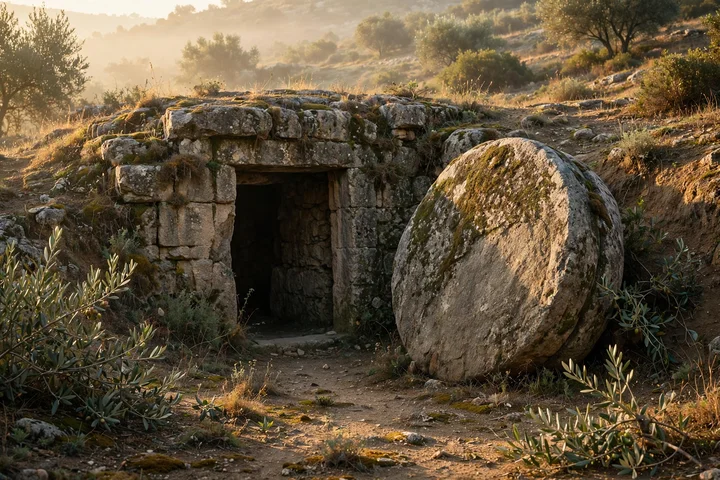
Holy Saturday is the day people skip over. Good Friday has the cross, Easter Sunday has the empty tomb, and the Saturday in between can look like nothing at all. It is not. It is the day the church remembers Christ’s body lying in the tomb, and the night it lights a single candle in a dark building and lets the flame pass from hand to hand until the whole church is lit. This guide gives you the exact date, explains why it moves every year, walks through the Easter Vigil in detail, covers the Orthodox date and the Holy Fire, and answers the practical questions people ask most: what is open, what happens at the Vigil, and why the day has so many different names.
Key Facts
| Fact | Detail |
|---|---|
| When is Holy Saturday 2027 | Saturday, March 27, 2027 (Western churches) |
| What it is | Final day of Holy Week; commemorates Christ’s body in the tomb and the Harrowing of Hell |
| Also called | Easter Eve, Black Saturday, Great Sabbath, Easter Even, Joyous Saturday, Saturday of Light |
| Day before | Good Friday, March 26, 2027 |
| Day after | Easter Sunday, March 28, 2027 |
| Easter Vigil 2027 | Saturday night, March 27, after total darkness (around 8:00 p.m.) |
| Orthodox date 2027 | Holy and Great Saturday, Saturday, May 1, 2027 |
| Orthodox Easter 2027 | Sunday, May 2, 2027 |
| Lent ends | Holy Saturday, March 27, 2027 |
| Federal holiday | No |
| Holy Day of Obligation | No |
| Earliest possible date | March 21 (when Easter falls on March 22) |
| Latest possible date | April 24 (when Easter falls on April 25) |
What Is Holy Saturday?
Holy Saturday is the final day of Holy Week, the Saturday between Good Friday and Easter Sunday, and the day Christians remember Jesus Christ’s body lying in the tomb. In Latin it is called Sabbatum Sanctum, the Holy Sabbath, and the day commemorates the Harrowing of Hell, the belief that Christ descended to the dead while his body rested in the tomb.
It is the last day of Lent, which began on Ash Wednesday, February 10, 2027, and it is the second day of the Paschal Triduum, the three-day heart of the Christian year that opened with the evening Mass on Maundy Thursday and closes with Evening Prayer on Easter Sunday. The Triduum is treated as a single unbroken service spread across three calendar days, and Holy Saturday is its middle movement: the waiting.
The day carries more names than almost any other on the church calendar. Catholics and most Protestants call it Holy Saturday. In the Philippines it is Black Saturday, for the color of mourning. Anglicans know it from the Book of Common Prayer as Easter Even. The Moravian Church calls it the Great Sabbath. Coptic Christians call it Joyous Saturday, and Syriac Christians call it the Saturday of Light. Eastern Orthodox Christians call it Holy and Great Saturday, or simply the Great Sabbath, because it is the day Christ “rested” physically in the tomb.
The name people use most often by mistake is Easter Saturday. That term usually means the Saturday in Easter week, the Saturday after Easter Sunday, not the Saturday before it. The confusion is common enough that the Australian states of New South Wales and Queensland use “Easter Saturday” in their legislation to mean the Saturday before Easter, while most churches use it to mean the Saturday after. If a calendar says Easter Saturday, check which side of Easter it falls on.
Why Holy Saturday Falls on March 27 in 2027
The short answer to when is holy saturday 2027 is simple math: count back one day from Easter. Easter Sunday 2027 falls on March 28, which is unusually early, the earliest Easter since 2016. Count back one day from March 28 and you land on Saturday, March 27.
Easter itself moves because it is tied to the moon. By the rule set at the Council of Nicaea in 325, Easter is the first Sunday after the first full moon on or after March 21, the spring equinox. In 2027 the full moon falls on Saturday, March 27, which is Holy Saturday itself, so Easter is the next day, Sunday, March 28. Holy Saturday follows Easter wherever it goes, which is why the date swings by more than a month from year to year.
The range is wide. Holy Saturday can fall no earlier than March 21, when Easter falls on its earliest possible date of March 22, and no later than April 24, when Easter falls on its latest possible date of April 25. In 2027 the day sits only six days after the earliest possible date, which is why the whole of Holy Week fits inside a single month. The Holy Saturday page at Wikipedia lists the same 2027 dates, March 27 for the Western churches and May 1 for the Orthodox churches.
| Year | Holy Saturday (Western) | Holy Saturday (Orthodox) | Easter Sunday (Western) |
|---|---|---|---|
| 2026 | Saturday, April 4 | Saturday, April 11 | Sunday, April 5 |
| 2027 | Saturday, March 27 | Saturday, May 1 | Sunday, March 28 |
| 2028 | Saturday, April 15 | Saturday, April 15 | Sunday, April 16 |
| 2029 | Saturday, March 31 | Saturday, April 7 | Sunday, April 1 |
| 2030 | Saturday, April 20 | Saturday, April 27 | Sunday, April 21 |
| 2031 | Saturday, April 12 | Saturday, April 12 | Sunday, April 13 |
The table above answers when is holy saturday 2027 at a glance, and it also shows the 35-day split between the two calendars in 2027. The Western and Orthodox dates agree in 2028 and again in 2031, but in 2027 they sit five weeks apart, because the two traditions calculate the spring full moon differently. The Orthodox date follows the Julian calendar’s paschal full moon, which is why Orthodox Easter falls on May 2 in 2027 while Western Easter falls on March 28.
The Easter Vigil: Four Parts After Nightfall
The Easter Vigil is the reason Holy Saturday matters, and it is the most important liturgy of the Christian year. Saint Augustine called it the mother of all vigils, and it is the longest Mass of the year, often running two to three hours. It begins after nightfall on Holy Saturday and belongs liturgically to Easter Sunday, even though it is celebrated on Saturday evening, so some parishes count it as the first Mass of Easter rather than the close of Holy Saturday.

The Vigil may not begin before total darkness, which in late March means around 8:00 p.m. in most of the United States, according to the 2027 liturgical calendar published by the Diocese of Owensboro. Arrive early, because the service starts outside the church, and latecomers miss the opening.
The Vigil has four parts. The Service of Light begins in darkness, with a new fire blessed outside the church and the Paschal candle lit from it. The deacon carries the candle into the dark building, pausing three times to sing “The Light of Christ,” and the flame is shared from candle to candle until the whole congregation is lit. The Exsultet, the great Easter proclamation, is then sung beside the candle.
The Liturgy of the Word follows, with up to nine readings that trace the whole arc of salvation history, from the creation in Genesis, through the crossing of the Red Sea in Exodus, to the prophets. The readings are longer than on any other night, and the psalms between them are sung, not spoken. In 2027 the Vigil Gospel is Mark 16:1-7, the account of the women finding the empty tomb, because the liturgical year follows Cycle B.
The Liturgy of Baptism comes next. The water is blessed, the congregation renews its baptismal promises, and adults who have prepared through Lent are baptized, confirmed, and receive Communion for the first time. In many parishes this is the largest group of baptisms of the year, and it is the reason the Vigil runs so long. The sprinkling of holy water that follows the renewal of promises is the moment the church turns from mourning to celebration.
The Liturgy of the Eucharist closes the service, the first Mass of Easter, with the Gloria sung and the bells rung for the first time since Maundy Thursday. The silence of the Triduum breaks, the altar is dressed again, and the church that was bare in the morning is full of light, flowers, and song. Catholics who attend the Vigil and renew their baptismal promises may gain a plenary indulgence, one of the few granted outside a pilgrimage.
If you have never been to a Vigil, the practical advice is simple: bring a candle if your parish does not provide one, wear something warm for the outdoor opening, and plan for the full length of the service. It is long, dark at the start, and slow to build, and that is the point. The Vigil is designed to make you feel the wait before the light comes.
The Daytime: A Bare Altar and a Quiet Church
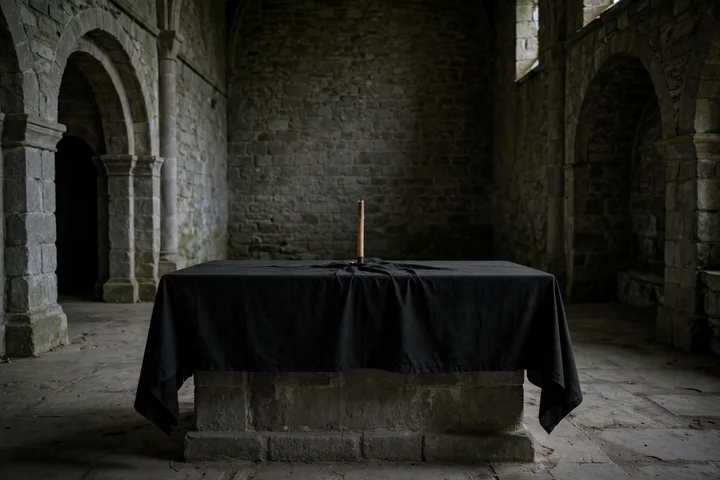
The daytime of Holy Saturday is the quietest stretch of the Christian year, and it is quiet on purpose. In the Catholic Church the altar remains stripped completely bare, exactly as it was left after the Mass of the Lord’s Supper on Maundy Thursday, and no Mass is celebrated during the day at all. The celebration of the sacraments is extremely limited: Holy Communion is given only as Viaticum to the dying, while penance, Anointing of the Sick, and baptism may be administered because they help ensure salvation for the dying.
The day is the second day of the Paschal fast, the fast outlined in the Second Vatican Council’s constitution on the liturgy, Sacrosanctum Concilium, article 110. The fast that began on Good Friday continues through Holy Saturday, and the faithful are encouraged to keep it until the Vigil. In the Catholic tradition the Blessed Virgin Mary is honored on this day under the title Our Lady of Solitude, referring to her grief at the death of her son.
Lutheran, Anglican, Methodist, and other churches observe many of the same customs as the Catholic Church, though their altars may be covered in black instead of being stripped bare. Black is the liturgical color of the day in Lutheran churches, and the chancel is dressed in black paraments. In some Anglican churches, including the Protestant Episcopal Church in the United States, provision is made for a simple Liturgy of the Word on this day, with readings commemorating the burial of Christ, and the Daily Offices are still observed.
The stillness is the hardest part of the day to explain to someone who has not kept it. Churches are not locked, but they are empty, and the emptiness is deliberate. The day is meant to feel like a tomb: nothing happens, nobody speaks, and the waiting itself is the observance. The Methodist Church of Great Britain once published a reflection on this, noting that groups are happy to talk about Good Friday but want to jump forward to Easter Day as quickly as possible, and that the long hiatus of Holy Saturday, when Jesus lies alone in a borrowed tomb, was to be avoided. The church keeps the day precisely because it is hard to sit with.
Holy and Great Saturday in the Orthodox Church
In Eastern Orthodoxy, Holy Saturday is known as Holy and Great Saturday, and it is observed with the most elaborate services of the day in any tradition. The day is also called the Great Sabbath, since it is on this day that Christ “rested” physically in the tomb, and it is believed that on this day he performed, in spirit, the Harrowing of Hell, and was raised up to Paradise, having liberated those who had been held captive.
Matins of Holy and Great Saturday, usually held on Friday evening, takes the form of a funeral service for Christ. The entire service takes place around the Epitaphios, a cloth icon embroidered with the image of Christ prepared for burial. The first part consists of chanting Psalm 118, as at both Saturday matins and funerals, interspersed with hymns called lamentations between the verses. The theme is not so much mourning as watchful expectation: the canon sings, “Today Thou dost keep holy the seventh day, which Thou hast blessed of old by resting from Thy works.”
Near the end of Matins, at the end of the Great Doxology, the Epitaphios is taken up and carried in procession around the outside of the church, while the Trisagion is sung, as is done when carrying the body to the cemetery in an Orthodox burial.
On Saturday itself, a vesperal Divine Liturgy of Saint Basil the Great is celebrated, called the First Resurrection Service. It is the longest Divine Liturgy of the entire year, and it is performed later than on any other day, at the tenth hour of the day. After the Little Entrance there are fifteen Old Testament readings that recall the history of salvation, from Genesis 1 through the crossing of the Red Sea, Jonah in the belly of the sea monster, and Daniel’s three holy youths in the fiery furnace. The Epistle is Romans 6:3-11, Paul’s explanation of the role of death and resurrection in baptism, and the Gospel is Matthew 28:1-20, the account of the Resurrection.
One detail is unique to this day. In place of the Trisagion, the baptismal hymn “As many as have been baptised into Christ have put on Christ” is sung, and in Slavic tradition, where the service begins in dark vestments, the hangings, altar cloths, curtain, and vestments are changed to bright. In Greek and Arabic tradition, the clergy strew laurel leaves, a symbol of victory, and flower petals all over the church to symbolize Christ’s triumph over death, often accompanied, especially in Cypriot custom, by the congregation making a loud noise by stamping their feet, banging on pews, and even clanging pots and pans, all to symbolize Christ shattering the gates and breaking the chains of hell.
Before midnight the faithful gather for the reading of the Acts of the Apostles in its entirety. Then the Paschal Vigil begins with the Midnight Office, during which the Canon of Holy Saturday is repeated, the Epitaphios is removed from the center of the church and placed on the altar table, where it remains until the Ascension, and all the candles and lights in the church are extinguished. Everyone waits in darkness and silence for the proclamation of the Resurrection.
In the Holy Land, the day carries one more observance found nowhere else. Eastern Orthodox Christians in Palestine and the Levant call Holy Saturday sabt an-nur, the Saturday of Light, and commemorate it with the Holy Fire ceremony at the Church of the Holy Sepulchre in Jerusalem. The Coptic, Ethiopian, and Eritrean Orthodox churches call it Joyous Saturday, the night of light and joy, and the Syriac Orthodox Church calls it the Saturday of Good Tidings, a day when Syriac Christians also remember their departed.
Traditions Around the World
Holy Saturday looks different from place to place, but the same two threads run through every tradition: a quiet day of waiting, and a night of light.
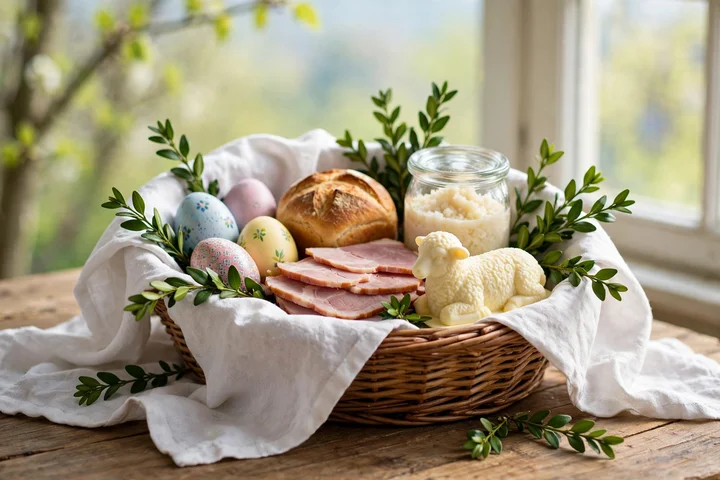
In Poland, Swieconka, the blessing of the Easter baskets, is one of the most enduring and beloved traditions of the day. Baskets containing eggs, ham, bread, sweet breads, horseradish, and lamb cakes or butter lambs are brought to church to be blessed by a priest, in preparation for the Easter feast. The baskets are lined with linen and decorated with boxwood, and the blessing is the moment the fast is understood to be over, even though the Vigil is still hours away. In Slovakia and the Czech Republic the day is called Biela sobota or Bila sobota, meaning White Saturday, named after the white robes of those baptized during the Vigil.
In the Philippines, where the day is legally and colloquially known as Black Saturday, the traditional taboos of Good Friday are carried over and are sometimes broken: swimming is allowed in the afternoon, most commercial establishments resume operations, and television and radio stations return to normal hours with special programming. Filipino Catholics continue Visita Iglesia, the practice of visiting and praying in at least seven churches, which began on Maundy Thursday and runs through Black Saturday. The day is a public holiday, and families use it to prepare the Easter feast.
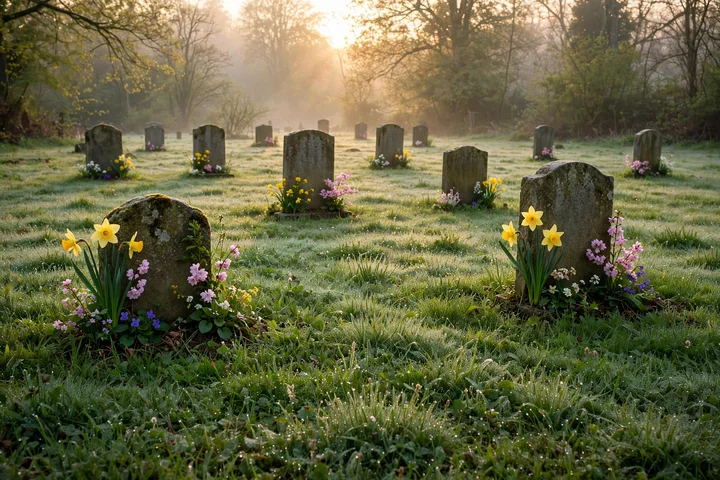
In the Moravian Church, the day is known as the Great Sabbath, and people decorate the graves in God’s Acre, the church cemetery, with flowers during the day. The sunrise service, the first liturgy of Paschaltide, begins before dawn on Easter Sunday, so the decorating is the daytime work of Holy Saturday, and the flowers are the first color of Easter. The Moravian tradition is one of the oldest continuous Holy Saturday observances in the United States, carried by the congregations at Bethlehem and Winston-Salem.
In Spain and Latin America, the day is quieter than the processions of Maundy Thursday and Good Friday, but the churches stay open late, and the Vigil is the main event of the night. In Oaxaca, the 2027 calendar lists Holy Saturday and the Easter Vigil on March 27 as a confirmed date, with services after nightfall in parishes throughout the city. In Germany, the day is a normal working day, though many shops close early, and in the United Kingdom it is an ordinary Saturday, with the bank holiday falling on Good Friday instead.

Holy Week 2027: The Full Calendar
Holy Saturday sits at the end of a week that moves fast, opening with Palm Sunday on March 21 and closing with Easter Sunday on March 28. The table in the date section above gives the years ahead, and the week itself runs like this: Palm Sunday on March 21, Holy Monday on March 22, Holy Tuesday on March 23, Spy Wednesday on March 24, Maundy Thursday on March 25, Good Friday on March 26, Holy Saturday on March 27, Easter Sunday on March 28, and Easter Monday on March 29.
The Orthodox calendar runs five weeks later in 2027. Orthodox Palm Sunday falls on Sunday, April 25, Great and Holy Friday on Friday, April 30, Holy and Great Saturday on Saturday, May 1, and Pascha, or Orthodox Easter, on Sunday, May 2. The gap is the widest the two calendars can produce, and it comes from the different ways the two traditions calculate the spring full moon.
Knowing when is holy saturday 2027 matters most for the Vigil, because the Vigil is the one service of the year that cannot be moved. It begins after nightfall and ends before dawn, and a parish that starts it too early is breaking the rule, not bending it. If you are choosing between parishes, the one that starts after dark is the one keeping the Vigil as it was written.
Is Holy Saturday a Public Holiday? What Is Open and Closed
Holy Saturday is not a federal holiday in the United States, and it is not a Holy Day of Obligation, so there is no requirement to attend any service. Federal offices, the post office, banks, and most businesses stay open on their normal schedules, and the New York Stock Exchange trades as usual. Public schools do not close for Holy Saturday, though many are already on spring break that week, and the New York City public schools are on spring recess from Thursday, April 22 to Friday, April 30, 2027, which does not cover the day.
The picture is different abroad. In the Philippines, Black Saturday is a public holiday, with banks and government offices closed and most businesses shut until the afternoon. In Poland, the day is a normal working day, but shops close early and the basket blessings draw crowds to churches from the morning onward. In Spain and most of Latin America, the day is a public holiday in many regions, though services and shops operate on reduced hours.
In Australia, Easter Saturday is a public holiday in New South Wales and Queensland, but remember the naming trap: the Australian “Easter Saturday” is the Saturday before Easter, which is Holy Saturday, while in church usage Easter Saturday usually means the Saturday after Easter.
If you are traveling, the practical rule is simple: in the United States, plan for a normal Saturday with an evening Vigil, and abroad, check the local Holy Week calendar, because the day is a holiday in much of the Catholic world. If you are mailing anything or visiting a bank, do it before the afternoon, because some branches and post offices in heavily Catholic areas close early for the Vigil.
How to Observe Holy Saturday in 2027
The daytime of Holy Saturday is for quiet preparation, and the best way to keep it is to treat it as a day of getting ready rather than a day of doing nothing. Prepare the Easter basket if your family keeps the Swieconka tradition, and bring it to the church blessing in the morning or early afternoon. Decorate eggs, bake the Easter bread, and set the table for the next day, so that the work is done before the Vigil begins.
If you plan around when is holy saturday 2027, keep the morning for the basket blessing and the evening free for the Vigil.
If your parish keeps a vigil at the altar of repose, or if you want to spend the afternoon in the church, go in the late afternoon, when the church is at its quietest. Many parishes keep the church open all day, and the bare altar is worth seeing once: it is the only day of the year the church looks like that, and it makes the light of the Vigil feel earned.
For the Vigil itself, arrive early and dress warmly, because the service begins outside with the new fire. Bring a candle if your parish asks you to, and plan to stay for the whole service, which often runs two to three hours. The service is long by design, and the readings are the heart of it: nine readings that carry the whole story of salvation from creation to the empty tomb. If you have children, the Vigil is the hardest service of the year for them to sit through, and many parishes provide a children’s area or a shortened family Vigil earlier in the evening.
For families with children, the daytime is the easiest part of the day to make their own. A basket of eggs, a loaf of bread, and a walk to the church for the blessing turns the waiting into something a child can touch, and the flowers on a grave in the Moravian tradition turn the day into a lesson about remembering the people who came before. The point of Holy Saturday is not to fill the silence but to keep it, and then to let the light break it.
Frequently Asked Questions
When is Holy Saturday 2027?
Holy Saturday 2027 falls on Saturday, March 27, 2027, for Western churches, the day after Good Friday (March 26) and the day before Easter Sunday (March 28). The Orthodox date, Holy and Great Saturday, falls on Saturday, May 1, 2027, five weeks later. The day is always the Saturday before Easter, so it moves with Easter every year.
What is Holy Saturday?
Holy Saturday is the final day of Holy Week, the day Christians remember Jesus Christ’s body lying in the tomb and the Harrowing of Hell. The church is bare, no Mass is celebrated during the day, and the day ends with the Easter Vigil after nightfall, the longest and oldest liturgy of the year. It is the last day of Lent and the second day of the Paschal Triduum.
What time does the Easter Vigil start?
The Easter Vigil begins after total darkness on Holy Saturday, which in late March means around 8:00 p.m. in most of the United States. The 2027 liturgical calendar notes that the Vigil may not begin before total darkness. The service often runs two to three hours and has four parts: the Service of Light, the Liturgy of the Word, the Liturgy of Baptism, and the Liturgy of the Eucharist.
Is Holy Saturday a public holiday?
No, not in the United States. Holy Saturday is not a federal holiday, and federal offices, banks, schools, and the post office stay open on their normal schedules. It is a public holiday in the Philippines, where it is called Black Saturday, and in parts of Latin America, and Easter Saturday is a public holiday in the Australian states of New South Wales and Queensland.
What is the difference between Holy Saturday and Easter Saturday?
Holy Saturday is the Saturday before Easter Sunday, the day Christ’s body lay in the tomb. Easter Saturday usually means the Saturday in Easter week, the Saturday after Easter Sunday. The two terms are confused so often that Australian legislation uses “Easter Saturday” to mean the Saturday before Easter, while most churches use it to mean the Saturday after. If a calendar says Easter Saturday, check which side of Easter it falls on.
Why is it called Black Saturday?
Black Saturday is the name used in the Philippines, where the day is a public holiday, and the name comes from the color of mourning. The church is bare, the altar is stripped, and the liturgical color of the day is black in Lutheran churches. The name is also used in some other Catholic countries, though most of the English-speaking world calls the day Holy Saturday.

Leave a Reply