
Thanksgiving leftovers are safe when you refrigerate everything within 2 hours of serving, store food in shallow containers, eat refrigerated leftovers within 3–4 days, and reheat all of it to 165°F. The rules are simple — the mistakes come from getting relaxed about them.
Leftovers are half the point of Thanksgiving. The next-day turkey sandwich has its own fan club, and a well-stocked fridge of sides means days of easy meals. But a big holiday meal also creates the year’s biggest food-safety test: large quantities of perishable food, a crowded refrigerator, and a relaxed atmosphere where the 2-hour rule is easy to forget. This guide covers exactly how to store, freeze, and reheat everything safely.
Key Facts
- Refrigerate within 2 hours of serving — the single most important leftovers rule (USDA).
- Use shallow containers so food cools quickly and evenly in the fridge.
- 3–4 days refrigerated is the safe window for turkey, stuffing, gravy, and most sides.
- Reheat to 165°F — sauces, soups, and gravy should come to a rolling boil.
- Never thaw frozen leftovers on the counter — refrigerator, cold water, or microwave only.
The 2-Hour Rule: Start Here
Perishable food — turkey, stuffing, gravy, mashed potatoes, casseroles, pies with dairy fillings — must not sit at room temperature for more than 2 hours total. That clock starts when the food is served, not when you finish eating. On a warm day (above 90°F), the limit drops to 1 hour, though that rarely applies to a November dinner indoors.
The practical move: about 90 minutes after you sit down, start packing. You do not need to clear the whole table mid-conversation — just get the perishables into containers and into the fridge. Dessert and coffee can continue; the turkey cannot wait. Set a phone timer if the gathering is the lingering kind. This is the rule behind every other rule in this guide, and the USDA leftovers and food safety guide states it plainly.
“The 2-hour rule is not about being fussy — it is the line between leftovers and a gamble.”
How to Pack Leftovers Properly
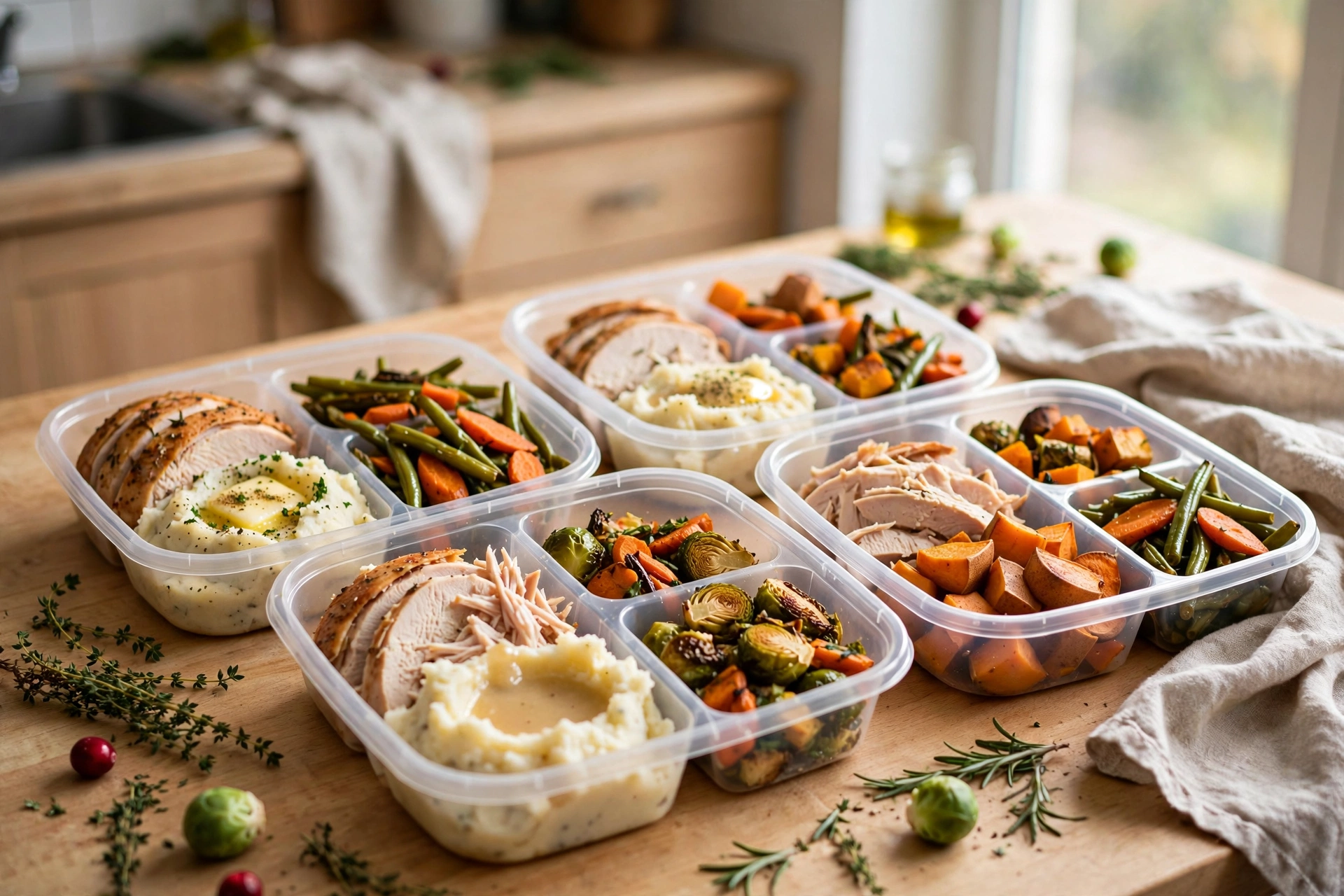
Use shallow containers. Food in a deep pot cools slowly in the middle, spending too long in the temperature danger zone (40–140°F) where bacteria multiply fastest. Divide large batches into containers no more than 2–3 inches deep so everything chills quickly.
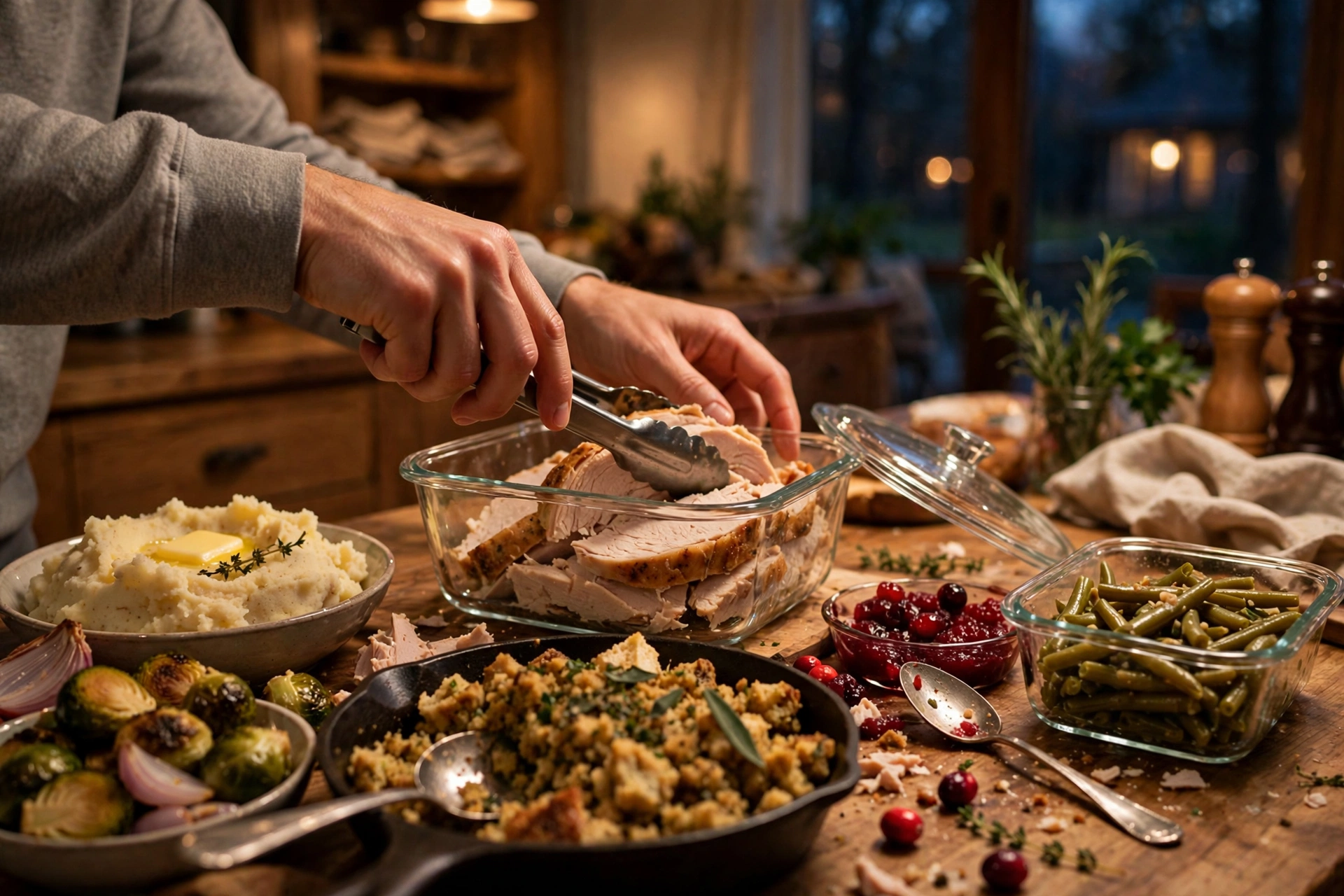
Carve the turkey off the bone. Do not refrigerate the whole bird or a half carcass — the mass is too large to cool safely. Slice or chunk the meat, separate light and dark if you like, and pack it flat in containers. Bonus: deboned meat is far easier to use in sandwiches, soups, and casseroles later.
Remove stuffing from the cavity. If you stuffed the bird, take all the stuffing out and store it separately. Stuffing left inside a cooling turkey stays warm in the center far too long.
Separate gravy. Store gravy in its own container — it reheats better alone and keeps 3–4 days refrigerated, or freezes beautifully for months.
Label and date everything. A piece of tape and a marker with the contents and the date eliminates the “how old is this?” guessing game three days later. Future you will be grateful.
Cool before sealing (briefly). Let hot food cool for 20–30 minutes at room temperature, then seal and refrigerate. Do not leave it out for hours “to cool completely” — the fridge handles the rest safely.
How Long Leftovers Last
The USDA’s standard for cooked meat, poultry, stuffing, and gravy is 3–4 days refrigerated at 40°F or below. That covers the core of the Thanksgiving plate:
- Roast turkey (sliced): 3–4 days refrigerated
- Stuffing/dressing: 3–4 days refrigerated
- Gravy: 3–4 days refrigerated
- Mashed potatoes: 3–4 days refrigerated
- Casseroles: 3–4 days refrigerated
- Cranberry sauce: 7–10 days refrigerated (high acid and sugar preserve it longer)
- Pumpkin or pecan pie: 3–4 days refrigerated
- Apple or fruit pie: about 2 days at room temperature, then refrigerate
- Dinner rolls and bread: several days at room temperature in a sealed bag
When in doubt, throw it out. Off smells, sliminess, or visible mold mean the food is done — and some bacterial contamination shows no signs at all, which is why the day count matters more than your senses.
Freezing Thanksgiving Leftovers
The freezer is your time machine — it pauses the 3–4 day clock indefinitely for quality purposes (food kept at 0°F stays safe indefinitely, though quality fades after a few months).
Turkey: Freezes excellently for 2–3 months at best quality. Pack in portion-sized freezer bags with as much air pressed out as possible, or wrap tightly in plastic wrap plus foil. Label with the date.
Gravy: One of the best freezables on the table — freeze in ice cube trays, then transfer cubes to a bag for perfect single-serving portions. Thaw and bring to a boil before serving.
Mashed potatoes: Freeze well for up to a month or two, though the texture softens slightly. Reheat with a splash of milk and butter, stirring well.
Stuffing: Freezes well for about a month. Reheat covered with a splash of broth to restore moisture.
Cranberry sauce: Freezes beautifully for months — barely changes at all.
What not to freeze: creamy casseroles can separate, and salads or fresh vegetable sides turn to mush. Eat those fresh within the 3–4 day window.
Thawing frozen leftovers: thaw in the refrigerator, in cold water (changed every 30 minutes), or in the microwave — never on the counter. Our turkey thawing guide covers the same principles that apply to any frozen poultry.
Reheating to 165°F
Reheating is not just about warmth — it is a food-safety step. Reheat all leftovers to an internal temperature of 165°F, verified with a thermometer for thick items.
Soups, sauces, and gravy: bring to a rolling boil, stirring. This is the most reliable reheat — boiling is unambiguous.
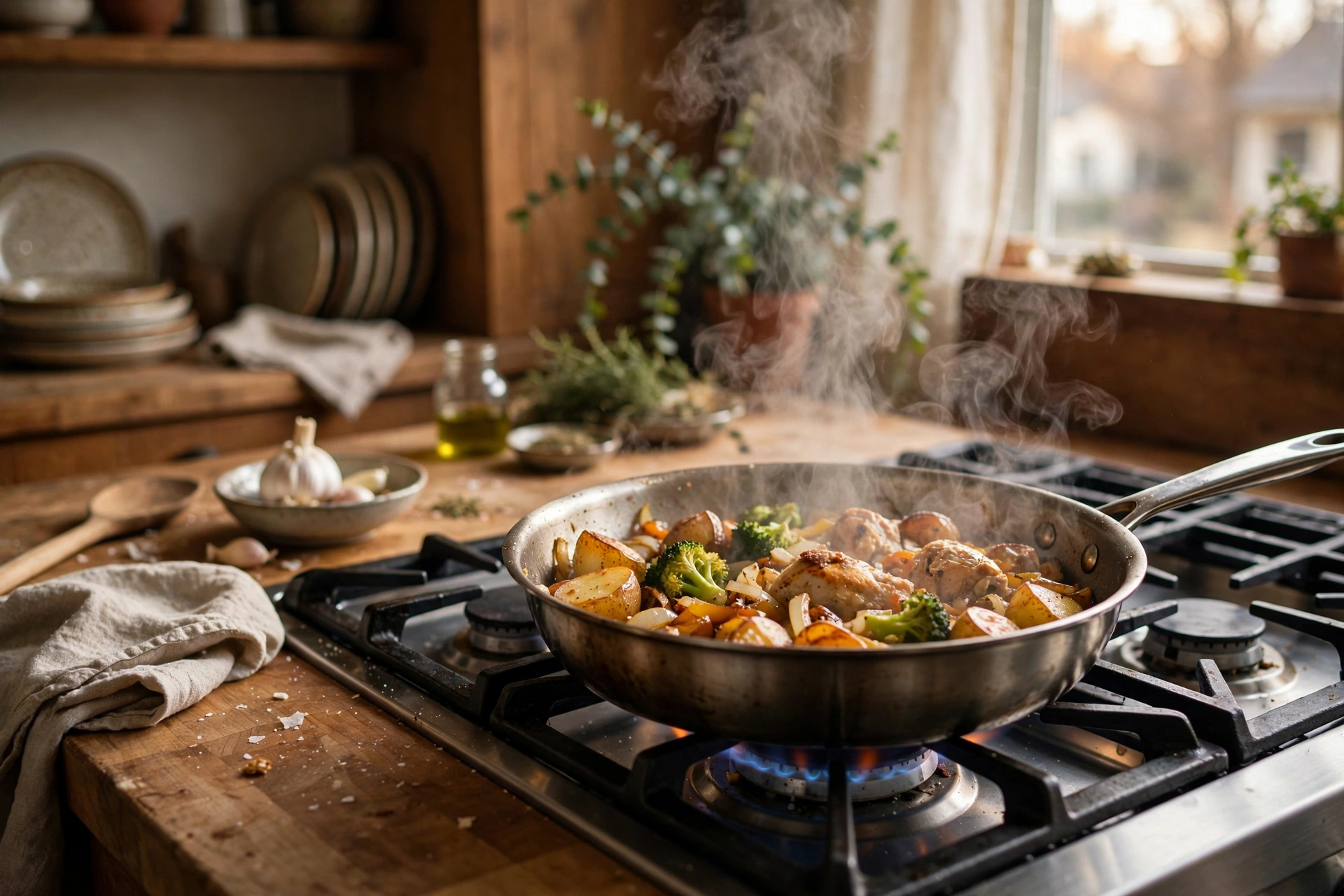
Turkey slices: reheating dried-out turkey is the classic leftovers complaint. Warm slices gently in a covered skillet with a splash of broth or gravy, or wrap in foil with broth and heat in a 325°F oven. The microwave works for single portions — cover and use medium power to avoid rubbery edges.
Casseroles and stuffing: reheat covered in a 325–350°F oven with a splash of broth to restore moisture, uncovering for the last few minutes if you want the top crisp again.
The one-reheat rule: reheat only the portion you will eat. Repeated cooling and reheating cycles march food through the danger zone again and again — each cycle adds risk.
“Reheat it like you mean it — 165°F is not a suggestion, it is the finish line.”
What NOT to Do
The mistakes that cause problems are almost always the same short list:
- Do not leave the turkey out overnight. “It’ll be fine, it’s a big bird” is the most dangerous sentence in leftovers history. Refrigerate within 2 hours.
- Do not stuff the bird the night before. Stuffing a turkey ahead of roasting lets bacteria grow in the warm, moist cavity. Always stuff just before the bird goes into the oven.
- Do not thaw frozen leftovers on the counter. The outside reaches the danger zone while the inside is still frozen. Refrigerator, cold water, or microwave only.
- Do not taste-test old food to check safety. You cannot taste, smell, or see the bacteria that cause foodborne illness. Trust the date, not your tongue.
- Do not put a whole hot turkey in the fridge. Carve it first — a whole bird cannot cool fast enough even in the refrigerator.
- Do not keep leftovers a week “because they look fine.” The 3–4 day rule exists because the dangerous bacteria are invisible.
Best Uses for Leftovers (Days 1–4)
Safe storage is only half the fun — here is how to actually enjoy the bounty, all within the safe window:
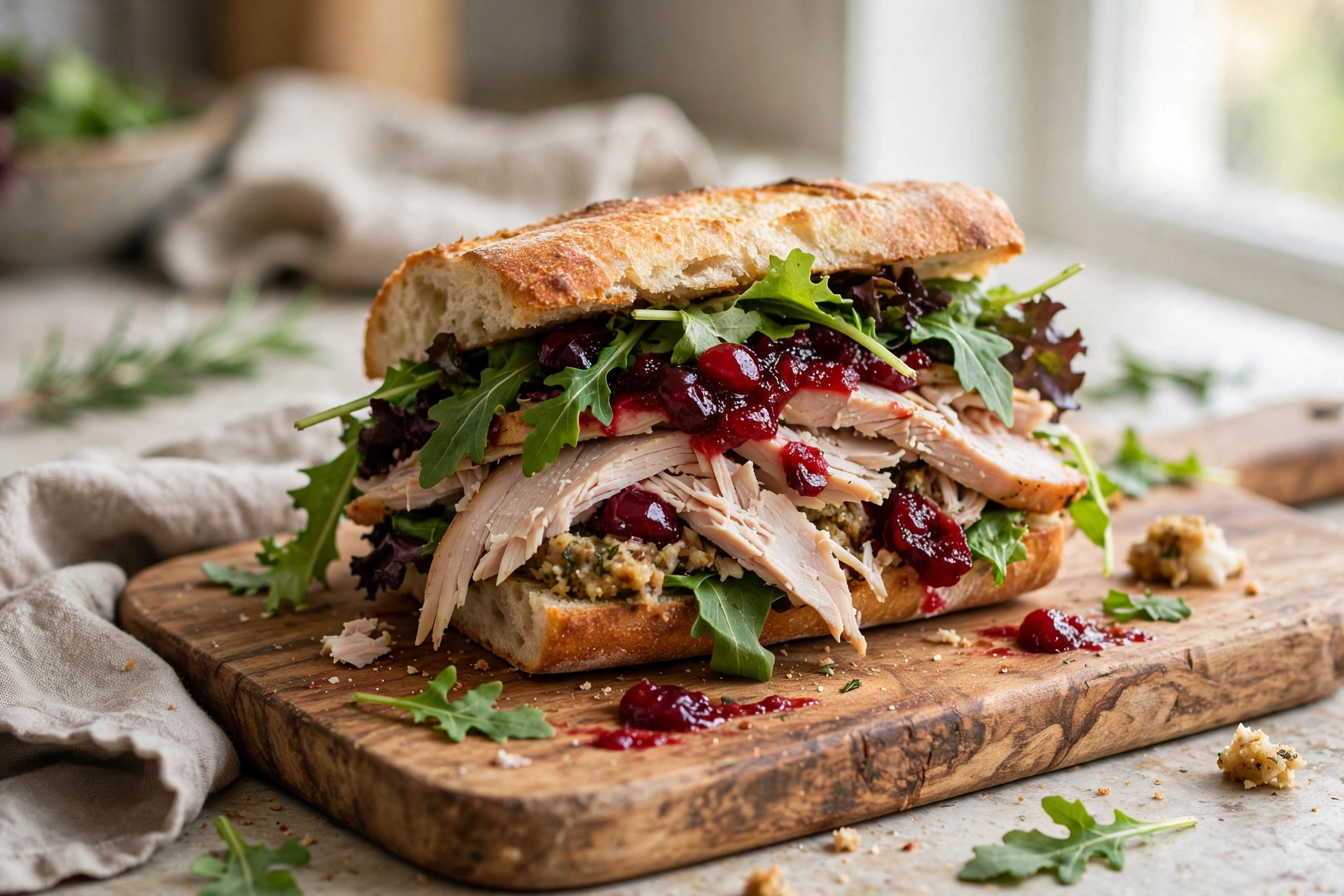
Day 1 (Friday): the legendary sandwich. Turkey, stuffing, cranberry sauce, and a little gravy or mayo on good bread or a roll. This is not leftovers — this is the reason for the season.
Day 2: turkey soup or pot pie. Simmer the carcass for stock (it is liquid gold), then build soup with leftover turkey, vegetables, and noodles — or tuck everything under a pie crust.
Day 3: breakfast hash. Diced turkey, potatoes, and stuffing crisped in a skillet with a fried egg on top. Thanksgiving breakfast is deeply underrated.
Day 4: use-it-up casserole. Whatever remains — turkey, vegetables, gravy, mashed potatoes as a topping — becomes a shepherd’s-pie-style bake. A clean fridge and one last great meal.
For timing the original meal so you land here with the right quantities, our Thanksgiving cooking timeline and turkey roasting guide help you plan portions that leave generous — but not reckless — leftovers.
Frequently Asked Questions
How long can Thanksgiving leftovers sit out?
No more than 2 hours at room temperature — the clock starts when food is served. Pack perishables into the refrigerator around 90 minutes after the meal to stay safely inside the limit.
How long is leftover turkey good for?
3–4 days in the refrigerator at 40°F or below. For longer storage, freeze it — turkey keeps best quality for 2–3 months frozen. Always label with the date so you are not guessing later.
Can I reheat leftovers more than once?
It is safest to reheat only once: portion out what you will eat and reheat that to 165°F. Each cool-and-reheat cycle moves food through the bacterial danger zone again, adding risk every time.
Is it safe to eat cold leftover turkey?
Yes — cold turkey straight from the fridge is perfectly safe within the 3–4 day window. The 165°F rule applies to reheating; cold sandwiches and salads made from properly stored turkey need no reheating at all.
Can I freeze gravy and mashed potatoes?
Both freeze well. Freeze gravy in ice cube trays for single servings (thaw and boil before serving). Mashed potatoes keep a month or two frozen; reheat with milk and butter, stirring well to restore texture.
What should I do with the turkey carcass?
Make stock within a day or two — simmer the carcass with onion, carrot, celery, and herbs for a few hours, strain, and refrigerate (3–4 days) or freeze (months). It is the foundation of the best post-Thanksgiving soup you will ever make.
Conclusion
Thanksgiving leftovers are one of the great joys of the holiday — days of easy, delicious meals from a single afternoon of cooking. Keep them joyful with four habits: refrigerate within 2 hours, pack in shallow containers, respect the 3–4 day window, and reheat to 165°F. Do that, and the only thing you will have to worry about is who gets the last turkey sandwich.
Leave a Reply