
What are the most interesting Thanksgiving facts? This list of 25 verified Thanksgiving facts for kids and adults has the answers: the 1621 harvest feast lasted three days, presidents from Washington to Lincoln shaped the holiday, and Americans now eat about 46 million turkeys every November.
Whether you are a teacher looking for classroom-safe trivia, a parent settling a dinner-table debate, or simply curious about the real story behind the holiday, these Thanksgiving facts are accurate, sourced, and written to be shared out loud. We begin in the autumn of 1621, on the coast of what is now Massachusetts.
Key Facts
- The 1621 harvest feast lasted three days — English colonists and about 90 Wampanoag men shared it, according to Plimoth Patuxet Museums.
- Thanksgiving became an annual national holiday in 1863, when Abraham Lincoln issued his proclamation during the Civil War.
- Americans eat an estimated 46 million turkeys every Thanksgiving, per the National Turkey Federation.
- The Macy’s Thanksgiving Day Parade has run since 1924, making it the oldest Thanksgiving parade in the world.
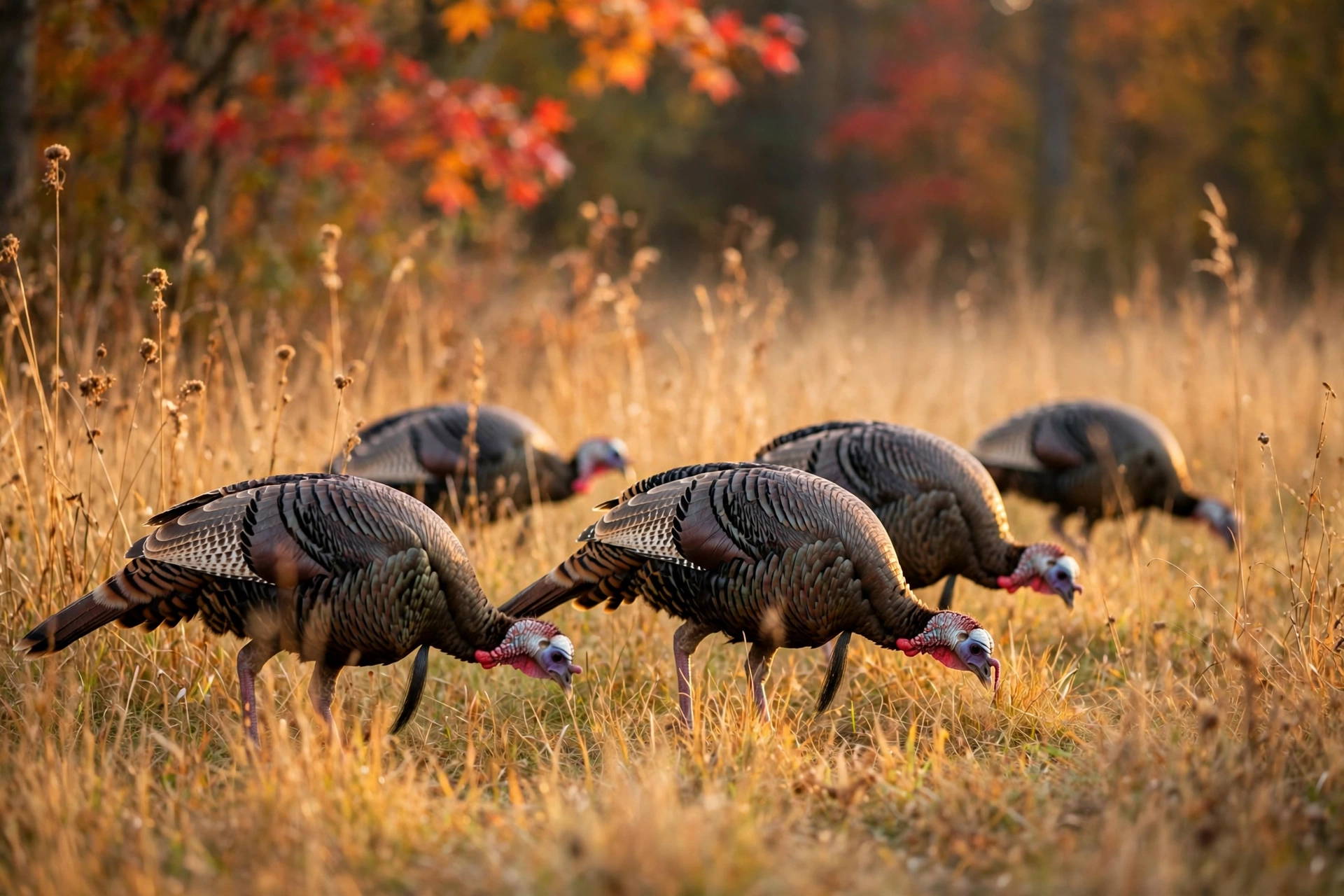
- Wild turkeys can fly up to 55 mph in short bursts — the holiday bird is surprisingly athletic.
Origin Thanksgiving Facts
The story most of us learned in school is a simplified version. The real 1621 harvest feast — the event behind the holiday — is better documented, more interesting, and more complicated than the legend. For the full timeline, see our history of Thanksgiving, and for the deeper meaning behind the celebration, read why Thanksgiving is celebrated.
1. The First Thanksgiving Lasted Three Days
The 1621 harvest feast was not a single dinner — it was a three-day festival of eating, games, and entertainment. According to Plimoth Patuxet Museums, the great sachem of the Pokanoket, Ousamequin (Massasoit), arrived with 90 of his men and shared three days of feasting with the English colonists. Imagine hosting a dinner party that stretches across an entire long weekend — that was the first Thanksgiving.
2. The Guests Outnumbered the Hosts
Only about 50 of the Mayflower’s 102 passengers had survived the brutal first winter, so the English side of the feast numbered around five dozen people at most. The 90 Wampanoag men who joined them significantly outnumbered their hosts. It is a useful corrective to the popular image: this was not a small English dinner with a few Native guests — it was a large gathering in which the Wampanoag were the majority.
3. Only Two Firsthand Accounts of the Feast Survive
Almost everything we know about the 1621 feast comes from two short sources: a letter written by colonist Edward Winslow in December 1621, and a passage in Governor William Bradford’s journal, Of Plymouth Plantation, written years later. Winslow mentions wildfowl, venison brought by the Wampanoag, and three days of entertainment; Bradford records the successful harvest and the fowl they gathered. That is the entire primary-source record — every painting and pageant since has filled in the rest.
4. There Were No Forks — and No Pumpkin Pie
The colonists ate with spoons, knives, and their fingers; forks would not become common in America for decades. And the menu would surprise a modern diner: venison (the Wampanoag contributed five deer), wildfowl such as duck and goose, seafood including mussels and eel, and native corn. There was no pumpkin pie, no mashed potatoes, no cranberry sauce, and no bread stuffing as we know it today.
5. It Was Not Called “Thanksgiving” at the Time
The 1621 event was a traditional English harvest festival, not a religious day of thanksgiving — nobody present called it Thanksgiving. The first recorded religious day of thanksgiving at Plymouth came in 1623, when the colonists declared a feast after a drought-breaking rain saved their crops. The name “Thanksgiving” was applied to the 1621 feast retroactively, centuries after the fact.
“Three days of feasting, ninety guests, and not a single fork — the first Thanksgiving looked nothing like the painting.”
Food Thanksgiving Facts
Food is the heart of the modern holiday, and the numbers behind the Thanksgiving table are staggering. Here is what the feast looks like today — and how far it has traveled from 1621.
6. Americans Eat About 46 Million Turkeys Every Thanksgiving
The National Turkey Federation estimates that roughly 46 million turkeys are eaten in the United States each Thanksgiving — about one bird for every seven Americans. That makes the holiday by far the biggest single turkey-eating event of the year, dwarfing Christmas. The average Thanksgiving turkey weighs about 15 pounds, which means Americans collectively roast close to 700 million pounds of turkey in a single week.
7. The First Feast Had No Potatoes
White potatoes had not yet been widely cultivated in New England in 1621, so there were no mashed potatoes at the first Thanksgiving. Sweet potatoes, though native to the Americas, were a Southern crop the Plymouth colonists had never seen. The starchy sides of 1621 were more likely boiled pumpkin, cornmeal porridge, and beans — humble dishes that would look unfamiliar next to today’s marshmallow-topped casseroles.
8. Cranberry Sauce Is a 20th-Century Invention
Native Americans used cranberries for food, dye, and medicine long before 1621, and they almost certainly introduced the tart berry to the colonists. But the jellied cranberry sauce on today’s table dates to 1912, when grower Marcus Urann began canning it — the business that became Ocean Spray. Before that, cranberry sauce was a homemade, short-season condiment, not the holiday staple we know now.
9. Americans Eat an Estimated 50 Million Pumpkin Pies
Pumpkin pie is the undisputed dessert champion of Thanksgiving, with an estimated 50 million pies baked and eaten each holiday. Nearly all the canned pumpkin behind them comes from a single variety — Dickinson pumpkins grown in Illinois. Fun twist for trivia night: canned “pumpkin” is often a blend of winter squashes, which the FDA legally allows, because botanically speaking, they are all pumpkins.
10. Wild Turkeys Are Surprisingly Athletic
The domesticated bird on your table cannot fly, but its wild cousins are athletes: wild turkeys can run up to 20 miles per hour and fly in short bursts at up to 55 miles per hour, roosting in trees at night to stay safe from predators. The wild turkey’s comeback from near-extinction is one of conservation’s great success stories — more on that in the classroom facts below.
Presidential Thanksgiving Facts
Thanksgiving would not exist as a national holiday without presidents — and one very determined magazine editor. These are the political facts behind the feast.
11. George Washington Proclaimed the First National Thanksgiving
In 1789, at the request of Congress, George Washington issued the first presidential Thanksgiving proclamation, setting aside Thursday, November 26, 1789, as a day of public thanksgiving and prayer. It was a one-time event — his successors did not continue it, and for the next 74 years Thanksgiving remained a patchwork of state and regional observances with no fixed national date.
12. One Woman Lobbied Five Presidents for 17 Years
Sarah Josepha Hale — the author of “Mary Had a Little Lamb” and editor of the influential Godey’s Lady’s Book — campaigned for a national Thanksgiving for 17 years, writing to five presidents: Taylor, Fillmore, Pierce, Buchanan, and finally Lincoln. She also published recipes and editorials that popularized the turkey-and-pumpkin-pie menu we recognize today. Without her persistence, Thanksgiving might never have become a national holiday.
“One woman’s 17-year letter-writing campaign gave America its most beloved holiday.”
13. Abraham Lincoln Made Thanksgiving an Annual Holiday in 1863
In the middle of the Civil War, Lincoln issued his Thanksgiving proclamation on October 3, 1863, declaring the last Thursday of November a national day of thanksgiving — partly at Hale’s urging, partly to unify a fractured country. Every president since has issued an annual Thanksgiving proclamation, making it one of the oldest unbroken traditions of the American presidency.
14. FDR Once Moved Thanksgiving — and Got Roasted for It
In 1939, Franklin D. Roosevelt moved Thanksgiving up a week to lengthen the Christmas shopping season during the Great Depression. Critics dubbed it “Franksgiving,” some states refused to follow, and the country briefly had two competing Thanksgivings. Congress settled the matter in 1941, fixing the holiday to the fourth Thursday of November — the date we still use, as our guide to when Thanksgiving is explains.
15. The Turkey Pardon Became an Official Ritual in 1989
Presidents had received ceremonial turkeys from the National Turkey Federation since Harry Truman accepted the first one in 1947, and a few birds were informally spared over the years. But the annual White House turkey “pardon” as a formal ritual began with George H. W. Bush in 1989, when he declared that the bird had “been granted a presidential pardon.” Every president since has continued the tradition.
Modern Thanksgiving Facts
Parades, football, travel chaos, and shopping stampedes — the modern Thanksgiving is a cultural machine. These facts explain how the holiday grew into what it is today.
16. The Macy’s Parade Has Run Since 1924
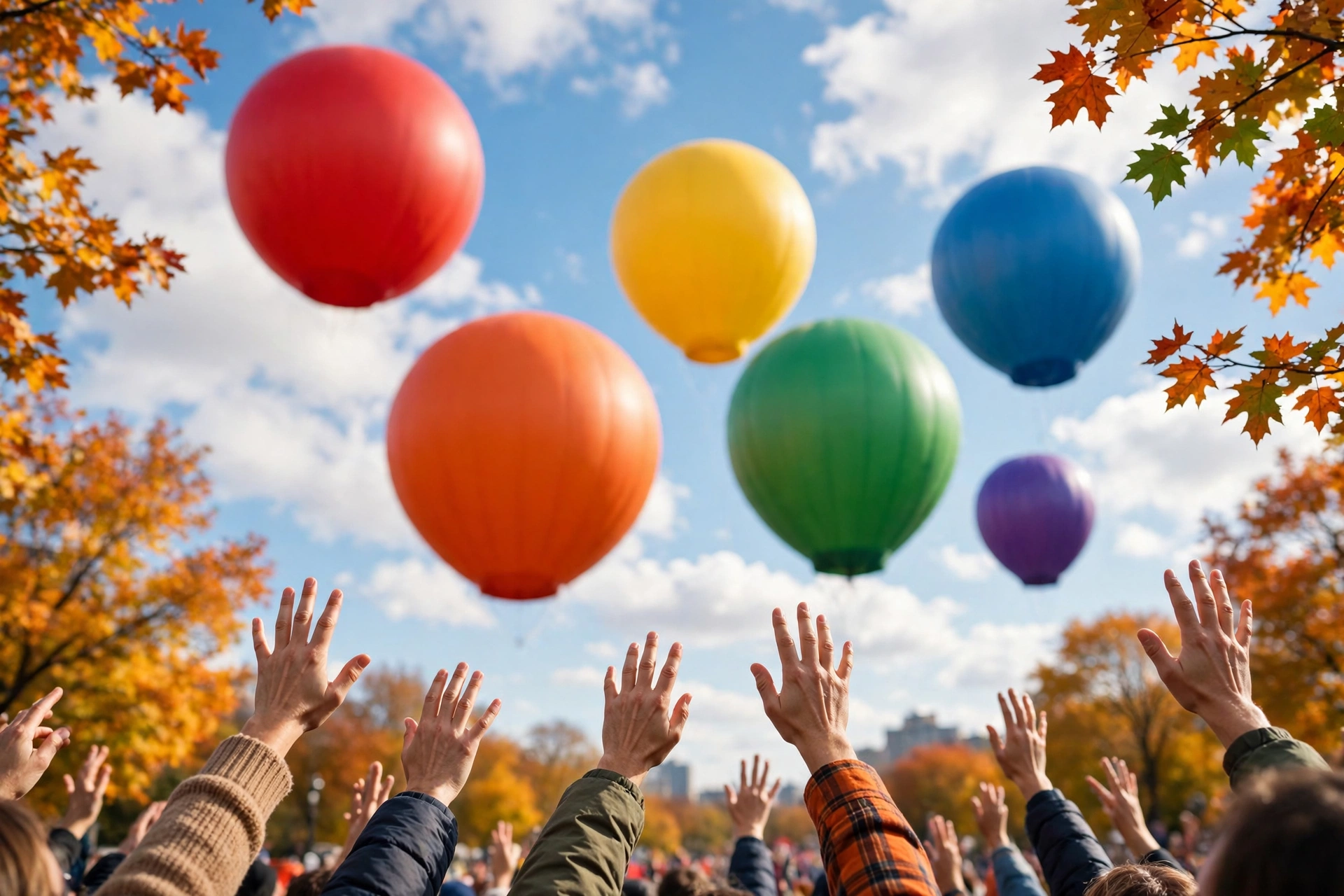
The Macy’s Thanksgiving Day Parade, first held in 1924, is the oldest Thanksgiving parade in the world — older than the holiday’s fixed date. The first parade featured live animals from the Central Park Zoo instead of balloons; the giant character balloons debuted in 1927. Today about 3.5 million people line the New York route, and another 50 million watch on television.
17. Thanksgiving Is America’s Busiest Travel Holiday
More Americans travel for Thanksgiving than for any other holiday. In recent record years, AAA estimated nearly 80 million Americans traveling 50 miles or more for the holiday — the vast majority by car. The Wednesday before Thanksgiving is traditionally the busiest travel day of the year, and the Sunday after ranks among the busiest days at US airports.
18. Football and Thanksgiving Go Back a Century
The NFL has played games on Thanksgiving since 1920, when six games were held on the holiday. The Detroit Lions have hosted a Thanksgiving game every year since 1934 — a marketing idea by owner George Richards to fill seats — and the Dallas Cowboys joined the tradition in 1966. For millions of families, the afternoon game is as fixed a ritual as the turkey itself.
19. Turkey Trots Are Among America’s Biggest Race Days
Thanksgiving-morning “turkey trots” — fun runs held in thousands of towns — collectively draw enormous fields, making Thanksgiving one of the largest single days of road racing in the United States. The tradition of working up an appetite before the feast now spans 5Ks, costume runs, and charity fundraisers in nearly every state.
20. “Black Friday” Was Named by Philadelphia Traffic Cops
The term “Black Friday” for the day after Thanksgiving originated in 1960s Philadelphia, where police used it to describe the chaotic crowds and traffic jams of post-holiday shoppers and football fans. Retailers later reframed it as the day stores go “into the black,” meaning profitable. It became America’s biggest shopping day in 2005, according to retail analysts.
Classroom-Friendly Thanksgiving Facts
Teachers: these five Thanksgiving facts are written in kid-safe language and double as classroom discussion starters. Each one is accurate, sourced, and safe to share with young learners — no myths, no scary details.
21. Only Boy Turkeys Gobble
Here is a fact kids love: only male turkeys — called toms — make the famous “gobble-gobble” sound. Female turkeys, called hens, make softer clicking and chirping sounds instead. A tom’s gobble is so loud it can be heard from a mile away, which is useful in the wild for calling to other turkeys.
22. Turkeys Can See Almost All the Way Around Their Heads
Turkeys have excellent eyesight — they see in full color, and their eyes are positioned so they can see about 270 degrees around them without turning their heads. That is three-quarters of a full circle. In the wild, this superpower vision helps them spot danger coming from almost any direction.
23. Benjamin Franklin Wrote a Famous Letter Praising the Turkey
In 1784, Benjamin Franklin wrote a letter to his daughter saying he wished the turkey — “a much more respectable bird” — had been chosen as America’s symbol instead of the bald eagle, which he teased for stealing food from other birds. Important classroom note: Franklin never formally proposed the turkey as the national bird. He was joking with his daughter in a private letter — but his admiration for the turkey was genuine.
24. Wild Turkeys Made an Amazing Comeback
By the early 1900s, hunting and habitat loss had reduced wild turkeys in America to about 100,000 birds — they had vanished from many states entirely. Thanks to conservation programs and reintroduction efforts, there are now around 7 million wild turkeys across North America. It is one of the greatest wildlife comeback stories ever, and it happened just in time for every Thanksgiving.
25. Ripe Cranberries Bounce
Cranberries have tiny air pockets inside them, which is why fresh, ripe cranberries bounce — and float. Long ago, farmers tested cranberries by bouncing them: the bounciest berries were the ripest. Classroom activity idea: drop a few fresh cranberries on a table and see which ones bounce highest. It is real food science, and it is much like how growers once sorted their harvest.
“From a three-day feast in 1621 to bouncing cranberries in science class — Thanksgiving facts never stop giving.”
Frequently Asked Questions
When was the first Thanksgiving?
Autumn 1621, in Plymouth (present-day Massachusetts). English colonists and about 90 Wampanoag men shared a three-day harvest feast celebrating the colony’s first successful harvest.
Why do we eat turkey on Thanksgiving?
Wildfowl was served at the 1621 feast, the turkey is native to North America and large enough to feed a family, and 19th-century writers like Sarah Josepha Hale popularized it as the centerpiece. Habit and tradition did the rest.
Did the Pilgrims really wear buckles on their hats?
No — the buckled hats and shoes are a 19th-century artistic invention. Real 17th-century colonists wore simple, practical clothing with no buckles in sight.
What did the Wampanoag bring to the first Thanksgiving?
Venison — five deer, according to Edward Winslow’s letter — along with their knowledge of local foods. The English contributed wildfowl and their harvest of corn, barley, and peas.
Is the presidential turkey pardon real?
Yes. It has been an official annual White House ritual since George H. W. Bush pardoned a turkey in 1989, and every president since has continued the tradition.
Are these Thanksgiving facts safe to share with kids?
Yes. Facts 21–25 were written specifically for classrooms, with kid-safe wording and no myths. Teachers can share the whole list of Thanksgiving facts with confidence.
Conclusion
These 25 Thanksgiving facts span four centuries — from a three-day harvest feast shared by two cultures, through presidential proclamations and one determined magazine editor, to parades, football, and cranberries that bounce. The holiday keeps changing, but its core has never moved: gratitude, harvest, and people gathered around a table. Share your favorite fact at dinner this year — it might start the best conversation of the night.
Leave a Reply