
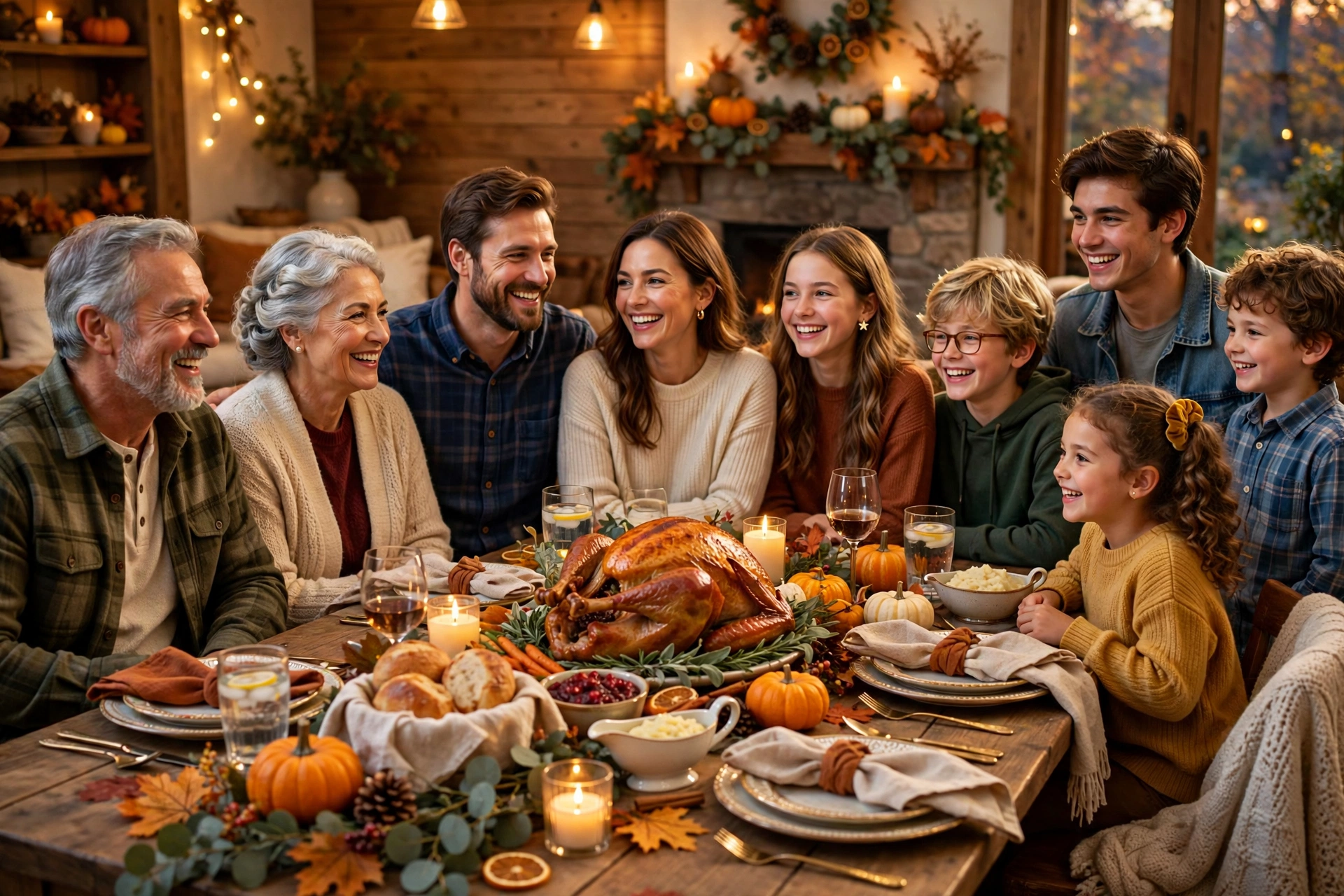
Americans celebrate Thanksgiving to express gratitude for the good things in their lives, spend time with family and friends, and share a meal. The holiday has historical connections to harvest celebrations, religious days of thanksgiving, and a 1621 gathering involving English colonists and the Wampanoag people in present-day Massachusetts.
Today, Thanksgiving is observed on the fourth Thursday of November in the United States. Families often gather for dinner, prepare traditional foods, and reflect on what they appreciate. However, the history behind the holiday is more complicated than the familiar story of Pilgrims and Native Americans sharing a peaceful meal.
Understanding why Thanksgiving is celebrated means looking at both its historical origins and what the holiday represents to Americans today.
What Is Thanksgiving, and Why Is It Celebrated?
Thanksgiving is a national holiday in the United States associated with gratitude, harvest traditions, family gatherings, and reflection.
The original idea of giving thanks was not unique to America. Many cultures have held harvest celebrations to recognize successful crops, seasonal changes, and the people or circumstances that made survival possible.
For many early European settlers in North America, days of thanksgiving also had a religious meaning. They were occasions for prayer and gratitude to God, especially following significant events or periods of hardship.
Over time, these traditions developed into a national holiday with both religious and secular meanings.
Today, Americans celebrate Thanksgiving for several reasons:
- Gratitude: To appreciate family, friendships, health, opportunities, and other important parts of life.
- Family connections: To spend time with relatives and loved ones.
- Tradition: To continue customs passed down through generations.
- Community: To share meals, volunteer, and help people who need support.
- Reflection: To recognize both the positive experiences and challenges of the past year.
Thanksgiving means different things to different people. Some consider it a religious occasion, while others celebrate it as a cultural holiday centered on relationships and appreciation.
What Is the Origin of Thanksgiving in America?
The origins of American Thanksgiving involve several different historical traditions rather than one single event.
Long before European colonization, Indigenous communities throughout North America held ceremonies and seasonal gatherings connected to gratitude and harvests. The Wampanoag people, whose history is closely associated with Thanksgiving, had their own longstanding practices of giving thanks.
European settlers also brought traditions of religious thanksgiving and harvest celebrations.
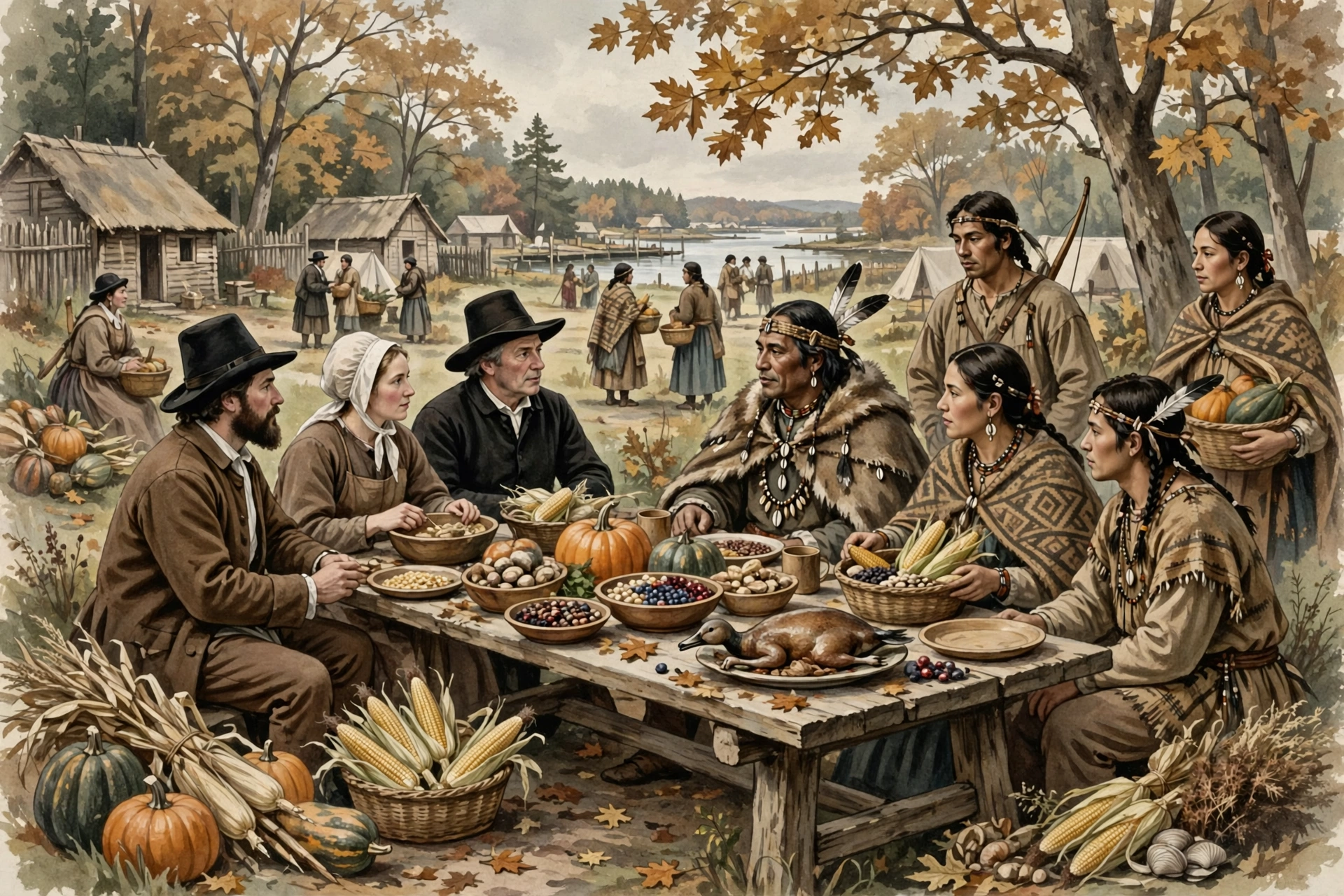
The event most commonly connected with the modern holiday occurred in 1621, when English colonists at Plymouth and members of the Wampanoag community participated in a harvest gathering.
However, that event did not immediately establish the national holiday Americans celebrate today.
What Happened at the 1621 Harvest Celebration?
In 1620, English settlers arrived in the region now known as Massachusetts and established Plymouth Colony on Wampanoag ancestral land.
Their first winter was extremely difficult. Many colonists died from illness and harsh conditions, and those who survived faced the challenge of growing enough food.
The Wampanoag played an important role in the settlers’ survival. Relations between the groups involved diplomacy, political considerations, and an agreement of mutual protection.
Tisquantum, also known as Squanto, was a Patuxet Wampanoag man who helped the English settlers communicate and adapt to local conditions.
Following a successful harvest in the autumn of 1621, Plymouth colonists held a celebration. Ousamequin, also known as Massasoit, and approximately 90 Wampanoag men joined the gathering.
Historical accounts describe several days of feasting and activities. The Wampanoag contributed deer, while English records also mention wildfowl.
Although this event later became widely known as the “First Thanksgiving,” the participants did not establish the modern American holiday during that gathering.
The Smithsonian’s National Museum of the American Indian explains that the familiar story often leaves out the Wampanoag people’s history, political decisions, and experiences following European settlement.
Historical reference: Smithsonian National Museum of the American Indian
How Did Thanksgiving Become a National Holiday?
Thanksgiving developed gradually from local celebrations and religious observances into a nationally recognized holiday.
Several events helped shape its place in American history.
George Washington’s Thanksgiving Proclamation in 1789
On October 3, 1789, President George Washington issued a proclamation recommending a national day of thanksgiving and prayer.
He designated November 26, 1789, as an occasion for Americans to express gratitude for the establishment of the new government and other blessings.
However, Washington’s proclamation did not create the permanent annual Thanksgiving holiday Americans observe today.
Abraham Lincoln’s Thanksgiving Proclamation in 1863
Thanksgiving took an important step toward becoming an established national tradition during the American Civil War.
On October 3, 1863, President Abraham Lincoln issued a proclamation calling for a national day of thanksgiving on the last Thursday of November.
The country was divided by war, and Lincoln’s proclamation encouraged Americans to recognize blessings and seek peace during a period of tremendous suffering.
The proclamation contributed to the continuing annual observance of Thanksgiving.
Congress Established the Modern Date in 1941
Thanksgiving did not always fall on the fourth Thursday of November.
In the late 1930s, President Franklin D. Roosevelt moved the observance earlier in November in an effort to extend the holiday shopping season. The decision created disagreement and confusion over which date should be observed.
In December 1941, Congress and President Roosevelt established the fourth Thursday of November as the federal Thanksgiving holiday, beginning in 1942.
That is why Thanksgiving falls on different calendar dates but always on the fourth Thursday of November in the United States.
Historical references: Library of Congress and National Archives
What Is the True Meaning of Thanksgiving Today?
For many Americans, the meaning of Thanksgiving has expanded beyond its historical and religious origins.
It has become an occasion to appreciate relationships, reflect on the year, and share time with others.
1. Expressing Gratitude
Gratitude is central to the modern understanding of Thanksgiving.
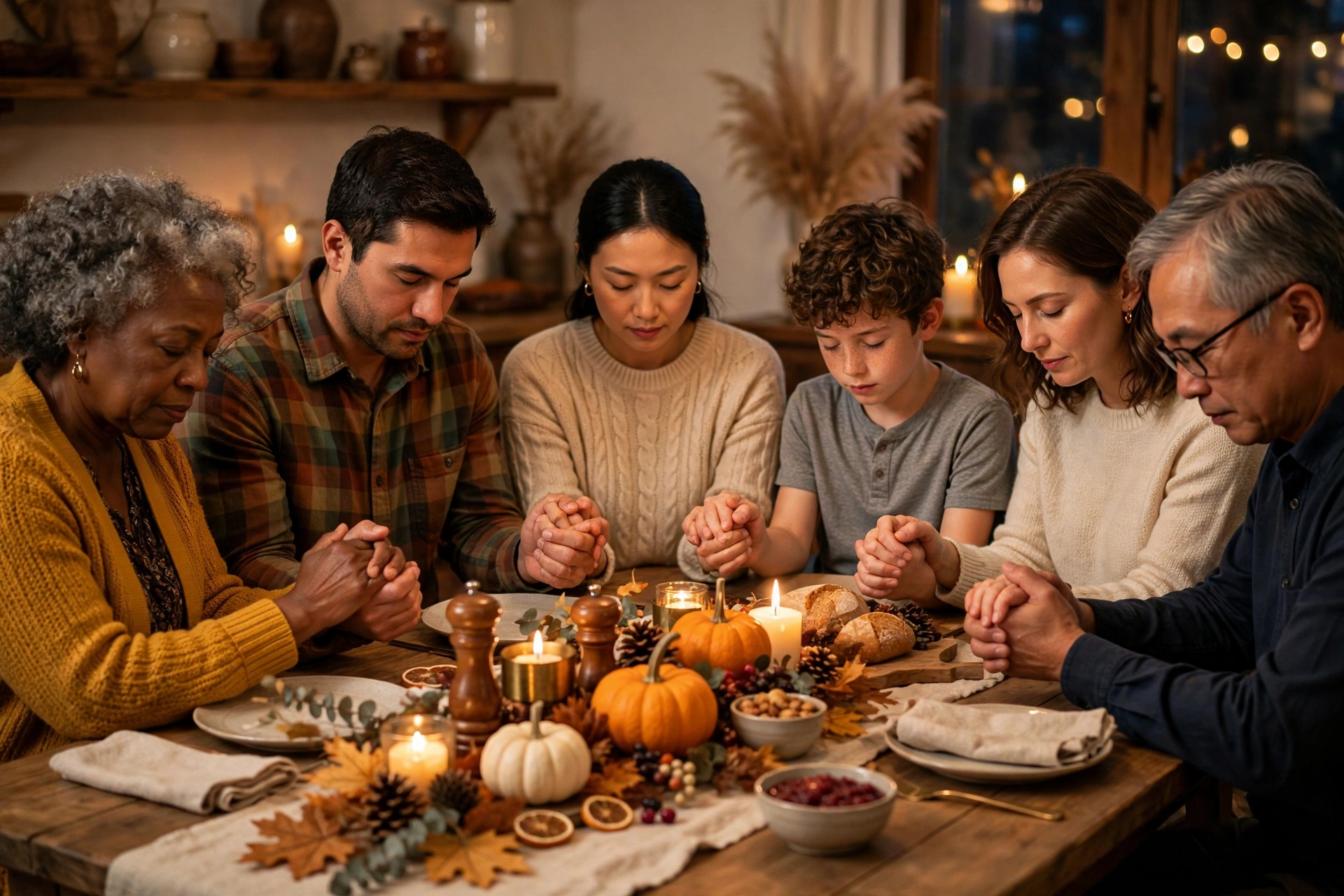
Some families share what they are thankful for before dinner. Others express appreciation through conversations, prayers, letters, or personal reflection.
The purpose is not necessarily to celebrate a perfect year. People may also use the occasion to recognize the support they received during difficult times.
2. Spending Time With Family and Friends
Thanksgiving provides an opportunity for people to reconnect.
Relatives may travel to visit one another, gather around a shared table, and continue family traditions.
Not everyone spends Thanksgiving with relatives. Some celebrate with friends, neighbors, partners, or chosen family.
These different gatherings reflect the holiday’s broader emphasis on human connection.
3. Sharing Food and Hospitality
The Thanksgiving meal is one of the most recognizable parts of the celebration.
Preparing and sharing food provides an opportunity to work together, welcome guests, and continue family customs.
The exact menu varies between households, regions, and cultural backgrounds.
4. Helping Others
Some people mark Thanksgiving through community service.
Volunteering, donating food, helping neighbors, or supporting local organizations can connect the holiday’s theme of gratitude with practical acts of generosity.
There is no single required way to express thankfulness. The meaning comes from the intention behind the celebration.
Why Do Americans Eat Turkey on Thanksgiving?
Turkey became closely associated with Thanksgiving through American food traditions that developed over time.
Wild turkeys were native to North America, and turkey eventually became a popular centerpiece for holiday meals.
The 1621 harvest gathering is often depicted with a large roasted turkey, but the surviving eyewitness account does not specifically identify turkey as the main dish.
It mentions wildfowl and venison. Historians cannot reconstruct the complete menu with certainty.
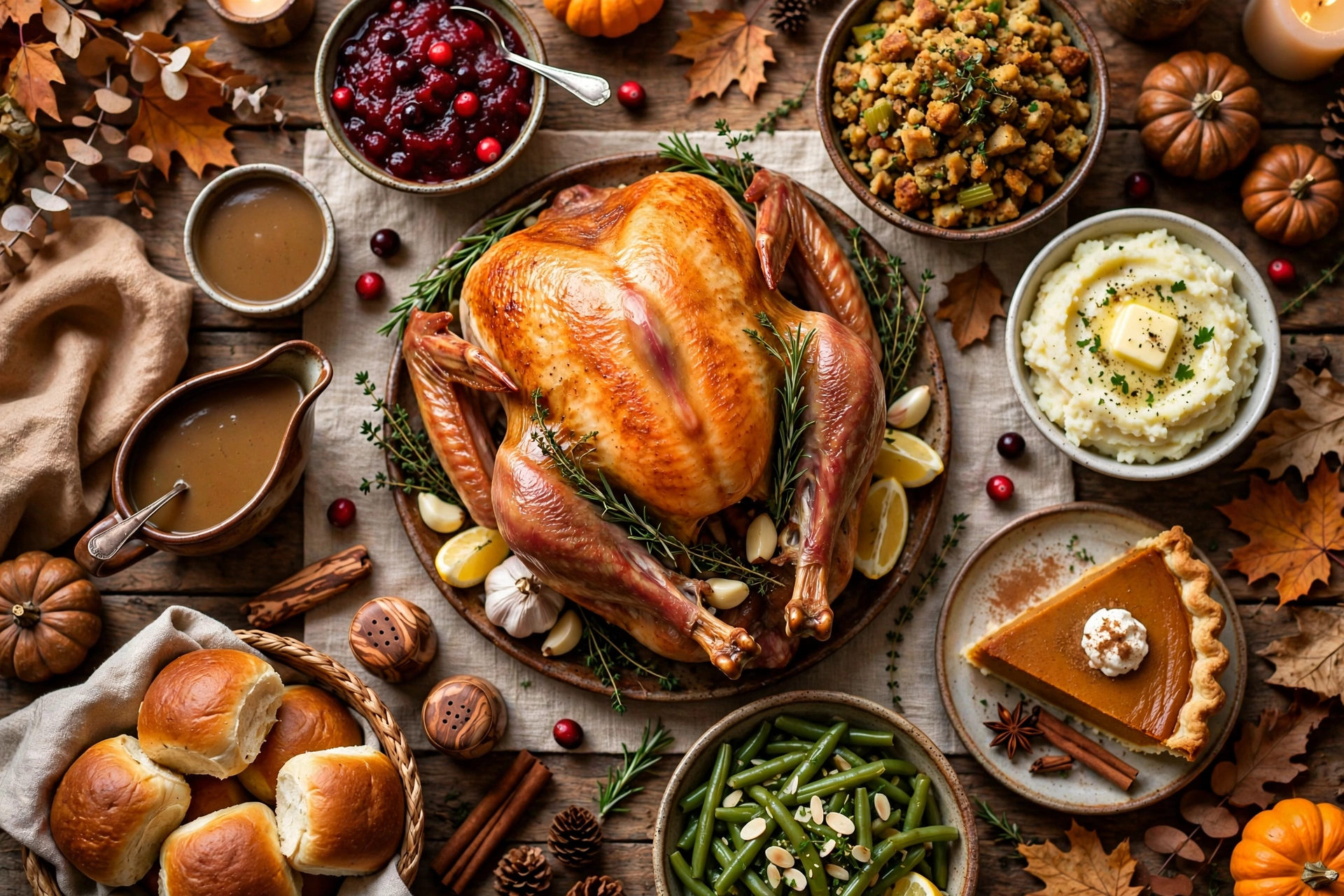
Modern Thanksgiving dinners often feature:
- Roast turkey
- Stuffing or dressing
- Mashed potatoes
- Gravy
- Cranberry sauce
- Sweet potato dishes
- Green bean casserole
- Pumpkin pie
These foods reflect traditions that developed over generations rather than a precisely preserved menu from 1621.
Families may also serve dishes that represent their own cultures, local ingredients, or personal preferences.
Historical food reference: Plimoth Patuxet Museums
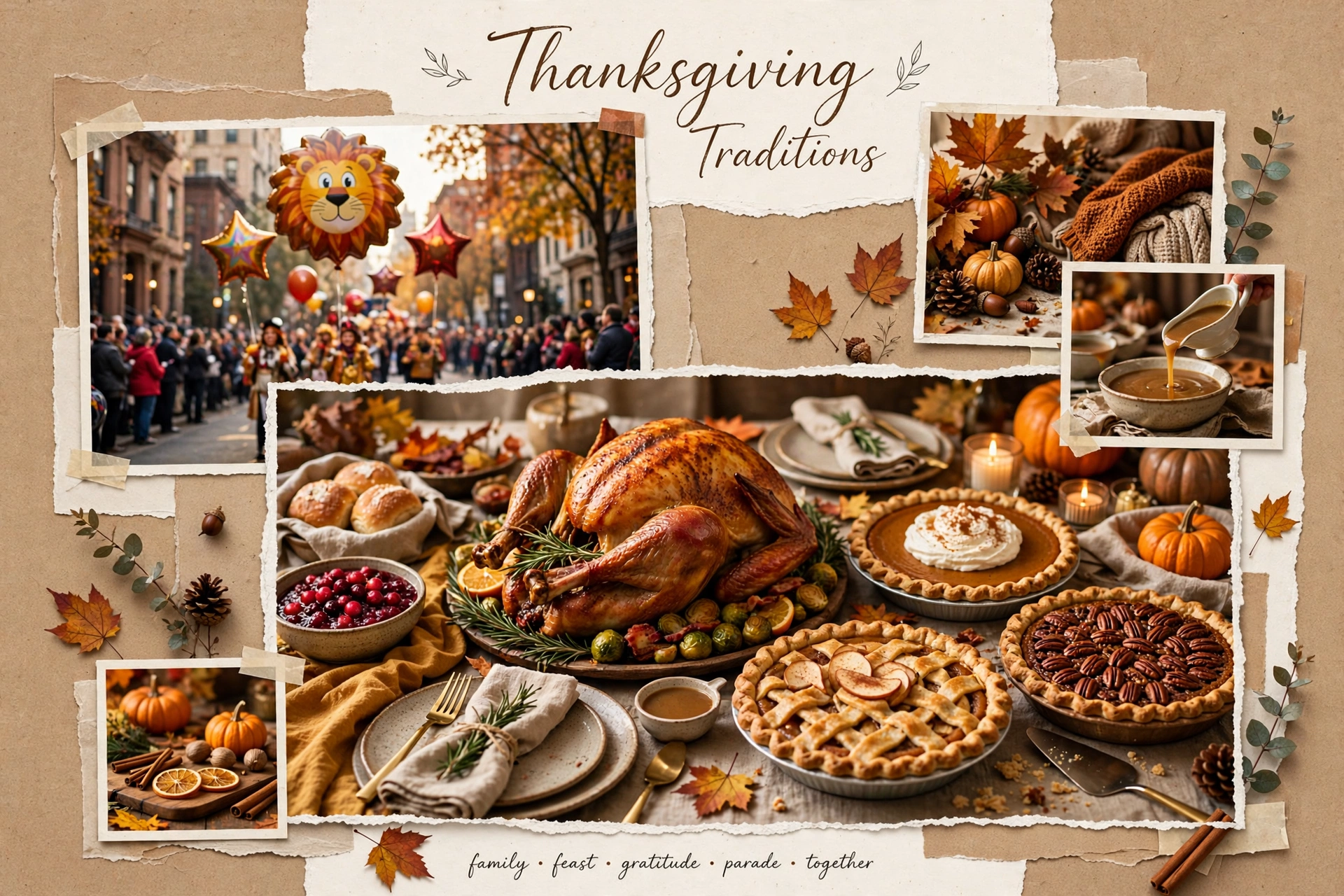
How Do Americans Celebrate Thanksgiving?
Thanksgiving traditions vary widely, but several activities are commonly associated with the holiday.
| Tradition | What it involves |
|---|---|
| Thanksgiving dinner | Sharing a meal with family, friends, or neighbors |
| Expressing gratitude | Reflecting on people and experiences worth appreciating |
| Family gatherings | Reconnecting with relatives and loved ones |
| Thanksgiving parades | Watching televised or local holiday parades |
| Football | Watching or playing American football |
| Volunteering | Helping community organizations or neighbors |
| Friendsgiving | Celebrating with friends, often through a shared meal |
Some households prefer an elaborate dinner with many guests. Others keep the day quiet, travel, work, or choose not to celebrate.
No single tradition defines the holiday for everyone. Many families also develop their own Thanksgiving family traditions that they pass down through generations.
Why Is Thanksgiving Important to American Culture?
Thanksgiving has cultural significance because it brings together several longstanding themes in American life: gratitude, family, tradition, religion, national history, and community.
Unlike holidays centered primarily on gifts or elaborate ceremonies, many Thanksgiving celebrations focus on a shared meal.
The holiday also creates a recurring occasion for families and communities to maintain traditions.
For some Americans, Thanksgiving is connected to religious gratitude. For others, it is an opportunity to appreciate loved ones without any particular religious observance.
At the same time, the holiday’s cultural importance does not mean everyone interprets its history or symbolism in the same way.
Why Is Thanksgiving Controversial for Some Native Americans?
The popular Thanksgiving story often presents the 1621 gathering as a simple example of friendship and harmony between English settlers and Native Americans.
That account leaves out significant parts of the history.
The Wampanoag were established communities with their own governments, cultural practices, and diplomatic interests long before the arrival of Plymouth colonists.
Although the English colonists and Wampanoag formed an alliance, their relationship existed within a broader history of colonization, disease, loss of land, and conflict.
In later decades, expanding European settlement profoundly affected Indigenous communities.
For this reason, some Native Americans regard Thanksgiving as a time for remembrance and reflection on the consequences of colonization.
The National Day of Mourning, observed in Plymouth, Massachusetts, has provided a space for Indigenous people and supporters to remember Native history and continuing struggles.
Other Native American families celebrate Thanksgiving in their own ways, while some do not observe the holiday.
There is no single Native American perspective.
Acknowledging these different experiences does not prevent families from practicing gratitude. It makes room for a more complete understanding of the people and history associated with Thanksgiving.
Further reading: Smithsonian: Thanksgiving From an Indigenous Perspective
When Is Thanksgiving Celebrated in 2026?
In the United States, Thanksgiving will be celebrated on Thursday, November 26, 2026.
The holiday is observed on the fourth Thursday of November each year. Learn more in our guide to when Thanksgiving falls each year.
Canada celebrates Thanksgiving on a different date, the second Monday of October.
Although both holidays involve gratitude and harvest traditions, their histories and customs are not identical.
Frequently Asked Questions About Thanksgiving
Why do we celebrate Thanksgiving every year?
Americans celebrate Thanksgiving each year to express gratitude, maintain traditions, and spend time with loved ones. The modern holiday developed from earlier harvest celebrations and religious observances.
Was Thanksgiving originally a religious holiday?
Religious thanksgiving played an important role in the holiday’s development. Early proclamations often encouraged prayer and gratitude to God. Today, Thanksgiving is also widely celebrated as a secular cultural holiday.
Did Native Americans celebrate Thanksgiving before the Pilgrims?
Indigenous communities practiced traditions of gratitude and seasonal harvest celebrations long before European settlers arrived. Those traditions were distinct from the later US national holiday.
Did the Pilgrims start Thanksgiving?
The 1621 Plymouth harvest gathering became an important part of the holiday’s popular origin story, but it did not establish the modern annual national holiday. That developed over the following centuries.
Why is Thanksgiving celebrated in November?
American Thanksgiving traditions became associated with autumn harvests. Presidential proclamations in the 18th and 19th centuries helped establish November observances, and federal legislation eventually fixed the holiday on the fourth Thursday.
Is Thanksgiving celebrated only in America?
No. Canada also has a national Thanksgiving holiday, and other countries and cultures observe their own thanksgiving or harvest celebrations. The dates and customs differ.
Conclusion
Americans celebrate Thanksgiving to recognize what they are grateful for and spend meaningful time with family, friends, and communities. The holiday has roots in harvest traditions, religious observances, and events in early American history, but its modern significance has developed over centuries.
Understanding Thanksgiving also means recognizing the Wampanoag people and the complex history behind the familiar 1621 story.
For many families today, the central purpose is simple: to appreciate what matters, share what they have, and make time for the people around them. If you are hosting this year, see our Thanksgiving dinner planning guide for a complete preparation timeline.
Leave a Reply