
Easy Christmas cookies share one trait: the dough is forgiving and the decorating is optional. If a recipe needs a candy thermometer or three hours of chilling, it is not an easy cookie. This guide gives you 25 easy Christmas cookie recipes for 2026 — classics, kid-friendly bakes, and no-bake treats — plus the storage and gifting rules that keep them fresh through the holidays.
Key Facts
- The easy-cookie test: one bowl or one pot, under 30 minutes of active work, ingredients from a normal pantry.
- Chill the dough: 30 minutes in the fridge prevents spreading and is the difference between crisp-edged and pancake-flat sugar cookies.
- No raw dough tasting: raw flour and eggs can carry bacteria — the FDA advises against eating raw cookie dough; bake first, taste after.
- Storage rule: crisp cookies and soft cookies must be stored separately, or the crisp ones go soft within a day.
- Freeze the dough, not the stress: most cookie doughs freeze for 3 months — bake fresh batches all December from one November baking day.

Classic Easy Christmas Cookies
Classic sugar cookies are the blank canvas of Christmas baking. A simple butter-sugar-egg-flour dough, rolled and cut into stars and trees. The secret is chilling the cut shapes 15 minutes before baking — cold dough holds its edges. Decorating is optional; a plain warm sugar cookie needs no apology.
Gingerbread men earn their place with spice, not difficulty. Molasses, ginger, cinnamon, and cloves in a sturdy dough that holds its shape. Roll to a quarter inch thick — thinner snaps, thicker stays soft. They keep two weeks in a tin, which makes them the ultimate make-ahead Christmas cookie.
Snickerdoodles are the sleeper hit: a tangy cream-of-tartar dough rolled in cinnamon sugar. No decorating, no chilling, 10 minutes in the oven. They taste like Christmas even though they are not “Christmas-shaped” — proof that flavor beats theme.
Chocolate crinkle cookies look bakery-fancy with zero skill: a rich chocolate dough rolled in powdered sugar that cracks beautifully as it bakes. Five ingredients, one bowl, and they photograph like you tried much harder than you did.
Peanut butter blossoms — peanut butter cookies pressed with a chocolate kiss the second they leave the oven — are the cookie-exchange champion. They travel well, everyone recognizes them, and the kiss placement is a job kids love.
Kid-Friendly Christmas Cookies
Slice-and-bake pinwheels turn decorating into a non-event: roll two colored doughs together, chill, slice, bake. Red-and-white spirals look stunning with literally no piping skill, and kids can do every step except the oven.
M&M Christmas cookies are sugar-cookie dough pressed with red and green candies before baking. A toddler can “decorate” these, which makes them the official cookie of baking with small children — and they pair perfectly with the Christmas gifts for kids spirit of the season.
No-bake cornflake wreaths — melted marshmallow, cornflakes, green food coloring, red cinnamon candies — shaped into wreaths. No oven, no raw eggs, ready in 20 minutes. When the oven is full of the Christmas dinner, no-bake cookies save the dessert table.
Decorated sugar cookies, the easy way: skip royal icing and use a simple powdered-sugar glaze that sets in 20 minutes, plus sprinkles. It tastes better than royal icing and forgives every wobble.
Christmas Cookie Decorating Basics
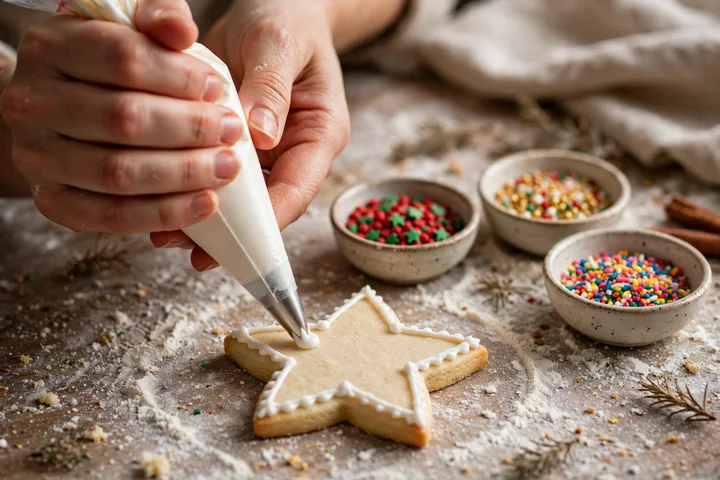
You need three tools: a piping bag (or zip bag with the corner snipped), sprinkles, and patience. Flood the cookie with glaze, spread to the edges with a toothpick, then add sprinkles while it is wet. That is 90% of “decorated cookie” technique — everything else is practice.
The two-tone dip is the fastest pretty cookie: dip half the cookie in white glaze, let it set, dip the other half in red or green. Clean lines, zero piping, and they look deliberate on a platter.
Sprinkle timing matters. Sprinkles stick only to wet glaze — decorate each cookie immediately after glazing it, not after doing the whole batch. Work in groups of four.
Let kids do the “ugly” batch. Set aside a dozen plain cookies, hand over the sprinkles, and accept the chaos. Those lopsided cookies are the ones everyone photographs — and the memory is the point.
Baking with kids: the safety basics. Kids own the mixing, cutting, and decorating; adults own the oven and the stovetop, no exceptions. Give small children pre-measured ingredients in bowls to avoid spills, keep pot holders and hot trays on a back counter away from little hands, and let cookies cool a full 10 minutes before the taste test — molten chocolate chips are the classic burn.

Impressive-But-Easy Christmas Cookies
Shortbread is three ingredients — butter, sugar, flour — and tastes like a Scottish holiday. Press into a pan, score, bake low and slow. The entire difficulty is waiting for it to cool before cutting.
Russian tea cakes (snowballs) — buttery pecan dough rolled in powdered sugar twice — melt in the mouth and look like snowballs on the platter. They are naturally gluten-flexible with a 1:1 flour swap.
Thumbprint cookies with jam centers look patisserie-made: roll dough balls in sugar, press a thumbprint, fill with raspberry jam after baking. The jam jewel does all the visual work.
Ginger molasses crinkles are the chewy answer to gingerbread — same warm spices, soft centers, crackled sugar tops. They stay soft for a week, which most crisp cookies cannot claim.
Cookie Storage & Freshness
Crisp and soft never share a tin. Moisture migrates — store snappy gingerbread separately from chewy molasses cookies, or everything converges on stale within 48 hours.
Room temperature rules: most baked cookies keep 5–7 days in an airtight container with a slice of bread (the bread goes stale, the cookies stay soft — replace the slice every couple of days).
Freeze baked cookies up to 3 months. Cool completely, layer with parchment in a freezer container, thaw at room temperature. Undecorated sugar cookies freeze best; frost after thawing.
Dough freezes even better. Scoop drop-cookie dough into balls, freeze on a tray, then bag. Bake from frozen, adding 2–3 minutes — fresh-baked cookies on demand all month.
Gifting Christmas Cookies
The tin formula: 4–5 varieties, 3–4 of each, layered with parchment. Variety reads generous; a tin of one cookie reads like leftovers. This is one of the most loved budget Christmas gifts — a beautiful tin costs a few dollars and outshines a $25 store-bought box.
Label everything. A handwritten tag with the cookie name (and a nut warning if relevant) turns a tin into a gift. Include the recipe for one cookie — it is the part people actually keep.
Ship smart: choose sturdy cookies (shortbread, gingerbread, biscotti), pack tightly so nothing shifts, and ship early in the week so tins never sit in a warehouse over the weekend.
Cookie Troubleshooting
Spreading flat? The butter was too warm or the baking sheet was hot from the last batch. Chill the dough, cool the sheets, and check your oven temperature with a thermometer.
Too hard? Overbaked by 2 minutes, most likely. Cookies firm up as they cool — pull them when the edges are set but the centers still look slightly soft.
Icing won’t set? Too much liquid. Royal-style glaze should be the consistency of honey; add powdered sugar a spoonful at a time until a piped line holds for 5 seconds.
Burnt bottoms, raw tops? Your oven runs hot on the bottom — move the rack up one level and consider an insulated baking sheet.

Frequently Asked Questions
How far ahead can I bake Christmas cookies?
Most cookies keep 5–7 days at room temperature in airtight containers; sturdy ones like gingerbread and shortbread keep 2 weeks. For longer, freeze baked cookies up to 3 months or freeze the dough and bake fresh.
Why do my sugar cookies spread?
Warm dough and warm baking sheets. Chill cut shapes 15 minutes before baking, use cool sheets for every batch, and make sure your butter was cool-room-temperature, not melty.
Can I freeze Christmas cookie dough?
Yes — nearly all of it. Scoop or shape the dough, freeze solid on a tray, then transfer to bags for up to 3 months. Bake from frozen with a few extra minutes.
Is it safe to eat raw cookie dough?
No. Raw flour and raw eggs can carry harmful bacteria — the FDA advises against tasting raw dough. Bake the cookies first; licking the spoon is not worth the risk.
What are the best cookies for a cookie exchange?
Sturdy, recognizable, pretty: gingerbread men, peanut butter blossoms, chocolate crinkles, and shortbread. Avoid anything frosted with buttercream (it smears in transit) or anything too fragile.
How do I keep cookies soft for days?
Store soft cookies airtight with a slice of bread — the bread goes stale while the cookies stay soft. Replace the bread slice every two days. And never store crisp and soft cookies in the same tin: the moisture migrates within hours, and by the next morning your snappy gingerbread will have the texture of a sponge.
Can I decorate cookies with kids without the mess taking over?
Yes — set up a contained station: one baking sheet per child as their tray, piping bags instead of knives, and only three colors of icing. Sprinkles go in small bowls, not shakers. Cap it at 30 minutes; after that the fun-to-mess ratio collapses and everyone is happier eating the results.
Leave a Reply