
The smart Christmas baking timeline starts four weeks out and ends with fresh bread on Christmas Eve. Most Christmas treats freeze beautifully for weeks — the people who are calm in December are the ones who baked in November. This guide gives you a week-by-week Christmas baking timeline for 2026: what to make when, what freezes, what must be fresh, and the storage rules that keep everything tasting day-one good.
Key Facts
- The four-week rule: fruitcake, stollen, and aged cookies start 3–4 weeks out; butter cookies and doughs go in the freezer 2–3 weeks out; meringues and fresh bread wait for the final week (FDA FoodKeeper guidance puts most baked goods at 2–3 months in the freezer, 2–4 days at room temperature).
- Freezer is your time machine: 90% of Christmas cookies taste identical after a month frozen — thaw at room temperature for 1–2 hours and nobody can tell.
- Fresh-only list: breads, meringues, cream-filled pastries, and anything with whipped cream cannot be frozen and must be baked within 48 hours of serving.
- The 2-hour rule: cool baked goods completely before freezing or storing, and never leave frosted or dairy items at room temperature over two hours.
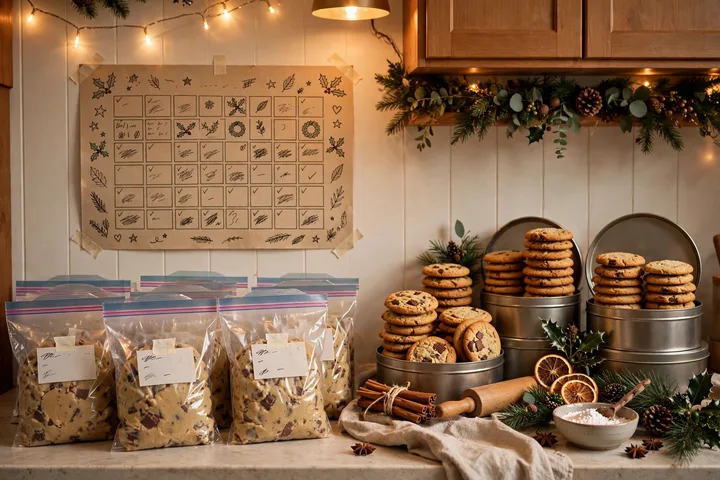
The Master Timeline
4 Weeks Before Christmas (Late November)
This is aging week — the treats that get better with time.
Fruitcake. Bake it now, soak in rum or brandy, wrap in cheesecloth, and re-soak weekly. A properly aged fruitcake is a different species from the dry doorstop people joke about.
Stollen. German Christmas bread needs 2–3 weeks to develop flavor. Bake, wrap airtight, and let it rest cool.
Pfeffernüsse and aged spice cookies. These harden then soften over weeks — they are at their best in late December.
Aged rum balls. No baking at all: crushed cookies, cocoa, rum. They need a week minimum for flavors to meld.

3 Weeks Before (Early December)
Freeze cookie dough logs. Roll sugar cookie, gingerbread, and shortbread doughs into logs, wrap in plastic, freeze. Slice-and-bake for the rest of the month.
Bake hardy cookies. Biscotti, mandel bread, and shortbread freeze for 2–3 months with zero quality loss.
Make candy fillings. Fudge, toffee, and bark keep 2–3 weeks at room temperature in airtight tins — bake (or rather, cook) them now.
Start the gift-cookie inventory. Our Easy Christmas Cookies guide has 25 recipes ranked by freezer-friendliness — pick the ones that survive December.
2 Weeks Before (Mid-December)
Bake and freeze butter cookies. Spritz, thumbprints, and butter balls — bake them, cool completely, freeze in single layers with parchment between.
Freeze dinner rolls dough. If bread is part of your Christmas spread, freeze shaped-but-unbaked rolls now.
Make icings and glazes. Royal icing keeps a week refrigerated; freeze ganache in portions.
Decorate nothing yet. Undecorated cookies freeze; decorated ones crack and bleed in the freezer.
1 Week Before (Dec 18–22)
Thaw week begins. Move the first round of frozen cookies to the refrigerator — they need 24 hours there, then 1–2 hours at room temperature before serving.
Bake soft cookies. Snickerdoodles, molasses, and chocolate crinkles taste best within a week — bake them now and store airtight at room temperature.
Make gingerbread houses. Bake the panels now; assemble and decorate over the next few days. Stale panels are actually stronger for construction.
Prep appetizer baking. If your Christmas spread includes baked appetizers, our Christmas Appetizers guide has make-ahead notes — most freeze or hold beautifully.
Christmas Eve & Day (Dec 24–25)
Fresh bread. Dinner rolls, cinnamon rolls, and stollen slices get baked now — nothing beats the smell.
Meringues and pavlova. Humidity-sensitive and fragile — the last 48 hours only.
Whipped-cream desserts. Same-day assembly, no exceptions.
Everything from the freezer. The grand thaw: pull all frozen cookies and breads, arrange on platters, and let the room warm them. Nobody will believe you baked in November.
What Freezes Well (and What Doesn’t)
Freezes beautifully: sugar cookies (undecorated), gingerbread, shortbread, biscotti, chocolate chip dough, bread dough, quick breads, pound cake, brownies, bars, fudge.
Never freeze: meringues, cream puffs, whipped-cream anything, custard pies, decorated cookies with delicate royal icing, fresh fruit tarts.
The FDA storage rule of thumb: baked goods keep 2–3 months in a 0°F freezer, 2–4 days at room temperature, and dairy-filled items belong in the refrigerator and get eaten within 3–4 days.
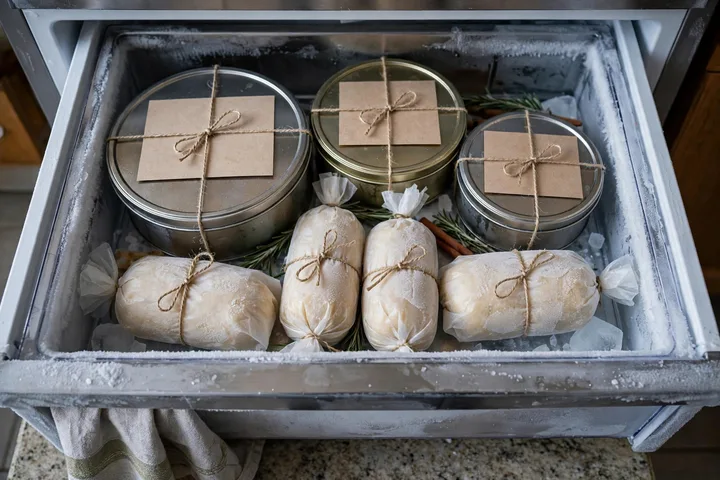
Storage Rules That Actually Matter
- Cool completely before wrapping. Even slight warmth creates condensation, and condensation creates ice crystals, and ice crystals create soggy cookies.
- Double-wrap for the freezer. Plastic wrap first, then foil or a freezer bag. Air is the enemy.
- Parchment between layers. Frozen cookies fuse into a single mega-cookie without it.
- Label everything. “Cookies, Dec 1” beats mystery dough every time. Include the bake date and reheating note.
- Thaw smart. Fridge first for filled items, countertop for plain cookies — 1–2 hours does it.
Baking for the Full Christmas Day
Christmas dinner is the anchor of the day, and baked goods are its bookends — breakfast rolls in the morning, bread at dinner. Our Traditional Christmas Dinner Menu coordinates the evening, so bake toward that plan: if dinner is heavy, keep dessert light; if dinner is simple, let the dessert table carry the show.
Baking With Kids: The December Calendar
December baking with kids works when you match the task to the week. Small hands cannot do everything, but they can do something every week.
Early December (freezer weeks): kids are excellent dough helpers. They roll logs, press thumbprints, and cut shapes. The dough is going in the freezer anyway, so imperfection costs nothing.
Mid-December (decorating week): thawed sugar cookies become the canvas. Set up a decorating station: three icing colors, sprinkles in muffin tins, one cookie per child at a time. The rule is one cookie at a time — refills happen, chaos does not.
The week of Christmas: gingerbread houses. Kids decorate panels you baked earlier; you do the structural assembly with royal icing “glue.” It is a two-day project disguised as one afternoon.
Christmas Eve: the official taste-test. One cookie of each type, rated on a paper scorecard. Kids take this extremely seriously, which is the entire point.
Safety note: keep kids away from the hot oven and the mixer blades, obviously — but also remember that raw dough with eggs should not be tasted by small children. Bake a few “taster” cookies early so nobody is tempted by the raw batch (FDA flags raw flour and eggs as the two risks).
The Reheat & Refresh Guide
Frozen does not mean compromised — if you revive things properly.
Cookies: thaw 1–2 hours at room temperature on a wire rack (not in the bag — condensation makes them soggy). Crisp cookies get 5 minutes in a 300°F oven to re-crisp.
Breads and rolls: sprinkle lightly with water, wrap in foil, 10 minutes at 350°F. Tastes bakery-fresh.
Cakes and quick breads: thaw overnight in the refrigerator, then 30 minutes at room temperature before serving. Glaze or frost after thawing, never before freezing.
Pies: fruit pies reheat beautifully — 15 minutes at 350°F from thawed. Custard and cream pies do not freeze; plan those for the final 48 hours.
Candy and fudge: thaw in the refrigerator to prevent sugar bloom (that white dusty coating). It is harmless but ugly.
The smell trick: simmer orange peels, cinnamon, and cloves on the stove while thawed goods come to room temperature. Guests will swear everything was baked this morning.
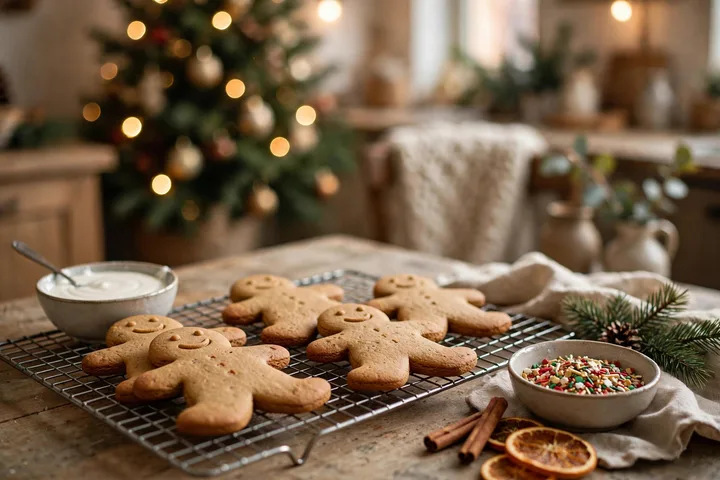
Packaging Baked Gifts
Half of Christmas baking leaves the house as gifts. Pack it right:
Tins beat boxes. Metal tins protect cookies in transit and get reused. Line with parchment, layer with more parchment, and add a card with the cookie name and date.
The assortment rule: 4–6 varieties per tin, 3–4 pieces each. More variety reads generous; more of one thing reads like leftovers.
Mason jars for dry mixes. Layer cookie or brownie dry ingredients in a jar with a recipe tag. Zero baking required on your part, and recipients love the interactive gift.
Ship early. Baked goods mailed December 18 arrive fresh; mailed December 22 arrive as a story. If shipping, freeze first and ship frozen with 2-day delivery — they thaw in transit.
FAQ
When should I start baking for Christmas?
Four weeks out for fruitcake and stollen; 2–3 weeks out for freezable cookies and doughs; the final week for soft cookies and anything fresh. Follow the timeline above and nothing is stale.
How long do Christmas cookies last?
At room temperature, 2–4 days in airtight tins; in the freezer, 2–3 months per FDA guidance. Thaw frozen cookies 1–2 hours at room temperature.
Can you freeze decorated Christmas cookies?
Plain undecorated cookies freeze well; decorated royal-icing cookies tend to crack and bleed. Freeze plain, decorate after thawing.
What Christmas baking can I do with kids?
Sugar-cookie decorating, gingerbread houses (assemble after panels cool), and no-bake rum balls — the messy, fun stuff lands in the final week when it stays fresh.
How do I keep cookies fresh for Christmas gifts?
Bake 3–5 days before gifting, cool completely, and pack in airtight tins with parchment between layers. Add a “best by” note 5 days out.
Leave a Reply