
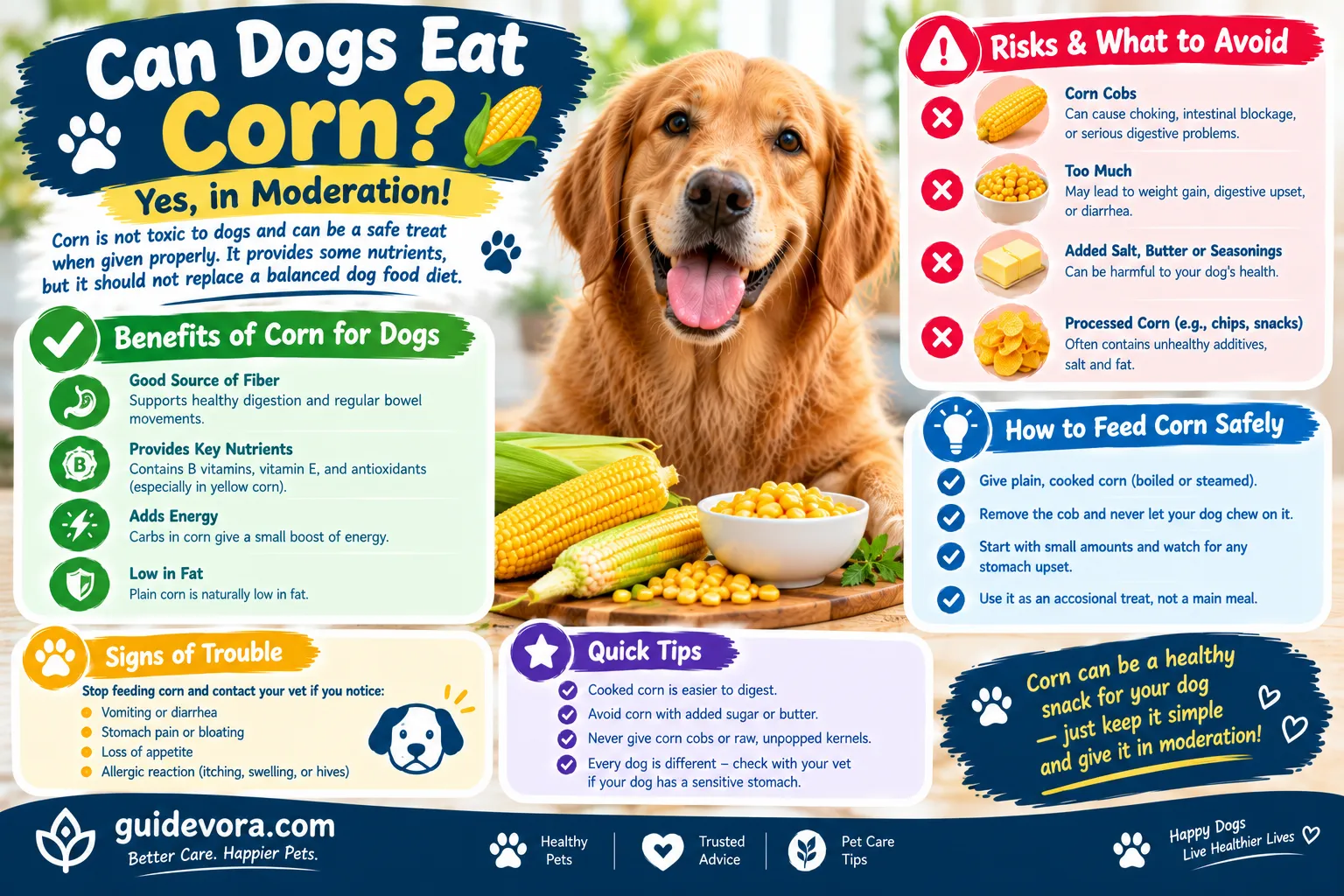
Yes — plain corn kernels are safe for dogs, and corn is already a common ingredient in many commercial dog foods. That’s genuinely reassuring news. The part that isn’t reassuring: the cob is one of the most frequent causes of emergency intestinal-obstruction surgery in dogs, and it deserves to be treated with real urgency, not a passing footnote.
Can Dogs Eat Corn Kernels?
Yes. Plain corn kernels — cooked or raw — are safe for most dogs and offer some real nutritional value: digestible carbohydrates for energy, dietary fiber, linoleic acid (an essential fatty acid supporting skin and coat health), and modest protein and antioxidant content. This is exactly why corn already shows up as a standard ingredient in many quality commercial dog foods — it’s not filler, despite a persistent myth to that effect.
Read More: Can Dogs Eat Mango? Safe Prep, Amounts, and What to Skip
Serving guidelines:
- Plain only — no butter, salt, oil, or seasoning
- Small amounts, occasional — treats generally shouldn’t exceed about 10% of daily calories
- Off the cob, always — strip kernels before offering, regardless of how the corn was prepared
Can a Dog Eat Cooked Corn? Is Boiled Corn Good for Dogs?
Yes — cooked (boiled, steamed, or grilled) plain corn kernels are a fine occasional treat, and cooking doesn’t introduce any risk that raw kernels don’t already have at a similar level. The preparation matters more than whether it’s cooked: plain boiled corn kernels, stripped off the cob, are the safe version. Corn prepared with butter, salt, or as part of a seasoned dish is a different (and less ideal) situation, covered below.
Can Dogs Eat Corn on the Cob? — Read This Before You Toss One
No — never intentionally give a dog a corn cob, and treat accidental ingestion as an emergency. This is genuinely one of the more dangerous “food” items covered in this content set, not because the corn itself is unsafe, but because the cob is fibrous, indigestible, and roughly the wrong size in exactly the way that lodges in a dog’s intestine.
Why it’s so dangerous:
- The cob cannot be digested — it doesn’t break down the way most swallowed plant material does
- It’s the right diameter to partially or fully block the intestine, which is why it’s one of the leading causes of obstruction surgery vets see
- A dog can seem completely fine at first. Many owners don’t notice anything wrong until later that day or the next, when vomiting or lethargy begins — this delay is exactly why “watch and see” isn’t the recommended approach
If your dog eats a corn cob or a piece of one:
- Call your vet or an emergency animal hospital immediately — don’t wait for symptoms to appear.
- Don’t induce vomiting unless specifically told to by a vet — this depends on cob size, your dog’s size, and timing, which is exactly what the phone call is for.
- Watch for: vomiting, loss of appetite, lethargy, abdominal pain, straining to defecate, or producing very little or no stool. These can appear within hours or take 1–2 days to show up.
- Understand that continued bowel movements don’t rule out a problem — a dog can still be passing stool normally even with a cob partially lodged further up the digestive tract.
- Expect an X-ray and possible surgery. Vets typically confirm the cob’s location by imaging, and emergency surgery is often needed to remove it before it progresses further. Dogs treated promptly generally have the best outcomes.
This risk applies regardless of dog size, though it’s especially common with medium and large dogs who can swallow bigger pieces, and it’s especially common around cookouts and barbecues, when cobs end up within easy reach or in an accessible trash bag.
Common Real-World Scenarios
Can dogs eat corn chips? Best avoided as a regular thing. Corn chips are typically high in salt and sometimes seasoned with onion or garlic powder — check the ingredient label carefully. An occasional plain chip isn’t an emergency, but this isn’t a good regular corn source for your dog.
Can dogs eat corn puffs? Similar reasoning to corn chips — most packaged corn puff snacks are heavily salted or flavored, offering little nutritional benefit and a real sodium/seasoning concern if given regularly. Plain corn kernels are a meaningfully better choice for the same basic ingredient.
Can dogs eat corn with butter? Better to avoid or wipe it off first. Butter itself isn’t toxic, but regularly feeding fatty additions increases pancreatitis risk over time. An occasional lick isn’t likely to cause harm, but it’s not the ideal way to serve corn as a regular treat.
Can dogs eat corn with mayo? No — skip this one specifically. Beyond the fat content (similar concern to butter), mayonnaise-based corn dishes (like elote-style preparations) often include additional seasoning, cheese, chili powder, or lime that compound the concern. Plain kernels are the better choice by a meaningful margin here.
Can Dogs Eat Peas?
Yes — plain peas (fresh, frozen and thawed, or cooked) are safe for dogs and, like corn, are a common ingredient in commercial dog foods. The same general guidance applies: plain only, no added butter or seasoning, and in moderation as part of an overall balanced diet rather than a daily addition on their own.
What Is the Best Vegetable for a Dog?
There’s no single universal answer, but corn fits well alongside other commonly recommended options: carrots (crunchy, low-calorie, mild dental benefit), green beans (low-calorie, often used for weight management), peas, and cooked sweet potato (nutrient-dense and easy to digest). Corn’s advantage is that it’s already a familiar, well-tolerated ingredient in most dogs’ regular diets — the main thing that changes it from “fine” to “risky” is preparation (the cob, or heavy seasoning), not the vegetable itself.
Frequently Asked Questions
Can dogs eat corn? Yes — plain corn kernels are safe and offer real nutritional value, which is why corn is a common ingredient in many dog foods. The cob is the one hard exception and should never be given intentionally.
Can dogs eat corn on the cob? No. The cob is indigestible and a leading cause of intestinal obstruction requiring emergency surgery in dogs. If your dog eats one, call your vet or an emergency animal hospital immediately, even if they seem fine at first — symptoms can take 1–2 days to appear.
Is boiled corn good for dogs? Yes, plain boiled corn kernels (no butter, salt, or seasoning), stripped off the cob, make a fine occasional treat.
Can dogs eat corn kernels? Yes, corn kernels are safe for dogs whether raw, cooked, or frozen, as long as they’re plain and given in moderation.
What should I do if my dog eats a corn cob? Call your vet or an emergency animal hospital right away rather than waiting to see if symptoms develop. Watch for vomiting, lethargy, loss of appetite, abdominal pain, or straining to defecate, and don’t assume normal bowel movements rule out a partial blockage.
Can dogs eat peas? Yes, plain peas are safe for dogs in moderation and are a common ingredient in commercial dog food, similar to corn.
Final Thoughts
Corn itself is one of the more reassuring “can my dog eat this” answers — plain kernels are safe, nutritious, and already in your dog’s food bag. The entire risk lives in the cob, not the corn, so the one habit worth building is automatic: strip the kernels, and get the cob straight into a covered trash can your dog can’t reach, especially during cookout season when cobs are most likely to end up within reach.
This article is for informational purposes and doesn’t replace immediate veterinary care for a suspected corn cob ingestion.
Leave a Reply