
You can clean a burnt pot without scrubbing by boiling water with vinegar in it, then adding baking soda and letting the fizz lift the burnt layer — most of it wipes away with a soft sponge afterward. For a badly burnt pot, the baking-soda overnight soak works even better: cover the burnt area with baking soda and hot water, wait until morning, and the black layer slides off. No elbow grease required.
Everyone has done it: the phone rings, the sauce catches, and by the time you remember the stove, the bottom of the pot is black. The instinct is to attack it with a scouring pad, which scratches the pot and barely helps. Learning how to clean a burnt pot without scrubbing is about chemistry, not force — the right liquid, given time, dissolves the burnt layer so it wipes away. This guide ranks six methods, tells you which one fits your pot, and explains why the overnight soak beats every shortcut.

Key Facts
- The vinegar boil + baking soda method is the fastest reliable fix for stainless steel and enamel pots — about 20 minutes.
- The baking-soda overnight soak is the most effective for badly burnt pots — 8 hours of waiting, zero scrubbing.
- Never use steel wool or abrasive pads on nonstick or enamel — the scratches are permanent and the coating is ruined.
- Cast iron needs a different method entirely: coarse salt and oil, never soap soaks or vinegar boils.
- Boiling water alone rarely works — the acid (vinegar or lemon) or the alkali (baking soda) is what breaks the burnt layer down.
- A dishwasher tablet dissolved in hot water is a legitimate shortcut for stainless steel pots.
Why Burnt Food Sticks So Hard
Burnt food is not just dirt — it is carbonized sugar, protein, and starch bonded to metal by heat. Water alone cannot break those bonds, and scrubbing only removes the top layer while scratching the pot underneath. The methods below work by chemistry: acids (vinegar, lemon juice, cola) dissolve mineral and sugar bonds, alkalis (baking soda) saponify fats and lift carbon, and time lets the chemistry work through the whole layer instead of just the surface. That is why every no-scrub method has a waiting step — the waiting is the work.
How to Clean a Burnt Pot Without Scrubbing: 6 Methods Ranked
1. Vinegar Boil + Baking Soda (Fastest)
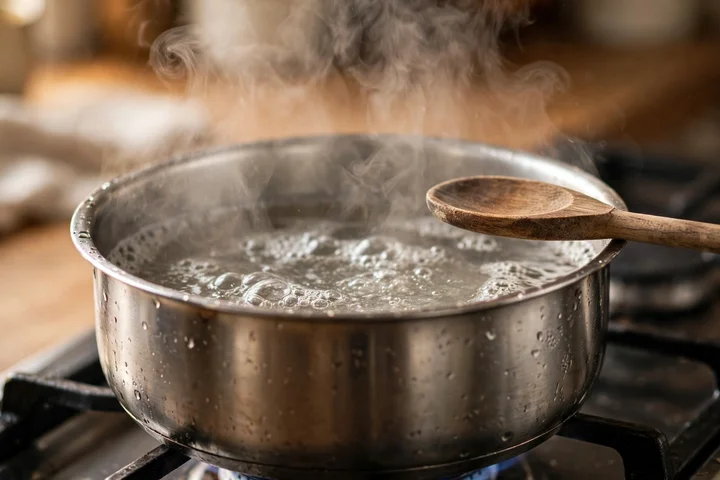
The classic, and the fastest reliable method for stainless steel and enamel. Pour enough white vinegar into the pot to cover the burnt area, add the same amount of water, and bring it to a boil on the stove. Let it simmer for 5–10 minutes, then remove from heat and add 2–3 tablespoons of baking soda — it will fizz dramatically, which is the point. Let it cool for 15 minutes, then pour it out and wipe the pot with a soft sponge. Most burnt layers come off in one pass; a stubborn spot gets a second boil. Total time: about 20 minutes.
2. Baking-Soda Overnight Soak (Most Effective)
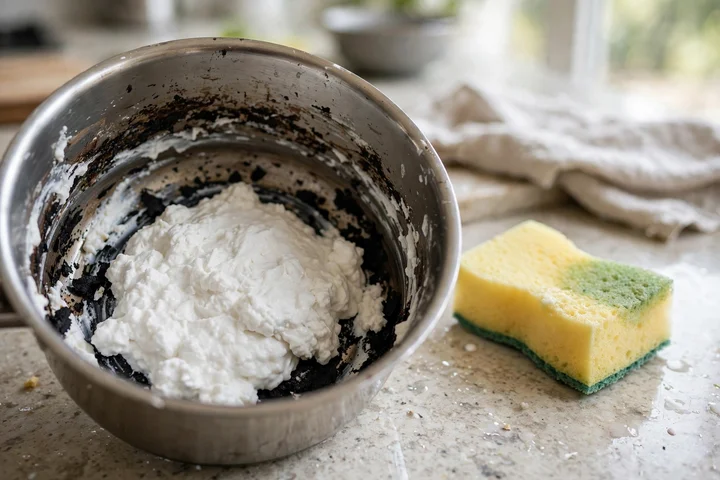
For a badly burnt pot, this is the method that wins. Sprinkle a generous layer of baking soda over the burnt area — enough to cover it completely — then add hot water until the burnt layer is submerged. Leave it overnight, at least 8 hours. In the morning, pour it out and wipe with a soft sponge. The burnt layer, softened by hours in alkaline water, slides off with almost no pressure. This is the method to use when the vinegar boil leaves a stubborn ring behind.
3. Dishwasher Tablet (Best Shortcut)
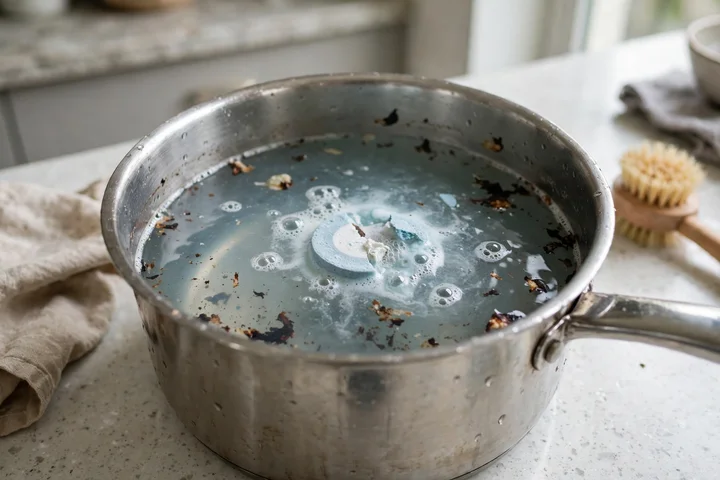
Drop one dishwasher tablet into the pot, fill it with hot water, and leave it for 2–4 hours (or overnight for a bad burn). The tablet’s enzymes and alkalis are designed to dissolve burnt-on food, and they work on pots just as well as on dishes. Pour out, wipe with a soft sponge, and rinse well. Best for stainless steel; avoid on cast iron and be cautious with nonstick — check the tablet’s label and do not use it on aluminum.
4. Lemon + Salt (Best for Light Burns and Smell)
Cut a lemon in half, squeeze the juice into the pot, add the lemon halves and a tablespoon of coarse salt, then add enough water to cover the burnt area and simmer for 10 minutes. The citric acid loosens the burn, the salt acts as a gentle abrasive when you wipe, and the lemon leaves the pot smelling fresh instead of scorched. Best for light to moderate burns and for pots you also want to deodorize.
5. Cola (The Surprising One)
Pour enough cola into the pot to cover the burnt area and let it sit overnight, or simmer it gently for 15 minutes. The phosphoric acid in cola dissolves burnt sugar and carbon surprisingly well. It sounds like an internet myth, but the chemistry is real — cola is acidic enough to loosen the bond. It is slower than the vinegar boil and leaves a sticky residue to rinse, so treat it as a backup, not a first choice.
6. Dryer-Sheet Soak (Gentlest)
Lay one or two used dryer sheets over the burnt area, fill the pot with hot water, and leave it overnight. The surfactants in the sheets loosen the burnt layer, and in the morning it wipes away with a sponge. This is the gentlest method and the best choice for delicate enamel, where you want zero abrasion. It is also the slowest — reserve it for pots you are nervous about scratching.
Which Method for Which Pot
| Pot type | Best method | Avoid |
|---|---|---|
| Stainless steel | Vinegar boil + baking soda; dishwasher tablet | Steel wool (scratches, but the pot survives) |
| Enamel / Dutch oven | Baking-soda overnight soak; dryer-sheet soak | Abrasive pads, steel wool — chips the enamel |
| Glass / ceramic | Vinegar boil; baking-soda soak | Abrasive pads (scratch the surface) |
| Nonstick | Baking-soda soak only (gentle, no boil) | Vinegar boil, dishwasher tablet, steel wool — all damage the coating |
| Cast iron | Coarse salt + oil scrub (see below) | Vinegar boil, baking-soda soak, dishwasher tablet — all strip seasoning |
| Aluminum | Baking-soda soak | Vinegar boil (discolors aluminum), dishwasher tablet |
Cast Iron: The Exception
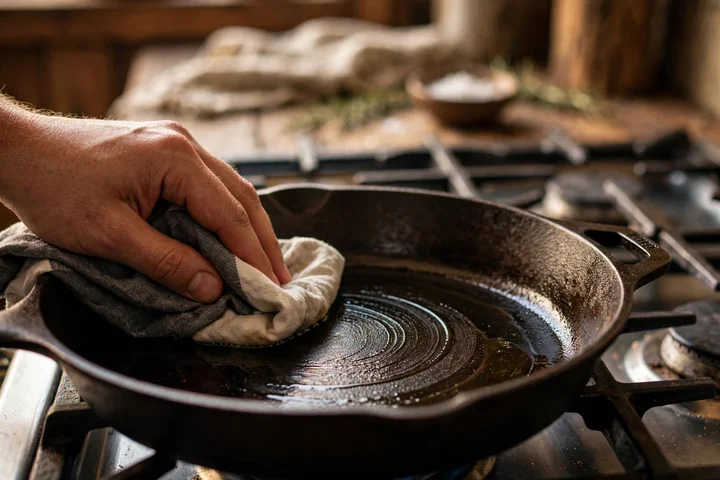
Cast iron does not get the no-scrub treatment — it gets its own method, and it is still easy. Pour a handful of coarse kosher salt into the warm (not hot) pan, add a teaspoon of oil, and rub the mixture over the burnt area with a paper towel or a soft cloth. The salt is a gentle abrasive and the oil protects the seasoning. Wipe out the salt, rinse briefly with hot water, dry immediately on low heat, and rub in a thin layer of oil. Never soak cast iron, never boil vinegar in it, and never put it in the dishwasher — water and acid strip the seasoning that makes cast iron nonstick. A well-seasoned pan releases burnt food far more easily next time, which is the real long-term fix.
Overnight vs. Quick: When to Wait
| Situation | Use | Time |
|---|---|---|
| Light scorch, dinner tonight | Vinegar boil + baking soda | 20 minutes |
| Moderate burn, pot needed tomorrow | Dishwasher tablet soak | 2–4 hours |
| Bad burn, black layer, pot not urgent | Baking-soda overnight soak | 8 hours, zero effort |
| Delicate enamel, nervous about damage | Dryer-sheet soak | Overnight |
| Cast iron | Salt + oil | 10 minutes |
The pattern is simple: the worse the burn, the longer you should let chemistry work. A 20-minute boil handles most burns; an overnight soak handles the rest. Scrubbing is what you do when you skip the waiting — and it is the step that damages the pot.
What Never to Use on a Burnt Pot
- Steel wool and metal scouring pads. They scratch stainless steel, chip enamel, and destroy nonstick coatings. The scratches then catch food faster next time.
- Oven cleaner. It is caustic, toxic if not fully rinsed, and it damages most pot finishes. It is designed for oven walls, not cookware.
- Boiling a dry pot. Never heat an empty burnt pot to “burn it off” — it warps the base and can damage the stove.
- Mixing cleaners. Never mix vinegar and bleach, or any cleaner with bleach. The EPA’s Safer Choice program lists cleaning products that meet strict safety standards, and its guidance on choosing safer cleaners is worth reading before you stock the cupboard under the sink.
For more kitchen systems that prevent the problem — including how to organize the pantry so ingredients are visible and used before they burn — our pantry organization ideas are a good next read. And if the kitchen’s damp air is part of the problem (steam, condensation, musty smells), our guide on how to humidify a room without a humidifier covers the moisture balance that affects cooking and comfort alike. The same “let chemistry do the work” principle applies elsewhere in the house — our laundry room ideas include soaking setups that use time instead of scrubbing for stained clothes too.
FAQs About Cleaning a Burnt Pot Without Scrubbing
What is the fastest way to clean a burnt pot without scrubbing?
Boil equal parts white vinegar and water in the pot for 5–10 minutes, add baking soda off the heat, let it cool for 15 minutes, then wipe with a soft sponge. Total time is about 20 minutes and it handles most burns.
Can I use baking soda on a burnt nonstick pan?
Yes — a baking-soda soak (baking soda + hot water, left for a few hours) is the gentlest effective method for nonstick. Do not boil vinegar in a nonstick pan and do not use a dishwasher tablet or any abrasive pad, all of which damage the coating.
How do you clean a burnt pot with a dishwasher tablet?
Drop one tablet in the pot, fill with hot water, and leave it for 2–4 hours (overnight for a bad burn). Pour out, wipe with a soft sponge, rinse well. Best for stainless steel; avoid on cast iron and aluminum.
Will vinegar damage my pot?
White vinegar is safe for stainless steel, enamel, glass, and ceramic. It can discolor aluminum and it strips the seasoning from cast iron, so skip the vinegar boil for those two. For everything else, it is the fastest method available.
How do I clean a burnt Dutch oven?
Use the baking-soda overnight soak — it is the safest method for enamel. Never use steel wool or abrasive pads on enamel; chips are permanent and can rust. A dryer-sheet soak is the gentlest alternative.
Can I save a pot that is badly burnt black?
Almost always, yes. A baking-soda overnight soak followed by a second soak handles even severe burns on stainless steel and enamel. Cast iron with a badly burnt layer can be re-seasoned. Only a warped base or a cracked enamel lining means the pot is truly done.
Why does burnt food stick so badly?
Heat bonds carbonized sugar, protein, and starch to the metal surface. Water alone cannot break those bonds — acid or alkali, given time, dissolves them. That is why waiting is more effective than scrubbing.
How do I prevent pots from burning in the first place?
Lower the heat, stir more often, and do not leave the stove unattended with a sauce or a sugary liquid. A heavy-bottomed pot distributes heat more evenly and burns less. And if a sauce does catch, move the pot off the heat immediately — every extra minute of heat makes the bond stronger.
The Bottom Line
How to clean a burnt pot without scrubbing comes down to letting chemistry do the work: boil vinegar and water, add baking soda, and wipe — or, for a bad burn, soak baking soda overnight and wipe in the morning. Match the method to the pot, never use steel wool on nonstick or enamel, and give cast iron its own salt-and-oil treatment. The pot is almost always saveable, and the scrubbing was never the answer.
Leave a Reply