
The smartest Thanksgiving dessert strategy is one excellent pie made two days ahead, plus one no-bake or store-bought backup — because dessert should be the calmest part of your day, not a second high-stakes cooking project.
By the time dessert arrives, everyone is full, happy, and barely able to move — which is exactly why Thanksgiving sweets work so well. Nobody needs a towering showpiece; they need a familiar slice of pie, a cup of coffee, and room to breathe. This guide covers the classic pies, cakes, and make-ahead sweets that define the holiday table, with honest notes on what to bake, what to buy, and when to serve it all.
Key Facts
- Bake pies 2 days ahead — pumpkin, pecan, and apple pies all hold beautifully refrigerated.
- One pie per 6–8 guests is plenty when you offer two varieties; slices are traditionally modest.
- Whipped cream goes on at serving time — whip it fresh or stabilize it if making ahead.
- Store-bought is a legitimate strategy — spend your energy where guests notice it most.
- Serve dessert 1–2 hours after dinner — give the meal room to settle; pie tastes better when people are ready for it.
The Classic Pies
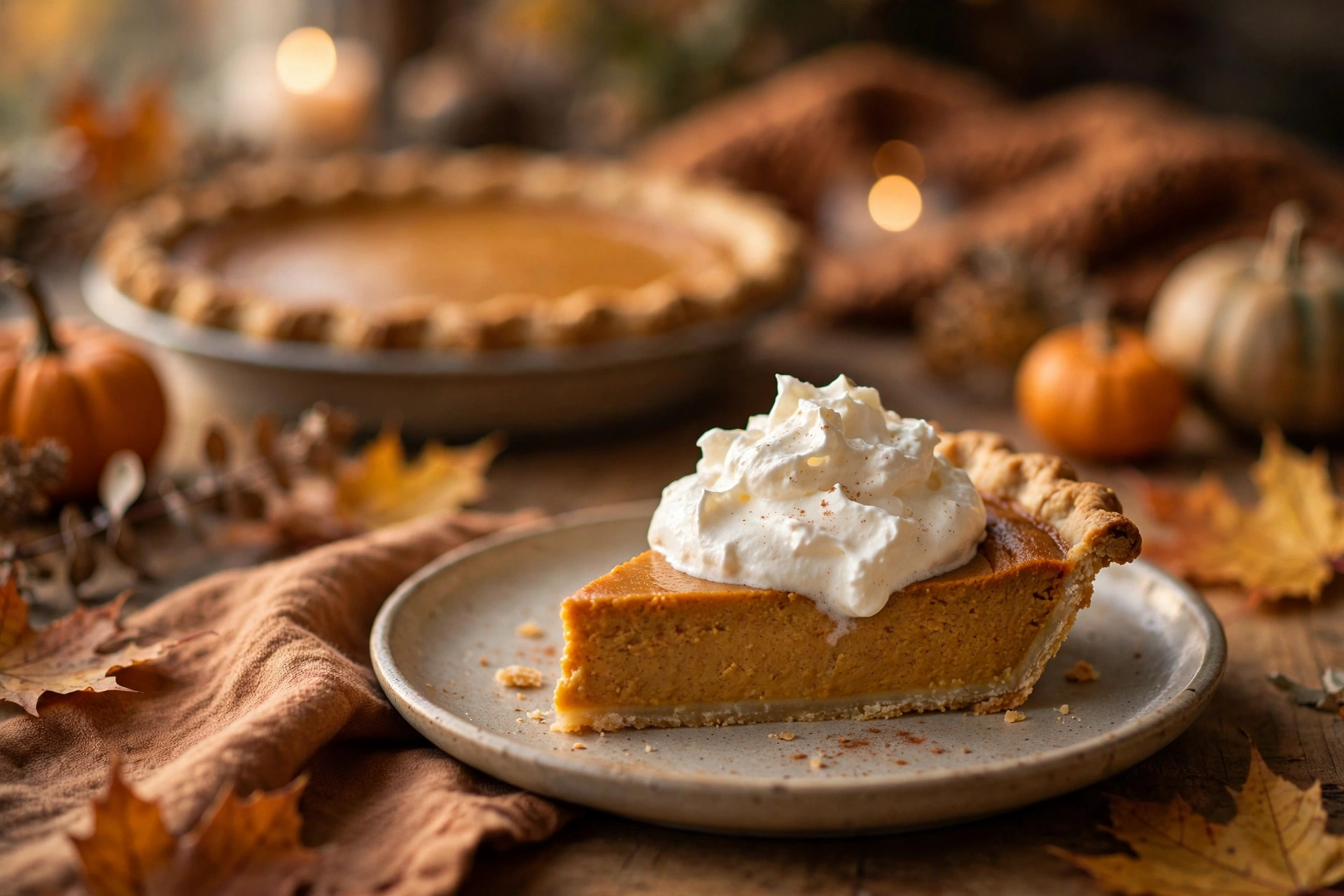
Pie is Thanksgiving dessert. Everything else is a guest at pie’s party.
Pumpkin pie. The undisputed headliner — silky spiced custard in a flaky crust. Canned pumpkin puree (not pumpkin pie filling) plus evaporated milk, eggs, sugar, and the classic spice blend produces a pie better than most bakery versions. Make ahead: bake 2 days ahead; refrigerate uncovered until cool, then cover. Serve at room temperature or lightly warmed.
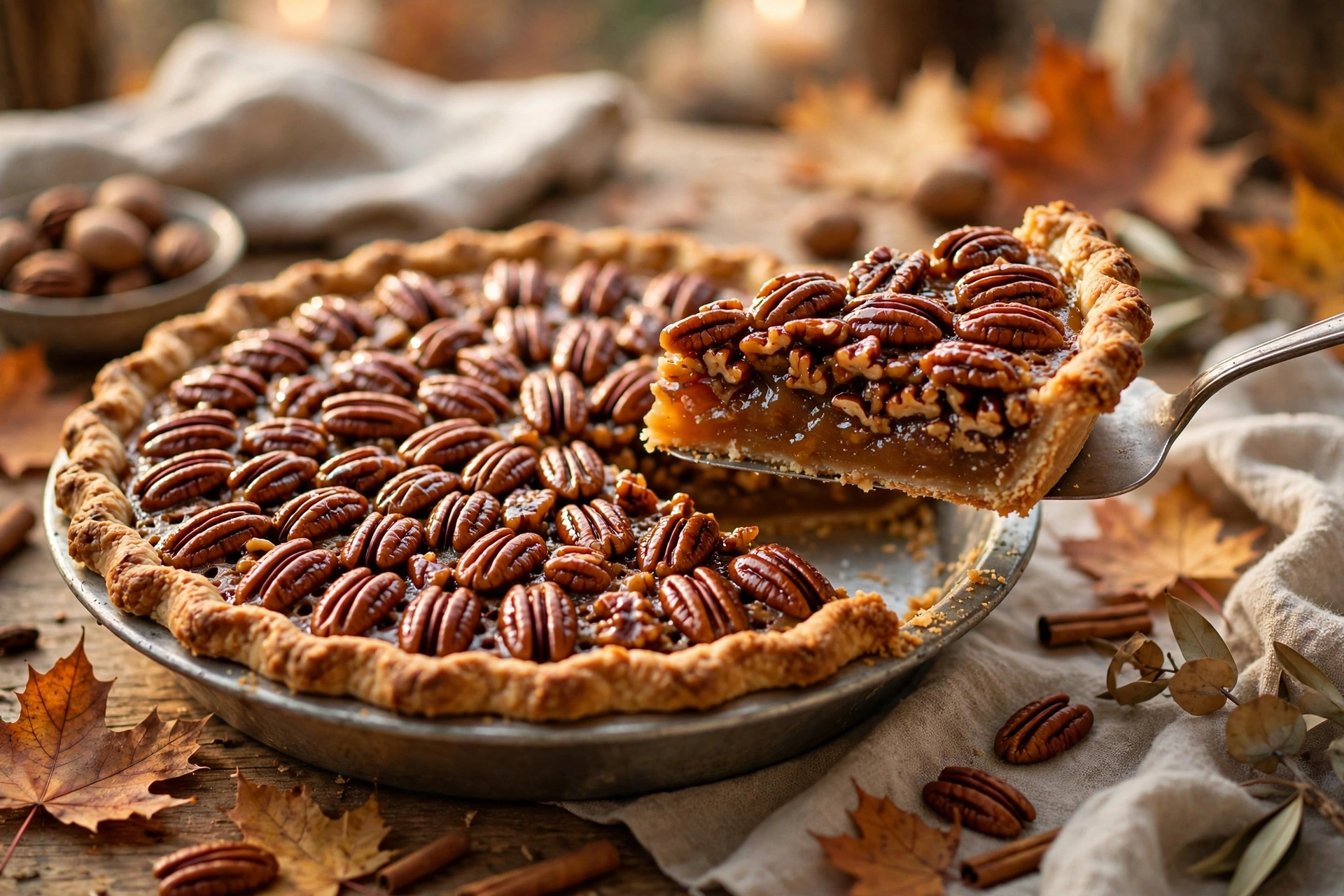
Pecan pie. Gooey, caramel-sweet, unapologetically rich. The filling is essentially butter, sugar, eggs, and corn syrup around a dense layer of pecans. A tiny pinch of salt and a splash of bourbon (optional) balance the sweetness. Make ahead: bake 2 days ahead; keeps well at room temperature for a day, refrigerated after.
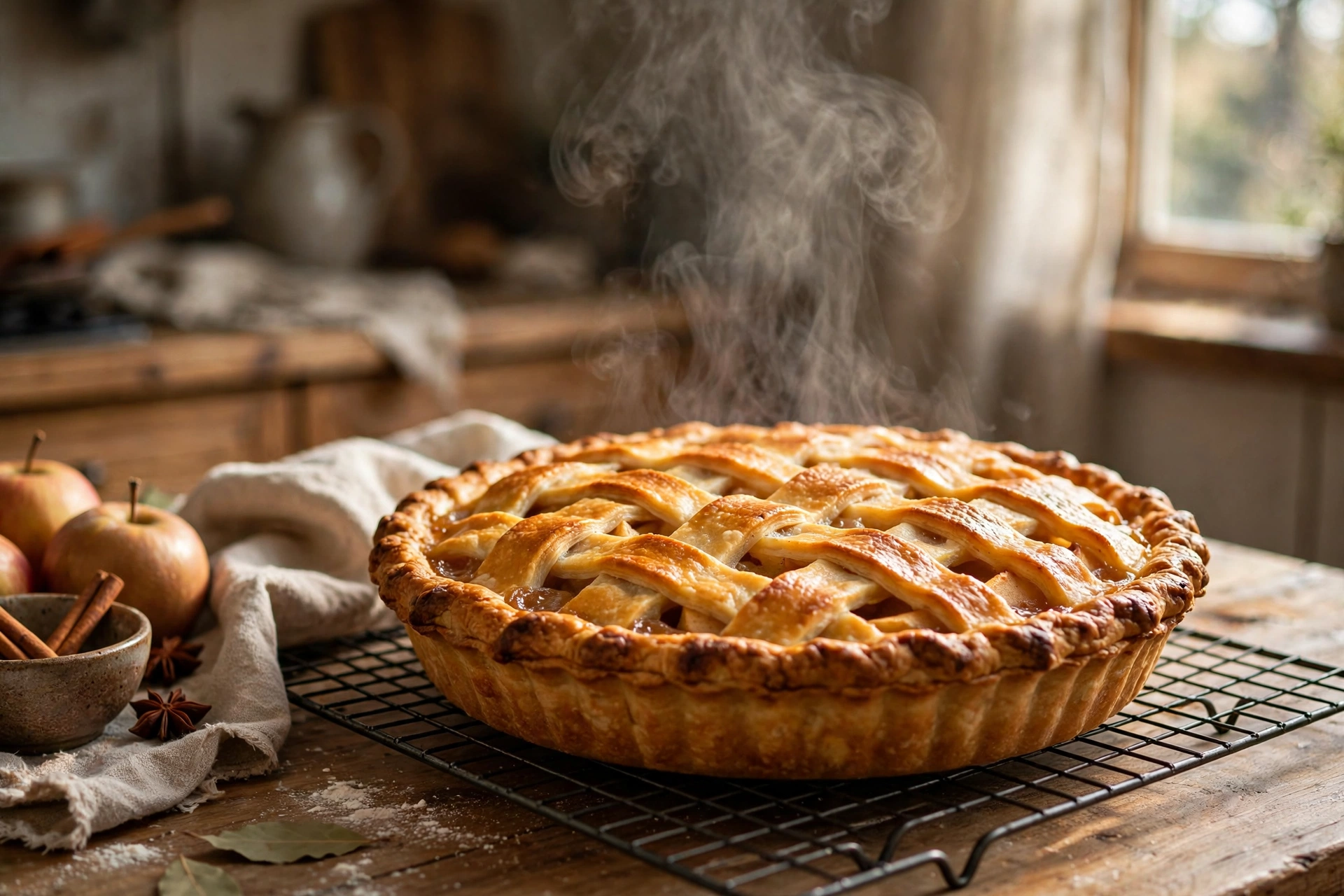
Apple pie. The all-American option — tart apples, cinnamon, and a buttery double crust. Use firm baking apples that hold their shape, and do not skimp on the filling; apples shrink as they bake. Make ahead: bake 2 days ahead; reheat slices briefly for serving or serve at room temperature.
Sweet potato pie. Pumpkin pie’s Southern cousin — similar spices, slightly denser and earthier. If your table already has sweet potato casserole, pick one or the other to avoid flavor repetition. Make ahead: same as pumpkin pie, 2 days ahead refrigerated.
Cherry or berry pie. A bright, tart counterpoint to the custard-and-nut heaviness of the classics. Frozen fruit works beautifully here. Make ahead: bake 1–2 days ahead; the filling sets as it cools.
“Nobody has ever complained that there were only two kinds of pie.”
Cakes and Other Baked Sweets
Not every table wants pie three ways. These alternatives round out the dessert spread.
Pumpkin roll. Spiced pumpkin cake rolled around cream cheese filling — impressive-looking, sliceable, and easier than it appears. Make ahead: 2 days ahead, refrigerated; slice cold for clean cuts.
Apple crisp or crumble. All the flavor of apple pie with a fraction of the effort — no crust to roll, served warm with ice cream. Ideal when oven space is tight, since it bakes quickly. Make ahead: assemble 1 day ahead; bake day-of and serve warm.
Carrot cake. Spiced, moist, and crowned with cream cheese frosting — a strong non-pie option that still tastes like the season. Make ahead: bake layers 2 days ahead (wrap well); frost the day before.
Pumpkin cheesecake. For the cheesecake lovers at the table — dense, spiced, and rich. Needs a full overnight chill, which makes it a natural make-ahead. Make ahead: bake 2 days ahead; chill overnight minimum.
Bread pudding. A thrifty, comforting way to use leftover rolls or bread — custardy, warm, and wonderful with a whiskey or caramel sauce. Make ahead: assemble 1 day ahead; bake day-of.
No-Bake and Make-Ahead Sweets
When the oven is booked solid, these keep dessert on track without it.
Pumpkin mousse or trifle. Layers of spiced pumpkin mousse, crushed gingersnaps, and whipped cream in a glass bowl — no oven required, feeds a crowd, looks festive. Make ahead: assemble 1 day ahead.
Chocolate-dipped anything. Pretzels, dried fruit, or marshmallows dipped in melted chocolate and sprinkled with crushed nuts or sea salt. A 20-minute project that fills a beautiful platter. Make ahead: 3–4 days ahead; store airtight at room temperature.
Spiced nuts. Pecans or mixed nuts roasted with sugar, cinnamon, and a pinch of cayenne. Doubles as a pre-dinner nibble and a take-home gift. Make ahead: up to a week ahead in an airtight container.
Ice cream — the secret weapon. A quality vanilla ice cream served alongside warm pie is arguably better than any second dessert you could bake. Keep it simple: pie plus ice cream plus whipped cream covers every craving.
Store-Bought vs. Homemade: An Honest Guide
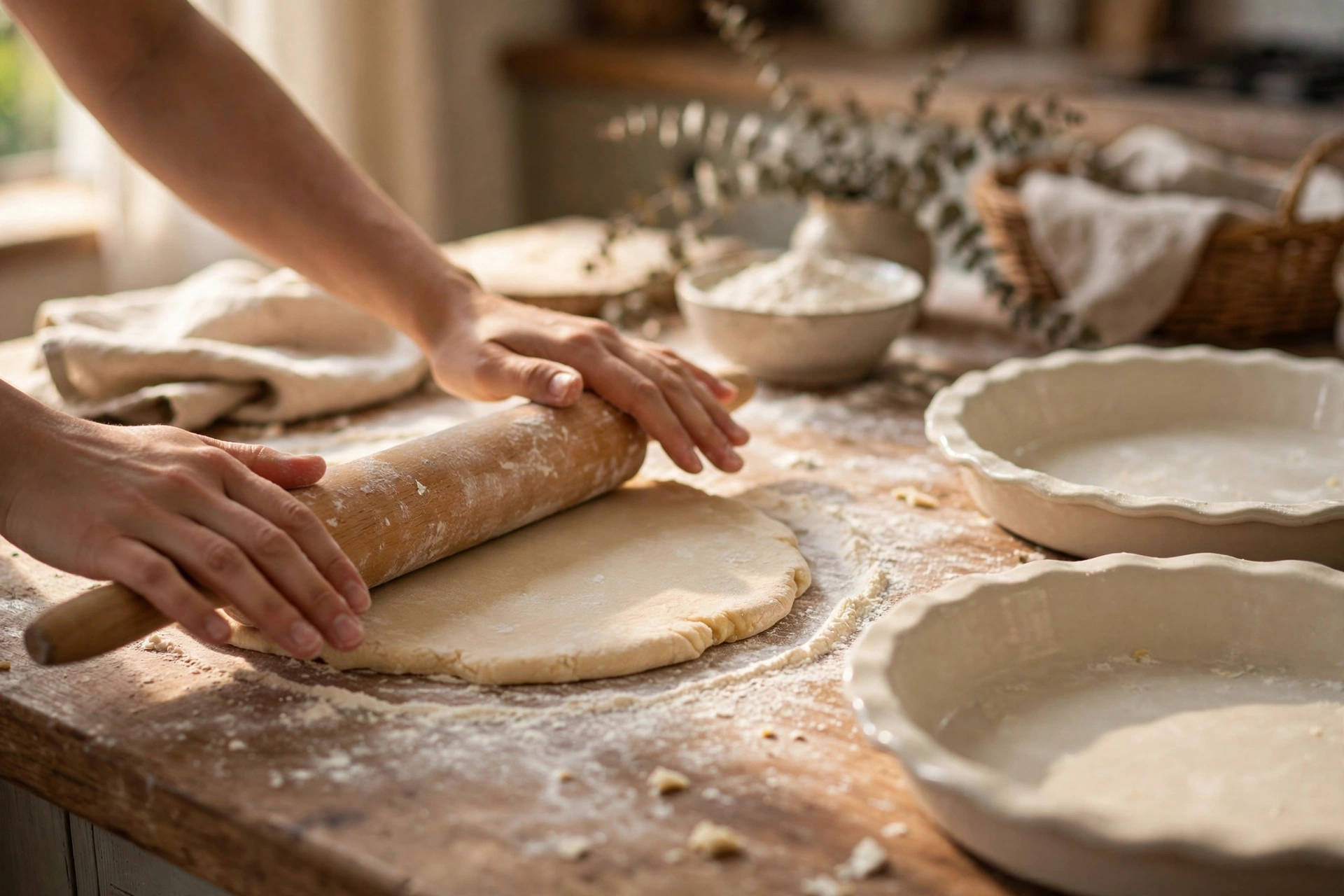
There is no moral hierarchy here — only strategy. The right call depends on your time, your skills, and what your guests will actually notice.
Always worth making from scratch: whipped cream (takes 3 minutes, tastes 10 times better), apple crisp (easier than pie, better than store-bought), and any family recipe with emotional weight. If your grandmother’s pie recipe is the tradition, that pie is homemade — full stop.
Smart to buy: pie crusts (good store-bought crusts exist and rolling is the most time-consuming part), vanilla ice cream, and dinner rolls for the bread pudding you will not have time to bake.
The hybrid move: buy the pie, make the whipped cream; buy the crust, make the filling. Guests taste the filling and the cream — the crust is infrastructure.
The upgrade trick: a store-bought pie warmed for 10 minutes and served with fresh whipped cream and a dusting of cinnamon tastes homemade to everyone who matters. Presentation and temperature do half the work of “homemade.”
“Homemade is a flavor, not a rule — buy the crust, make the memory.”
When to Serve Dessert
Do not rush from dinner to dessert. The traditional pause — clearing the table, making coffee, letting everyone digest and talk — is part of the holiday. Plan for dessert 1 to 2 hours after the main meal.
Use the pause productively: pack up leftovers (perishables should be refrigerated within 2 hours of serving), start the dishwasher, and set out the dessert plates, forks, coffee, and tea. When people drift back to the table on their own, dessert is ready — not announced, just there.
Serve pie at room temperature or gently warmed, with whipped cream and ice cream alongside so guests customize. Coffee and tea are not optional — they are part of the dessert course. For the full day’s schedule, our Thanksgiving cooking timeline shows where dessert prep fits, and our Thanksgiving dinner checklist covers the whole week including baking days. For smaller crowds, the small Thanksgiving dinner menu scales dessert sensibly.
Frequently Asked Questions
How far ahead can I bake Thanksgiving pies?
Pumpkin, sweet potato, and cheesecake-style pies: bake 2 days ahead and refrigerate. Fruit pies (apple, cherry): 1–2 days ahead. Pecan pie: 2 days ahead. Add whipped cream and any fresh garnishes just before serving.
How many pies do I need?
One 9-inch pie serves 6–8 modest slices. For most gatherings, two different pies cover the table — variety matters more than volume, since everyone is already full. Add ice cream and whipped cream rather than a third pie.
Can I freeze pies ahead of time?
Yes — most pies freeze well for up to a month. Cool completely, wrap tightly in plastic wrap plus foil, and thaw overnight in the refrigerator. Fruit pies freeze best; custard pies (pumpkin) freeze acceptably but can weep slightly on thawing. Whipped cream does not freeze well — make it fresh.
Should dessert be served hot or at room temperature?
Most Thanksgiving pies are best at room temperature or gently warmed — a 10-minute warm in a low oven revives a refrigerated pie beautifully. Apple crisp is best warm. Ice cream, obviously, is cold. The contrast of warm pie and cold ice cream is the whole point.
What about guests with dietary restrictions?
One naturally accommodating option covers most needs: a fruit crisp made with gluten-free oats topping and served without ice cream (or with a dairy-free alternative) handles gluten and dairy restrictions at once. Label everything — a small card noting “contains nuts” or “gluten-free” lets guests serve themselves confidently.
How do I store leftover pie safely?
Pies with dairy or egg fillings (pumpkin, pecan, cheesecake) must be refrigerated and are best within 3–4 days. Fruit pies can sit at room temperature for about 2 days, then refrigerate. The USDA’s leftovers and food safety guide has the full storage rules.
What desserts can I make without using the oven?
On Thanksgiving Day the oven belongs to the turkey, so plan at least one dessert that never needs it. No-bake cheesecake, chocolate mousse cups, and pumpkin icebox pie all set in the refrigerator instead. A slow cooker can even “bake” apple butter bars or a self-saucing chocolate pudding cake while the turkey rests. Anything refrigerator-set should be made the night before — it needs six to eight hours to firm up, and it frees the oven completely on the big day.
Conclusion
Thanksgiving dessert is a victory lap, not a second marathon. Bake the pies two days ahead, buy what makes sense without guilt, whip the cream fresh, and serve it all an hour or two after dinner with good coffee. The pie does not need to be perfect — it needs to be there, warm, with people you like around the table.
Leave a Reply