

If you are wondering what to bring to Thanksgiving dinner, the short answer is: ask your host what would help, then bring a travel-safe dish — pie, rolls, or a side — plus a small host gift like wine or flowers.
Being a Thanksgiving guest comes with a delicious responsibility. The host is juggling the turkey, the timing, the table, and probably a dozen opinions about gravy. Your job is to arrive with something that makes their life easier, not harder.
This guide covers exactly what to bring to Thanksgiving dinner as a guest: the golden rule, the best travel-safe dishes, what to leave at home, wine and flower etiquette, and how to time your arrival so you help instead of hover.
Key Facts
- Always ask the host before choosing a dish — filling a real gap beats guessing.
- Bring food that travels well: pies, breads, room-temperature salads, and casseroles with tight lids.
- Skip anything that needs the host’s oven or stovetop during the final hour.
- Wine, flowers, or a host gift are appreciated — but they are a gift, not your dinner contribution.
- Arrive on time or 10–15 minutes after the invited time, never early.
- Keep hot food above 140°F and cold food below 40°F during the trip, and get perishables into the fridge within 2 hours.
What to Bring to Thanksgiving Dinner: The Golden Rule of Guest Dishes
The golden rule of deciding what to bring to Thanksgiving dinner is simple: ask the host first, then fill a gap. Hosts plan their menus down to the serving dish, and a surprise duplicate — two green bean casseroles, three pumpkin pies — creates awkward surplus and wasted food. A two-minute text or call saves everyone from it.
How you ask matters. “What can I bring?” is fine, but hosts under pressure often answer “oh, nothing” when they mean “please don’t make me plan your dish.” Try giving them something easy to say yes to: “I’d love to contribute — would a pie, a side salad, or rolls help most?” That makes it simple for them to pick one. If they name something specific, bring exactly that. Our Thanksgiving dinner planning guide shows how carefully hosts build their menus — your question is a kindness that fits right into their plan.
If the host insists you bring nothing, believe them — and then bring a small host gift anyway. Wine, flowers, or a box of nice chocolates are not a dish; they are a thank-you. Bring them in addition to your assigned contribution, never instead of it.
Also ask about the guest list before you cook. If anyone at the table has a nut allergy, celiac disease, or keeps kosher or vegetarian, your dish needs to account for it — or at least be clearly labeled. A gorgeous pecan pie is a problem if one bite could send a child to the emergency room. When you arrive, tell the host exactly what’s in your dish so they can steer sensitive guests correctly.
“The best guest dish is the one the host was quietly hoping someone would bring.”
What to Bring to Thanksgiving Dinner: Travel-Safe Picks
The defining feature of a great guest dish is that it survives the trip. A dish that arrives sloshed, lukewarm, or requiring twenty minutes of finishing in the host’s oven has already failed. When choosing what to bring to Thanksgiving dinner, favor foods that are sturdy, serve at room temperature or stay warm easily, and look good in the dish they traveled in.
Desserts that travel beautifully
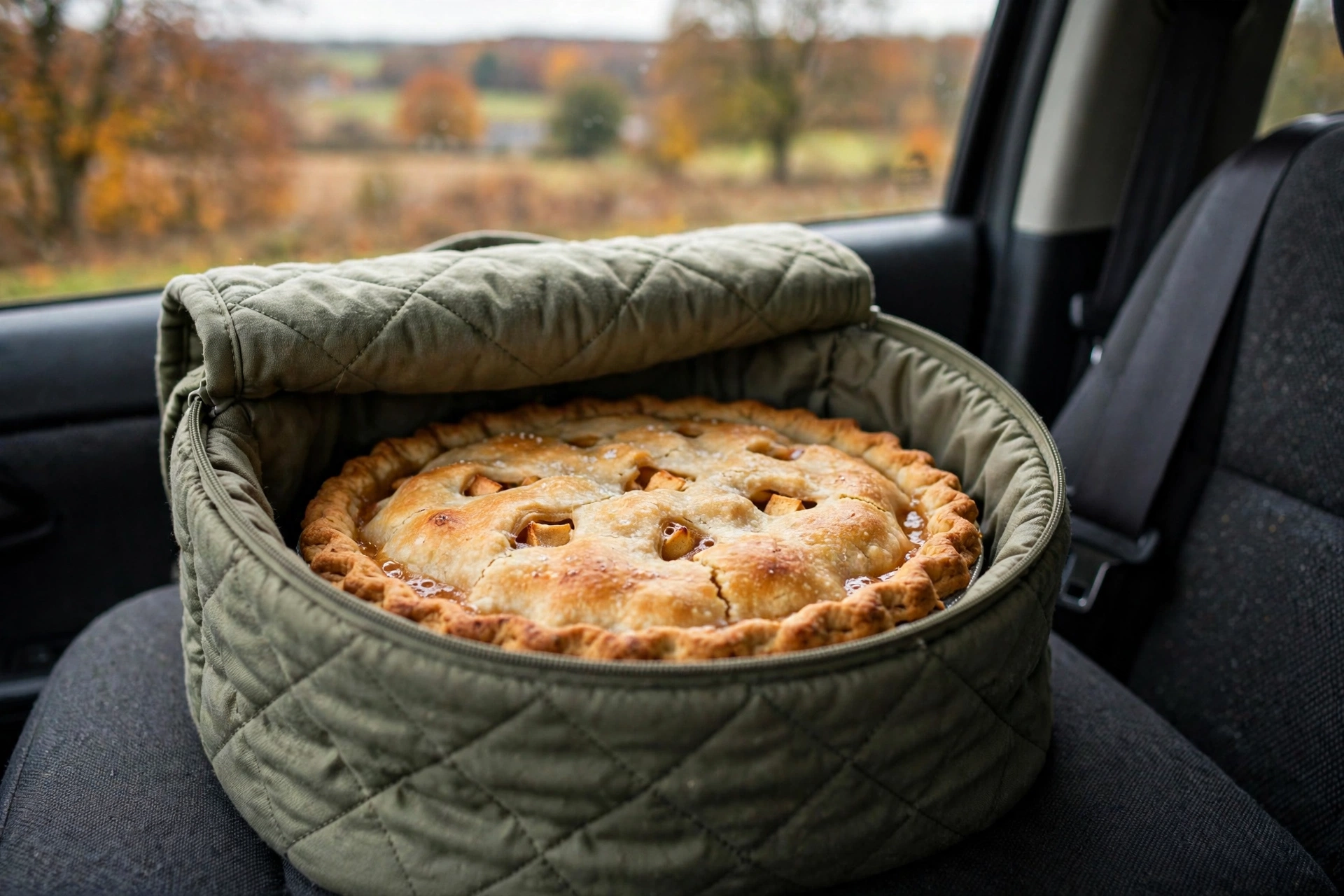
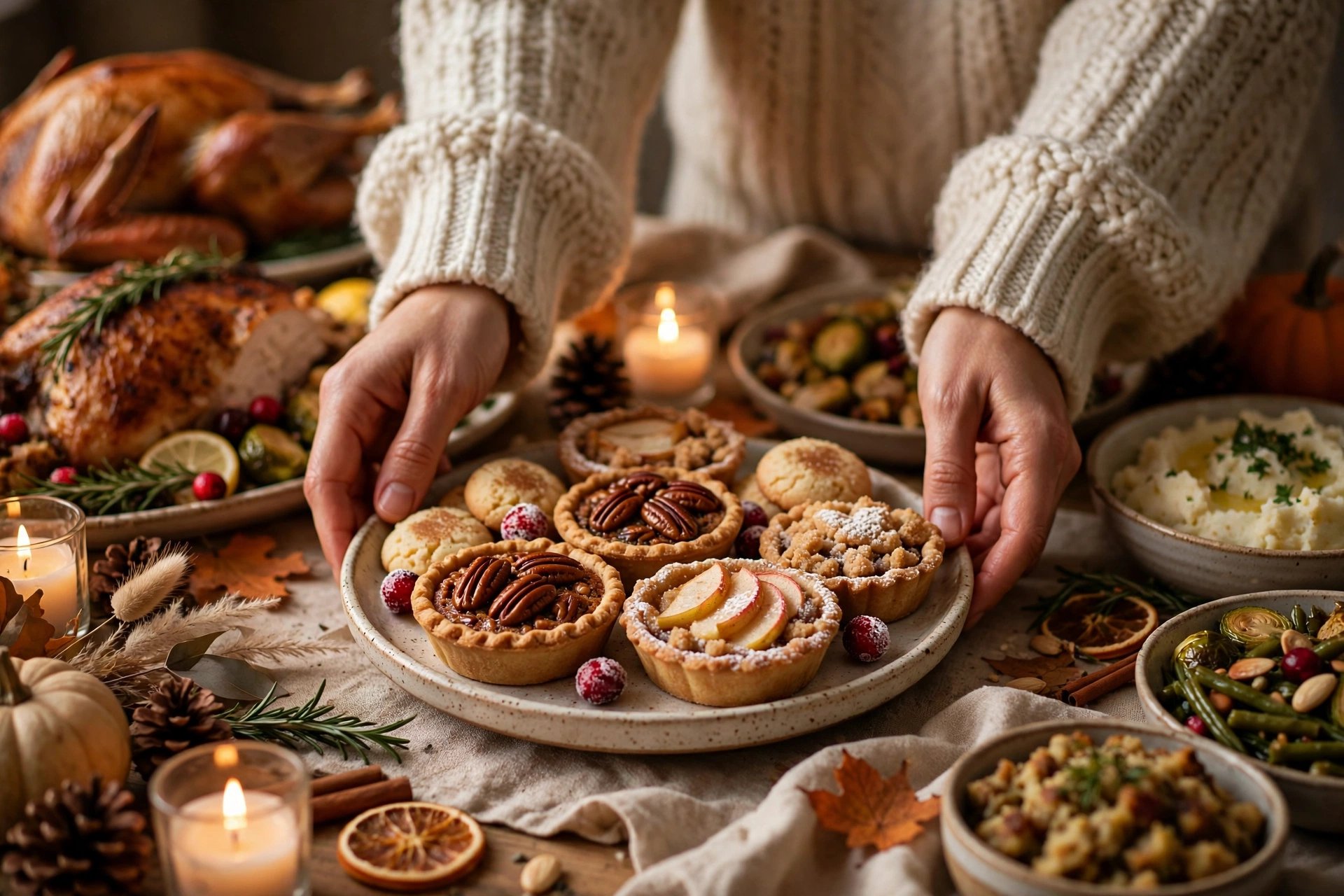
Pies are the classic guest contribution for a reason: apple, pumpkin, and pecan pies travel flat, slice cleanly, and serve at room temperature. Bake them the day before so they set fully, and carry them on a flat surface — the trunk floor or a footwell, never a tilted seat. Cookies, brownies, and bar desserts are even hardier; they ride in any container and need no reheating.
Breads and rolls
Dinner rolls, cornbread, and focaccia are nearly foolproof guest dishes. They travel at room temperature, reheat in minutes if needed, and never clash with the menu. Bring them in the basket or cloth-lined bowl you will serve them from, with a small dish of compound butter if you want to show off.
Sides that hold their own
Good travel-safe sides include cranberry sauce (serve chilled or at room temperature), roasted vegetables that taste great warm or at room temperature, hearty grain salads, and sturdy green salads with dressing on the side. Casseroles work too if they have tight-fitting lids and you can keep them hot — wrap the dish in towels and set it in an insulated carrier or a cooler lined with more towels.
Drinks and appetizers
A bottle of sparkling cider, a batch of mulled-cider mix in a jar, or a simple cheese-and-cracker spread buys the host time while guests arrive and the turkey rests. Deviled eggs and shrimp cocktail are crowd-pleasers but demand strict cold holding — transport them in a cooler with ice packs and get them into the host’s fridge the moment you arrive. Our Thanksgiving shopping list helps you scale quantities so you bring enough for the whole table, not just a taste.
Transport like a pro
Food safety travels with the dish. The federal food-safety guidance at foodsafety.gov emphasizes keeping hot foods hot (above 140°F) and cold foods cold (below 40°F), because the temperature danger zone between them is where bacteria multiply quickly. Practically: use insulated carriers and ice packs, minimize the drive time, and never leave a dish sitting in a warm car while you run errands. Once you arrive, perishable dishes should go into the refrigerator promptly — and food left out during the gathering should be refrigerated within 2 hours of serving.
“If your dish can’t survive a thirty-minute drive, it can’t survive Thanksgiving.”
What NOT to Bring as a Thanksgiving Guest

Knowing what to bring to Thanksgiving dinner is only half the etiquette — knowing what to leave at home is the other half. These are the most common guest missteps:
- Anything that needs the host’s oven at the last minute. The oven is running on a military timetable on Thanksgiving. A dish that needs “just twenty minutes at 375°F” is a logistical bomb.
- A duplicate of the host’s signature dish. If grandma always makes the stuffing, do not bring stuffing. Competing with the host’s traditions is a lose-lose.
- Untested recipes. Thanksgiving is not the day to debut an experimental dish. Bring something you have made successfully before.
- Strong-smelling food. Fish, heavy garlic dishes, and pungent cheeses can overpower the whole house. Save them for another occasion.
- A dish that doesn’t travel. Delicate soufflés, anything with a fragile garnish, and ice cream (unless you have confirmed freezer space) will not survive the trip intact.
- Surprise allergens. Nuts, shellfish, and sesame hidden in a dish are dangerous. If your recipe includes a top allergen, say so clearly — or choose a different recipe.
- Too little to share. Bring a full recipe’s worth, enough for everyone at the table to have a real serving. A tasting portion for six when twelve are coming is worse than nothing.
- Dishes in the host’s own servingware. Bring your dish in your own pan or a disposable pan, with your own serving utensil. Showing up with food that needs their favorite platter — and then taking that platter home dirty — is a classic blunder.
One more caution: do not bring alcohol to a home where someone is in recovery, and do not bring a plus-one’s surprise dish without clearing it with the host first. When in doubt, ask — guests who think carefully about what to bring to Thanksgiving dinner, and what to leave at home, are the ones hosts invite back.
Wine, Flowers & Dessert Etiquette for Thanksgiving Guests
Beyond the dish itself, there is the question of the host gift — and the rules are simpler than people think.
Wine: A bottle of wine is a lovely gesture, but treat it as a gift to the host, not as your contribution to the table. Hand it over with “this is for you to enjoy later” so the host does not feel pressured to open and pair it. Remember, the real answer to “what to bring to Thanksgiving dinner” is always a dish the host needs — the wine is a bonus on top of that. If you do hope it will be served, bring something versatile — a dry Riesling, Pinot Noir, or a sparkling wine all pair well with turkey. Our Thanksgiving dinner checklist reminds hosts to plan drinks for the crowd; your bottle is a bonus, not the plan.
Flowers: Always bring them already arranged in a vase or vessel. A host mid-dinner-prep has no time to trim stems and hunt for a vase — a bouquet that needs arranging becomes a chore. Small, low arrangements are best since tall centerpieces block conversation across the table.
Dessert duty: In many families, dessert is implicitly the guests’ department — pies and cookies arrive from all directions while the host focuses on the savory spread. But never assume. If the host says they have dessert covered, believe them and bring your assigned side. If they ask you to bring dessert, one pie or one batch of cookies per household is plenty; bringing three desserts when four other guests did too just creates a pie pileup.
Thank-you gifts: Beyond wine and flowers, a small candle, good olive oil, fancy tea, or a handwritten note all land well. The gift should be modest — this is gratitude, not a competition.
Arriving: Timing and Helping Out at Thanksgiving Dinner
Arrive at the invited time or 10–15 minutes after — never early. An early guest walks into a kitchen in controlled chaos and becomes one more thing to manage. If you are running more than 20 minutes late, text the host so they can adjust the plan.
When you walk in, hand over your dish with a quick briefing: what it is, whether it needs the fridge or the oven (it should need neither), and any allergens it contains. That thirty-second handover is the practical end of the “what to bring to Thanksgiving dinner” question: useful food, safely transported, clearly explained. Then offer to help — and make it specific. “Can I set the table?” or “Want me to pour drinks?” beats a vague “let me know if you need anything,” which a busy host will reflexively decline.
During the meal, the best guests stay flexible: sit where you are asked, compliment the food sincerely, and keep conversation warm. After the meal, do not vanish to the couch — help clear, offer to wash or dry, and pack up your own dish and serving utensil before you leave. And the next day, send a short thank-you text or note. It costs you thirty seconds and it is remembered for years.
“The perfect Thanksgiving guest arrives with food, leaves with dishes washed, and is invited back before dessert.”
Frequently Asked Questions
Should I ask the host what to bring or just surprise them?
Always ask. A surprise dish risks duplicating something already planned or clashing with the menu. There is no scenario where asking about what to bring to Thanksgiving dinner makes things worse. A quick text — “What would help most: a pie, rolls, or a salad?” — takes a minute and guarantees your contribution is genuinely useful.
Is it rude to bring store-bought food to Thanksgiving dinner?
Not at all, as long as you asked first and chose well. A bakery pie, quality rolls from a good bakery, or a cheese spread are perfectly respectable. What matters is that the dish serves the meal — not whether you made it from scratch. Just do not pass store-bought off as homemade.
How much food should I bring as a guest?
Enough for every guest to have a full serving — plan on the host’s guest count plus a little extra. One standard pie serves 8, one 9×13 casserole serves 10–12, and a batch of rolls should number at least one and a half per person. When in doubt, bring more rather than less.
What if I have dietary restrictions myself?
Tell the host in advance, and bring a dish you can eat that others will enjoy too — a naturally gluten-free side or a vegan dessert, for example. That way you contribute to the table and guarantee yourself something safe, without asking the host to cook a separate menu.
Can I bring my kids along with a dish they picked?
Yes, and it is a lovely tradition — kids who bring the cranberry sauce or the cookies feel ownership of the meal. Just clear it with the host first and make sure it is travel-safe and allergen-aware like any other guest dish.
Is wine always an appropriate host gift?
Usually, but not universally. Skip alcohol if anyone in the household is in recovery or the family does not drink — flowers, quality chocolates, or a small candle are safer choices. When you do bring wine, present it as a gift for the host to enjoy later rather than expecting it to be served.
Conclusion
Deciding what to bring to Thanksgiving dinner comes down to one mindset: you are there to make the host’s day easier. Ask what would help, choose a dish that travels well and serves at room temperature, keep food at safe temperatures on the drive over, and arrive ready to pitch in. Do that — plus a small host gift and a thank-you note the next day — and you will be the guest every host hopes will say yes next year.
Leave a Reply