
When is Divine Mercy Sunday 2027? It falls on Sunday, April 4, 2027. The feast is always the Second Sunday of Easter, which means it lands exactly one week after Easter Sunday — and in 2027 Easter is unusually early, so Divine Mercy Sunday comes early too, on the first Sunday of April. If you are planning your Easter season, April 4 is the date to mark, because it closes the Octave of Easter and carries the most generous promise of forgiveness in the Catholic calendar.
Divine Mercy Sunday is easy to miss. Easter Sunday gets the lilies, the sunrise services, and the family dinner. The Sunday after it can look like an ordinary Sunday. It is not. On this one day, the Church teaches, a person who goes to confession and receives Holy Communion obtains the complete forgiveness of sins and punishment — a grace the diary of St. Faustina compares to a second baptism.
Popes have tied their own lives to the feast: John Paul II died on its vigil, was beatified on it, and was canonized on it. In Krakow, hundreds of thousands of pilgrims fill the sanctuary of Lagiewniki for the main Mass and the 3 p.m. Hour of Mercy. This guide gives you the exact date, explains why it moves every year, walks through the nine-day novena and the chaplet, lays out the indulgence conditions in plain English, tells the story of Faustina and the image, and answers the practical questions people ask most.
Key Facts
| Fact | Detail |
|---|---|
| When is Divine Mercy Sunday 2027 | Sunday, April 4, 2027 |
| What it is | Second Sunday of Easter; Feast of the Divine Mercy; closes the Octave of Easter |
| Easter Sunday 2027 | Sunday, March 28, 2027 |
| Divine Mercy Novena 2027 | Friday, March 26 – Saturday, April 3, 2027 |
| Hour of Mercy | 3:00 p.m. daily; the Chaplet of Divine Mercy is prayed then |
| Readings 2027 (Year B) | Acts 4:32-35; 1 John 5:1-6; John 20:19-31 |
| Established | April 30, 2000, by Pope John Paul II |
| Based on | Visions of St. Faustina Kowalska (1905–1938) and her Diary |
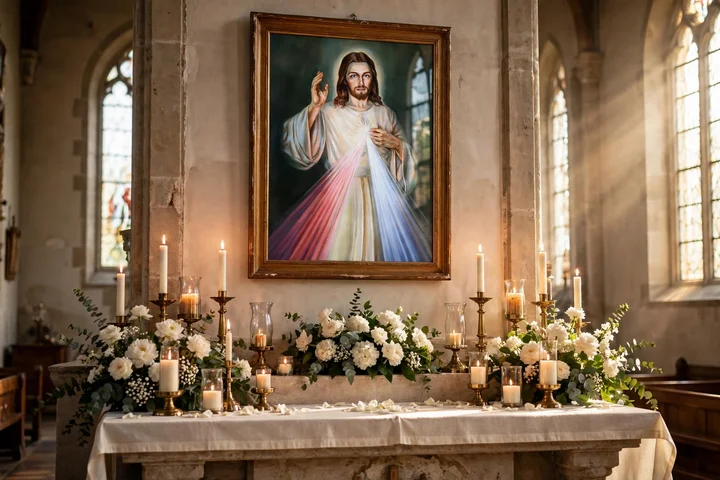
| The image | Painted 1934 by Eugeniusz Kazimirowski, Vilnius; white and red rays |
| Motto | “Jesus, I trust in You” |
| Federal holiday in the US | No |
| Holy day of obligation | No, beyond the normal Sunday obligation |
| Earliest possible date | March 29 (when Easter falls on March 22) |
| Latest possible date | May 2 (when Easter falls on April 25) |
| Divine Mercy Sunday 2026 | Sunday, April 12, 2026 |
| Divine Mercy Sunday 2028 | Sunday, April 23, 2028 |
What Is Divine Mercy Sunday?
Divine Mercy Sunday is the Second Sunday of Easter, the day that closes the Octave of Easter — the eight-day stretch in which the Church treats every day as if it were Easter itself. Its official name is the Feast of the Divine Mercy. It is celebrated in the Roman Rite, and some Anglo-Catholic parishes in the Church of England observe it too, although it is not an official Anglican feast.
The feast is built on the devotion to the Divine Mercy that St. Faustina Kowalska, a Polish nun, reported as part of her visions of Jesus. According to her diary, Jesus asked for a feast of Divine Mercy to be established on the first Sunday after Easter, so that mankind would take refuge in his mercy. The words she recorded are direct: “I want the image solemnly blessed on the first Sunday after Easter, and I want it to be venerated publicly so that every soul may know about it.”
What makes the day different from any other Sunday is the promise attached to it. A person who goes to sacramental confession and receives Holy Communion on Divine Mercy Sunday obtains the total forgiveness of sins and punishments. The Church teaches that this grace is similar to the grace received at baptism, and greater than a plenary indulgence, because it forgives both the sins and the punishment due to them, and it does not require the complete detachment from sin that an indulgence requires. In plain terms: a person in that state of grace would go straight to heaven if they died, without time in purgatory.
That is a remarkable claim, and it is why the feast draws such large crowds. It is also why the day has its own structure — a nine-day novena that starts on Good Friday, a chaplet prayed at 3 p.m., and a plenary indulgence with its own conditions — all of which this guide covers below. The full history of the feast, from Faustina’s diary to the Vatican approval and the indulgence decree, is set out on the Divine Mercy Sunday page.

Why Divine Mercy Sunday Falls on April 4 in 2027
The short answer to when is divine mercy sunday 2027 is simple math: add seven days to Easter. Easter Sunday 2027 falls on March 28, which is unusually early — the earliest Easter since 2016. Add seven days to March 28 and you land on Sunday, April 4.
Divine Mercy Sunday always falls on the Second Sunday of Easter, so it always moves with Easter. Easter itself is set by the computus: the first Sunday after the first full moon on or after the spring equinox. When Easter is early, Divine Mercy Sunday is early; when Easter is late, the feast is late. The range is wide. The earliest Divine Mercy Sunday can ever fall is March 29, when Easter falls on March 22 — that happened in 1818 and will happen again in 2285. The latest is May 2, when Easter falls on April 25 — that happened in 1943 and will happen again in 2038.
April 4, 2027 sits near the early end of that range, and it creates a crowded spring week. The Annunciation, which is fixed on March 25, collides with Maundy Thursday in 2027 and is transferred to Monday, April 5 — the day right after Divine Mercy Sunday. Easter Monday falls on March 29, the day after Easter. So the whole Easter season in 2027 is compressed into late March and early April, and anyone planning travel, Mass times, or a pilgrimage to Krakow needs to book early.
Divine Mercy Sunday Dates, 2026–2031
| Year | Easter Sunday | Divine Mercy Sunday | Day of the week |
|---|---|---|---|
| 2026 | April 5 | April 12 | Sunday |
| 2027 | March 28 | April 4 | Sunday |
| 2028 | April 16 | April 23 | Sunday |
| 2029 | April 1 | April 8 | Sunday |
| 2030 | April 21 | April 28 | Sunday |
| 2031 | April 13 | April 20 | Sunday |
The pattern is worth noting for long-range planning. After the early April 4 date in 2027, the feast swings late in 2028 (April 23) and early again in 2029 (April 8). If you are the kind of person who plans a Krakow trip a year ahead, 2028 is the year to watch: April 23 is a comfortable spring date in Poland, and the sanctuary crowds are smaller than on the years when the feast falls on a holiday weekend. That is the short answer to when is divine mercy sunday 2027: Sunday, April 4, 2027.
The Story Behind the Feast: Faustina and the Image
The feast begins with a young Polish nun named Maria Faustina Kowalska, who lived from 1905 to 1938. She entered the Congregation of the Sisters of Our Lady of Mercy in Warsaw, and from 1931 onward she reported visions of Jesus and conversations with him, which she recorded in a diary that now runs to hundreds of pages.
In the diary, Jesus asked her to have a picture painted of the vision she saw: himself in a white garment, with one hand raised in blessing and the other over his heart, from which two great rays shone — one white and one red. The white ray stands for water, which justifies souls. The red ray stands for blood, which is the life of souls. Under the image, Jesus asked for the words “Jesus, I trust in You.”
The painting was made in 1934 by the artist Eugeniusz Kazimirowski in Vilnius, working from Faustina’s description. The first Mass at which the image was displayed took place on April 28, 1935 — itself the Second Sunday of Easter that year — in the Gate of Dawn church in Vilnius. The Mass was celebrated by Faustina’s confessor, Fr. Michael Sopocko, who had obtained permission to place the image in the church. Faustina was there. She wrote that when she took part in the celebrations, her heart leapt, because the two solemnities — the feast and the end of the Jubilee of Redemption — were so closely united.
The diary entries that matter most for the feast are the ones that record the promise. In entry 699, Jesus says: “On that day the very depths of My tender mercy are open. I pour out a whole ocean of graces upon those souls who approach the fount of My mercy. The soul that will go to Confession and receive Holy Communion shall obtain the complete forgiveness of sins and punishment.”
In entry 300 he says: “Whoever approaches the Fountain of Life on this day will be granted complete forgiveness of sins and punishment.” And in entry 1109: “I want to grant a complete pardon to the souls that will go to Confession and receive Holy Communion on the Feast of My Mercy.”
But the diary also insists that the feast is not only about receiving. In entry 742, Jesus tells Faustina that the first Sunday after Easter is the Feast of Mercy, “but there must also be deeds of mercy, which are to arise out of love for Me. You are to show mercy to our neighbors always and everywhere.” The feast, in other words, is a two-way street: receive mercy, then give it.
The devotion was actively promoted by Pope John Paul II, who had a personal connection to it — he was from Poland, and he had known the devotion since his youth in Wadowice and Krakow. On April 30, 2000, at the canonization of Faustina Kowalska, he officially designated the Second Sunday of Easter as the Sunday of the Divine Mercy in the General Roman Calendar.
That was the first time the feast had been celebrated. A year later, on April 22, 2001, he returned to the theme in his homily: “Humanity will never find peace until it turns with trust to Divine Mercy. Divine Mercy! This is the Easter gift that the Church receives from the risen Christ and offers to humanity.”
The Novena and the Chaplet: How to Prepare
Divine Mercy Sunday is preceded by a nine-day novena, and the novena is the practical heart of the preparation. Jesus told Faustina that the feast should be preceded by a Divine Mercy Novena beginning on Good Friday. In 2027, Good Friday falls on March 26, so the novena runs from Friday, March 26 through Saturday, April 3 — the day before the feast.
Each day of the novena has its own intention: all mankind, especially sinners; priests and religious; devout souls; unbelievers and those who do not yet know Jesus; the souls of separated brethren; the meek and humble and little children; souls who venerate the Divine Mercy; the souls in purgatory; and, on the last day, lukewarm souls. Each day ends with the Chaplet of Divine Mercy.
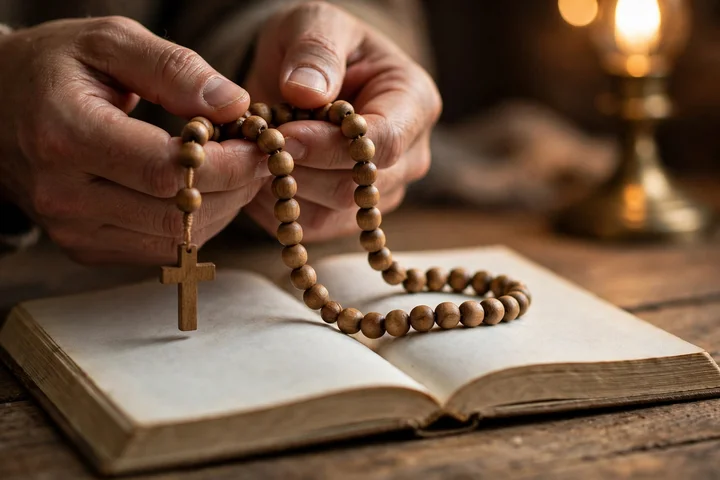
The Chaplet is a short prayer, prayed on ordinary rosary beads. It begins with an Our Father, a Hail Mary, and the Apostles’ Creed. Then, on the large beads, the prayer “Eternal Father, I offer You the Body and Blood, Soul and Divinity of Your dearly beloved Son, Our Lord Jesus Christ, in atonement for our sins and those of the whole world” is said. On the small beads, ten times per decade, comes “For the sake of His sorrowful Passion, have mercy on us and on the whole world.” It closes with “Holy God, Holy Mighty One, Holy Immortal One, have mercy on us and on the whole world,” said three times.
The chaplet is most often prayed at 3:00 p.m., the Hour of Mercy — the hour Jesus died on the cross. Faustina recorded that at 3 p.m., Jesus said, “you shall pray for My mercy, especially for sinners, and if only for a brief moment, immerse yourself in My Passion.” Many parishes hold a 3 p.m. service on Divine Mercy Sunday itself, with the chaplet, adoration, and confessions. That 3 p.m. service is one reason people start asking when is divine mercy sunday 2027 as early as March: the nine days of prayer begin on Good Friday, so the date matters well before the feast itself.
The Plenary Indulgence: What the Church Grants
In June 2002, John Paul II granted indulgences for Divine Mercy Sunday, and the grants were formally decreed by the Apostolic Penitentiary. The Church grants a plenary indulgence to the faithful who take part, in any church or chapel, in prayers and devotions held in honor of Divine Mercy, or who, in the presence of the Blessed Sacrament exposed or reserved in the tabernacle, recite the Our Father and the Creed, adding the prayer “Merciful Jesus, I trust in you.”
The usual conditions apply: sacramental confession, Holy Communion, prayer for the intentions of the pope, and complete detachment from the affection for a sin, even a venial sin. Priests are encouraged on that day to lead the prayers in honor of Divine Mercy, to inform parishioners about the devotion, and to hear confessions — which is why confession lines on Divine Mercy Sunday are famously long, and why many parishes schedule extra confessors.
There is also a provision for people who cannot get to a church. The faithful who, for a justified reason beyond their control, are unable to go to a church or chapel may obtain the indulgence by reciting the Our Father and the Creed before an image of Jesus, adding the prayer “Merciful Jesus, I trust in you,” with the conditions of detachment from sin and the intention to fulfill the other conditions as soon as possible.
And if even that is impossible, the indulgence can be obtained by those who are united with the people carrying out the prescribed practice in the usual way, and offer to Jesus a prayer and their sufferings, with the resolution to fulfill the normal conditions at the earliest opportunity.
Two things are worth keeping straight. First, the special promise of complete forgiveness from the diary and the plenary indulgence from the Church are two different things, and the promise is the greater of the two: the promise forgives sins and punishment without requiring complete detachment from sin, while the indulgence does require it. Second, the confession for the promise may take place some days before the feast — it does not have to be on the Sunday itself — but the Communion must be received on the day.
Divine Mercy Sunday in Krakow
If there is one place on earth that owns Divine Mercy Sunday, it is Krakow. The Sanctuary of Divine Mercy in Lagiewniki, the district where Faustina lived and died, is the center of the worldwide celebration. The sanctuary holds her relics and the original image is venerated there, and on the feast the crowds are enormous.
The pattern in recent years gives a good guide to 2027, even though the sanctuary publishes its official program only a few weeks before the feast. The vigil begins on Saturday evening, Masses run through the night, the main Mass is celebrated at an outdoor altar at 10:00 a.m., and the Hour of Mercy is kept at 3:00 p.m. In 2026 the feast fell on April 12 and the sanctuary’s own report described crowds that filled the square and spilled into the surrounding streets. For 2027, plan around Masses from midnight, the main Mass at 10:00, and the Hour of Mercy at 15:00 — and check the sanctuary’s site in March for the confirmed program.
Practical notes for a 2027 trip: Lagiewniki is about 20 minutes by tram from Krakow’s Old Town, and trams run all night on the feast. Anyone asking when is divine mercy sunday 2027 with a Krakow trip in mind should book accommodation early, because the feast falls on the first Sunday of April, when Krakow’s spring tourist season is starting. The sanctuary is open year-round, and the convent chapel where Faustina prayed is open to visitors outside the feast as well, so a trip in the days before April 4 is quieter and just as rewarding.
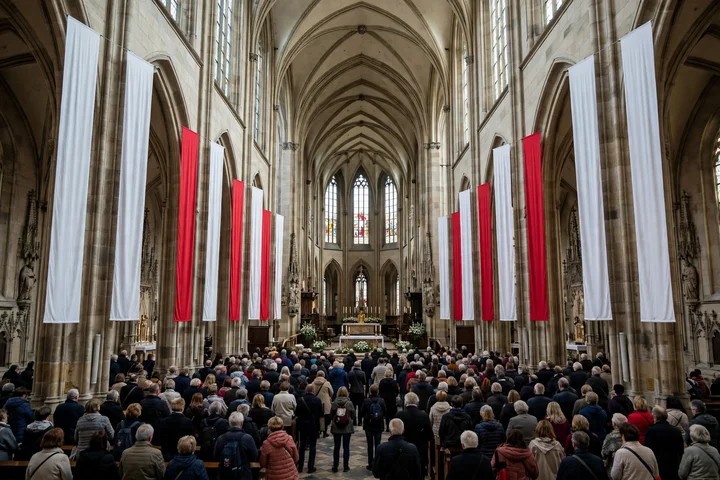
Outside Poland, the feast is kept wherever there are large Polish and Catholic communities — Chicago, New York, London, and Toronto all hold major celebrations — and most parishes in the United States now mark the day with a 3 p.m. chaplet service, adoration, and confessions. Check your parish bulletin in March; the service time is almost always 3:00 p.m.
John Paul II and Divine Mercy Sunday
No pope is more closely tied to a single feast than John Paul II is to Divine Mercy Sunday. The connection runs through his whole life, and it runs through three dates that all fell on the feast itself.
He died on Saturday, April 2, 2005 — the vigil of Divine Mercy Sunday. The crowds in St. Peter’s Square that night were already praying the chaplet when the announcement came. He was beatified on Sunday, May 1, 2011 — Divine Mercy Sunday — in front of more than a million pilgrims, by his successor, Benedict XVI. And he was canonized on Sunday, April 27, 2014 — Divine Mercy Sunday again — together with Pope John XXIII, by Pope Francis.
The beatification and the canonization were deliberate choices. Benedict XVI chose Divine Mercy Sunday for the beatification because John Paul II had established the feast and because he had died on its vigil. Francis chose the same feast for the canonization for the same reason. The message was unmistakable: the pope who gave the Church the feast now belongs to it.
For anyone planning a pilgrimage, the connection adds another layer to Krakow. John Paul II’s home town of Wadowice is an hour from the city, and the sanctuary at Lagiewniki is the place where the devotion, the saint, and the pope all meet. A trip that combines Wadowice, the sanctuary, and the Old Town is the standard Divine Mercy pilgrimage, and April is the best month to make it.
Is Divine Mercy Sunday a Holiday? What Is Open and Closed
Divine Mercy Sunday is not a federal holiday in the United States. It is not in the list of federal holidays in 5 U.S.C. 6103, and no government office, school, or bank closes for it. It is also not a holy day of obligation beyond the normal Sunday obligation — Catholics are obliged to attend Mass on Sundays anyway, and Divine Mercy Sunday is a Sunday.
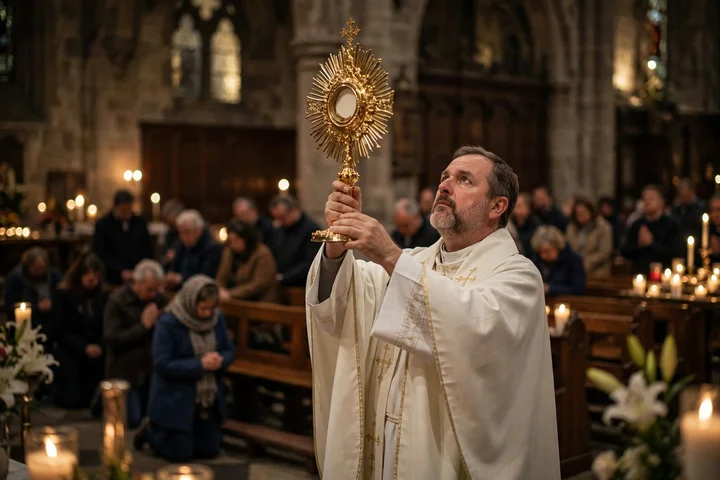
In practice, that means the day runs on a normal Sunday schedule. Churches follow their usual Sunday Mass times, with the addition of the 3 p.m. chaplet service in many parishes. Shops, restaurants, and public transport run on Sunday hours. The only place the day changes anything is inside the church: longer confession lines, a chaplet service in the afternoon, and often a procession with the Divine Mercy image.
The day after the feast, Monday, April 5, 2027, is an ordinary Monday in the United States — except in the liturgical calendar, where it carries the transferred feast of the Annunciation, moved from March 25 because of the collision with Maundy Thursday. And Easter Monday 2027 itself, March 29, is a public holiday in more than 50 countries, though not in the United States. If you are planning time off around the Easter season, the Monday after Easter is the day to take, not the Monday after Divine Mercy Sunday.

Frequently Asked Questions
When is Divine Mercy Sunday 2027?
Divine Mercy Sunday 2027 is Sunday, April 4, 2027. It is always the Second Sunday of Easter, so it falls exactly one week after Easter Sunday, which is March 28, 2027. The novena runs from Good Friday, March 26, through Saturday, April 3.
What is Divine Mercy Sunday?
Divine Mercy Sunday is the Feast of the Divine Mercy, celebrated on the Second Sunday of Easter. It is based on the devotion reported by St. Faustina Kowalska, a Polish nun who recorded visions of Jesus and his request for a feast on the first Sunday after Easter. Pope John Paul II established it in the General Roman Calendar on April 30, 2000, the day he canonized Faustina.
What is the promise of Divine Mercy Sunday?
The promise, recorded in St. Faustina’s diary, is that a person who goes to sacramental confession and receives Holy Communion on Divine Mercy Sunday obtains the complete forgiveness of sins and punishment. The grace is compared to a second baptism, and it is greater than a plenary indulgence because it does not require complete detachment from sin. The confession may take place some days before the feast, but the Communion must be received on the day itself.
When is the Divine Mercy Novena in 2027?
The Divine Mercy Novena in 2027 runs from Friday, March 26 (Good Friday) through Saturday, April 3, 2027. The novena begins on Good Friday every year and ends on the Saturday before the feast. Each day has its own intention and ends with the Chaplet of Divine Mercy, which is most often prayed at 3:00 p.m., the Hour of Mercy.
Is Divine Mercy Sunday a holy day of obligation?
No. Divine Mercy Sunday is not a holy day of obligation beyond the normal Sunday obligation. Catholics are obliged to attend Mass on Sundays, and Divine Mercy Sunday is a Sunday, so the obligation is the ordinary one. It is also not a federal holiday in the United States, and nothing outside the church closes for it.
What time is the Chaplet of Divine Mercy prayed?
The Chaplet of Divine Mercy is traditionally prayed at 3:00 p.m., the Hour of Mercy, the hour Jesus died on the cross. Many parishes hold a 3 p.m. service on Divine Mercy Sunday itself, with the chaplet, adoration, and confessions. The chaplet is prayed on ordinary rosary beads and takes about ten minutes. If you are still asking when is divine mercy sunday 2027, mark Sunday, April 4, 2027, and plan to be in church at 3 p.m.
Why April 4, 2027 Is Worth Marking Now
The answer to when is divine mercy sunday 2027 is short — Sunday, April 4 — but the day itself is not small. It closes the Octave of Easter, it carries the most generous promise of forgiveness in the Catholic calendar, and it falls in a crowded spring week that also holds the transferred Annunciation on April 5 and the early Easter on March 28.
Mark April 4 on your calendar, set a reminder for the novena on March 26, and plan to be in church at 3 p.m. — whether that is your parish, the sanctuary in Krakow, or your own living room with a rosary in your hand. The feast was made for sinners, and the diary is blunt about why: “Let no soul fear to draw near to Me, even though its sins be as scarlet.”

Leave a Reply