
Kwanzaa 2027 runs from Sunday, December 26, 2027, to Saturday, January 1, 2028. It always starts the day after Christmas and ends on New Year’s Day, and every one of its seven days honors a different principle of African heritage. This guide covers the exact 2027 dates, the day-by-day schedule, the dates for the years around it, the history of the holiday, the seven principles and seven symbols, how families celebrate, the Karamu feast, gifts, and what is open and closed.

Key Facts
| Fact | Detail |
|---|---|
| When is Kwanzaa 2027 | Sunday, December 26, 2027 – Saturday, January 1, 2028 |
| First day | Sunday, December 26, 2027 (Umoja, Unity) |
| Last day | Saturday, January 1, 2028 (Imani, Faith) |
| Length | Seven days, December 26 to January 1 every year |
| Karamu feast | Friday, December 31, 2027 (sixth day) |
| Created | 1966 by Dr. Maulana Karenga |
| First celebrated | December 26, 1966 – January 1, 1967 |
| Name origin | Swahili “matunda ya kwanza” — first fruits |
| Principles | Nguzo Saba, the Seven Principles, one per day |
| Symbols | Seven: Mazao, Mkeka, Kinara, Muhindi, Mishumaa Saba, Kikombe cha Umoja, Zawadi |
| Candle colors | Black (people), red (struggle), green (the future) |
| Religious status | Non-religious cultural holiday |
| Is Kwanzaa a federal holiday | No — it is not in 5 U.S.C. 6103 |
| Kwanzaa 2026 | Saturday, December 26, 2026 – Friday, January 1, 2027 |
| Kwanzaa 2028 | Tuesday, December 26, 2028 – Monday, January 1, 2029 |
| Americans who celebrate | An estimated 500,000 to 2,000,000 (2009 estimate) |
What Day Does Kwanzaa Start in 2027?
Kwanzaa 2027 starts on Sunday, December 26, 2027, the day after Christmas. The first day is Umoja, or Unity, and it sets the tone for the whole week: families gather, the kinara is placed on its mat, and the black candle in the center is lit first. The celebration runs for seven days, one day for each of the seven principles, and it ends on Saturday, January 1, 2028, with Imani, or Faith.
The date never moves. Unlike Hanukkah, which shifts with the Hebrew calendar, or Easter, which shifts with the moon, Kwanzaa is fixed to the same seven calendar dates every single year: December 26 through January 1. That makes planning simple. The only thing that changes is the day of the week each date falls on. In 2027 the first day lands on a Sunday, which means the whole week runs Sunday to Saturday, and the Karamu feast on December 31 falls on a Friday, the same night as New Year’s Eve.
That fixed schedule is part of the design. Kwanzaa was built around the number seven on purpose: seven days, seven principles, seven symbols, and seven letters in the name itself. Once you know the pattern, you never need to look it up twice. If you are asking when is kwanzaa 2027, the answer is the same one you would get for any other year — December 26 to January 1 — with the weekdays filled in for 2027.
Kwanzaa Dates Through 2031
Because the dates are fixed, the future years are easy to map. The table below shows the start and end of Kwanzaa for the next five seasons, so you can plan travel, family gatherings, and gifts well ahead of time.
| Kwanzaa season | First day (Dec 26) | Karamu feast (Dec 31) | Last day (Jan 1) |
|---|---|---|---|
| 2026–2027 | Saturday, Dec 26, 2026 | Thursday, Dec 31, 2026 | Friday, Jan 1, 2027 |
| 2027–2028 | Sunday, Dec 26, 2027 | Friday, Dec 31, 2027 | Saturday, Jan 1, 2028 |
| 2028–2029 | Tuesday, Dec 26, 2028 | Sunday, Dec 31, 2028 | Monday, Jan 1, 2029 |
| 2029–2030 | Wednesday, Dec 26, 2029 | Monday, Dec 31, 2029 | Tuesday, Jan 1, 2030 |
| 2030–2031 | Thursday, Dec 26, 2030 | Tuesday, Dec 31, 2030 | Wednesday, Jan 1, 2031 |
| 2031–2032 | Friday, Dec 26, 2031 | Thursday, Dec 31, 2031 | Thursday, Jan 1, 2032 |
Notice the pattern: the weekdays shift forward by one each year, except after a leap year, when they shift by two. Planning travel around when is kwanzaa 2027 is simpler than planning around most holidays, because the dates never move — only the weekdays shift. The 2027–2028 season is the only one in this stretch that starts on a Sunday, which gives the whole week a weekend feel from the first day. It is also the season where the Karamu feast lands on New Year’s Eve, so families celebrating both will have two big evenings back to back, with the last day of Kwanzaa falling on New Year’s Day itself.
Anyone checking when is kwanzaa 2027 will find the same December 26 to January 1 dates in every year.
What Is Kwanzaa?
Kwanzaa is a seven-day African American and Pan-African celebration of family, community, and culture. It was created in 1966 by Dr. Maulana Karenga, a professor of Africana studies at California State University, Long Beach, in the wake of the 1965 Watts Rebellion in Los Angeles. Karenga wanted a holiday that would give African Americans a way to reconnect with African heritage and to affirm their own history, values, and community after a year of unrest and loss.
The name comes from the Swahili phrase “matunda ya kwanza,” which means “first fruits.” Karenga drew on first-fruit harvest celebrations found in African cultures across the continent, including Zulu and Ashanti traditions. He added an extra “a” to the end of the name so that it would have seven letters — one for each of the seven children who took part in an early celebration. That small choice says a lot about the holiday: every detail is deliberate, and the number seven runs through everything.
The first Kwanzaa was celebrated from December 26, 1966, to January 1, 1967. It was small and experimental, a gathering built around discussion, candles, and shared food. Over the decades it grew into a widely recognized American holiday, observed in homes, schools, churches, libraries, and museums across the country. The Smithsonian’s National Museum of African American History and Culture has hosted Kwanzaa programming since 1988, and the museum’s Kwanzaa holiday programming page confirms the 1966 creation, the seven principles, and the December 26 to January 1 dates.
One fact surprises many people: Kwanzaa is not a religious holiday. It is cultural, not tied to any faith, and families of any religion — or none — can celebrate it. It is also not a substitute for Christmas. Many families celebrate both, with Christmas on December 25 and Kwanzaa beginning the next morning. That history is part of why the question of when is kwanzaa 2027 comes up every December, even though the dates never change: people want to know where the week falls before they plan around it. The holiday is a week of reflection and recommitment, built around values that Karenga believed would strengthen families and communities all year, not just for seven days in December.
The Seven Principles: Nguzo Saba
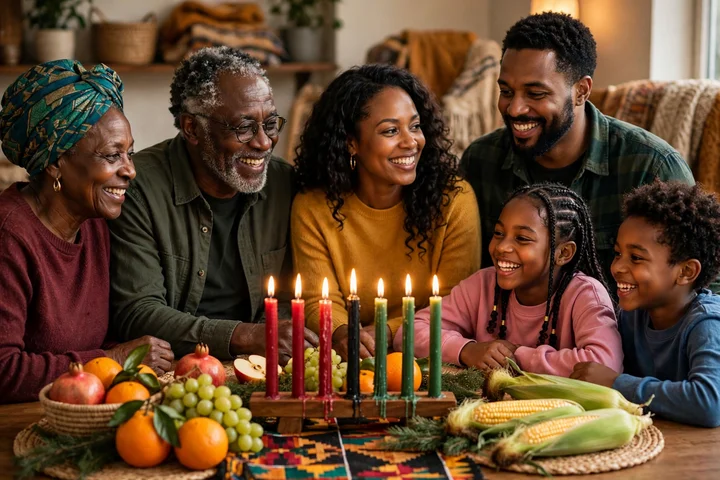
The heart of Kwanzaa is the Nguzo Saba, the Seven Principles. Each day of the week is dedicated to one principle, in a fixed order, and each evening the family lights a candle and talks about what that principle means in their own lives. The principles are Swahili words, and together they form a value system that Karenga called Kawaida.
Day 1: Umoja (Unity) — Sunday, December 26, 2027
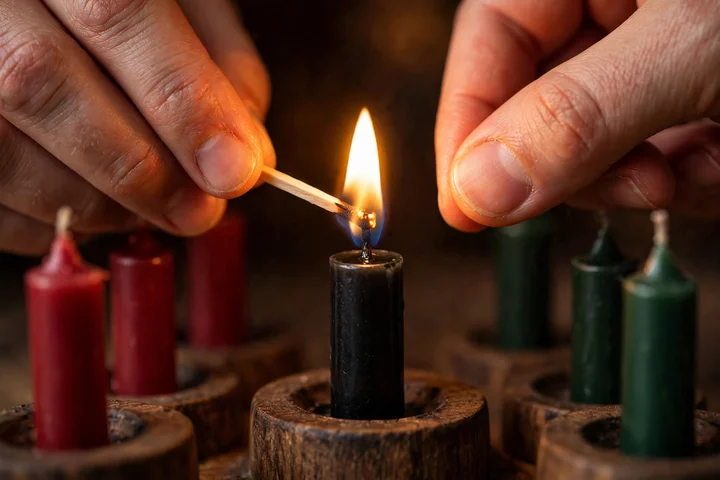
Umoja means unity: to strive for and maintain unity in the family, community, nation, and race. On the first evening, the black candle in the center of the kinara is lit. Black stands for the people, and it is lit first because unity is the foundation everything else rests on. Families often use this night to talk about what holds them together and what they want to build in the year ahead.
Day 2: Kujichagulia (Self-Determination) — Monday, December 27, 2027
Kujichagulia means self-determination: to define ourselves, name ourselves, create for ourselves, and speak for ourselves. The first red candle, on the left nearest the black candle, is lit. Red stands for struggle, and the principle is a direct answer to a history of being defined by others. It is the day for naming who you are on your own terms.
Day 3: Ujima (Collective Work and Responsibility) — Tuesday, December 28, 2027
Ujima means collective work and responsibility: to build and maintain our community together, and to make our brothers’ and sisters’ problems our problems and solve them together. The first green candle, on the right nearest the black candle, is lit. Green stands for the future that struggle builds. This is the day for volunteering, helping a neighbor, or fixing something that belongs to the whole community.
Day 4: Ujamaa (Cooperative Economics) — Wednesday, December 29, 2027
Ujamaa means cooperative economics: to build and maintain our own stores, shops, and other businesses and to profit from them together. The second red candle is lit. Many families use this day to shop at Black-owned businesses, to support a local market, or to talk about money, saving, and shared prosperity. The principle is practical: wealth should circulate inside the community, not just pass through it.
Day 5: Nia (Purpose) — Thursday, December 30, 2027
Nia means purpose: to make our collective vocation the building and developing of our community in order to restore our people to their traditional greatness. The second green candle is lit. This is the reflective day, the one for asking what your work is for. Families often talk about goals, education, and the legacy they want to leave.
Day 6: Kuumba (Creativity) — Friday, December 31, 2027
Kuumba means creativity: to do always as much as we can, in the way we can, in order to leave our community more beautiful and beneficial than we inherited it. The third red candle is lit, and this is also the night of the Karamu, the great feast. It is the most celebratory night of the week, full of music, food, and art — creativity made visible.
Day 7: Imani (Faith) — Saturday, January 1, 2028
Imani means faith: to believe with all our hearts in our people, our parents, our teachers, our leaders, and the righteousness and victory of our struggle. The final green candle is lit, and all seven candles burn together. The week ends on New Year’s Day with a sense of renewal: the principles are not just for December, they are for the year ahead. That is why the holiday ends with faith — it is a promise to carry the week forward.
The Seven Symbols
Kwanzaa has seven symbols, and most of them sit together on the mkeka, the woven mat that anchors the celebration table. Each symbol carries a meaning, and setting the table is itself part of the ritual.
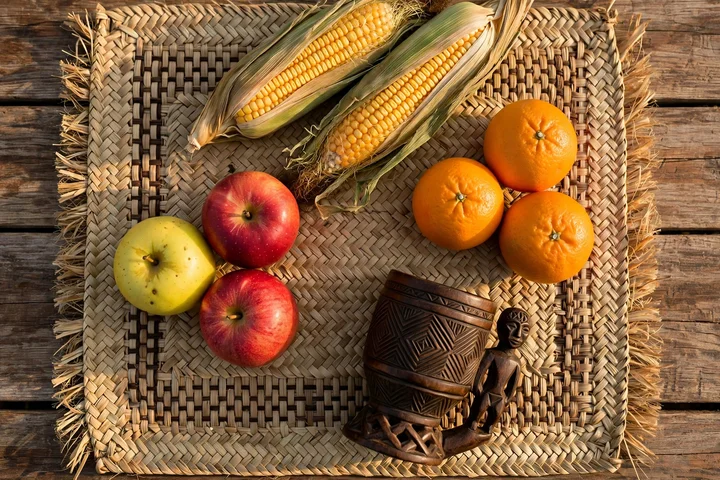
Mazao are the crops — fruits and vegetables placed on the mat to honor the harvest and the fruits of collective labor. Mkeka is the mat itself, usually woven from straw or cloth, and it stands for the foundation on which everything rests: history, tradition, and culture. Kinara is the candleholder that holds the seven candles, the Mishumaa Saba.
Muhindi is the corn, with one ear for each child in the family, a reminder that children are the future. Mishumaa Saba are the seven candles themselves: one black, three red, three green. Kikombe cha Umoja is the unity cup, passed around so that everyone drinks from the same cup in a shared act of togetherness. Zawadi are the gifts, given on the last day or throughout the week.
The candles are lit in a specific order. The black candle in the center is lit first, on the night of Umoja. After that, the candles alternate sides: red on the left, then green on the right, then red, then green, then red, then green. By the last night, all seven burn at once. The order matters because it tells the story of the week: unity first, then the balance between struggle and hope, day by day, until the whole kinara is lit.
How Families Celebrate
A typical Kwanzaa evening follows a simple pattern. The family gathers around the table where the mkeka, kinara, and other symbols are arranged. Someone lights the candle for the day’s principle, and the family talks about what that principle means — sometimes reading from a book, sometimes telling a story, sometimes just talking honestly about the year. Children often take part in the lighting, and the corn on the mat, one ear per child, makes their place in the celebration visible.
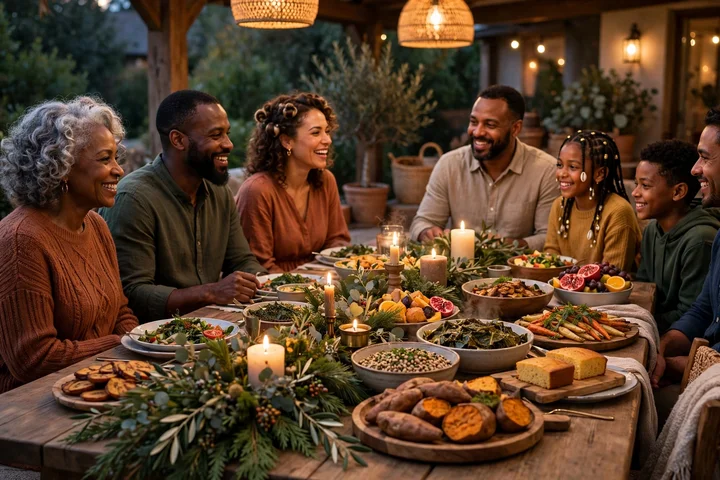
Music, drumming, and dance are part of many celebrations, especially on the night of the Karamu. The feast is the centerpiece of the week: a large shared meal, usually on December 31, with dishes that reflect African and African American food traditions — greens, black-eyed peas, sweet potatoes, fried chicken, and cornbread are common, along with fruit and drinks served from the unity cup. Guests are welcomed, elders are honored, and the meal often ends with music and storytelling that runs late into the evening.
Gifts, the Zawadi, are part of the celebration too, but they work differently from Christmas gifts. The tradition favors handmade gifts, books, and items that teach or carry cultural meaning — a book about Black history, a piece of art, something made by hand. The point is the thought behind the gift, not the price. Many families give the main gifts on the last day, January 1, as a way of closing the week with something that will be used all year.
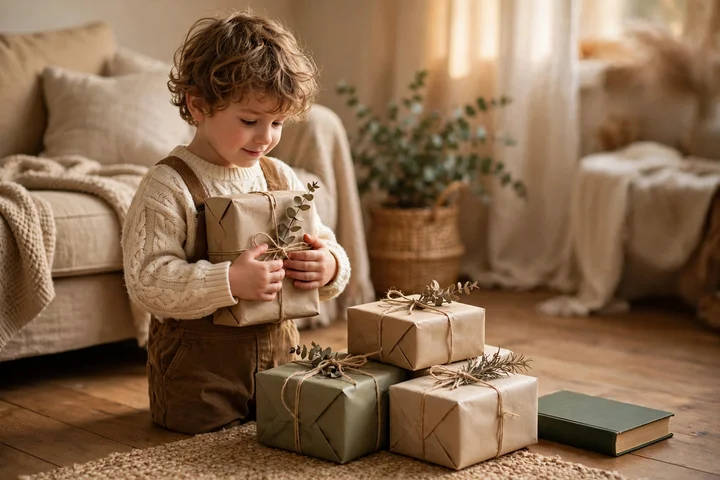
For families new to Kwanzaa, the advice is simple: start small. Set the table, light one candle a night, and talk about one principle a day. You do not need a perfect kinara or a full feast to begin. The holiday was built to be celebrated at home, with what you have, and the conversation matters more than the decorations.
Kwanzaa and the Christmas Week
Kwanzaa 2027 sits in the middle of the busiest holiday week of the year, and that is part of its appeal and part of its challenge. Christmas Day is Saturday, December 25, 2027, and Kwanzaa begins the next morning, so families that celebrate both move straight from one celebration into the next. Our guide to When Is Christmas 2027 covers the Saturday Christmas and the long weekend that follows it.
The overlap with Hanukkah is just as close. Hanukkah 2027 ends at nightfall on Saturday, January 1, 2028 — the same night Kwanzaa ends — and its first full day falls on Christmas Day itself. Our guide to When Is Hanukkah 2027 covers the eight-night candle schedule and the Christmas overlap in full.
The Karamu feast lands on Friday, December 31, 2027, which is also New Year’s Eve. That makes the sixth night of Kwanzaa one of the most crowded evenings on the calendar: the feast, the countdown, and the turn of the year all in one night. Our guide to When Is New Years Eve 2027 covers the Friday date and the ball drop, the fireworks, and the first places in the world to enter 2028.
The result is a nine-day stretch — December 24 to January 1 — that holds Christmas Eve, Christmas Day, the whole Kwanzaa week, the end of Hanukkah, New Year’s Eve, and New Year’s Day. No other week of the year packs so many celebrations together, and that is why the question of when is kwanzaa 2027 matters beyond the date itself: it tells you where Kwanzaa fits in a week that already has a lot going on.
Is Kwanzaa a Federal Holiday?
No. Kwanzaa is not a federal holiday, and it does not appear in 5 U.S.C. 6103, the law that lists federal holidays. There is no observed-day shift and no extra day off. Government offices, schools, and most businesses run their normal hours from December 26 through December 31, except for the holidays that fall inside the week itself: Christmas Day is observed on Friday, December 24, 2027, and New Year’s Day is observed on Friday, December 31, 2027, which means many offices are closed on those two Fridays even though Kwanzaa itself carries no closure.
That is worth knowing if you are planning around the week. If you need a day off for the Karamu feast on December 31, you may already have it, because that Friday is the observed New Year’s Day holiday for many federal workers. But the other Kwanzaa days — December 26, 27, 28, 29, and 30 — are ordinary workdays, and evening celebrations are the norm. Schools are usually on winter break during the whole week anyway, which makes it one of the easiest times of year for families to gather in the evening.
Kwanzaa has been recognized in other ways, though. The United States Postal Service issued the first Kwanzaa stamp in 1997, and the Smithsonian’s National Postal Museum holds Kwanzaa stamps and buttons in its collection. Several states and cities mark the holiday with proclamations, and community events — like those run by the DC Kwanzaa Planning Committee, organized in 1977 — have been held every year for decades. The holiday’s place in American life is cultural, not legal, and that is exactly how its founder intended it: a celebration built by the community, for the community.
Why Kwanzaa Still Grows
Kwanzaa is sixty-one years old in 2027, and it is still growing. Part of the reason is simple: the principles travel well beyond the holiday. Unity, self-determination, collective work, cooperative economics, purpose, creativity, and faith are values that apply to any week of the year, and many families say the seven days give them a language for talking about things they care about all year long. The holiday does not ask you to believe anything in particular. It asks you to think about who you are, who you belong to, and what you are building together.
Another reason is the calendar. Kwanzaa arrives at the exact moment when the year is ending and people are already thinking about what comes next. A week of reflection, gratitude, and shared meals fits naturally into that mood, and the fact that it starts the day after Christmas means it never competes with the biggest shopping day of the year. It begins when the presents are already open and the rush is over, and it gives families a reason to keep gathering when they otherwise might scatter.
That timing is one reason people search for when is kwanzaa 2027 as December approaches.
If you are planning to celebrate, and you have just looked up when is kwanzaa 2027, mark Sunday, December 26, on your calendar now. Set the table, lay out the mat, and light the first candle with the people you love. Seven days later, on New Year’s Day, you will light the last one — and the year will start with all seven flames burning at once.

Frequently Asked Questions
When is Kwanzaa 2027?
Kwanzaa 2027 runs from Sunday, December 26, 2027, to Saturday, January 1, 2028. It always runs from December 26 to January 1, so the dates are fixed every year and only the weekdays change. The Karamu feast falls on Friday, December 31, 2027.
What are the seven principles of Kwanzaa?
The seven principles, called the Nguzo Saba, are Umoja (Unity), Kujichagulia (Self-Determination), Ujima (Collective Work and Responsibility), Ujamaa (Cooperative Economics), Nia (Purpose), Kuumba (Creativity), and Imani (Faith). One principle is honored on each day of Kwanzaa, in that order, from December 26 to January 1.
Is Kwanzaa a religious holiday?
No. Kwanzaa is a non-religious cultural holiday created in 1966 to celebrate African heritage, family, community, and culture. It is not tied to any faith, and people of any religion — or none — can celebrate it. Many families celebrate both Christmas and Kwanzaa.
Who created Kwanzaa and when?
Kwanzaa was created in 1966 by Dr. Maulana Karenga, a professor of Africana studies at California State University, Long Beach, in the wake of the 1965 Watts Rebellion in Los Angeles. The first Kwanzaa was celebrated from December 26, 1966, to January 1, 1967. The name comes from the Swahili phrase “matunda ya kwanza,” meaning “first fruits.”
What is the Karamu feast?
The Karamu is the great feast of Kwanzaa, usually held on the sixth day, December 31. In 2027 that is Friday, December 31, the same night as New Year’s Eve. It is a large shared meal with family and guests, featuring dishes from African and African American food traditions, music, and storytelling, and it is the most celebratory night of the week.
Is Kwanzaa a federal holiday?
No. Kwanzaa is not a federal holiday and does not appear in 5 U.S.C. 6103, so there is no day off for it. Government offices and most businesses run normal hours from December 26 to December 31, except for Christmas Day, observed Friday, December 24, 2027, and New Year’s Day, observed Friday, December 31, 2027.
Leave a Reply