
Ramadan 2027 is expected to start on Monday, February 8, 2027, and end on Monday, March 8, 2027, with Eid al-Fitr on Tuesday, March 9. The dates follow the Umm al-Qura calendar and match the dates published by Britannica, but they are expected, not final: the month officially begins only when the crescent moon is sighted, so the start can shift by a day in either direction depending on where you live.
If you are asking when is ramadan 2027, the answer is a Monday in early February, which makes it one of the shortest fasting months the United States has seen in years. Because Ramadan falls in late winter, the days are short, the fasts run about 11 to 13 hours, and the whole month is over before spring really begins. This guide gives you the exact expected dates, explains why they can move by a day, covers the fasting hours, the Night of Power, Eid al-Fitr, the dates for the years around 2027, and what is open and closed.
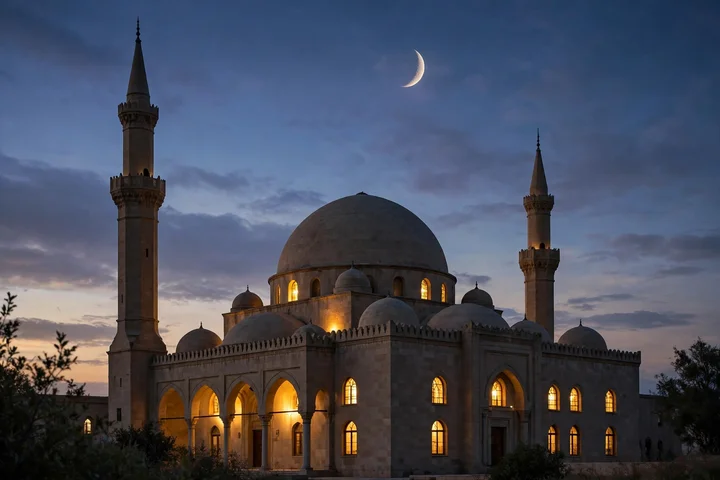
Key Facts
| Fact | Detail |
|---|---|
| When is Ramadan 2027 | Monday, February 8 – Monday, March 8, 2027 (expected) |
| Islamic year | 1448 AH, the ninth month of the Islamic calendar |
| First day of fasting | Monday, February 8, 2027 |
| Last day of fasting | Monday, March 8, 2027 (29 days, Umm al-Qura calendar) |
| Eid al-Fitr 2027 | Tuesday, March 9, 2027 (expected) |
| First Taraweeh prayers | Evening of Sunday, February 7, 2027 |
| New moon | Saturday, February 6, 2027 |
| Length | 29 or 30 days, depending on the moon sighting |
| Laylat al-Qadr (27th night) | Night of Friday, March 5, into Saturday, March 6, 2027 |
| Fasting hours in the US | About 11 to 13 hours, shortest at the start of the month |
| Ramadan 2026 | Wednesday, February 18 – Thursday, March 19, 2026 |
| Ramadan 2028 | Friday, January 28 – Friday, February 25, 2028 |
| Is Ramadan a federal holiday | No — it is not in 5 U.S.C. 6103 |
| Muslims worldwide | About 2 billion, roughly one in four people on Earth |
| Muslims in the United States | About 3.5 million (Pew Research Center estimate) |

Why the Dates Are Expected, Not Fixed
Ramadan does not have a fixed date on the Gregorian calendar. It is the ninth month of the Islamic calendar, which is a lunar calendar, and every Islamic month begins with the sighting of the waxing crescent moon. The new moon that opens Ramadan 1448 AH is expected on Saturday, February 6, 2027. If the crescent is seen on the evening of Sunday, February 7, the fast begins on Monday, February 8. If clouds hide the moon, or the sighting is not confirmed, the month of Sha’ban completes thirty days and Ramadan begins a day later, on Tuesday, February 9.
That is why every answer to the question when is ramadan 2027 carries the word expected with it. The Umm al-Qura calendar used in Saudi Arabia puts 1 Ramadan 1448 on Monday, February 8, and Britannica publishes the same date. Turkiye’s Diyanet calendar, which is based on astronomical calculation, agrees. But many communities around the world still confirm the month by looking for the crescent with their own eyes, and local moon-sighting committees in each country make the final call. Saudi Arabia’s Supreme Court, Pakistan’s Ruet-e-Hilal Committee, and local mosques in the United States and Europe can all announce slightly different dates, usually by no more than a day.
The same rule applies at the end of the month. Ramadan lasts 29 or 30 days, depending on when the Shawwal crescent is seen. The Umm al-Qura calendar gives Ramadan 29 days in 2027, so the last fast falls on Monday, March 8, and Eid al-Fitr falls on Tuesday, March 9. If the month runs to 30 days instead, the last fast moves to Tuesday, March 9, and Eid moves to Wednesday, March 10. Either way, the shift is one day at most, and your local mosque will confirm the exact dates on the evening before.
There is a useful habit to build around this. Treat February 8 as the planning date, and treat February 9 as the backup. If you are booking time off work, arranging school accommodations, or planning an iftar dinner for the first weekend, plan for the evening of Sunday, February 7, when the first Taraweeh prayers are held, and keep Monday morning free. The moon sighting is part of the tradition, not a flaw in the calendar, and Muslims have planned around it for fourteen centuries.

Ramadan Dates Through 2031
Because the Islamic year is about 11 days shorter than the Gregorian year, Ramadan starts 10 to 11 days earlier every year, and over about 33 years it cycles through every season. In 2027 it falls in late winter, which means short days and short fasts in the Northern Hemisphere. By 2031 it will start in late December, in the middle of winter, and a few years later it will move into spring. The table below answers when is ramadan 2027 for the next five seasons and beyond, so you can plan travel, weddings, and work schedules years ahead.
| Gregorian year | Islamic year | Expected start | Expected end |
|---|---|---|---|
| 2026 | 1447 | Wednesday, February 18, 2026 | Thursday, March 19, 2026 |
| 2027 | 1448 | Monday, February 8, 2027 | Monday, March 8, 2027 |
| 2028 | 1449 | Friday, January 28, 2028 | Friday, February 25, 2028 |
| 2029 | 1450 | Tuesday, January 16, 2029 | Tuesday, February 13, 2029 |
| 2030 | 1451 | Saturday, January 5, 2030 | Monday, February 3, 2030 |
| 2031 | 1452 | Thursday, December 26, 2030 | Thursday, January 23, 2031 |
These dates come from Britannica’s Ramadan dates table, which lists the same February 8 start for 2027 and warns that the precise dates can be off by a day or so because of differences in moon sightings. For the full background on the month, its timing, and its traditions, Britannica’s Ramadan page is the clearest single reference. The 2031 row looks odd at first glance because Ramadan starts in December 2030 and ends in January 2031, which is what happens when a lunar month straddles the new year. In 2031 there will actually be two Ramadans in one Gregorian year: the one that ends in January, and a second one that starts in mid-December 2031.
The drift is the reason Ramadan feels different every year. A child who fasts for the first time in 2027 will fast in February, in the cold and the dark, with the sun setting before dinner. Ten years later, the same person will be fasting in November. Twenty years later, in July, with fasts that can stretch past 16 hours in the northern United States. The month never stays still, and that is by design: over a lifetime, every Muslim fasts in every season.

How Long Is the Fast in 2027?
For most of the United States, when is ramadan 2027 also means short winter fasts, and that is good news for anyone fasting for the first time. The fast runs from dawn, at the Fajr prayer, until sunset, at the Maghrib prayer. In New York, the fast on the first day runs just under 12 hours, from about 5:45 in the morning until about 5:30 in the evening. By the last fast on March 8, the days have lengthened, and the fast runs close to 13 hours. Across the continental United States the range is roughly 11 to 13 hours, with the shortest fasts in the south and the longest in the north.
That is a big change from the Ramadan of a few years ago. When Ramadan fell in June, the fast in New York ran close to 17 hours, and in northern cities like Seattle and Minneapolis it ran longer still. In 2027 the winter timing means the hardest part of the fast is not the length but the early start: Fajr falls before 6 in the morning for most of the month, so the pre-dawn meal, suhoor, means waking up in the dark. The trade-off is worth it. A 12-hour fast is manageable for most healthy adults, and the short days make it one of the easiest Ramadans in a generation for American Muslims.
The pattern flips in the Southern Hemisphere, where February is late summer and the days are long. In Sydney, Australia, the fast in February 2027 runs closer to 14 hours, and in places further south it runs longer. Near the poles the rules bend: in northern Norway and Alaska, where the sun barely rises in February, Muslims follow the timings of Mecca or of the nearest major city, in consultation with their scholars. The same solution was worked out for the Malaysian astronaut Sheikh Muszaphar Shukor, who fasted aboard the International Space Station in 2007 by following the daylight timings of his launch site.
If you are fasting in 2027, the practical advice is simple. Eat a suhoor with protein and slow carbohydrates, drink water before dawn, and break the fast with dates and water at sunset, the way the Prophet Muhammad did. Keep the evening meal moderate: a heavy iftar after a long day without food is the most common cause of discomfort during Ramadan, not the fast itself. And remember that the fast is not only about food. During daylight hours Muslims also refrain from drinking, including water, and the month is a time for prayer, reading the Quran, and giving to charity.

What Happens During Ramadan?
Ramadan is much more than a month of fasting. It is the holiest month in the Islamic calendar, the month in which the Quran was first revealed, and a time of prayer, reflection, and community. The daily rhythm has a shape that anyone can follow, whether they are fasting or supporting someone who is.
The day begins before dawn with suhoor, the pre-dawn meal. Families eat together in the dark, often eggs, bread, yogurt, and dates, and drink as much water as they can before the Fajr prayer marks the start of the fast. In some neighborhoods a drummer or a bell wakes people up, a tradition that goes back centuries. Then comes the daytime fast: no food, no drink, and a focus on patience, kindness, and self-control. The Quran describes fasting as a way to become mindful of God, and the tradition says that false words or unkind deeds can damage a fast just as surely as eating.
At sunset the fast breaks with iftar. The meal traditionally starts with dates and water, and then opens into a full dinner shared with family and friends. Mosques hold community iftars every night, and in many cities restaurants and community centers do the same. After the evening prayer, Sunni Muslims gather for Taraweeh, the special nightly prayers in which the Quran is recited in sections, so that over the course of the month the whole book can be heard from start to finish. The first Taraweeh of 2027 falls on the evening of Sunday, February 7, the night before the first fast.
The last ten nights of Ramadan are the most sacred part of the month. Muslims believe that Laylat al-Qadr, the Night of Power, falls on one of these nights, and that it was on this night in 610 CE that the angel Gabriel first revealed the Quran to the Prophet Muhammad. Most Sunni Muslims observe it on the 27th night, which in 2027 is the night of Friday, March 5, into Saturday, March 6. Shia Muslims most commonly observe it on the 23rd night. Many people spend these nights in prayer at the mosque, and some practice i’tikaf, a retreat in which they stay at the mosque for the final ten days, away from work and daily life.
Charity runs through the whole month. Muslims believe that good deeds count for more during Ramadan, so giving rises sharply: donations to mosques, food banks, and relief organizations spike, and many families pay their annual zakat, the obligatory alms, during the month. There is also a separate payment, Zakat al-Fitr, which every Muslim pays before Eid prayers so that the poor can celebrate too. In the United States it is commonly set at about $10 to $15 per person. Knowing when is ramadan 2027 in advance matters because the month rewards preparation: the families who plan their meals, their charity, and their time off before February 8 get far more out of the month than those who start planning on the first day.

Eid al-Fitr 2027
Eid al-Fitr, the Festival of Breaking the Fast, is expected on Tuesday, March 9, 2027, the day after the last fast. If Ramadan runs to 30 days, Eid moves to Wednesday, March 10. The holiday lasts one day in most countries and three days in many Muslim-majority countries, and it is one of the two great festivals of the Islamic calendar, alongside Eid al-Adha.
The morning begins with a special prayer at the mosque, after Zakat al-Fitr has been paid. Then comes the celebration: new clothes, especially for children, gifts and money for the young, special sweets, and big family meals. In many communities people visit the graves of relatives, call family overseas, and spend the day together. In the United States, Eid is not a public holiday, so many Muslim families take the day off work or school, and a growing number of school districts now close for Eid or excuse absences for it.
The timing of Eid in 2027 has a practical wrinkle worth knowing. Because Ramadan ends on a Monday, Eid falls on a Tuesday, in the middle of the work week. If you are planning a celebration, the weekend after Eid, March 13 and 14, is when most community events and large family gatherings will happen. Book a restaurant or a hall early if you are hosting, and check with your employer or your children’s school in February, not March, so the day off is already arranged when the moon is sighted. If you know when is ramadan 2027, you can plan the weekend after Eid with confidence.

What Is Open or Closed During Ramadan?
Ramadan is not a federal holiday in the United States, so nothing closes for it. Federal offices, banks, schools, the post office, and the stock market all run on their normal schedules throughout February and March 2027. That is the simple answer, and it surprises people who assume a month-long religious observance must come with closures. In the United States it does not. What changes instead is personal: Muslim employees may ask for adjusted hours, a later start, or time off for Eid, and many employers and schools accommodate those requests.
In Muslim-majority countries the picture is different. Working hours are shortened, often by an hour or two a day, and government offices, banks, and schools run on Ramadan schedules. Restaurants close during the day and open at sunset, and malls and markets stay open late into the night. In Saudi Arabia, the United Arab Emirates, Egypt, and Turkiye, the whole rhythm of the day shifts toward the night, with the busiest hours falling after iftar. If you are traveling to the Middle East or North Africa in February or March 2027, expect slower service during the day and a lively, crowded evening.
For travelers, the rules are straightforward. In Muslim-majority countries, eating, drinking, or smoking in public during fasting hours is discouraged, and in some places it is against the law, so plan your meals around the fast.
Tourist sites stay open, hotels serve food to guests, and the evenings are the best time to be out: the streets fill with lanterns, food stalls, and families, and the atmosphere is festive. In the United States, nothing about daily life changes for non-Muslims, though you may notice your Muslim colleagues stepping away at sunset, or your local mosque holding a community iftar that welcomes neighbors of all faiths. That is why knowing when is ramadan 2027 matters for travel plans as well.
How Ramadan Compares With Other Holidays That Move
Ramadan is not the only holiday that refuses to sit still on the calendar, and comparing it with the others shows why the 2027 dates matter. Easter moves too, because it is set by the moon: Easter Sunday 2027 falls on March 28, and its season, Lent, begins on Ash Wednesday, February 10, 2027, just two days after Ramadan starts. For a few weeks in February and March 2027, two of the world’s great fasting traditions will overlap, with Muslims fasting for Ramadan and Christians observing Lent at the same time. Our guide to when Easter falls in 2027 covers the full Holy Week calendar.
St. Patrick’s Day is the opposite: a date that never moves. St. Patrick’s Day 2027 falls on Wednesday, March 17, 2027, nine days after Ramadan ends, and it will be March 17 in every year, forever. The contrast is the point. A fixed holiday like St. Patrick’s Day can be booked a year in advance without a second thought, while a moon-driven holiday like Ramadan needs a sighting, a backup date, and a little patience. That is why the expected dates in this guide matter so much: they let you plan around a moving holiday almost as confidently as a fixed one.
Hanukkah moves as well, but on a different calendar again. Hanukkah 2027 starts at sundown on Friday, December 24, 2027, with its first full day falling on Christmas Day itself. It follows the Hebrew calendar, just as Ramadan follows the Islamic calendar, and both holidays drift against the Gregorian year. The three calendars together, Gregorian, Islamic, and Hebrew, explain why the holiday season never looks the same twice, and why a single guide to one holiday is never quite enough.
Planning Tips for Ramadan 2027
Once you know when is ramadan 2027, the rest of the planning is simple, and February is the month to do it in. If you are fasting, start adjusting your sleep a week before the month begins, so the early wake-up for suhoor does not hit all at once. Stock the kitchen with dates, oats, eggs, yogurt, lentils, and rice, the foods that carry a fast best, and plan a few easy iftar menus in advance so you are not cooking from scratch every evening. If you have children who are fasting for the first time, let them try half days at first, and make the iftar table the reward, not the test.
If you are hosting, the first weekend of Ramadan is the one to plan for. The first Friday falls on February 12, and the first Saturday on February 13, and those are the nights when family and friends will want to gather. Keep the menu simple: soup, a main dish, salad, bread, and dates will feed a crowd better than an elaborate spread, and it leaves you free to enjoy the evening instead of cooking all of it. Invite neighbors, too. A community iftar is one of the easiest ways to share the month with people who have never experienced it, and most mosques welcome guests at their nightly iftars.
For employers and teachers, a small amount of planning goes a long way. A Muslim colleague fasting in February may be most tired in the late afternoon, so schedule demanding work earlier in the day if you can. A student fasting during Ramadan may need a quiet room at lunchtime and an excused absence on Eid, and both are easy to arrange in advance. The month is short, the fasts are short, and a little flexibility costs almost nothing.
One last tip, and it matters more than the rest: confirm the dates on the evening of February 7. Check your local mosque’s announcement, or the announcement of your country’s moon-sighting authority, before the first fast. The expected date is February 8, and every authority agrees on it, but the sighting is the final word, and the month belongs to the people who watch the sky.
Frequently Asked Questions
When is Ramadan 2027?
Ramadan 2027 is expected to start on Monday, February 8, 2027, and end on Monday, March 8, 2027, with Eid al-Fitr on Tuesday, March 9. The dates follow the Umm al-Qura calendar and match Britannica’s dates table. They are expected, not final, because the month begins with the sighting of the crescent moon, so some countries may start on Tuesday, February 9, and Eid may fall on Wednesday, March 10.
How long does Ramadan 2027 last?
Ramadan 2027 is expected to last 29 days, from Monday, February 8, to Monday, March 8. Islamic months last 29 or 30 days depending on when the next crescent moon is sighted, so if the Shawwal crescent is not seen on March 8, the month runs to 30 days, the last fast moves to Tuesday, March 9, and Eid al-Fitr moves to Wednesday, March 10.
What is Laylat al-Qadr, and when is it in 2027?
Laylat al-Qadr, the Night of Power, is the night Muslims believe the Quran was first revealed to the Prophet Muhammad in 610 CE. It falls on one of the last ten nights of Ramadan. Most Sunni Muslims observe it on the 27th night, which in 2027 is the night of Friday, March 5, into Saturday, March 6. Shia Muslims most commonly observe it on the 23rd night. Many people spend the night in prayer at the mosque.
Is Ramadan a federal holiday in the United States?
No. Ramadan is not a federal holiday, and it does not appear in the federal holiday law, so federal offices, banks, schools, and the post office stay open throughout the month. Many employers and schools offer accommodations, such as adjusted hours or time off for Eid al-Fitr, and a growing number of school districts now close or excuse absences for Eid.
Why does Ramadan start earlier every year?
Ramadan follows the Islamic lunar calendar, which is about 11 days shorter than the Gregorian solar calendar. Because of that gap, Ramadan starts 10 to 11 days earlier each year, and over about 33 years it cycles through every season. That is why Ramadan fell in summer a decade ago, falls in winter in 2027, and will fall in late December by 2031.
What should non-Muslims know about Ramadan?
The simplest thing to know is that your Muslim friends, colleagues, and neighbors will not be eating or drinking during daylight hours for a month, from dawn until sunset. It is polite not to offer them food or water during the day, and it is always welcome to wish them “Ramadan Mubarak,” which means “Blessed Ramadan.” If you are invited to an iftar, the evening meal that breaks the fast, accept: it is the warmest way to experience the month, and guests of all faiths are welcome.
Leave a Reply