
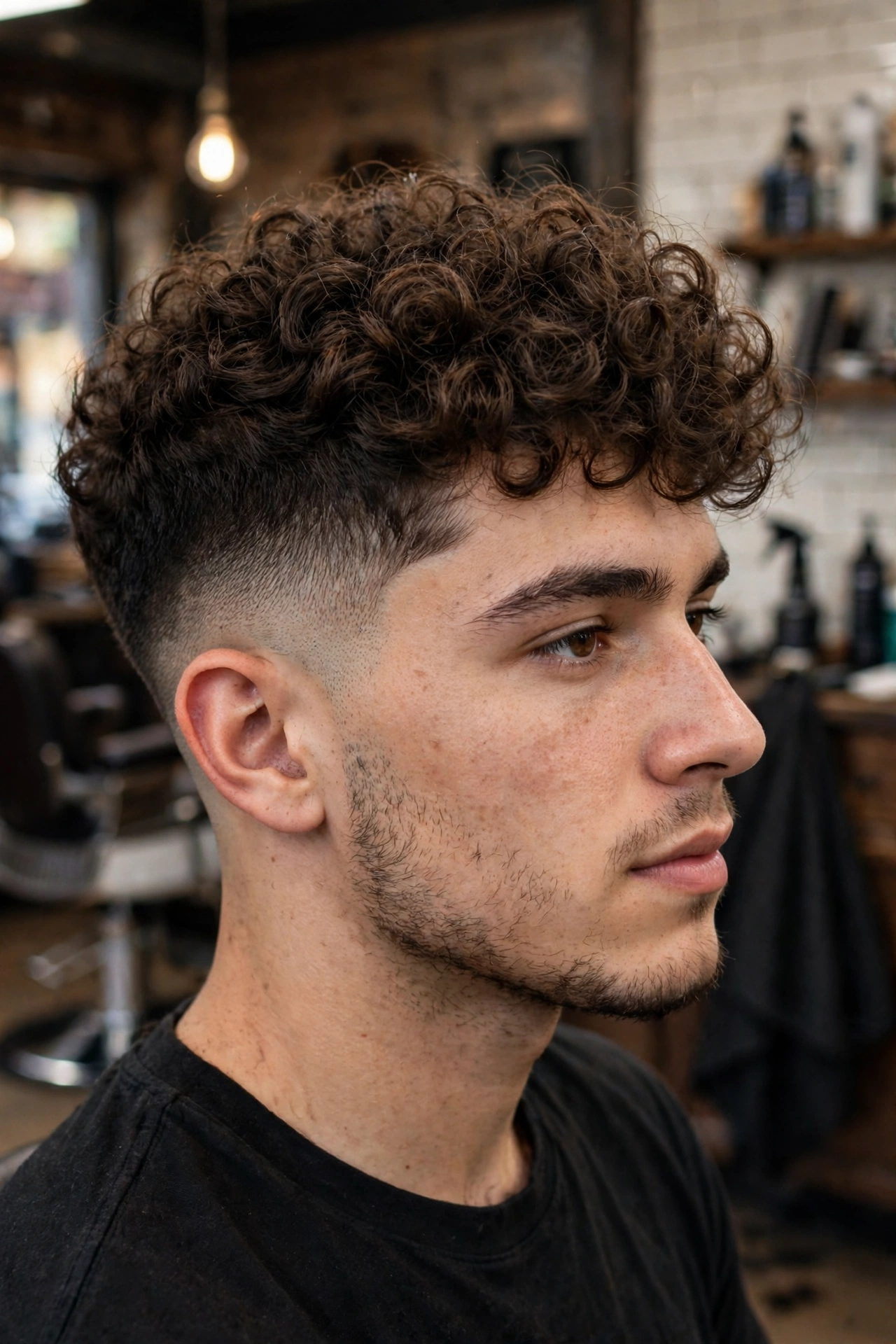
Type “taper fade” into any search bar and you will find a hundred photos that all look slightly different — some soft and classic, some sharp enough to cut glass. That is because “taper fade” is not one haircut. It is a family of cuts built on one idea: hair that gradually shortens toward the edges, with no hard lines.
This is the complete guide. Every taper type, the numbers behind them, who each one suits, and a simple way to choose the right one before your next barber visit.
What Is a Taper Fade, Exactly?
A taper is a gradual transition from longer hair to shorter hair. In a taper fade, that transition happens at the edges of the haircut — around the ears and the neckline — while the hair above keeps its length.
Two variables define any taper fade:
- Height — where the taper finishes: low, mid or high.
- Finish — how short the shortest point is: a short guard, or all the way to skin.
Every cut in this guide is just a combination of those two choices, plus whatever you wear on top.
The Three Heights, Compared
Low Taper Fade
The taper sits at the very bottom of the haircut — the bottom inch around the ears and neckline. The most subtle and classic option; the silhouette of your hair barely changes, but the edges look professionally finished. Grows out the slowest and suits almost everyone.
→ Full guide: Low Taper Fade
Mid Taper Fade
The taper rises to the middle of the sides around the ears, taking a little more off while still keeping coverage above. The balanced, most versatile option — sharp enough to notice, soft enough for any setting, and the most requested taper in most barbershops.
→ Full guide: Mid Taper Fade
High Taper Fade
The taper climbs high — close to where a fade would start — removing most of the side bulk while still blending without a hard line. The boldest taper; pairs with dramatic tops and strong styling.
The Finish: Classic Taper vs Skin-Fade Finish
- Classic finish: the shortest point is a 0.5 or 1 guard — a soft shadow of stubble at the edges. Timeless, and the most forgiving grow-out.
- Skin finish: the edges go to bare skin, like the Mid Taper Skin Fade. Maximum sharpness in week one; needs an edge refresh around week two.
Taper Fade vs Fade: The Difference That Matters
A fade removes the sides over a large area with a clear blend line; a taper only works the edges and keeps the side coverage. If your haircut still looks like “your hair, but tidier,” it is a taper. If the sides are visibly short and sculpted, it is a fade. Neither is better — they are different tools. Tapers read classic and professional; fades read modern and bold.
Guard Numbers, Translated
Guards are measured in eighths of an inch:
| Guard | Length | Where it appears in a taper |
|---|---|---|
| 0 / skin | 0 mm | Skin-finish edges only |
| 0.5 | ~1.5 mm | The shortest classic taper edge |
| 1 | 3 mm | Lower blend zone |
| 2 | 6 mm | Upper blend into scissor work |
| 3–4 | 10–13 mm | Short tops (crops, buzz styles) |
With tapers, your barber blends by eye and lever as much as by guards — which is why reference photos beat numbers when you describe the cut.
Choosing by Face Shape and Hair Type
- Round face: mid or high taper + height on top, to lengthen the outline.
- Square face: any taper; a low taper keeps the natural strength of the shape.
- Long face: low taper and less top height, to avoid adding length.
- Receding hairline: low or mid taper with a fringe or textured crop on top.
- Curly / coily hair: tapers are ideal — full texture on top, edges framed. See our guide to the Mid Taper Fade for Black Men for waves, sponge tops and line-up advice.
- Fine hair: classic finish (not skin) — skin edges can make fine sides look thinner.
Maintenance at a Glance
| Taper type | Full re-cut | Edge refresh |
|---|---|---|
| Low taper | 4–5 weeks | Optional |
| Mid taper | 3–4 weeks | Every 2 weeks (optional) |
| High taper | 3 weeks | Every 2 weeks |
| Skin finish (any) | 3 weeks | Every 1–2 weeks |
Keeping edges tidy at home only needs a lever clipper and a detail trimmer — our Best Clippers for a Taper Fade guide covers what to buy and how to blend without lines.
How to Ask for a Taper Fade (The Universal Script)
“A [low / mid / high] taper fade, [classic / skin] finish, taper around the ears and neckline, keep the coverage on the sides. [Style and length] on top, [natural / sharp] hairline.”
Then show a photo — front, side and back. That combination gets you the pictured cut in almost any barbershop in the world.
Taper Fade FAQs
How much does a taper fade cost?
Typically the same as a standard cut at your barbershop — tapers are not usually priced as a premium service, though skin finishes and line-ups can add a small fee.
Is a taper fade good for school or a conservative office?
It is the safest stylish cut there is. A low or mid taper with a classic finish passes in any dress code.
Can a taper fade fix a bad fade grow-out?
Often yes — a taper reframes the edges while the faded sides grow back to even length. Ask your barber to “convert it to a taper.”
What is the best taper for a first-timer?
The mid taper with a classic finish: noticeable, versatile, forgiving, and easy to adjust higher, lower, or sharper on the next visit once you see how it wears.
Ready to pick yours? Go deeper with the Mid Taper Fade, the Low Taper Fade, or the sharp Mid Taper Skin Fade — and follow our boards on Pinterest for photo references to show your barber.
Leave a Reply