
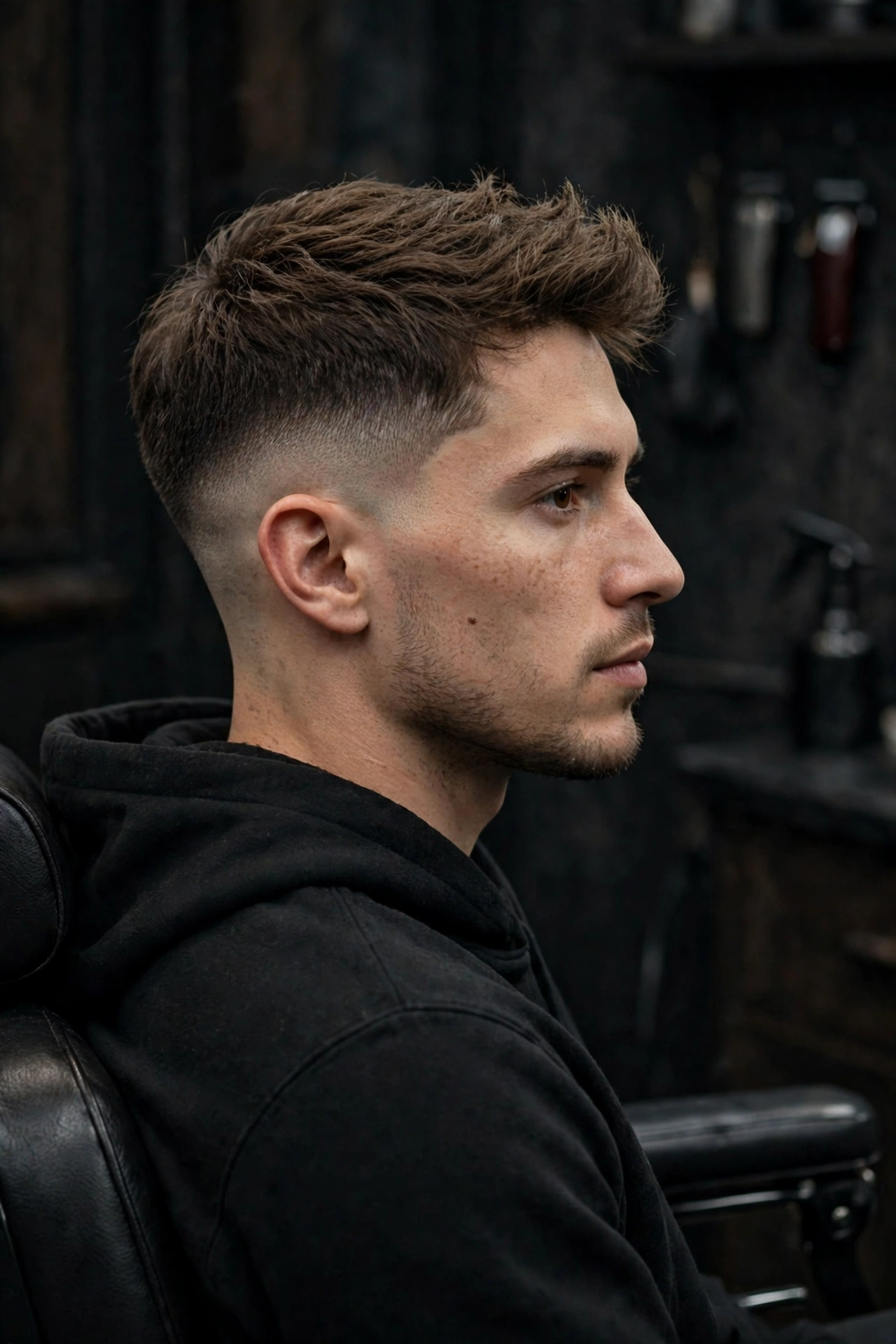
Some haircuts shout. The low taper fade whispers — and that is exactly why it has become one of the most requested cuts in barbershops. It tidies only the very bottom of the haircut: a short, gradual taper around the ears and across the neckline, with all the natural length and weight of your hair left untouched above it.
This guide explains what a low taper fade actually is, how it differs from a low fade, who should get it, and how to ask for it so you leave the chair with the cut you pictured.
What Is a Low Taper Fade?
A taper is a gradual shortening of the hair. A low taper fade places that taper at the lowest possible position — the bottom inch or so of the haircut:
- The sideburns and the area around the ears are tapered down to the skin or near it.
- The neckline is tapered and cleaned up.
- Everything above keeps its natural length — usually scissor-cut, with real coverage over the sides of the head.
The effect: from a distance it looks like a classic, well-kept haircut. Up close, the edges are so clean that the whole style looks intentional and sharp.
Low Taper Fade vs Low Fade
The names sound interchangeable, but the cuts are different:
- Low fade: the sides are clipped short over a much larger area, with a visible blend line that drops low around the ear. More contrast, more skin, faster messy grow-out.
- Low taper fade: only the edges are tapered. The sides keep their length and bulk, so the silhouette of your haircut barely changes — it just gets a polished frame.
Choose the low fade if you want a modern, high-contrast look. Choose the low taper if you want classic, subtle, and easy to live with.
Who Should Get a Low Taper Fade?
- Professionals and students who need a neat cut that never looks extreme.
- Men growing their hair out — a low taper cleans the edges while the top and sides gain length, so the awkward stage looks deliberate.
- Thick or wavy hair that bulks out at the sides; the taper removes the “puff” at the ears without thinning the whole side.
- Curly and coily hair — the taper sharpens the outline (especially with a gentle line-up at the front) while the natural texture stays on top.
- Anyone who hates frequent barber visits. This is one of the slowest cuts to look overgrown.
Styles That Work Best With a Low Taper
- Textured crop / fringe — short, forward-styled top; the taper keeps it tidy.
- Side part and comb-over — the classic pairing; maximum polish, minimum effort.
- Medium-length flow — longer top worn back or loose; the low taper stops it looking scruffy.
- Curls on top — full curls, clean edges. Ask for the taper only, no thinning of the top.
- Buzz cut with a taper — an all-over short cut finished with a low taper looks far more deliberate than a uniform buzz.
What to Ask Your Barber
“A low taper fade — just the edges: around the ears and the neckline. Keep the length on the sides, scissor-cut, no fade up the head. [Length/style] on top, natural finish.”
Three tips that prevent the classic mistakes:
- Say “taper, not fade” twice if you have to. Some barbers hear “low” and still clip a low fade.
- Bring photos from three angles. Especially the side view — that is where taper and fade look most different.
- Decide the hairline. A soft, natural hairline keeps the cut classic; a sharp line-up makes it look more defined and modern, but needs refreshing sooner.
Maintenance: Why This Cut Is So Easy
- Re-cut every 4–5 weeks — the longest interval of any tapered style.
- Neckline tidy at home with a trimmer once a week keeps it looking fresh between visits.
- Styling is optional. Most low taper styles look right with no product at all; a touch of matte clay adds texture to crops and fringes.
- Because the sides keep their length, the grow-out is even — no shelf, no mushroom shape.
Low Taper Fade FAQs
How is a low taper different from a mid taper?
Height. The low taper finishes at the very bottom of the haircut; the mid taper fade rises higher around the ears and takes a little more off the sides.
Does a low taper fade suit a round face?
Yes, especially with some height or texture on top — the clean edges slim the outline without the harshness of a skin fade.
What numbers/guards are used?
Usually the taper blends down to a 0 or 0.5 at the very edge, worked into scissor length. The exact guards matter less than the placement — low and edge-only.
Can I get a low taper with a beard?
Absolutely. Ask the barber to taper the sideburn into the beard so there is no disconnect line.
Want more contrast instead? Compare every type in our Taper Fade Guide, or step up to the Mid Taper Fade.
Leave a Reply