
Veterans Day is on November 11 because that is the day the fighting in World War I ended — an armistice took effect at the 11th hour of the 11th day of the 11th month in 1918. The United States has kept that exact date for over a century: first as Armistice Day, and since 1954 as Veterans Day, honoring all American veterans. In 2026, Veterans Day falls on Wednesday, November 11.
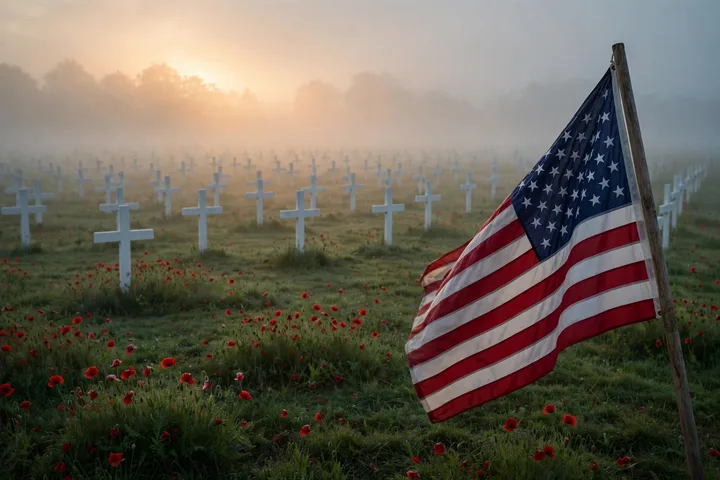
Key Facts
- The date: November 11, every year, regardless of the day of the week.
- The reason: The WWI armistice between the Allies and Germany took effect at 11:00 a.m. on November 11, 1918.
- Original name: Armistice Day — first proclaimed by President Woodrow Wilson in November 1919 and made a federal holiday in 1938.
- Renamed: June 1, 1954, when President Dwight D. Eisenhower signed the law changing “Armistice” to “Veterans,” expanding the honor to veterans of all wars.
- The Monday experiment: From 1971 to 1977, Veterans Day was moved to the fourth Monday in October — the confusion was so great that President Gerald Ford signed a law in 1975 restoring November 11 beginning in 1978.
- Not Memorial Day: Veterans Day honors all who served, living and deceased; Memorial Day (the last Monday in May) specifically honors those who died in service.
The Armistice: The 11th Hour of the 11th Day of the 11th Month
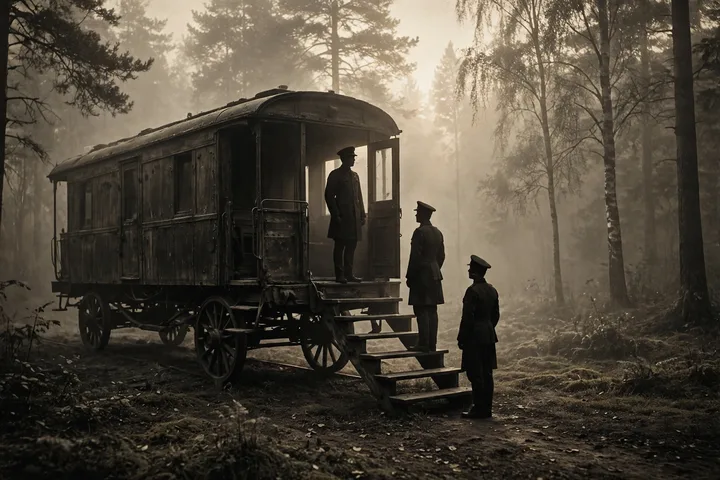
In the early morning hours of November 11, 1918, in a railway carriage in the Forest of Compiègne in France, German and Allied representatives signed an armistice — a formal agreement to stop fighting. It took effect at 11:00 a.m. Paris time: the eleventh hour of the eleventh day of the eleventh month.
The symmetry was accidental, but it made the moment unforgettable. After more than four years of a war that killed some 16 million people, soldiers on both sides heard the guns fall silent at a time stamp that felt almost designed for remembrance. As the U.S. Department of Veterans Affairs notes, November 11, 1918, “is generally regarded as the end of ‘the war to end all wars’” — even though the formal peace, the Treaty of Versailles, would not be signed until June 28, 1919.
November 11 wasn’t chosen — it was remembered. The guns stopped at the 11th hour of the 11th day of the 11th month, and America never let go of that moment.
That is the entire answer to why Veterans Day is on November 11: the date is the anniversary of the moment the Great War ended. Everything since — the parades, the proclamations, the federal holiday — flows from that single morning.
From Armistice Day to a National Holiday (1919–1938)
The first anniversary came quickly. In November 1919, President Woodrow Wilson proclaimed November 11 as the first commemoration of Armistice Day, writing that American reflections on the day would be “filled with solemn pride in the heroism of those who died in the country’s service and with gratitude for the victory.” The original concept called for parades, public meetings, and a brief suspension of business beginning at 11:00 a.m. — a pause at the exact hour the guns had stopped.
For nearly two decades, Armistice Day was observed by custom rather than federal law. Twenty-seven states made it a legal holiday on their own before Congress acted. In 1926, Congress passed a resolution asking the President to call for flag displays and ceremonies each November 11. Finally, on May 13, 1938, an Act of Congress made November 11 a legal federal holiday — “a day to be dedicated to the cause of world peace and to be thereafter celebrated and known as ‘Armistice Day.’” At that point it was still primarily a day honoring veterans of World War I.
Like Thanksgiving, whose date carries its own story (see our history of Thanksgiving), Veterans Day’s November 11 date was inherited from history rather than picked from a calendar.
1954: Why “Armistice” Became “Veterans”
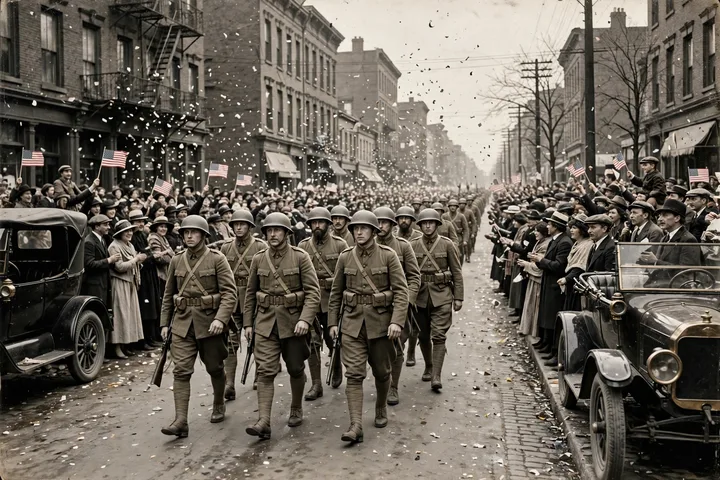
World War II changed everything about the holiday. After the greatest mobilization of soldiers, sailors, Marines, and airmen in the nation’s history — and then the Korean War — it no longer made sense to dedicate November 11 only to veterans of World War I. Veterans’ service organizations urged Congress to broaden the day.
In 1954, the 83rd Congress amended the 1938 Act by striking out the word “Armistice” and inserting “Veterans” in its place. With President Eisenhower’s approval of the legislation (Public Law 380) on June 1, 1954, November 11th became a day to honor American veterans of all wars. Later that year, on October 8, Eisenhower issued the first “Veterans Day Proclamation,” calling on “all veterans, all veterans’ organizations, and the entire citizenry” to join in observance.
The date itself never changed through the renaming. November 11 remained November 11 — the armistice anniversary was considered too historically significant to abandon, even as the meaning of the day expanded. The full official account is preserved in the VA’s History of Veterans Day, which traces the holiday from the 1918 armistice through every legislative change.
Why November 11 Never Moves: The Failed Monday Experiment
There was one period when Veterans Day was not on November 11 — and it proved exactly why the date matters.
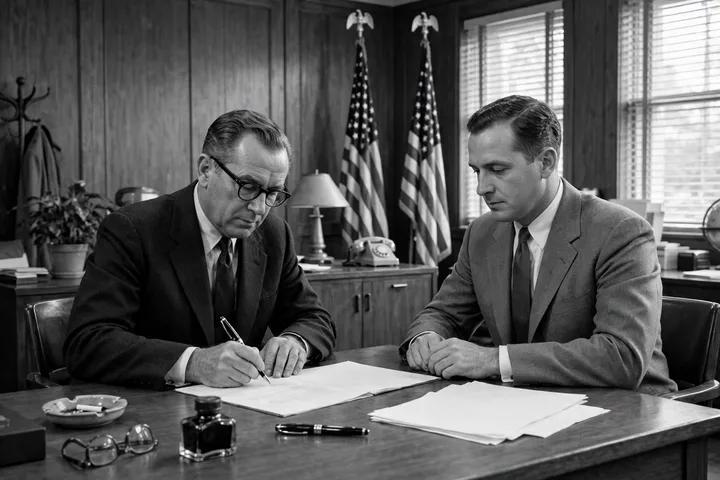
In 1968, Congress passed the Uniform Holiday Bill, moving four federal holidays to Mondays to create three-day weekends: Washington’s Birthday, Memorial Day, Veterans Day, and Columbus Day. The first Veterans Day under the new law was observed on October 25, 1971 — a date with no historical meaning whatsoever. The result, in the VA’s words, was “much confusion.” States refused to go along, veterans’ organizations protested, and the public never embraced it.
For seven years America tried to move Veterans Day to a Monday for a long weekend. The country refused — some dates are not conveniences.
On September 20, 1975, President Gerald R. Ford signed Public Law 94-97, returning the annual observance to November 11, beginning in 1978. Since then, Veterans Day has been observed on November 11 regardless of what day of the week it falls on. In 2026, that means Wednesday, November 11 — no “observed on Friday” shift, no Monday substitute. The VA puts it plainly: restoring the date “not only preserves the historical significance of the date, but helps focus attention on the important purpose of Veterans Day.”
If you’ve ever wondered about other holidays with fixed-but-curious dates, the pattern is familiar — American holidays often carry their history in their dates, just as Thanksgiving lands on the fourth Thursday for reasons worth knowing.
Veterans Day vs. Memorial Day: The Difference Everyone Mixes Up
This is the most confused distinction in the American holiday calendar, so let’s settle it clearly.
Memorial Day mourns the fallen; Veterans Day thanks the living. Confusing the two is the most common mistake Americans make in November.
| Veterans Day | Memorial Day | |
|---|---|---|
| Date | November 11, every year | Last Monday in May (May 25 in 2026) |
| Honors | All who served in the U.S. Armed Forces — living and deceased | Those who died while serving in the military |
| Origin | WWI armistice, 1918 | Civil War remembrance, 1860s |
| Tone | Thankful and celebratory — thank a veteran | Solemn and mournful — visit a cemetery, observe the moment of remembrance |
| What to say | “Thank you for your service” / “Happy Veterans Day” | Not “happy” — a quiet “we remember them” fits better |
The VA itself emphasizes that Veterans Day is “largely intended to thank living veterans for their service.” Wishing a living veteran a “Happy Memorial Day” in May misses the point of both holidays — November 11 is their day.
One more detail people get wrong: there is no apostrophe in “Veterans Day.” The VA explains the day does not belong to veterans — it is a day for honoring them. So it’s Veterans Day, not Veteran’s Day or Veterans’ Day.
How Veterans Day Is Observed on November 11
The moment of silence. The tradition begun in 1919 continues: many Americans pause at 11:00 a.m. on November 11 — the exact hour the armistice took effect — for two minutes of silence.
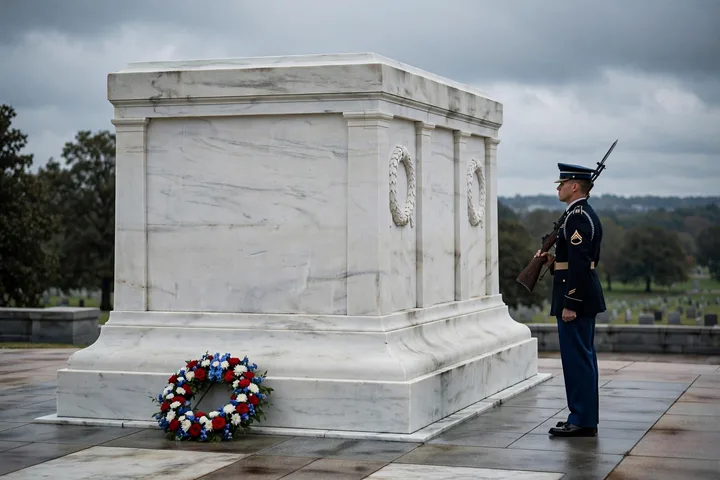
Arlington National Cemetery. The centerpiece of the national observance is the ceremony at the Tomb of the Unknown Soldier, where the President or Vice President lays a wreath. It is one of the most solemn annual rituals in American public life.
Parades. Cities and towns across the country hold Veterans Day parades, from small-town main streets to major city avenues. Parades are central to the day — much like the Macy’s Thanksgiving Day Parade anchors late November, Veterans Day parades anchor the month’s first half, except these marchers are the honored guests rather than the entertainment.
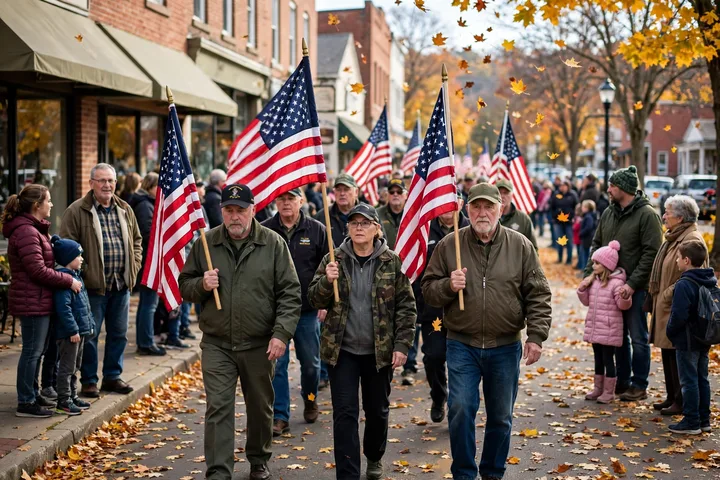
Flags. Federal law and custom call for the American flag to be displayed on government buildings, schools, and homes. Many families with veterans in them fly the flag from their porches.
What’s closed. Veterans Day is a federal holiday: post offices are closed and regular USPS mail is not delivered, federal offices are closed, and most banks observe the holiday. Many private businesses stay open, and quite a few restaurants offer free or discounted meals to veterans and active-duty service members — usually with proof of service such as a VA ID card, military ID, or DD-214.
Frequently Asked Questions
Why is Veterans Day on November 11 instead of another date?
Because November 11, 1918, is when the World War I armistice took effect — at 11:00 a.m., the 11th hour of the 11th day of the 11th month. The date was kept through the 1954 renaming and restored in 1978 after a brief move to Mondays.
Was Veterans Day always called Veterans Day?
No. From 1919 to 1954 it was Armistice Day, honoring primarily World War I veterans. Congress renamed it Veterans Day in 1954 to honor veterans of all wars, after World War II and Korea.
What is the difference between Veterans Day and Memorial Day?
Veterans Day (November 11) honors everyone who has served in the U.S. military, especially living veterans. Memorial Day (last Monday in May) specifically honors those who died in service.
Why did Veterans Day move to October in the 1970s?
The 1968 Uniform Holiday Bill moved it to the fourth Monday in October (first observed October 25, 1971) to create three-day weekends. The change caused widespread confusion, and President Ford signed a law in 1975 restoring November 11 starting in 1978.
Is Veterans Day a federal holiday? What closes?
Yes. Federal offices, post offices, and most banks close. Many private businesses remain open, and restaurants often offer veterans free or discounted meals.
Is it okay to say “Happy Veterans Day”?
Yes — unlike Memorial Day’s solemn tone, Veterans Day is a day of thanks, and greeting veterans warmly is appropriate. “Thank you for your service” is always welcome.
Why is there no apostrophe in “Veterans Day”?
The VA’s official position: the day doesn’t belong to veterans; it’s a day for honoring them. Hence “Veterans Day,” not “Veteran’s Day.”
What day of the week is Veterans Day 2026?
Wednesday, November 11, 2026. It is observed on November 11 regardless of the weekday — there is no shifted “observed” date.
The Bottom Line
So why is Veterans Day on November 11? Because at 11:00 a.m. on November 11, 1918, the guns of the Great War fell silent — and a century later, America still marks the anniversary of that exact hour. The name changed from Armistice Day to Veterans Day in 1954, the meaning widened from one war’s veterans to all of them, and one attempt to move it for convenience failed within seven years. The date survived because it isn’t arbitrary: November 11 is the history. This November 11, whether you attend a parade, pause at 11 a.m., or simply thank the veteran next door, you’ll know exactly why the day falls when it does.
Leave a Reply