
Yes — you can humidify a room without a humidifier. Simmering water on the stove, hanging damp towels near a heat source, and setting out bowls of water by radiators all release real moisture into the air. These methods work best in one closed room, and an inexpensive hygrometer tells you when you’ve hit the healthy 30–50% range.
If your skin feels tight by February, you wake up with a scratchy throat, or every doorknob delivers a static shock, your indoor air is probably too dry. If you’re wondering how to humidify a room without a humidifier, start here: 12 honest, practical methods that actually work — each with a straight answer about how well it works and what it asks of you. No gadget required, no fake precision, no miracle claims.

Key Facts
- The healthy indoor humidity range is 30–50% relative humidity, according to the U.S. EPA.
- Below 30%, dry air is linked to dry skin, irritated sinuses, static shocks, and wood furniture or floors shrinking and cracking.
- Above 60%, excess moisture encourages mold and dust mites — condensation on windows is your early warning sign.
- A small digital hygrometer is the only reliable way to know your room’s humidity; guessing by feel doesn’t work.
- No-humidifier methods work best in a single closed room, not across a whole house.
- Winter is peak dry-air season, because heating cold outdoor air drops its relative humidity sharply.
Why Indoor Humidity Matters More Than You Think
Humidity is the water vapor in indoor air, measured as relative humidity (RH). In the 30–50% sweet spot, most people feel comfortable and wood furniture stays stable. Much lower brings flaky skin, dry eyes, a sore morning throat, and static shocks.
Properly humidified air also feels warmer at the same thermostat setting, making it one of the genuinely simple ways to make your home more comfortable in winter without touching the heating bill. Dry air pulls moisture from everything it touches — skin, sinuses, hardwood floors.
More isn’t automatically better, though. Past about 60% you invite condensation, musty smells, and mold. The goal is balance — which is why measuring comes before doing.
How to Measure Indoor Humidity (Before You Start)
Every method below works better when you know your starting point. A hygrometer — a small device reading temperature and relative humidity — costs about as much as a pizza and removes all guesswork. Place it at chest height, away from heat, drafts, and windows, and give it an hour to settle.
What to look for:
- A plain digital hygrometer is all most rooms need. Models that record daily highs and lows are genuinely useful — you’ll see how far humidity drops overnight when the heat runs hardest.
- A two-pack lets you compare rooms, which often differ more than you’d expect.
- Skip the fancy stuff. You don’t need Wi-Fi or apps; accuracy within a few percentage points is plenty.
You can’t manage what you don’t measure — a hygrometer is the cheapest home-comfort upgrade you’ll ever buy.
Check readings morning and evening for a couple of days. Under 30% means a real dryness problem; near 40%, one gentle method may be enough. Keep the hygrometer in the room as you try the methods.
How to Humidify a Room Without a Humidifier: 12 Proven Methods
These run roughly from most effective to most passive, and all assume one thing: close the door. Every method works better in a smaller volume of air, so pick the room where you spend the most time — usually the bedroom — and treat that as your project.
The best no-humidifier methods don’t add the most moisture to your home; they add it to the one room where you breathe, sleep, and work.
1. Simmer a Pot of Water on the Stove
Effectiveness: high for nearby rooms · Effort: low, but stay in the kitchen
Fill a large pot two-thirds with water and bring to a gentle simmer for an hour or so — the fastest manual way to put real moisture into the air, drifting into adjoining rooms. Add citrus or cinnamon for a wonderful smell. Never leave it unattended.
2. Hang Damp Towels Near a Heat Source
Effectiveness: high for one room · Effort: low
Soak two large bath towels, wring until they stop dripping, and drape over a drying rack, chair, or radiator. Evaporation lifts room humidity steadily for hours — what a humidifier does, minus fan and filter. Wash towels afterward so they don’t turn musty.
3. Set Bowls of Water Near Radiators or Heat Vents
Effectiveness: moderate and steady · Effort: minimal
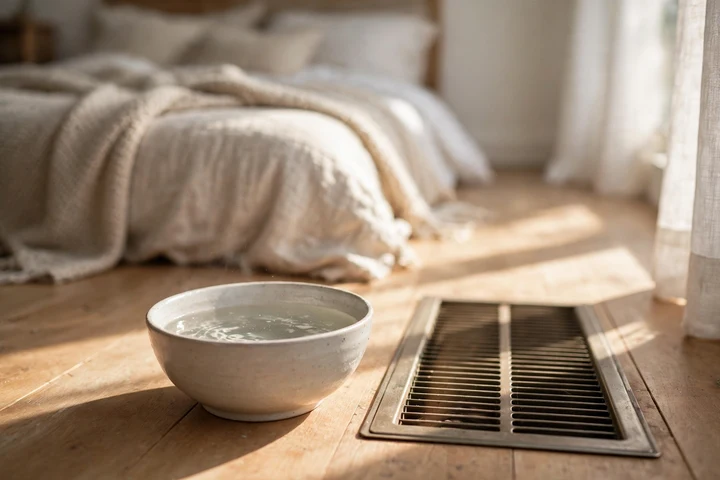
Set wide, shallow bowls of water on or beside radiators, baseboard heaters, or floor vents. Warm air passing over speeds evaporation all day; wide beats deep on surface area. Refill daily — you’ll be surprised how much disappears. Purpose-made radiator trays do the job more neatly.

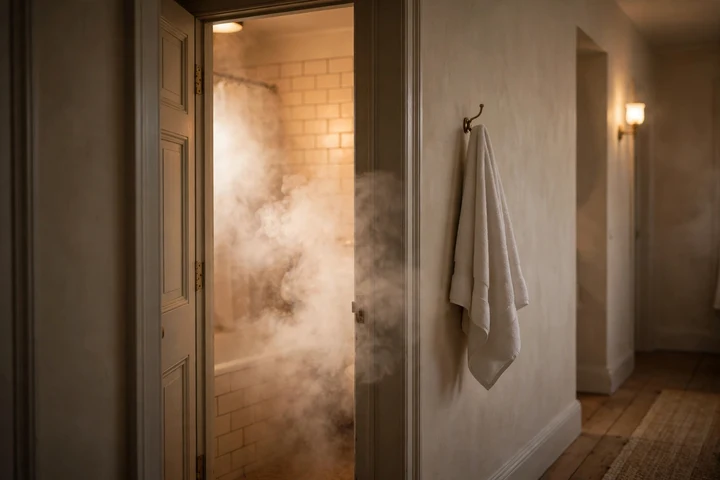
4. Leave the Bathroom Door Open After a Hot Shower
Effectiveness: quick short-term boost · Effort: none
A hot shower turns your bathroom into a steam room; opening the door afterward lets warm, moist air spill into nearby rooms instead of being vented outside. Free, effortless, and it takes the edge off dryness for an hour or two.
5. Boil the Kettle — and Let It Keep Steaming
Effectiveness: quick burst · Effort: minimal
A full kettle releases a visible plume of steam, and leaving the lid off lets it keep breathing moisture into the kitchen as it cools. Small alone, but it adds up alongside stronger methods. Supervised activity, like the simmering pot.
6. Cook Moist Meals More Often
Effectiveness: gentle and cumulative · Effort: none extra
Soups, stews, pasta, steamed vegetables — every simmering pot humidifies your kitchen for free. In winter, leaning into these meals a few nights a week is a legitimate humidity strategy. Leave lids ajar so steam escapes into the room.
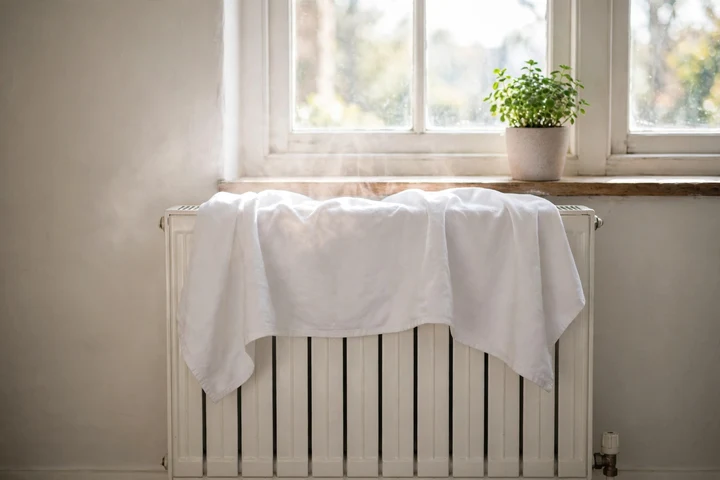
7. Drape a Wet Towel Directly Over a Warm Radiator
Effectiveness: high while the heat runs · Effort: low
Method 2 with a turbocharger: radiator heat drives moisture off the towel far faster than room air. Drape one damp (not dripping) cotton towel over the radiator and re-wet when dry. Don’t cover the thermostat valve, and wash the towel regularly.
8. Let the Dishwasher Steam Out
Effectiveness: small but free · Effort: none
When the dishwasher finishes, crack the door open instead of leaving it sealed. Hot steam escapes into the kitchen and dishes air-dry faster. A minor contribution, but it costs nothing.
9. Group Your Houseplants Together
Effectiveness: gentle · Effort: none after setup
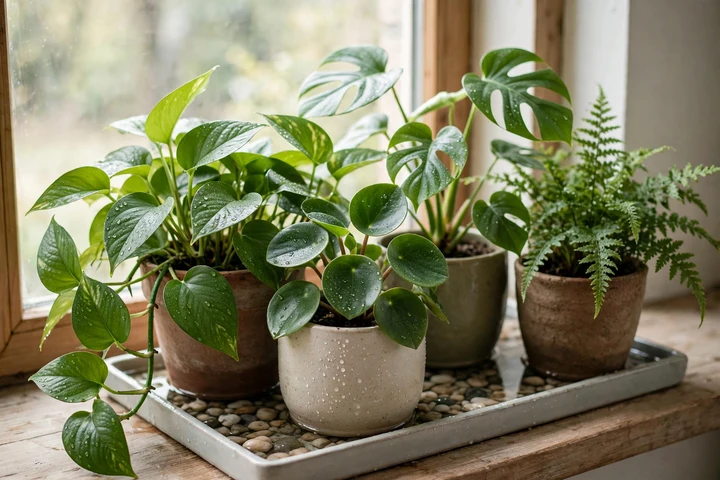
Plants release moisture through their leaves — real, but slow. Honest note: one pothos won’t rescue a parched bedroom. But a generous grouping of leafy plants (ferns, peace lilies, spider plants) creates a slightly more humid microclimate where you sit. More plants, bigger leaves, better results.

10. Put Pebble Trays Under Your Plants
Effectiveness: gentle, localized · Effort: low
Fill a shallow tray with pebbles, add water just below the tops of the stones, and set pots on top. Water evaporates all day, wrapping plants in more humid air and nudging the room too. Top up every couple of days. Pairs perfectly with method 9.
11. Place Water on Sunny Windowsills or a Wood Stove
Effectiveness: slow and passive · Effort: minimal
A shallow dish on a sun-warmed sill or atop a wood stove evaporates steadily with zero attention. It won’t transform a room alone — the slowest method here — but alongside two or three stronger methods, it earns its place.
12. Keep the Moisture You Already Make
Effectiveness: moderate · Effort: one-time setup
Your household already generates water vapor daily — showers, cooking, laundry, even breathing. Much escapes through drafts and over-ventilation. Closing interior doors, sealing window drafts, and not running exhaust fans longer than needed keeps that moisture working for you. These count as small home improvements with an outsized winter comfort payoff. One caveat: don’t seal a room so tightly that condensation appears.
How to Humidify a Room Without a Humidifier in Winter
Winter is when this project matters most. Cold outdoor air holds little moisture, and warming it drops relative humidity sharply — why a house fine in October can feel like a desert in January.
Your winter game plan:
- Pick one room. The bedroom is the best investment — you breathe its air eight hours nightly.
- Stack two or three methods — a bowl by the radiator, damp towels, and post-shower steam cover you around the clock.
- Watch the hygrometer, not the calendar. The driest weeks are the coldest ones, when the furnace runs longest.
- Mind the windows. Over-humidifying shows up first as condensation or frost on cold glass — if you see it, drop a method or two.
- Keep bedroom doors closed at night to concentrate every method’s effect where you sleep.
For more cold-weather comfort projects, browse our broader home improvement ideas — small seasonal tweaks compound.
How to Avoid Over-Humidifying Your Room
Adding moisture is half the skill; knowing when to stop is the other half. Too much brings window condensation, a clammy feeling, musty odors, and eventually mold.
Warning signs:
- Water beading on windows, especially in the morning — the clearest signal to ease off.
- A musty or damp smell that wasn’t there before.
- Hygrometer readings consistently above 60%.
The U.S. EPA recommends keeping indoor humidity below 60 percent — ideally between 30 and 50 percent relative humidity — and notes that condensation signals humidity running high. Their guide to mold, moisture and your home is the authority worth bookmarking on moisture control.
Overshoot? Remove a water bowl or two, open the door for an hour, or run the bathroom fan a while — humidity corrects within hours in one room. If anyone has mold allergies or asthma, stay conservative: hold closer to 40% than 50%.
FAQs About Humidifying a Room Without a Humidifier
How can I tell if my room is too dry without a hygrometer?
Classic hints include static shocks, dry or itchy skin, a scratchy morning throat, and gaps in wood floors or furniture. Useful clues, but imprecise — a hygrometer is the only way to know your number.
How long does it take to humidify a room without a humidifier?
Active methods like simmering water or a damp towel on a warm radiator can change a closed bedroom’s feel within an hour or two. Passive methods like water bowls work over many hours. Give any new combination a full day, then check the hygrometer.
Can I just put a bowl of water in a room to humidify it?
Yes — one of the oldest tricks because it works, slowly. Use a wide, shallow bowl near a heat source, not a cold corner, and refill daily. Alone it won’t fix very dry air, but paired with one stronger method it’s solid.
Do houseplants really humidify a room?
They do, but modestly. Plants release water vapor through their leaves, and a large grouping creates a slightly more humid zone around them. Honest take: plants are a supporting act — well below 30%, you’ll need evaporation methods too.
Is it safe to sleep with a wet towel on the radiator?
Generally yes, with common sense. Use a cotton towel, wring it well, and don’t block the radiator’s thermostat valve. The towel drying overnight is the point — just wash it regularly so it doesn’t turn musty.
What is the fastest way to add moisture to dry air?
Simmering a large pot of water moves the needle fastest, followed by a damp towel over a warm radiator. For an evening of effect with minimal fuss, combine them: simmer while you cook dinner, then hang the towels.
How do I know if I’ve added too much humidity?
Your windows tell you first — condensation or fogging on cold glass means back off. Musty smells and readings above 60% are the other signals. Remove a water source, ventilate briefly, and recheck in a few hours.
Should I just buy a humidifier instead?
Maybe — no shame in it. These methods handle mild to moderate dryness beautifully in one room. But if your hygrometer sits stubbornly below 30%, or dryness aggravates a health condition, a basic cool-mist humidifier is a reasonable, inexpensive upgrade. Consider these methods the free trial.
The Bottom Line
Learning how to humidify a room without a humidifier comes down to three habits: measure first with a hygrometer, concentrate on one closed room, and stack two or three evaporation methods that fit your routine. Simmering water and damp towels near heat do the heavy lifting; bowls, plants, and captured steam fill the gaps.
Stay in the 30–50% range, watch windows for condensation, and adjust as the weather changes. Dry winter air is among the most fixable comfort problems — and now you have twelve ways to fix it without buying a machine.
Leave a Reply