
Hanukkah vs Christmas: two entirely different holidays: Hanukkah is an eight-day Jewish festival (December 4–12, 2026) commemorating the rededication of the ancient Temple in Jerusalem, while Christmas is the Christian celebration of Jesus’s birth on December 25. They share a season — and a theme of light in winter’s darkness — but differ in religion, story, rituals, and meaning. Here’s the clear, respectful breakdown.

Key Facts
- Hanukkah 2026: begins the evening of Friday, December 4, ends at nightfall on Saturday, December 12 — eight nights.
- Christmas 2026: Friday, December 25 — one day (with Christmas Eve on December 24).
- Religions: Hanukkah is Jewish; Christmas is Christian.
- Core symbols: the nine-branched menorah (Hanukkah) vs. the Christmas tree and nativity (Christmas).
- The common mix-up: In the Hanukkah vs Christmas debate, Hanukkah is often called “the Jewish Christmas,” but it’s actually a minor Jewish holiday — its December prominence in America is largely because it falls near Christmas.
>

Quotable: “They’re both festivals of light in the darkest month — but they light entirely different stories.”
At a Glance: The Differences
| Hanukkah | Christmas | |
|---|---|---|
| Religion | Judaism | Christianity |
| 2026 dates | Dec 4 (eve) – Dec 12 | December 25 |
| Length | 8 days & nights | 1 day (+ Christmas Eve) |
| Commemorates | Rededication of the Temple in Jerusalem (~164 BCE) | The birth of Jesus |
| Central ritual | Lighting the menorah, one more candle nightly | Church services, nativity, tree |
| Key foods | Latkes, sufganiyot (fried in oil) | Roast meats, cookies, Christmas pudding |
| Gifts | Small gifts/gelt across 8 nights (modern custom) | Gifts exchanged on Christmas morning |
| Greeting | “Happy Hanukkah” / “Chag Sameach” | “Merry Christmas” |
| Religious weight | Minor holiday in Judaism | One of Christianity’s two holiest days |
The Stories Behind Them
Hanukkah celebrates events from around 164 BCE, when Jewish rebels (the Maccabees) recaptured the Temple in Jerusalem from Seleucid rule and rededicated it. According to tradition, the Temple’s menorah had only enough pure oil for one day — yet it burned for eight, until new oil could be prepared. That’s why the holiday lasts eight nights and why foods fried in oil dominate the table.
Christmas celebrates the birth of Jesus of Nazareth in Bethlehem, as told in the Christian Gospels — the nativity story of Mary, Joseph, the manger, shepherds, and wise men. For Christians, it’s one of the two central holy days of the year (alongside Easter), marking the incarnation at the heart of the faith.
Dates: Why One Moves and One Doesn’t
Christmas is fixed: December 25 every year on the Gregorian calendar. Hanukkah follows the Hebrew lunisolar calendar, always beginning on 25 Kislev — which drifts between late November and late December on the Gregorian calendar. In 2026 they keep a comfortable distance (Hanukkah ends December 12, Christmas is December 25), but some years they overlap: in 2024, Christmas Day fell during Hanukkah, a combination some interfaith families playfully call “Chrismukkah.”
Rituals and Symbols
Hanukkah’s rituals are home-centered and cumulative: each night the menorah (hanukkiah) gains one more flame, lit after nightfall with blessings; families play dreidel, eat fried foods, exchange small gifts, and place the lit menorah in a window to publicize the miracle.
Christmas’s rituals center on the tree (decorated evergreen), the nativity scene, church services (including midnight Mass on Christmas Eve), carols, stockings, and the exchange of gifts on Christmas morning. Advent — the four weeks before Christmas — is its own season of preparation, somewhat parallel to how Hanukkah’s eight nights build night by night.

Food Traditions
Both holidays are feasts, but the menus tell different stories. Hanukkah food is defined by oil: latkes (potato pancakes), sufganiyot (jelly donuts), and fritters — every bite a reminder of the Temple miracle — alongside brisket, kugel, and rugelach. Christmas food varies by country but typically centers on a roast (turkey, goose, ham, or beef), Christmas cookies and gingerbread, mince pies or Christmas pudding, and eggnog or mulled wine.

Gifts: Different Logics
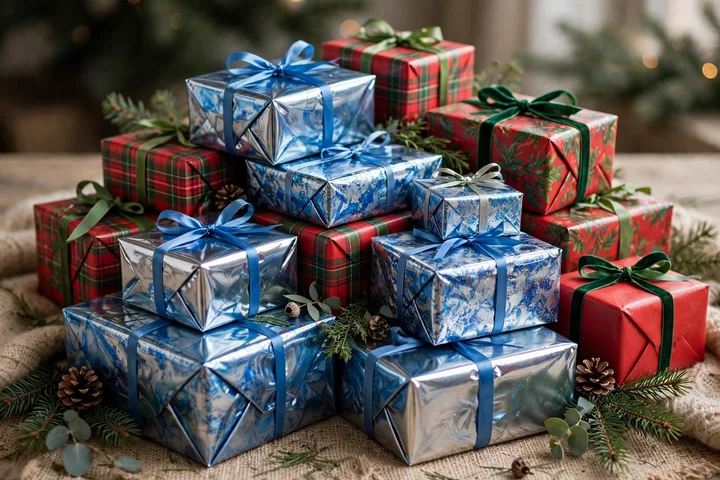
Christmas gifts traditionally arrive all at once — under the tree on Christmas morning, from “Santa” for children. Hanukkah gifts are a newer custom: historically children received gelt (money, now chocolate coins), and the modern practice spreads small gifts across the eight nights. Neither tradition is ancient in its current form — both evolved significantly in the last 150 years, partly in conversation with each other in America.
How to Be Respectful of Both
- Don’t call Hanukkah “Jewish Christmas.” It’s the most common well-meaning mistake. Hanukkah is its own holiday with its own 2,000-year-old story — it just happens to fall in December.
- Greetings: “Happy Hanukkah” and “Merry Christmas” are each perfect in context. “Happy holidays” works when you’re unsure.
- In interfaith homes: many families celebrate both fully — menorah in the window, tree in the living room. The holidays’ themes (light, generosity, gathering) harmonize better than people expect.
- At work or school: acknowledge both on the calendar. Hanukkah’s dates move yearly, so check rather than assume.
What the Two Holidays Share
Put Hanukkah vs Christmas side by side, and the two holidays rhyme in ways worth noticing:
- Light against darkness: both holidays place glowing light at the center of the darkest weeks of the year — candles in windows, lights on trees. Winter light festivals are among humanity’s oldest traditions.
- Gathering: both pull scattered families back to one table. The travel, the cooking marathons, the crowded houses — the logistics of love look the same.
- Generosity: gift-giving, charity drives, and feeding others peak in December across both traditions. Food banks report their biggest donation weeks during the Hanukkah–Christmas stretch.
- Children at the center: dreidel games and Santa mythology both exist to make children’s eyes widen. December belongs to kids in both traditions.
- Food as memory: latkes and Christmas cookies do the same work — one bite and you’re seven years old again at a grandparent’s table.
None of this makes them the same holiday. But it explains why December feels like one long festival of warmth even to people who celebrate neither — the themes are universal enough to borrow, and the month’s short days make every lit window feel like an invitation. Britannica’s entries on both holidays trace how each evolved its modern form largely in the last two centuries.
Celebrating Both: The Interfaith December
Millions of households celebrate both holidays, and they’ve worked out the choreography:
Separate the symbols, share the season. The menorah and the tree don’t compete — they occupy different symbolic space. Many families light Hanukkah candles in the window and keep the tree in the living room, giving each tradition its own stage.
Let the calendar help. In 2026 the holidays are two weeks apart, so each gets its own spotlight: eight nights of Hanukkah first, then Christmas. In overlap years, families often designate specific evenings for each — Hanukkah candles before the Christmas Eve dinner, for example.
Teach both stories honestly. Kids handle “two holidays, two stories” better than adults fear. The Maccabees’ courage and the nativity’s hope are both worth telling straight, without blending them into one mushy “holiday season” tale.
Respect the boundaries each family sets. Some interfaith families celebrate both fully; others choose one primary tradition while respectfully acknowledging the other. There’s no single right answer — only the one the family actually believes and enjoys.
The food is the easy part. Latkes on night three, Christmas cookies on the 24th — nobody has ever objected to this arrangement. And when guests ask questions about either tradition, answering simply and warmly beats a lecture every time.

Frequently Asked Questions
Is Hanukkah the Jewish Christmas?
No. Hanukkah is a Jewish holiday commemorating the Temple’s rededication over 2,000 years ago; Christmas is the Christian celebration of Jesus’s birth. Hanukkah only looks like a “major” holiday because it falls in December near Christmas — in Jewish religious terms it’s a minor festival.
Do Hanukkah and Christmas overlap in 2026?
No. Hanukkah 2026 runs December 4–12 and Christmas is December 25 — nearly two weeks apart. They do overlap some years, most recently in 2024.
Why is Hanukkah 8 days but Christmas 1 day?
Hanukkah’s eight nights commemorate the Temple oil that miraculously burned for eight days. Christmas celebrates a single event — the nativity — on December 25, though its season (Advent through Epiphany) spans weeks.
What are the main symbols of each holiday?
Hanukkah: the nine-branched menorah, the dreidel, and foods fried in oil. Christmas: the Christmas tree, the nativity scene, Santa Claus, and stockings.
Can a family celebrate both Hanukkah and Christmas?
Yes — many interfaith families celebrate both fully, and the holidays’ shared themes of light and togetherness make them natural companions in December.
Which holiday is older?
Hanukkah is older by over 300 years: its events date to ~164 BCE, while Christmas as a December 25 celebration developed in the 4th century CE — a gap of roughly five centuries.
Leave a Reply