
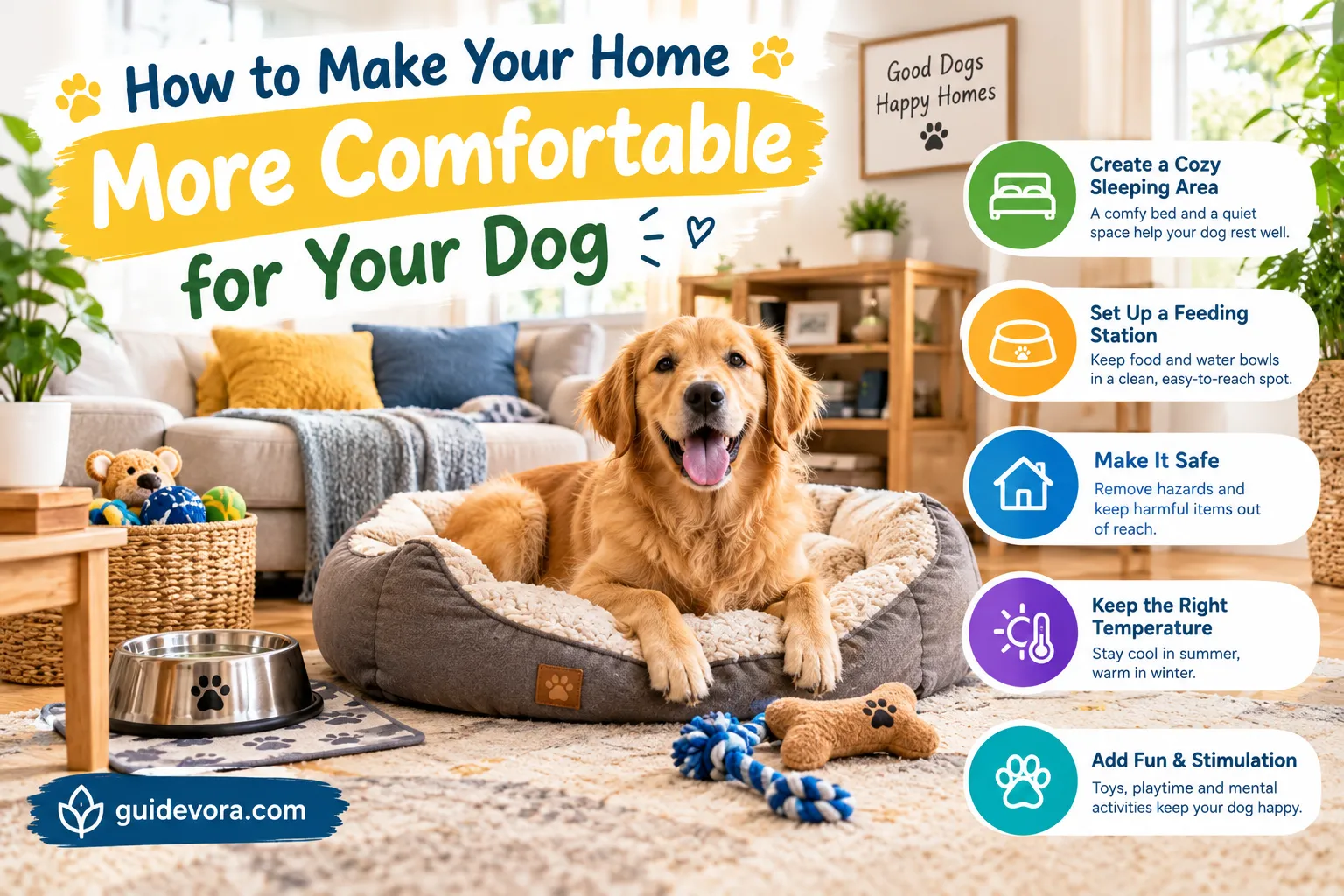
A comfortable home does more than keep your dog happy — it reduces anxiety-driven behaviors like chewing, barking, and accidents, and it supports better sleep and joint health over your dog’s lifetime. Comfort isn’t about buying more dog products. It’s about adjusting temperature, flooring, noise, and space in ways that match how dogs actually experience a home.
Below are 10 practical, research-backed changes, organized from easiest to implement to most involved.
1. Set the Right Room Temperature
Dogs regulate body heat less efficiently than humans, especially flat-faced (brachycephalic) breeds like the French Bulldog and heavy-coated breeds like the Golden Retriever.
- Ideal indoor range: 68–72°F (20–22°C) works for most healthy adult dogs.
- Puppies and senior dogs need slightly warmer conditions, closer to 72–75°F (22–24°C), since they regulate temperature less efficiently.
- Avoid direct heating vents or AC blasts aimed at a dog’s regular resting spot — sudden temperature swings are more disruptive to dogs than a slightly warm or cool steady room.
2. Fix Slippery Flooring
Hardwood, tile, and laminate floors are a leading cause of at-home slipping injuries in dogs, particularly in older dogs and large breeds like Labrador Retrievers.
- Add non-slip area rugs with rubber grip backing along main walking paths, not just in one room.
- Trim nail length regularly — overgrown nails reduce paw traction on hard floors by forcing an unnatural gait.
- Consider paw grip wax or traction socks for senior dogs with mobility issues.
3. Create One Dedicated Safe Space
Every dog benefits from a single, consistent spot that’s theirs alone — not moved room to room.
- Choose a quiet, low-traffic corner, away from entryways and loud appliances.
- Include a bed, water bowl, and one familiar toy or blanket.
- If crate training, the crate itself can serve as this safe space — the AKC notes that a properly introduced crate functions as a den-like retreat, not a punishment tool, when used correctly.
4. Upgrade to an Orthopedic Bed After Age 7
Joint stiffness in dogs often begins earlier than owners expect — many large breeds show early signs of arthritis by age 7, and small breeds by age 10–12.
- Orthopedic beds with 3–4 inches of memory foam reduce pressure on joints and are linked to better sleep quality in aging dogs.
- Replace flattened beds every 12–18 months — compressed foam loses its supportive structure well before it looks visibly worn.
5. Manage Noise and Sound Sensitivity
Dogs hear a far broader frequency range than humans and are more sensitive to sudden or high-pitched sounds — vacuum cleaners, fireworks, thunderstorms, and doorbells are among the most common triggers.
- A white noise machine set to a low, steady volume can mask sudden outdoor noises.
- Keep the safe space away from the loudest zones in the home (kitchen appliances, entryway, TV room).
- For dogs with diagnosed noise phobia, the AVMA recommends discussing anxiety-management options — including pheromone diffusers or, in more severe cases, behavioral therapy — with a veterinarian rather than relying on home fixes alone.
6. Reduce Separation Anxiety Triggers
Separation-related behaviors — destructive chewing, excessive barking, house-soiling — are one of the top reasons pet parents contact trainers.
- Practice short absences before long ones: leave for 5–10 minutes, then gradually extend.
- Leave a worn, unwashed piece of clothing with your scent near the safe space.
- Avoid dramatic greetings or goodbyes — calm departures and arrivals reduce the emotional spike dogs associate with your absence.
7. Keep Food and Water Stations Clean and Consistent
- Use stainless steel or ceramic bowls — plastic can retain bacteria and, in some dogs, contribute to chin acne.
- Keep bowls in the same location at all times; dogs build strong location-based routines around feeding.
- Wash bowls daily — bacterial buildup in food and water bowls can begin within 24 hours of use.
8. Dog-Proof Hardwood Floors and Furniture
- Apply furniture corner guards on sharp edges within a puppy’s or energetic dog’s reach.
- Use washable, dog-friendly fabric (microfiber or tightly woven canvas) on furniture your dog is allowed on.
- Trim floor-level cords and secure them with cord covers — chewed cords are a leading cause of at-home veterinary emergencies in puppies under 12 months.
9. Support Senior Dogs Specifically
Comfort needs shift meaningfully once a dog reaches senior status (roughly age 7+ for large breeds, 10+ for small breeds).
- Add ramps or steps near beds and couches to reduce jumping strain on joints.
- Increase non-slip flooring coverage, since senior dogs lose muscle stability faster than younger dogs.
- Schedule twice-yearly vet checkups instead of annual, as many veterinary guidelines recommend for dogs over age 7, since age-related conditions can progress faster than in younger dogs.
10. Maintain a Predictable Daily Routine
Dogs build a sense of security through repetition, not variety.
- Keep feeding times within the same 30-minute window daily.
- Walk at consistent times, even if the route changes.
- Predictability reduces stress-driven behaviors more effectively than adding new toys or products.
Quick-Reference Comfort Checklist
| Area | Key Adjustment |
|---|---|
| Temperature | Keep home at 68–72°F (72–75°F for puppies/seniors) |
| Flooring | Add non-slip rugs, trim nails regularly |
| Safe space | One consistent, quiet spot with bed and water |
| Sleep | Orthopedic bed after age 7 (large breeds) |
| Noise | White noise machine, avoid sudden loud triggers |
| Routine | Consistent feeding and walk times daily |
Frequently Asked Questions
What temperature is most comfortable for a dog at home? Most healthy adult dogs are comfortable between 68–72°F (20–22°C). Puppies, senior dogs, and short-haired breeds often need it slightly warmer, around 72–75°F.
What is the best flooring for dogs in the house? No flooring is fully slip-proof, but adding rubber-backed area rugs along main walking paths, combined with regular nail trims, significantly reduces slipping injuries on hardwood, tile, or laminate.
How do I create a safe space for my dog at home? Choose one quiet, low-traffic area away from loud appliances and entryways. Add a bed, water bowl, and a familiar blanket or toy. A properly introduced crate can also serve this purpose.
How can I calm a dog that’s anxious when left alone? Practice short absences before longer ones, leave a scented piece of clothing near their resting spot, and keep departures and arrivals low-key. Persistent or severe anxiety should be discussed with a veterinarian.
When should I switch my dog to an orthopedic bed? Around age 7 for large breeds and age 10–12 for small breeds, when early joint stiffness typically begins, though any dog showing signs of joint discomfort can benefit sooner.
Final Thoughts
Home comfort for a dog comes down to five controllable factors: temperature, footing, noise, routine, and a dedicated safe space. None of these require a full renovation — most are single-afternoon fixes that pay off in fewer anxiety behaviors, better sleep, and a calmer dog day to day.
Leave a Reply