

Table of Contents
Giving Tuesday ideas matter most when they fit your real life, not someone else’s idea of generosity. The day falls on Tuesday, December 1, 2026, right after a weekend built around buying, and that timing is the whole point. After Black Friday and Cyber Monday, Giving Tuesday asks a simple question: what can you give back, with the money, time, skills, or attention you actually have? I have watched friends freeze at that question because they assumed giving meant a large donation or a full day of volunteering, and then give nothing at all. A smaller, honest gift, given well, beats a grand plan that never happens.
This guide collects giving Tuesday ideas that work for different budgets, schedules, and households, from a ten-dollar donation to a neighbourhood drive you organise with friends. It also covers how to check a charity before you donate, how to give without money, and how to involve children without turning generosity into a lecture. Giving Tuesday began in 2012 as a day to refocus on giving after the shopping weekend, and it has grown into a global movement, but its best version is still local and personal: one cause you care about, one action you can complete, and one person or family who feels the difference.
Giving Tuesday Ideas: Start With What You Care About
Before you pick an idea, spend five minutes thinking about the cause that stays with you. It might be a food bank you passed on a cold morning, a shelter that helped someone you know, an animal rescue, a school library, or a hospital ward. The cause that moves you is the one you will follow through on, and the one you will still care about in January, when the seasonal appeals have stopped. If you are torn between several causes, pick one for Giving Tuesday and note the others for later in December, rather than splitting a small gift so thinly that it helps no one in a meaningful way.
Think about what you can give, honestly. Money is the simplest gift, and for many charities it is also the most flexible, because it lets them buy exactly what they need, when they need it. Time is just as valuable, especially for food banks, shelters, and community kitchens that rely on volunteers to sort, pack, and serve. Skills can be rarer still: a designer who makes a poster, a driver who delivers parcels, or a cook who prepares a meal can fill a gap that money alone cannot.
Goods matter too, but only when they match a real need, so always check a charity’s wish list before you fill a bag. A donation that matches a need is a gift. A donation that creates sorting work is a chore.
Set a giving budget for the day, just as you would set a shopping budget. It can be ten dollars, fifty dollars, or an hour of your time, and it should be an amount you can give without resentment. Generosity that leaves you stressed about rent is not sustainable, and it rarely leads to a second gift. If money is tight this year, say so plainly to yourself and choose a time-based or goods-based idea instead. Giving Tuesday is about generosity in all its forms, not about proving anything with a receipt.
Give Money Wisely
If you give money, give it to a charity you have checked. Look for clear information about what the charity does, how it spends its income, and how it reports its results. Independent charity evaluators publish ratings and financial details that help you compare organisations, and a charity’s own website should explain its work in plain language, not just in slogans. Be wary of a sudden appeal from an unfamiliar organisation that pressures you to give immediately, especially by text or social media, and never donate through a link you cannot verify.
Matching gifts are one of the best ways to stretch a donation. Many employers match employee donations, sometimes doubling them, and some charities run their own matching campaigns on Giving Tuesday, where a major donor matches gifts up to a set total. Check with your employer before the day, because matching often needs a simple form and a deadline, and it is easy to miss if you leave it until December. A monthly gift, even a small one, can also matter more than a single larger gift, because it lets a charity plan ahead. If you start a monthly gift on Giving Tuesday, choose an amount you can sustain for a year, not just for December.
Consider giving in someone’s honour. A donation made in memory of a grandparent, or as a gift for a friend who has everything, can be deeply meaningful, especially when you include a short note about why you chose that cause. Many charities let you send a card or an email to the person you are honouring, and that note often matters as much as the gift itself. For families, a shared donation can also be a lovely tradition: let each person pick a cause, explain why, and give together. Children who choose a cause themselves learn far more than children who watch adults donate in silence.

Give Time and Skills
Volunteering on or around Giving Tuesday does not need to mean a full day. Food banks often need help for a two-hour sorting shift, shelters need drivers for a single delivery run, and community kitchens need extra hands for one meal service. Contact the organisation a week or two before the day, because popular shifts fill up, and ask what help they actually need. Showing up unannounced with good intentions can still create work for staff who are already stretched, so a short call or email first is part of the gift.
Skills-based volunteering is often overlooked, and it can be the most useful gift of all. A photographer can take portraits for a charity’s appeal, a writer can help with a newsletter, a handyperson can fix a broken shelf at a community centre, and a driver with a car can deliver food parcels to people who cannot travel. If you have a professional skill, offer it for a defined task with a clear end date, rather than an open-ended promise you cannot keep. A charity would rather have two hours of focused help than a vague offer that never turns into a date.
You can also give time closer to home. Check on an elderly neighbour, offer to shop for someone who is housebound, or spend an hour helping a friend who is struggling with paperwork, childcare, or a move. These acts rarely appear in Giving Tuesday statistics, but they are generosity in its most direct form, and they often matter more to the person receiving them than a donation to a distant cause. If you start a habit of checking on one neighbour each week in December, that habit will outlast the day itself.

Give Goods That Are Actually Needed
Food banks, shelters, and clothing drives all need goods, but they need specific goods. Before you pack a bag, check the organisation’s current wish list. Food banks usually need tinned goods, rice, pasta, cooking oil, and toiletries, and they often cannot accept opened or out-of-date items. Shelters often need new, unopened toiletries, warm socks, hats, and gloves in winter, and bedding in good condition. Clothing drives need clean, wearable clothes in sizes people actually wear, not bags of stained or broken items that volunteers must sort and discard.
A reverse advent calendar is a lovely December idea that pairs well with Giving Tuesday. Instead of opening a door each day to receive something, you add one item to a box each day through November, then deliver the full box on Giving Tuesday. It works well for families, because children can choose an item each day and learn why it matters. Keep the list realistic: one tin, one packet of rice, one toiletry item, repeated with care, fills a box faster than you expect, and it arrives at a food bank at exactly the time demand rises.
Toy and gift drives need similar care. Buy a new, unwrapped toy in the age range the drive requests, and keep the receipt in case you need to exchange it. Avoid toys that need batteries you have not included, or that are tied to a specific game or device the child may not own. A book, a craft kit, or a warm hat can be just as welcome as a flashy toy, and it will not be left unused because a part is missing. If you are buying gifts for your own family too, our guide to easy Christmas cookies recipes for beginners offers a homemade gift idea that pairs well with a donated toy or book.

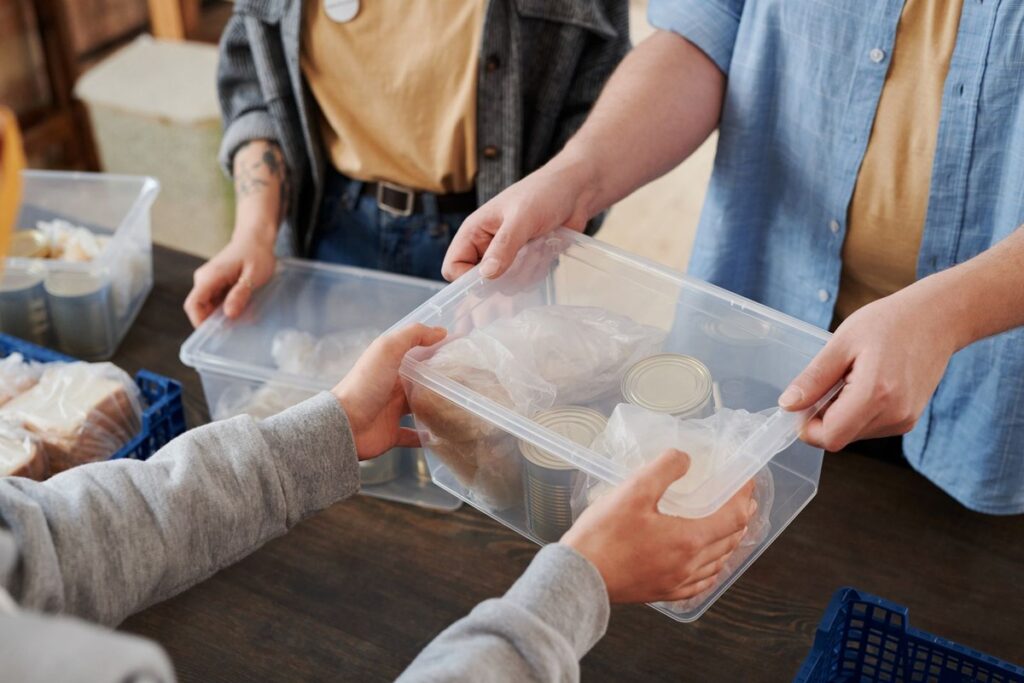
Giving Tuesday Ideas for Families and Children
Children understand generosity best when they can see it and touch it. Let them choose a toy to donate, help pack a food box, or make a card for a neighbour. Explain in simple terms who will receive the gift and why it helps, without turning the conversation into a guilt trip. A child who gives a toy they loved, because they understand another child will love it too, learns something no lecture can teach. Let them keep a toy they truly love as well. Forced giving teaches resentment, not generosity.
A family giving jar works well through November. Each week, everyone adds a small amount, or a note describing a kind act, and on Giving Tuesday the family decides together where the money goes and which kind acts to repeat. Schools can run a similar idea: a class challenge to collect food, books, or warm clothes, with a clear goal and a celebration when it is reached. Keep the focus on the people helped, not on competition between classes, because generosity should not become a contest.
For teenagers, social media can be a force for good on Giving Tuesday if it is used honestly. Sharing a charity’s story, explaining why you support it, and linking to its official donation page can reach people who would never see a traditional appeal. Encourage teenagers to share one cause they care about, with their own words, rather than reposting a generic banner. A personal reason, even a short one, moves people far more than a polished graphic. Remind them never to share personal details, donation amounts, or photos of people receiving help without permission.

Giving Tuesday Ideas for Workplaces and Neighbourhoods
Workplaces can make Giving Tuesday simple and social. A team collection for a local food bank, a matched giving scheme, a volunteer afternoon, or a bake sale where proceeds go to a chosen charity all work, provided participation is voluntary and the cause is chosen openly. A workplace that pressures staff to give, or that publishes donation amounts, turns generosity into performance. The best workplace campaigns let people give in different ways: money, time, goods, or skills, according to what they can offer.
Neighbourhoods can do the same on a smaller scale. A street collection for a shelter, a shared meal for neighbours who live alone, or a rota to check on elderly residents through winter all count as giving, and they build the kind of community that lasts beyond December. If you organise something, keep it simple, set a clear date and a clear ask, and thank everyone who takes part. People are far more likely to help again if the first experience was organised, warm, and clearly useful.
Small businesses can join in too, by donating a product, a service, or a share of one day’s sales to a local cause, or by offering their window, newsletter, or social page to a charity for the day. The key is to check with the charity first, agree on what will happen, and be honest about the amount or share involved. A vague promise to donate proceeds, with no detail, helps no one and can damage trust. A clear, modest promise, kept in full, builds it.

Give Back After the Shopping Weekend
Giving Tuesday sits deliberately after Black Friday and Cyber Monday, and that sequence can be a useful prompt. When your shopping parcels arrive, set aside the packaging, the spare items, and the clothes that no longer fit, and ask whether any of it can be donated. When you clear a cupboard for new gifts, fill a bag for a charity shop at the same time. When you receive a gift you cannot use, consider regifting it to someone who can, or donating it unopened, rather than leaving it in a cupboard. These small clear-outs, done in December, turn the shopping weekend into a giving season.
It is also worth remembering that the need does not end on December 2. Food banks, shelters, and charities face demand all winter, and a gift in January or February, when appeals have quieted, can be especially valuable. If Giving Tuesday inspires you, consider setting a reminder to give again in the new year, or to volunteer for a shift in a quieter month. A habit of giving, even a small one, matters more than a single generous day, however well meant.
For a family evening after the giving is done, gratitude and togetherness pair naturally. Our guide to a thanksgiving prayer for the dinner table may seem like a Thanksgiving piece, but its short graces work just as well for a December meal shared with neighbours or volunteers, and Christmas party games can turn a volunteer thank-you evening into a proper celebration. Giving, gratitude, and celebration belong together, and December gives us a chance to practise all three.
Giving Tuesday ideas work best when they are specific, honest, and finished. Pick one cause, pick one action, and do it well on Tuesday, December 1, 2026. Give money you have checked, time you have booked, goods that match a real need, or a skill that fills a gap. Tell one person why you gave, if that feels right, and let that conversation inspire another gift. You do not need to fix everything, and you do not need to give everything. You need to give something real, to someone real, on a day built for exactly that. For an authoritative starting point on vetted giving and current Giving Tuesday campaigns, see Save the Children’s Giving Tuesday page.
Frequently Asked Questions About Giving Tuesday Ideas
When is Giving Tuesday in 2026?
Giving Tuesday 2026 falls on Tuesday, December 1, the Tuesday after Thanksgiving, following Black Friday on November 27 and Cyber Monday on November 30.
What are the best giving Tuesday ideas if I have no money to spare?
Volunteer for a short shift, donate goods from a charity’s wish list, offer a skill, check on a neighbour, or share a charity’s story with your own words. Time, skills, and attention are all genuine forms of giving.
How do I check a charity before donating?
Look for clear information about its work, spending, and results, and check an independent charity evaluator. Avoid unfamiliar appeals that pressure you to give immediately, and donate through the charity’s official website or a verified link.
Can I give on Giving Tuesday as a family?
Yes. Let each person choose a cause, pack a food box together, or start a giving jar through November and decide together on December 1. Children learn most when they choose and take part themselves.
What goods do food banks need most?
Food banks usually need tinned goods, rice, pasta, cooking oil, and toiletries, but always check the current wish list first, because needs change. Do not donate opened, damaged, or out-of-date items.
Does giving have to happen only on Giving Tuesday?
No. Giving Tuesday opens the year-end giving season, which runs through December 31, and need continues into January and February. A small monthly gift or a volunteer shift in a quieter month can matter even more than a single December donation.
Leave a Reply