
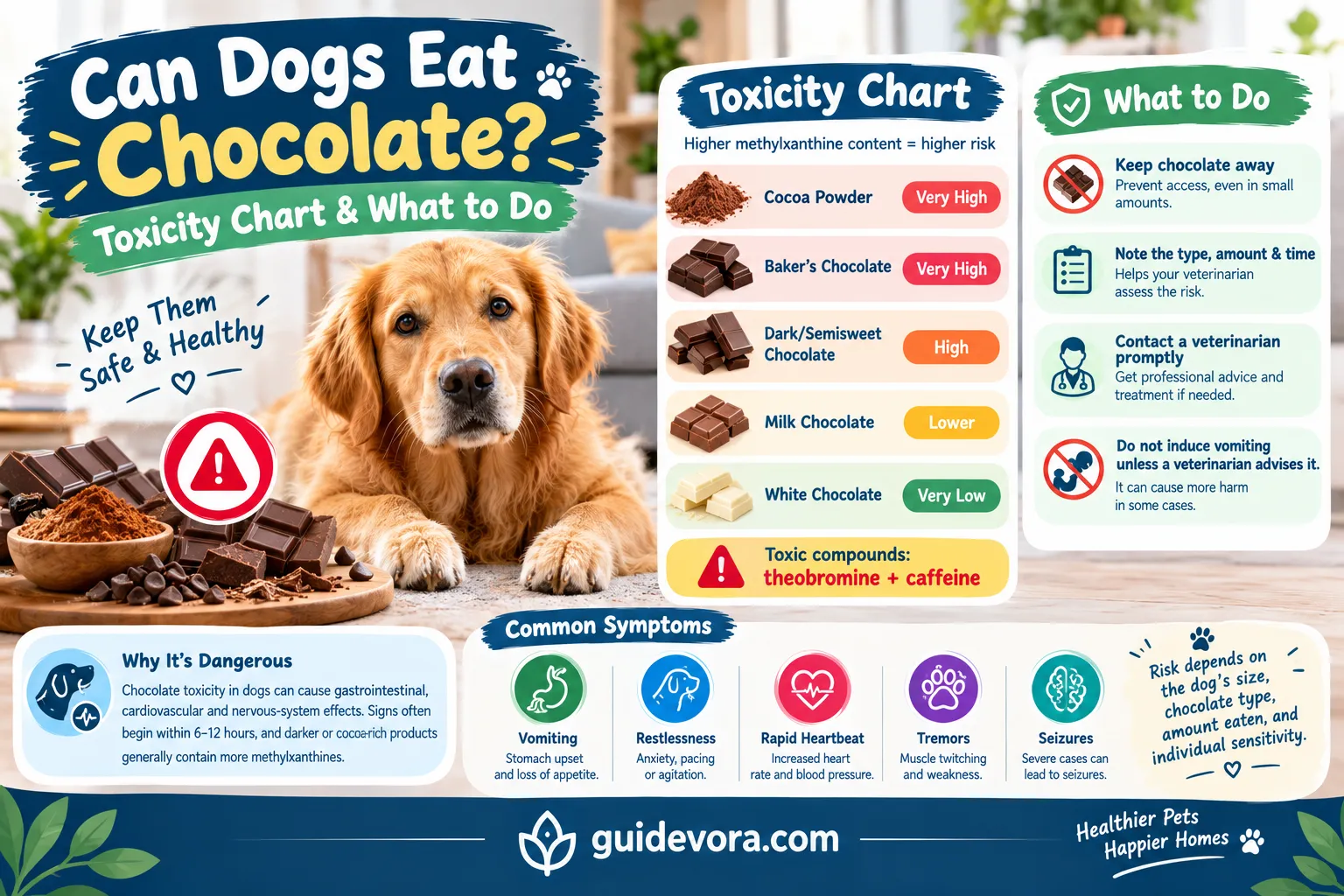
No. Chocolate is toxic to dogs and should never be given intentionally, in any amount. The toxic compound is theobromine, a stimulant related to caffeine that dogs metabolize far more slowly than humans, which allows it to build up to dangerous levels in their system.
If your dog already ate chocolate, skip to “What to Do Right Now” below — the type and amount matter for how urgent this is, and speed matters more than research at this stage.
What to Do Right Now If Your Dog Ate Chocolate
- Don’t wait for symptoms. By the time symptoms appear, treatment is harder and the situation is more serious. Early intervention (such as inducing vomiting) is most effective in the first couple of hours.
- Figure out what and how much. Type of chocolate and estimated amount eaten (in ounces) matter more than almost anything else — dark and baking chocolate are far more dangerous than milk chocolate.
- Call one of these immediately:
- Your veterinarian or the nearest emergency animal hospital
- ASPCA Animal Poison Control Center: 888-426-4435 (consultation fee applies)
- Pet Poison Helpline: 855-764-7661 (consultation fee applies)
- Don’t induce vomiting yourself unless a vet or poison control specifically instructs you how — done incorrectly, it can cause more harm.
- If symptoms have already started — vomiting, restlessness, rapid heart rate, tremors — treat this as an emergency and go to a vet immediately rather than calling first.
How Much Chocolate Is Actually Toxic?
Toxicity depends on three things: the type of chocolate, the amount, and your dog’s body weight. Darker chocolate contains dramatically more theobromine than milk chocolate.
| Chocolate Type | Approx. Theobromine per Ounce | Relative Danger |
|---|---|---|
| White chocolate | ~0–1 mg | Minimal theobromine risk (fat content can still cause GI upset or pancreatitis) |
| Milk chocolate | ~44–64 mg | Lower risk, but large amounts are still dangerous, especially for small dogs |
| Semisweet / dark chocolate | ~150–160 mg | High risk |
| Baking (unsweetened) chocolate | ~390–450 mg | Very high risk |
| Cocoa powder | ~800 mg | Most concentrated, most dangerous common form |
Dose thresholds (per the Merck Veterinary Manual, based on ASPCA Animal Poison Control Center data):
- ~20 mg/kg of theobromine — mild signs (vomiting, diarrhea, increased thirst)
- ~40–50 mg/kg — more serious cardiac effects (rapid or irregular heart rate)
- ≥60 mg/kg — seizures
- 100–200 mg/kg — potentially lethal range
In practical terms: about 1 ounce of milk chocolate per pound of body weight is a potentially lethal dose, while for baking chocolate, the lethal threshold can be roughly 10 times less — meaning a small amount of baking chocolate or cocoa powder is far more dangerous than the same weight of a milk chocolate bar.
A rough real-world example: a 20-pound dog eating a single ounce of baking chocolate has eaten enough to cause serious symptoms; the same dog would need to eat closer to 10 ounces of milk chocolate to reach a similarly dangerous dose. This is exactly why “how much” always has to be answered alongside “what kind.”
Read More: How to Keep Your Pet’s Feeding Area Clean
What Symptoms Look Like, and When
Theobromine stays in a dog’s system far longer than caffeine does in a human’s — clinical recovery can take several days in serious cases. A general timeline:
- First few hours: vomiting, diarrhea, restlessness, excessive thirst, hyperactivity
- 6–12 hours: panting, elevated heart rate, tremors, increased urination
- 12–24 hours (severe cases): cardiac arrhythmia, seizures, and in the most serious cases, collapse
Not every dog progresses through every stage — a small ingestion of milk chocolate often causes nothing beyond mild stomach upset. But because the dangerous doses aren’t dramatically higher than the mild-symptom doses, erring toward a call to your vet or poison control is always the safer choice, even if your dog seems fine.
“My Dog Only Ate a Little — Is That Really a Problem?”
This is one of the most common follow-up worries, and the honest answer is: it depends entirely on the type of chocolate and your dog’s size. A large dog that licked a small smear of milk chocolate frosting is very different from a small dog that ate a corner of a brownie made with baking chocolate or cocoa powder. When in doubt, a quick call to poison control with the chocolate type, estimated amount, and your dog’s weight will get you a real answer in minutes rather than a guess.
Is White Chocolate Actually Safe?
Functionally, yes, from a theobromine standpoint — white chocolate contains only trace amounts, essentially negligible. It isn’t risk-free, though: its high fat and sugar content can still cause vomiting, diarrhea, or in susceptible dogs, pancreatitis, especially with a larger amount. “Not toxic” isn’t the same as “fine in any quantity.”
Why Dogs Can’t Process Chocolate Like We Can
Humans metabolize theobromine quickly enough that a cup of hot chocolate is a non-event. Dogs process it far more slowly, so it accumulates in their bloodstream rather than clearing out — this is the entire reason a dose that would do nothing to a person can be dangerous, or even fatal, to a dog. It’s the same underlying reason theobromine poisoning is sometimes seen in cats, horses, and other animals that share this slower metabolism, though dogs are drawn to chocolate’s smell and sweetness far more often in practice.
Read More: Common Dog Walking Problems and Simple Solutions
Preventing Accidental Exposure
- Store chocolate on high shelves or in closed cabinets, not just “out of reach” on a counter — dogs are notably good at counter-surfing.
- Be especially careful around holidays (Halloween, Easter, Valentine’s Day, winter holidays), when chocolate volume in the house spikes and wrappers get left within reach.
- Watch baking chocolate and cocoa powder specifically — because they’re the most concentrated, they’re the most dangerous per bite even though they’re less commonly left lying around.
- Tell house guests and kids not to share chocolate treats with the dog, even “just a little” — this is one of the most common real-world sources of accidental exposure.
Frequently Asked Questions
Can dogs eat chocolate at all? No. Chocolate contains theobromine, which dogs metabolize much more slowly than humans, allowing it to build up to toxic levels. No amount of intentional feeding is safe, though the danger level from an accidental taste varies by type and quantity.
How much chocolate is toxic to a dog? It depends on chocolate type and body weight. As a general guide, about 1 ounce of milk chocolate per pound of body weight is potentially lethal, while for baking chocolate or cocoa powder, the dangerous threshold is roughly 10 times lower by weight.
My dog ate chocolate and seems fine — should I still call a vet? Yes. Symptoms typically appear within 6–12 hours, so “seems fine” immediately after eating chocolate doesn’t rule out a problem. A quick call to your vet or a pet poison hotline with the chocolate type, amount, and your dog’s weight will tell you whether monitoring at home is enough or whether treatment is needed.
Is white chocolate dangerous to dogs? It contains only trace theobromine and isn’t a significant poisoning risk, but its fat and sugar content can still cause vomiting, diarrhea, or pancreatitis, particularly in larger amounts.
How long does chocolate poisoning last in dogs? Mild cases often resolve within 24–48 hours. More severe poisoning, involving cardiac symptoms, can take several days to fully clear the body and may require hospitalization and monitoring during that time.
What should I do immediately if my dog eats chocolate? Identify the type and estimated amount eaten, then call your veterinarian, the ASPCA Animal Poison Control Center (888-426-4435), or the Pet Poison Helpline (855-764-7661) right away rather than waiting to see if symptoms develop.
Final Thoughts
Chocolate toxicity is one of the most common and most preventable dog emergencies — and also one of the most time-sensitive. If your dog hasn’t eaten any, the fix is simple: keep it stored well out of reach, year-round, with extra vigilance around holidays. If your dog already has, don’t wait and see — call your vet or a pet poison hotline with the type and amount eaten. Acting in the first couple of hours makes a real difference in outcome.
Leave a Reply