

Kwanzaa decorations turn a home into a warm, welcoming space for seven nights of reflection, family and community. Kwanzaa runs from 26 December 2026 to 1 January 2027, and each of its seven days honours a different principle, from unity to faith. The best Kwanzaa decorations are not about spending a lot of money or filling every corner. They are about choosing a few meaningful symbols, placing them where the family gathers, and letting colour, light and harvest foods tell the story of the celebration.
Key Facts
- Kwanzaa is celebrated from 26 December 2026 to 1 January 2027, seven nights in total.
- The colours of Kwanzaa are red, black and green: red for struggle, black for the people, green for hope and the future.
- The kinara, a candle holder with seven candles, is the centrepiece of Kwanzaa decorations.
- One new candle is lit each night, starting with the black candle in the centre.
- Traditional symbols include the mkeka mat, mazao (crops), muhindi (corn) and the kikombe cha umoja (unity cup).
- Kwanzaa decorations work in any home, with bought, handmade or borrowed pieces.
What Makes Kwanzaa Decorations Meaningful
Kwanzaa was created in 1966 as a celebration of African heritage, family and community values. Its decorations are therefore different from purely ornamental holiday decor. Every traditional item carries a meaning, and that is what makes a Kwanzaa display feel special even when it is simple. A bowl of fruit is not just a centrepiece; it represents the harvest and the rewards of working together. Ears of corn stand for children and the future of the community. A woven mat under the display represents history and tradition, the foundation on which everything else rests.
When you decorate with this in mind, you do not need to buy a matching set of everything. Start with the symbols that speak to your family. If you have children, let them help arrange the corn and fruit. If your family gathers around food, make the table the heart of the display. If your living room is where everyone talks in the evening, set the kinara there so the candle-lighting can become a shared nightly moment. To understand the celebration behind the decor, read our guide to Kwanzaa traditions and celebrations.
The Kinara Takes Centre Stage
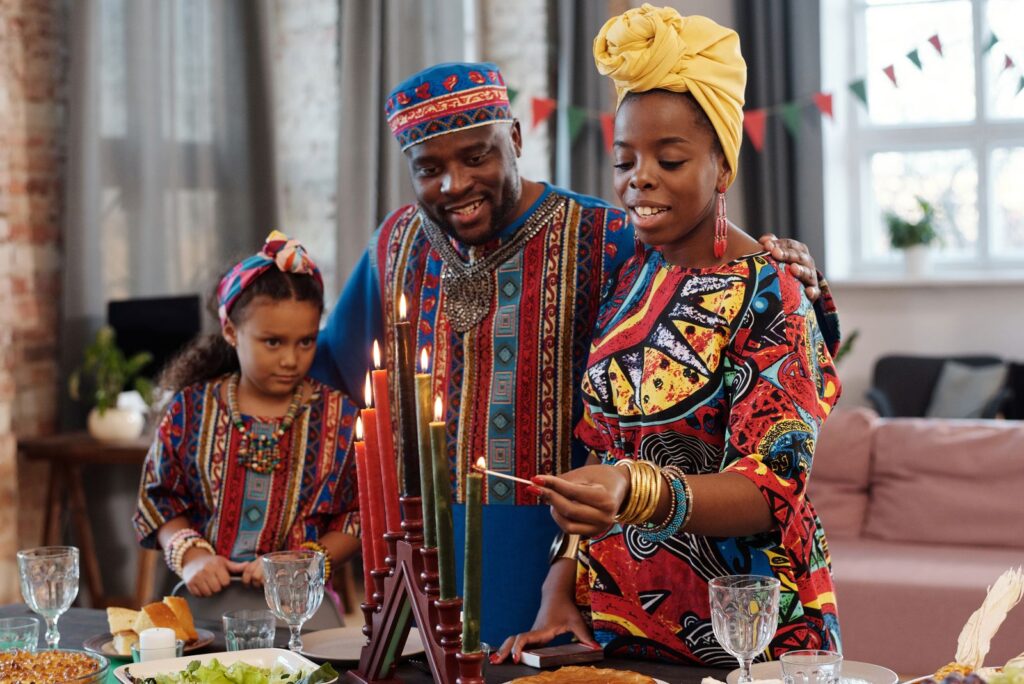
The kinara is the most important piece in any Kwanzaa display. It holds seven candles: three red on the left, one black in the centre, and three green on the right. Each night, a new candle is lit, beginning with the black candle on 26 December and then alternating red and green. By the seventh night, all seven candles burn together, which makes a beautiful sight and a natural focus for the evening’s conversation.
Place the kinara somewhere stable, visible and safe. A sideboard, a mantelpiece or the centre of the dining table all work well, as long as the surface is heat-resistant and the candles are away from curtains, paper decorations and anything that could catch fire. Keep the kinara at a height where everyone can see the flames but small children cannot easily reach them. If you do not yet own a kinara, a simple wooden candle holder can stand in until you find one, and many families treasure a handmade kinara for years.

Setting the Table: Mkeka, Mazao and the Unity Cup
The Kwanzaa table is where symbolism and everyday family life meet. Start with the mkeka, a woven straw or fabric mat, as the base of your display. Everything else sits on the mat, which represents history and tradition. On top of it, arrange the mazao, crops such as fruit, nuts and vegetables, in a bowl or basket. Apples, oranges, grapes and pomegranates look beautiful and last well through the week, while root vegetables and squash add an earthy harvest feel.
Next, add the muhindi, ears of corn, one for each child in the family. If there are no children in the household, one ear is traditionally placed to represent the children of the community. The kikombe cha umoja, the unity cup, sits nearby and is used in the libation ceremony, when water or juice is poured in honour of ancestors and shared values. A simple wooden or clay cup works perfectly; it does not need to be ornate to be meaningful. For the meaning behind each of these items, see our guide to Kwanzaa symbols and meanings.

Living Room, Doors and Walls
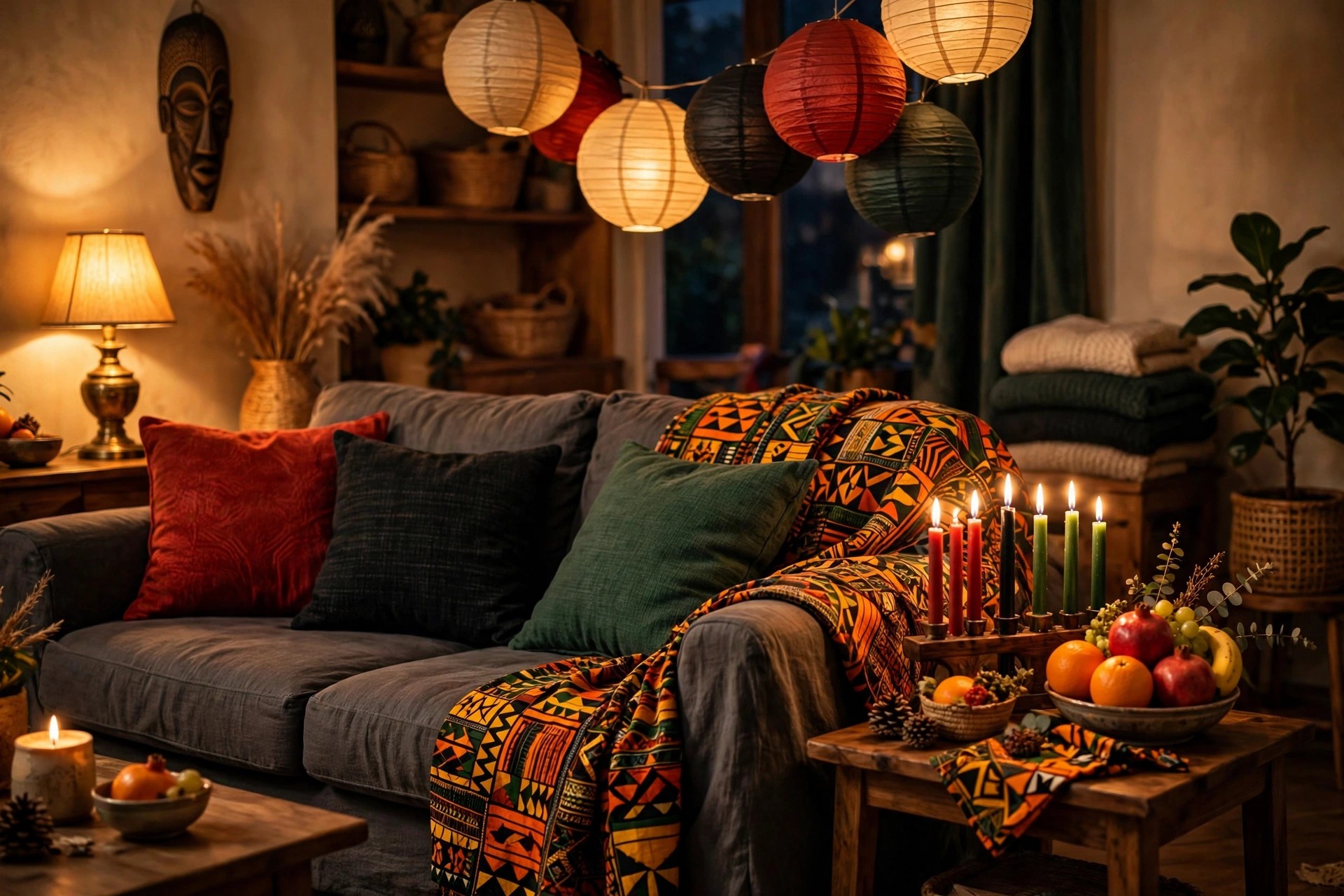
Beyond the main display, small touches around the home make the whole house feel part of the celebration. In the living room, swap a few cushion covers for red, black or green ones, and drape a throw with an African print over the sofa or an armchair. A woven basket filled with fruit on a coffee table, or a small plant in a clay pot, echoes the harvest theme without any extra effort. Families who also mark Hanukkah can find complementary ideas in our Hanukkah decoration ideas.

Simple DIY Kwanzaa Decorations
Handmade decorations are often the most treasured, and Kwanzaa lends itself beautifully to simple crafts. Children can make paper chains in red, black and green to hang across a doorway or along a mantelpiece. Older children might enjoy painting a wooden unity cup, weaving a small paper mkeka from strips of coloured paper, or making candle wraps from patterned paper for unlit display candles.
Kwanzaa Candle Safety
Because the kinara uses real candles every night for seven nights, safety deserves a place in your decorating plans. Always place the kinara on a stable, heat-resistant surface, away from curtains, decorations and draughts. Never leave burning candles unattended, and blow them out before going to bed or leaving the house. Keep matches and lighters out of children’s reach, and trim candle wicks to a short length before lighting so the flames stay steady and small.
It is also worth checking that any candles, holders or electrical decorations you buy are safe and in good condition. The U.S. Consumer Product Safety Commission’s recall and safety information is a useful place to check whether a product has been recalled before you bring it into your home. If you have pets or very young children, consider placing the kinara on a high shelf or behind a protective barrier during the day, and only bringing it to the table for the evening ceremony when adults can supervise.
Kwanzaa decorations work best when they are honest and personal. A lit kinara, a woven mat, fruit, corn and the colours red, black and green are all you truly need. Everything else, from handmade garlands to a dressed-up feast table, is a bonus that should serve the celebration, not overshadow it. Decorate with meaning, gather the people you love, and let the light of seven candles carry the week.
Frequently Asked Questions
When should I put up Kwanzaa decorations?
Put up your Kwanzaa decorations a day or two before 26 December, so the display is ready for the first night’s candle-lighting. Many families set up the kinara, mkeka and symbolic items on 24 or 25 December, especially if they also celebrate Christmas. Taking decorations down on 2 January, after the final night, gives the celebration a clear and tidy ending.
What are the essential Kwanzaa decorations?
The essential items are the kinara with seven candles, the mkeka mat, mazao (crops or fruit), muhindi (ears of corn) and the kikombe cha umoja (unity cup). These five symbols form the heart of the traditional display and represent history, harvest, children and unity. Everything else, such as cushions, garlands and wall art in red, black and green, is optional and should support rather than crowd these central pieces.
What colours are used for Kwanzaa decorations?
Kwanzaa decorations use red, black and green. Red represents the struggle for freedom, black represents the people, and green represents hope and the future. Using all three colours together, balanced with natural materials like wood, straw and clay, creates a display that feels both festive and grounded. Avoid letting one colour dominate, since the three together carry the full meaning.
Can I make Kwanzaa decorations at home?
Yes, handmade Kwanzaa decorations are very popular and often the most meaningful. Paper chains in red, black and green, a woven paper mkeka, painted unity cups and harvest garlands made from dried fruit and greenery are all simple projects. Children can join in with many of these crafts, which makes decorating a family activity in itself. Keep projects simple so they are enjoyable rather than stressful.
Is the kinara the same as a menorah?
No, the kinara and the menorah are different candle holders from different traditions. The kinara holds seven candles for Kwanzaa and represents the seven principles, while the menorah holds nine candles and is used for Hanukkah. They may look similar at a glance, but their colours, candle order and meanings are distinct. Families who celebrate both holidays often display them separately so each tradition is honoured clearly.
How do I keep Kwanzaa candles safe around children and pets?
Place the kinara on a stable, high surface away from curtains and anything flammable, and never leave burning candles unattended. Light the candles only during the evening ceremony when adults are present, and blow them out before bed. Battery-operated candles can be used for daytime displays if open flames are a concern. Checking product recalls before buying candles or holders is another sensible safety step.
Leave a Reply