

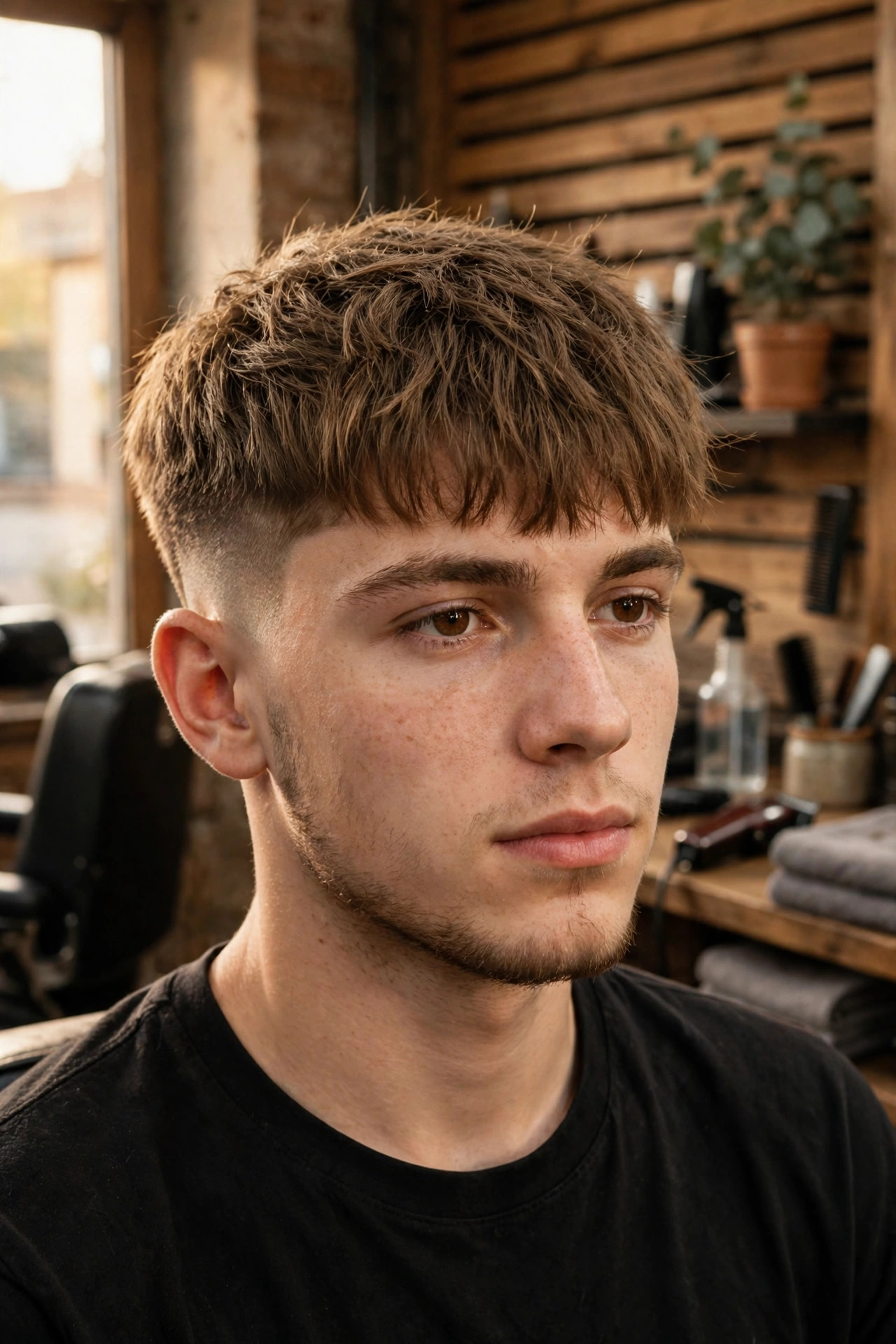
The textured fringe is one of the most popular men’s cuts right now. It pairs a messy, piecey fringe with clean, faded sides, giving you a modern look that works with almost any hair type and needs very little effort. Whether your hair is straight, wavy or slightly curly, it adds movement and character without a strict styling routine.
Unlike sharp, polished styles that need daily precision, the textured fringe is designed to look slightly undone. The top is cut with point-cutting and texturising techniques so the hair falls forward in soft, separated pieces rather than a solid block. The result is a relaxed, youthful style for the office, the gym and a night out that grows out gracefully, so you can stretch longer between barber visits.
Key Facts
- A textured fringe is a forward-styled fringe with choppy, separated pieces and faded or tapered sides.
- It works best on straight, wavy or slightly curly hair.
- It suits most face shapes, especially oval, square and heart-shaped faces.
- Styling takes about two minutes with a small amount of matte clay or paste.
- It needs a trim every 3–4 weeks.
- It is low-maintenance and looks better slightly messy than perfectly neat.
What Is a Textured Fringe Haircut?
A textured fringe keeps length on top — usually 5 to 8 centimetres — while the back and sides are faded or tapered. Instead of a straight, blunt line, the fringe is cut into uneven pieces that fall forward in a relaxed way. Your barber creates this with point cutting and sometimes thinning shears.
The sides are typically a mid or low fade, which keeps the look clean without making it too sharp. A skin fade gives a bolder contrast, while a taper is softer and more classic. The fringe can sit just above the eyebrows or fall slightly over them, and the same shape can be worn neat, pushed to one side, or left deliberately messy.
Who Does the Textured Fringe Suit?
The textured fringe adapts to most face shapes. It works well on oval faces, where almost any fringe length looks balanced, and on square faces, where the soft texture takes the edge off a strong jawline. On heart-shaped faces it adds width at the forehead, balancing a narrower chin. For a round face, keep the fringe slightly longer and angled to one side.
Hair type matters too. Straight hair shows off the choppy texture best, while wavy hair adds natural movement. Slightly curly hair works well if the fringe is kept a little longer so the curls can fall naturally. Very thick hair may need extra thinning, while very fine hair benefits from a shorter fringe and a matte product for grip.
Textured Fringe Variations to Try
The classic textured fringe
The standard version has a mid fade on the sides and a fringe just above the eyebrows. It is the most versatile option and the best starting point for a first try.
The messy textured fringe
This version leans into the undone look, with a longer, choppier fringe and more visible separation between the pieces. It suits wavy and curly hair well and is the lowest-maintenance option — a quick tousle with your fingers is often all it needs.
The longer fringe
A longer fringe that falls over the eyebrows gives a softer, more relaxed feel and works well with the curtain haircut style of longer, face-framing hair. It is a good choice if you like to change your style, since longer hair can be pushed back or swept to the side.
How to Ask Your Barber for a Textured Fringe
The easiest way to get the cut you want is to show your barber a photo. Save two or three pictures of textured fringes you like — ideally on someone with a similar hair type — and talk through what you like about each one. Then ask for a textured fringe with point cutting on top, a mid or low fade on the sides, and enough length left on the fringe to fall forward naturally.
Be specific about the length. Tell your barber where you want the fringe to sit — just above the eyebrows is the safest choice — and whether you want it straight down or angled to one side. Mention how much time you will spend styling it each morning, so your barber can adjust the cut. If you are comparing it with other classic short styles, our guides to the Caesar haircut and the Ivy League haircut will help you decide.
How to Style a Textured Fringe
Styling a textured fringe takes about two minutes, and the goal is controlled mess, not perfection. Start with clean, towel-dried hair that is slightly damp. Rub a pea-sized amount of matte clay or paste between your palms, then work it through the top from root to tip, pushing the fringe forward. Use your fingers, not a comb, to separate the hair into small pieces.
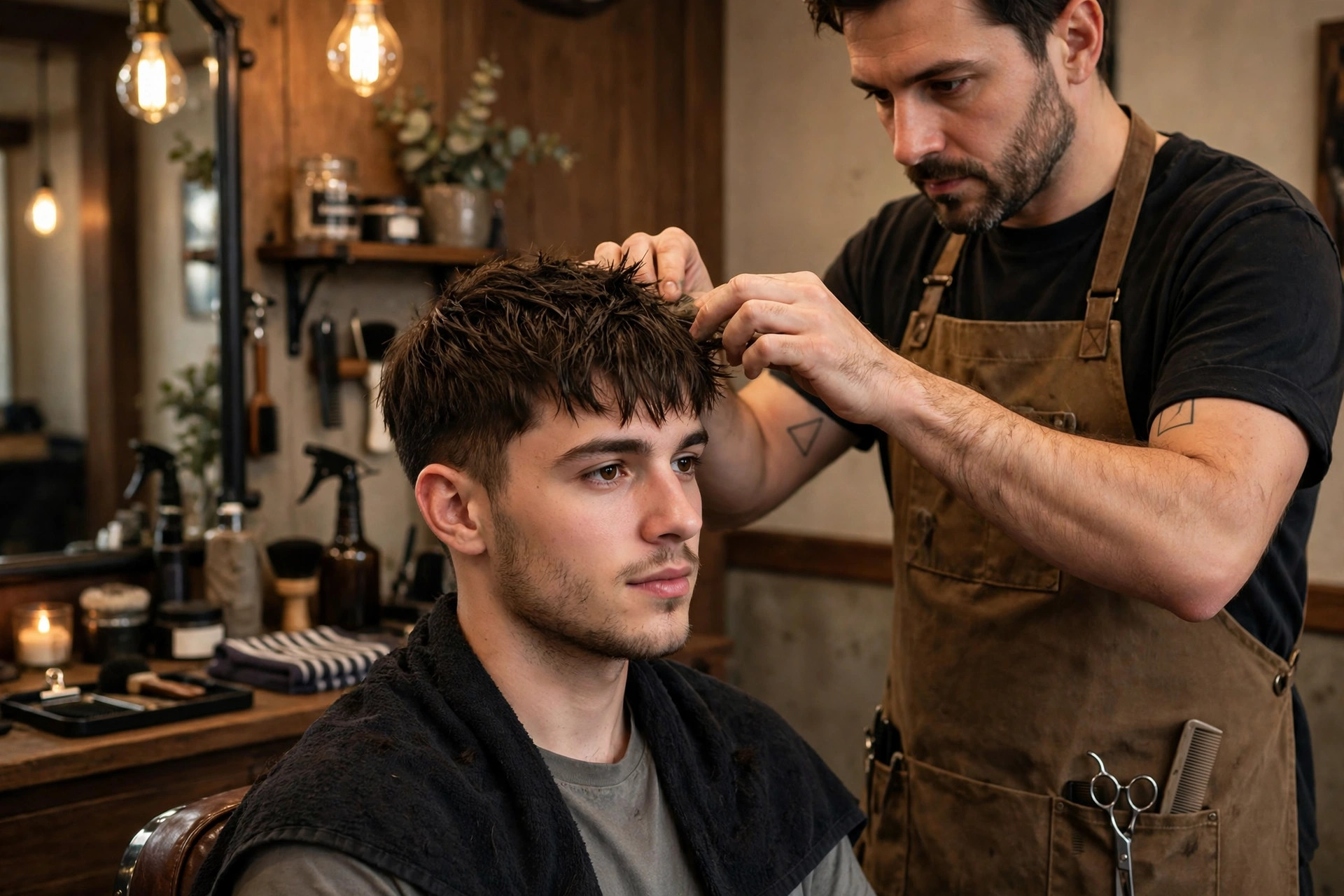
If your hair is straight and falls flat, a quick blast with a hairdryer on low heat while you push the fringe forward adds volume and hold. Finish by pinching small sections between your fingers to define the pieces. Avoid heavy, shiny products such as gel or pomade — they weigh the fringe down and make it look greasy. A matte finish is what gives this cut its modern, effortless feel. When choosing styling products, check what is in them: the U.S. Food and Drug Administration’s cosmetics pages explain how hair and skin products are regulated and what to look for on a label.
Maintenance and Growing It Out
A textured fringe needs a trim every three to four weeks. The fringe grows quickly, and once it starts falling into your eyes it loses its clean look, while the fade loses its sharpness. Between cuts, wash two or three times a week with a gentle shampoo and a light conditioner.
This cut grows out well: a few extra weeks of growth just make it look more relaxed. If you decide to grow your hair longer, the fringe is an easy starting point — you can transition into a longer, curtain-style cut without an awkward in-between phase.
Common Mistakes to Avoid
The most common mistake is using too much product. A large blob of clay or paste will make the fringe heavy, greasy and flat. Start with a pea-sized amount and add more only if you need it. The second mistake is cutting the fringe too short: it looks harsh and gives you nothing to work with, so always err on the longer side — you can take more off, but you cannot put it back.
Another mistake is asking for a fringe that does not match your hair type. Very curly hair cut too short on top can puff up instead of falling forward, and very fine hair with too much thinning can look sparse. Listen to your barber’s advice on what will work. Finally, do not expect the cut to style itself: even a low-maintenance style needs two minutes and a little product to look its best.
Frequently Asked Questions
What is a textured fringe haircut?
A textured fringe is a men’s cut with a forward-styled fringe cut into choppy, separated pieces, paired with faded or tapered sides. The top is usually 5 to 8 centimetres long, and the texture comes from point cutting and thinning shears.
Who suits a textured fringe?
It suits most face shapes, especially oval, square and heart-shaped faces, and works best on straight, wavy or slightly curly hair. It is a good choice if you want a modern, low-maintenance style.
How do I ask my barber for a textured fringe?
Show your barber a photo, then ask for a textured fringe with point cutting and a mid or low fade. Tell them where you want the fringe to sit — just above the eyebrows is safest — and whether you want it straight down or angled to one side.
How do I style a textured fringe at home?
Start with slightly damp, towel-dried hair. Warm a pea-sized amount of matte clay or paste in your palms, work it through the top, and push the fringe forward with your fingers. Pinch small sections to define the pieces, and use a hairdryer on low heat for extra volume.
How often should I get a textured fringe trimmed?
Every three to four weeks is ideal. The fringe grows quickly and starts to fall into your eyes, while the fade loses its sharpness. Regular trims keep the shape clean, though the cut grows out gracefully if you need longer between visits.
Is a textured fringe high maintenance?
No, it is one of the lowest-maintenance modern cuts. Styling takes about two minutes with a little matte product, and the slightly messy finish still looks good on days when you do very little to it. The main upkeep is a trim every three to four weeks.
Leave a Reply