

Learning how to declutter before the holidays is the simplest way to make your home feel calm and ready for guests. The season brings extra people, food, gifts and decorations — and if every cupboard is already full, it feels stressful instead of joyful. Clearing out what you no longer need creates space for what matters.
Decluttering does not have to mean a stressful weekend of chaos. Done room by room, in short sessions, it is surprisingly manageable. This guide walks you through each room, shows you what to do with the things you remove, and explains how to keep the clutter from creeping back.
Key Facts
- Start 3 to 4 weeks ahead to work in short, relaxed sessions.
- Use four boxes per room: keep, donate, recycle, and rubbish.
- If you have not used something in a year, you probably do not need it.
- Declutter before you decorate — it is much easier to find space for holiday items in a clear home.
- Donate early so charities can pass items on before the holidays.
- A clutter-free home is also safer: clear exits, tidy cords, less flammable clutter.
Start With a Plan, Not a Panic
The biggest mistake is starting without a plan and burning out fast. Instead, list the rooms in order of importance — usually the kitchen first, then the living room, the bedrooms, and finally the entryway and bathrooms. Give each room its own day or hour, and set a timer: 30 to 60 minutes per session is enough.
Gather your supplies first: four boxes labelled keep, donate, recycle and rubbish. Work through one small area at a time rather than emptying a whole room at once. Finish each area completely before moving on, so you see progress and stay motivated.
Be honest about each item. Ask three questions: have I used this in the past year, would I buy it again today, and does it have a proper home here? If the answer is no to all three, it goes. Sentimental items are the exception — keep a small box for those and decide on them last. The goal is not a perfect home, it is a home with room to breathe.
The Kitchen: Make Space for Holiday Cooking
The kitchen works hardest during the holidays, so it deserves attention first. Start with the worktops: clear everything off, clean the surfaces, and only put back what you use every day. Appliances you use once a year can live in a cupboard until needed. Our small kitchen organization ideas have more tips for small kitchens.
Next, tackle cupboards and drawers: check use-by dates and throw away anything expired. Group similar items together — baking supplies in one place, spices in another — and use small baskets to stop things sliding around. Go through pots, pans and baking trays: keep the ones you use and donate the duplicates. The same goes for mugs, bottles and food containers — most households have far more than they need.
The Living Room: Clear Space for Guests
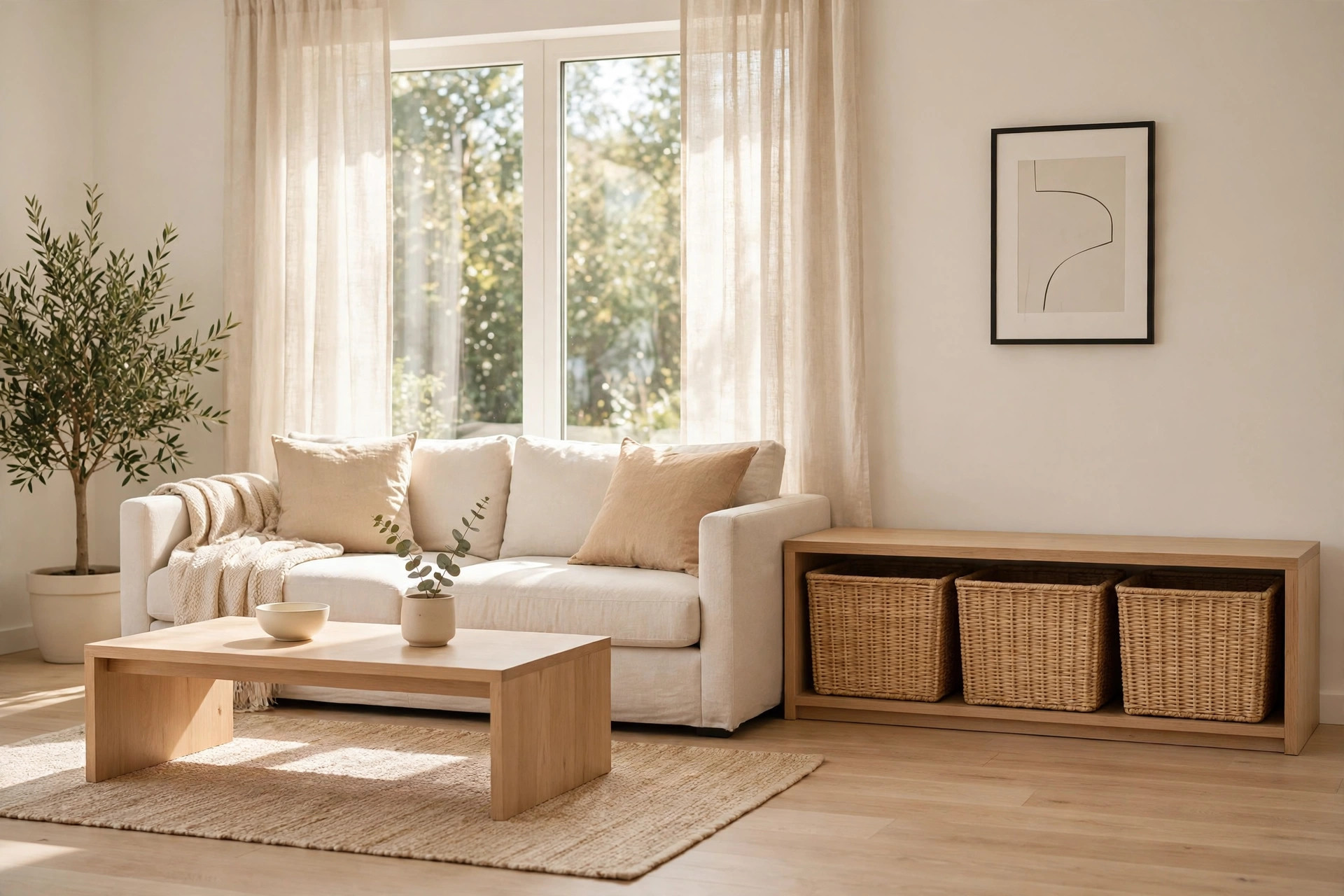
The living room is where guests gather and decorations go on display, so it needs clear surfaces and open floor space. Start with the obvious clutter: old magazines, remote controls, chargers, toys and anything that drifted in from other rooms. Give everything a proper home.
Then look at the furniture. A broken lamp, a wobbly side table, a chair nobody sits in? Moving one unused piece out can transform how spacious the room feels. The same applies to bookshelves: remove a few items rather than adding more, and the ones that remain look better. Less clutter reads as more style, as our guide to 10 simple ways to make your home look more expensive explains.
Finally, plan where the decorations and the tree will go before you bring them out. Measure the space and clear it now. When the decorations come out, you will have a clean stage instead of a last-minute scramble.
Bedrooms and Wardrobes: Room for Guests and Gifts
Bedrooms collect clutter quietly: clothes that no longer fit, books you will never reread, chargers for old devices. Start with the wardrobe, since it makes the biggest difference. Take everything out and sort it into keep, donate and recycle piles. Worn-out clothes go to textile recycling; good-condition clothes go to donation. Be realistic — if you have not worn something in a year, someone else will get more use from it.
Next, clear bedside tables and chest tops — these surfaces collect clutter fast. If you have a spare room, prepare it for guests now: clear a drawer and some wardrobe space, put fresh bedding on the bed, and leave room on the bedside table. You will not be rushing to tidy it the night before they arrive.
Bathrooms and the Entryway: Small Spaces, Big Impact
Bathrooms and entryways are small, but they make a big impression on guests. In the bathroom, check every product: throw away anything expired, empty, or unused for months. Old medicines should go to a pharmacy take-back programme, not in the bin or down the drain. Keep only what you actually use on the counter, and store the rest in a cupboard or basket.
The entryway is the first thing guests see, so give it ten minutes. Clear out coats nobody wears, worn-out shoes, and the pile of bags and umbrellas by the door. Add a basket for shoes and a hook or two for guest coats, and the entrance will feel welcoming rather than chaotic.
While you work through the house, run through your how to winterize your home checklist — sealing draughts, checking the heating, and making sure the house is ready for cold weather as well as guests.
What to Do With It All: Donate, Recycle, Sell
Decluttering only works if the unwanted items actually leave the house. Start with donations: charities and thrift shops welcome good-condition clothes, toys, books and household items, and donating early means they can reach someone who needs them before the holidays. Bag donations as you go and drop them off the same week.
Recycling comes next: paper, cardboard, glass and most plastics go in your regular recycling. Old electronics, batteries and light bulbs need special handling — check your local council’s website for drop-off points. Textiles too worn to donate, including old towels and bedding, can often go to textile recycling banks or be used as cleaning rags.
Selling is worth considering for items with real value: furniture, branded clothing, electronics and collectibles. List them early, since buyers are active before the holidays, and be realistic about prices — the goal is to clear space, not to run a business. Anything unsold within a week or two should be donated. Bag the rubbish and take it out the same day.
Keep It Clutter-Free Through the Holidays
Decluttering once is not enough — the holidays bring a fresh wave of stuff into the house. The trick is a simple rule: one in, one out. For every new gift, decoration or purchase that arrives, one similar item leaves. Children can follow the rule too.
Keep a donation box in a cupboard through the season. When something breaks, is outgrown, or is replaced, it goes straight in the box. Take it to a charity shop whenever it fills up. A quick ten-minute tidy each evening stops clutter from rebuilding.
Holiday safety matters too. A tidy home is a safer home: clear exits, no overloaded sockets, and decorations kept away from heat sources. Ready.gov’s home fires page has practical holiday safety advice, including keeping candles at least 12 inches from flammable materials, turning off lights at night, and watering a real Christmas tree daily. A few minutes of care here protects everything else you have done.

Frequently Asked Questions
How far in advance should I declutter before the holidays?
Three to four weeks ahead is ideal. It lets you work in short sessions — one room at a time — without rushing, gives charities time to pass on your donations before the holidays, and leaves you a clear home well before guests arrive.
What should I do with clothes I no longer wear?
Donate good-condition clothes to a charity shop a few weeks before the holidays so they can be passed on in time. Worn-out clothes go to textile recycling, not the bin — many clothing shops and recycling centres accept them.
How can I stop clutter coming back after the holidays?
Use the one-in-one-out rule: for every new item that arrives, one similar item leaves. Keep a donation box in a cupboard through the season, and do a ten-minute tidy each evening.
Is decluttering before the holidays really worth it?
Yes. A clear home is easier to clean, easier to decorate, safer for guests, and calmer to live in during a busy season. It also makes room for what the holidays bring — food, gifts, decorations and people — instead of squeezing them into an already full house.
Leave a Reply