
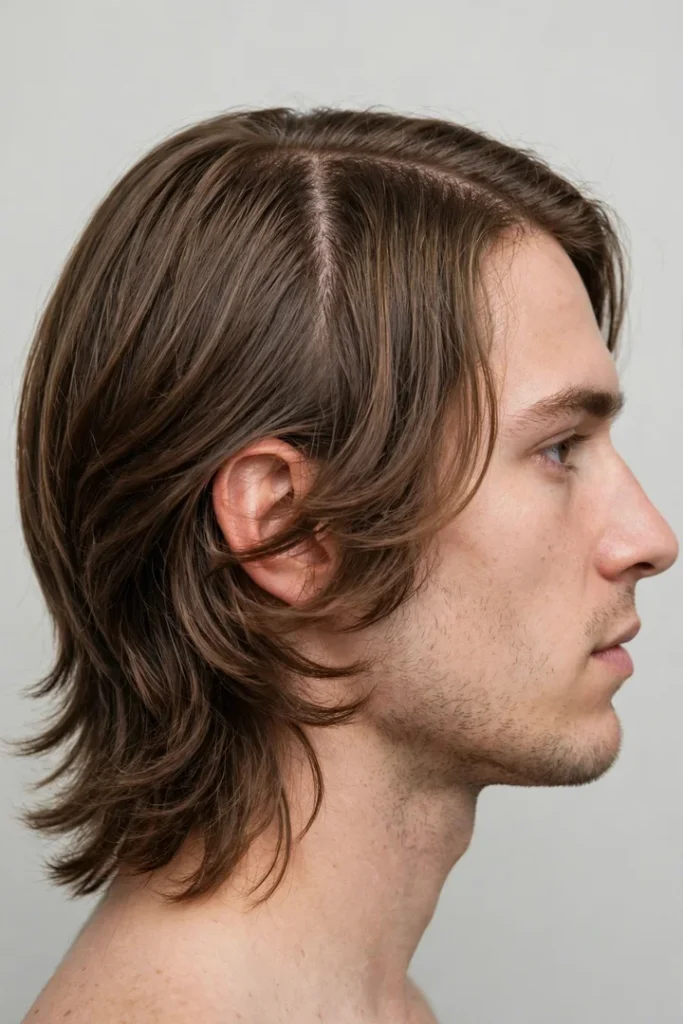
The curtain haircut for men is a medium-length style with a middle part and soft, face-framing layers that fall like curtains on either side of the forehead. Born in the 90s, refined for 2026 with better layering and lighter styling, it suits straight to wavy hair and adds instant character — if you have the length and the patience to grow it.

Key Facts
- What it is: 3–6 inches on top with a center (or near-center) part, layered so the front pieces frame the face and the rest flows back or to the sides.
- Best for: straight and wavy hair with medium to thick density; needs enough length that the front reaches at least the eyebrows.
- Styling time: 5–10 minutes with a blow-dryer and a light cream or salt spray — air-drying works on wavy hair.
- Maintenance: a trim every 6–8 weeks to keep the layers shaped; the part needs training for the first two weeks.
- The 2026 update: less floppy than the 90s original — more deliberate layering, tapered sides that stay neat, and a finish that looks styled rather than accidental.
What Is the Curtain Haircut, Exactly?
Picture the hair parted down the middle (or just off-center), with the front sections long enough to drape past the temples, framing the face the way curtains frame a window. The back and sides are kept long enough to blend — this is not a disconnected undercut with long curtains on top, though some modern versions flirt with that. The classic curtain keeps everything connected: sides around 2–4 inches, top 4–6 inches, all layered so it moves as one piece.
The 90s version — think boy bands and teen dramas — was often one-length and heavy, which is why it could look like a wet mop by afternoon. The 2026 version fixes that with proper layering: shorter pieces around the crown for lift, face-framing layers cut to cheekbone or jaw length, and texturized ends so the hair moves instead of hanging. Same DNA, better engineering.
It’s worth noting the family resemblance: the women’s equivalent is the curtain bang, and the techniques overlap heavily — center part, face-framing layers, soft movement. If you’ve ever admired curtain bangs on someone else, the men’s curtain is the same idea translated to longer overall length.
Quotable: “Curtains are a commitment disguised as a haircut — the style is easy, but earning the length is the real work.”
Which Hair Types Does It Suit?
Honesty first: curtains are picky about hair type, more than almost any cut on this list.
Straight hair — the ideal candidate. Straight hair falls cleanly from a middle part and shows off the layering. Fine straight hair works if there’s enough density; very fine, thin straight hair can look stringy at curtain length, so keep it on the shorter side (eyebrow-length front).
Wavy hair — excellent, arguably better. Natural wave gives curtains built-in movement and volume that straight hair has to manufacture with a blow-dryer. Wavy curtains air-dry beautifully and look intentionally tousled with almost no effort.
Thick hair — great with thinning. Density is your friend for curtains, but untextured thick hair turns into a triangle. Ask the barber to remove weight through the interior while keeping the length.
Curly and coily hair — a different haircut. Tight curls don’t drape; they spring. A true curtain part needs length that falls, which means very long curly hair or a different approach entirely. Curly guys wanting the vibe should look at layered medium cuts rather than forcing a middle part.
Face shapes: curtains flatter oval, oblong, diamond, and heart shapes especially well — the face-framing layers soften strong features and the center part adds symmetry. Round faces can wear them if the top has height and the sides stay close; square faces benefit from the softness around the temples.
What to Ask Your Barber
Curtains are one of the most commonly botched men’s cuts, because “long on top, middle part” is vague enough to go wrong. Be specific:
“I want to grow into curtains — keep the top long, around five inches, with face-framing layers starting at the cheekbones. Keep the sides blended at about three inches, no hard disconnect. I need the weight taken out through the top so it moves.”
If you’re still growing it out, say so: a good barber will shape what’s there and give you a roadmap (“two more months, then we layer the front”). Bring photos of curtains on your hair type — straight-hair inspiration on wavy hair sets everyone up for disappointment.
And set expectations about the awkward middle: between month two and four, the front won’t be long enough to stay parted and you’ll look slightly disheveled. That’s normal. Hats, a little extra product, and patience get you through.
Styling: The Blow-Dryer and Light Product Routine
Here’s the truth the tutorials gloss over: curtains on straight hair need heat to look like the photos. Not a lot — but some. The good news is the routine is simple once the part is trained.
Step 1 — Train the part. For the first two weeks, part your hair down the middle while it’s damp, every single day. Hair has memory, and a lifetime side part won’t surrender in a day. A little styling cream on damp hair helps it learn.
Step 2 — Blow-dry with direction. Rough-dry the hair about 70% while pushing it in the direction of the part — forward and outward from the center. Then, with a vent brush or your fingers, lift at the roots and direct the front pieces away from the face. The goal is volume at the roots, movement through the lengths. Keep the dryer on medium heat — the American Academy of Dermatology advises using the lowest effective heat setting, since repeated high heat weakens hair over time, and curtain wearers blow-dry more than most.

Step 3 — Light product, applied sparingly. A pea-sized amount of light cream, or a few sprays of salt spray on damp hair before drying for texture. Heavy waxes and clays fight the whole concept — curtains should move when you move.
Step 4 — Finish with cold air. A 30-second blast of cool air from the dryer sets the shape and adds shine. Then don’t touch it. Every touch transfers oil and collapses the part.
Wavy-haired guys can often skip the dryer entirely: scrunch in a little cream on damp hair, part it, let it air-dry. If your waves do the work, let them.

Quotable: “The difference between 90s curtains and 2026 curtains is fifteen minutes with a blow-dryer and the wisdom to use half the product.”
Growing It Out: The Timeline
From a short cut to proper curtains takes roughly 6–9 months, and knowing the phases keeps you from quitting:
Months 1–3: The top reaches 2–3 inches. It won’t part yet — wear it as a textured crop for men and let the barber keep the sides tidy. This is the easy phase.
Months 3–5: The awkward phase. The front is long enough to flop into your eyes but too short to stay parted. Push through with light product, occasional hats, and trims that only touch the back and sides.
Months 5–7: The part starts working. The front reaches eyebrow to nose length, the layers get cut in, and suddenly it looks like a haircut instead of a grow-out. This is when the blow-dryer routine starts paying off.
Months 7+: Full curtains. Maintenance mode — trims every 6–8 weeks, same routine, compliments from people who didn’t believe in the plan.
Maintenance Trims: What to Keep, What to Cut
The maintenance trim is where curtains live or die. Every 6–8 weeks, the barber should: reshape the face-framing layers, remove weight from the interior, tidy the neckline and sideburns, and take a whisper off the ends. What they should NOT do: take meaningful length off the top, thin it into wisps, or “clean up” the part area into something structured. If you leave the chair with noticeably shorter curtains, the wrong things were cut.
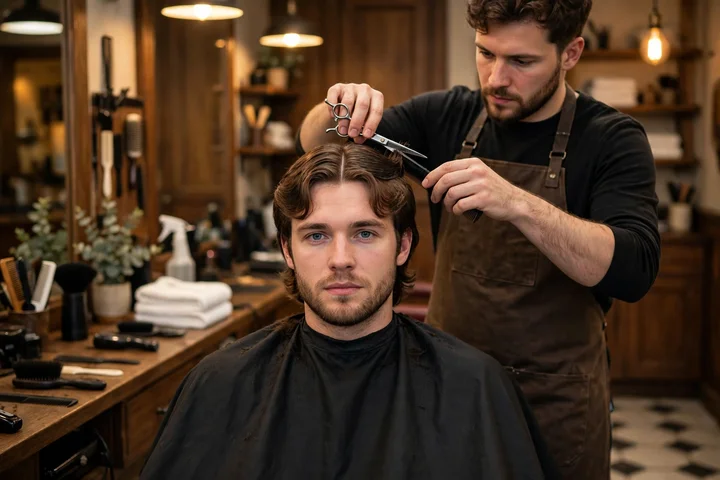
Between appointments, the only DIY allowed is neckline cleanup with a trimmer — and even that, carefully. One overzealous pass up the back of the neck can undo two months of blending.
4 Mistakes That Ruin Curtains
1. Starting without the length. Curtains need a minimum of 3–4 inches in front. Cutting the shape into short hair just gives you a strange bowl cut. Grow first, shape later.
2. The severe middle part. A razor-straight center part on day one looks harsh while the hair is still learning. Start slightly off-center and let it migrate as the length comes.
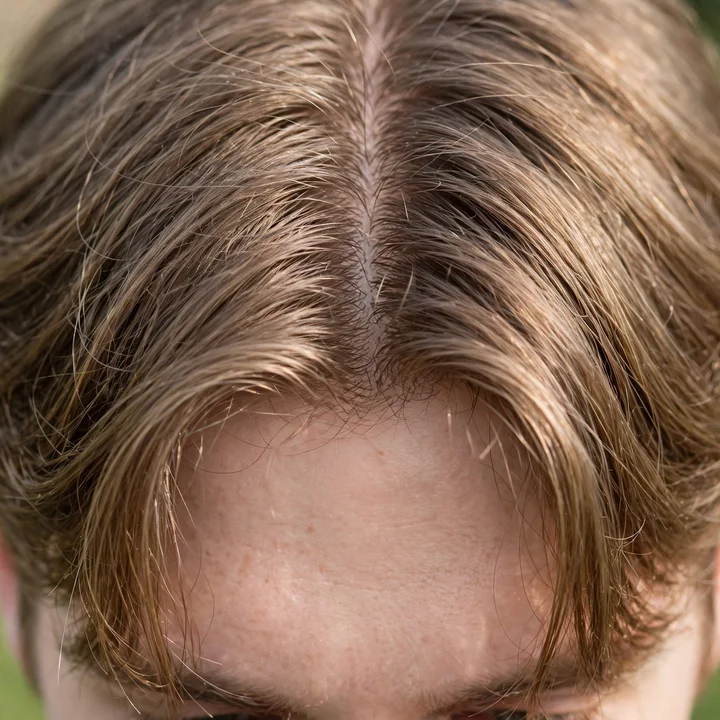
3. Product overload. Heavy product on curtain-length hair equals greasy strings by 2 p.m. Light cream or salt spray, small amounts, roots to mid-lengths — never the ends.
4. Neglecting the back. All the attention goes to the front, and the back grows into a mullet nobody ordered. Keep the back and sides on the trim schedule even when the front is the star.
For those who want medium length with less part-maintenance, the bro flow for men is curtains’ laid-back sibling — similar length, none of the part politics.

Frequently Asked Questions
How long does hair need to be for a curtain haircut for men?
At least 3–4 inches on top, with the front long enough to reach your eyebrows. From a short cut, expect 6–9 months of growing.
Do curtains suit straight or wavy hair better?
Both work. Straight hair gives the clean, classic curtain look but needs blow-drying; wavy hair has natural movement and often air-dries perfectly.
How do I get my hair to stay in a middle part?
Part it while damp every day for two weeks to train it, use a little styling cream, and blow-dry in the direction of the part. Hair has memory — consistency wins.
How often should I trim a curtain haircut?
Every 6–8 weeks: reshape the face-framing layers, remove interior weight, tidy the neckline. Don’t let anyone take real length off the top.
Are curtain haircuts still in style in 2026?
Yes — the 2026 version is more refined than the 90s original, with better layering and lighter styling. It’s a mature, deliberate look now, not a boy-band throwback.
Can I wear curtains if my hair is thinning on top?
It’s risky. Curtains need density to drape well, and a middle part exposes the crown. If thinning is early, shorter textured styles camouflage better.
Leave a Reply