
The bro flow for men is a medium-length haircut — typically 3 to 6 inches all over — worn swept back or to the side with soft layers, so it looks deliberately grown out rather than accidentally neglected. The 2026 version is more refined than the original surf-bro flow: cleaner perimeters, smarter layering, and just enough polish to work beyond the beach.

Key Facts
- What it is: medium-length hair (3–6 inches) with long layers, worn flowing back or loosely to the side — no hard part, no stiff hold.
- Best for: straight to wavy hair with medium to thick density; oval, square, and oblong faces wear it best.
- Styling time: 3–5 minutes — a little cream on damp hair, fingers or a quick blow-dry back, done.
- Maintenance: a shaping trim every 8–10 weeks; the grow-out IS the style, so awkward phases are minimal.
- The 2026 update: tidier than the 2010s original — tapered neckline, controlled volume, and an intentional finish instead of pure bedhead.
What “Bro Flow” Means in 2026
The term peaked in the mid-2010s with surfers and baseball players, and the original version was gloriously unrefined: grow it, push it back, hope for the best. The 2026 bro flow for men keeps the spirit — medium length, natural movement, masculine ease — but adds the structure the original lacked. The sides are kept close enough to frame the face rather than widen it, the back is tapered instead of shaggy, and the top has long layers that direct the hair backward instead of letting it collapse forward.
Think of it as the grown-up version: the same DNA, but it now passes in an office, at a wedding, and in every photo. The key word is “intentional.” The difference between bro flow and “hasn’t had a haircut in four months” is about thirty minutes in a barber’s chair every two months — shaping, layering, and perimeter control that the eye reads as deliberate even when the hair itself looks effortless.
Quotable: “Bro flow is the art of looking like you don’t care, maintained by someone who very much does — your barber.”
It’s also worth noting the women’s parallel: the layered, face-framing movement of a good flow shares technique with cuts like the butterfly haircut — long layers that create flow and volume. Different length, same principle: layers that move.
Who Does It Suit?
Hair type matters most. Straight to wavy hair is the natural home of the flow — it falls back cleanly and holds the shape with minimal product. Thick hair gives the best volume; fine hair can work if there’s enough density, but very fine or thinning hair goes stringy at flow length and is better served shorter. Curly hair can absolutely flow, but it becomes a different aesthetic — bigger, rounder, more volume-forward — and needs a barber who cuts curls with intention.
Face shapes: oval faces are the ideal canvas. Square faces benefit from the softness around the temples balancing the jaw. Oblong faces do well because the flow adds width at the sides. Round faces need caution — volume at the sides widens further, so keep the sides tighter and the top directed back with some height. Heart shapes work if the sides have enough fullness to balance a narrow chin.
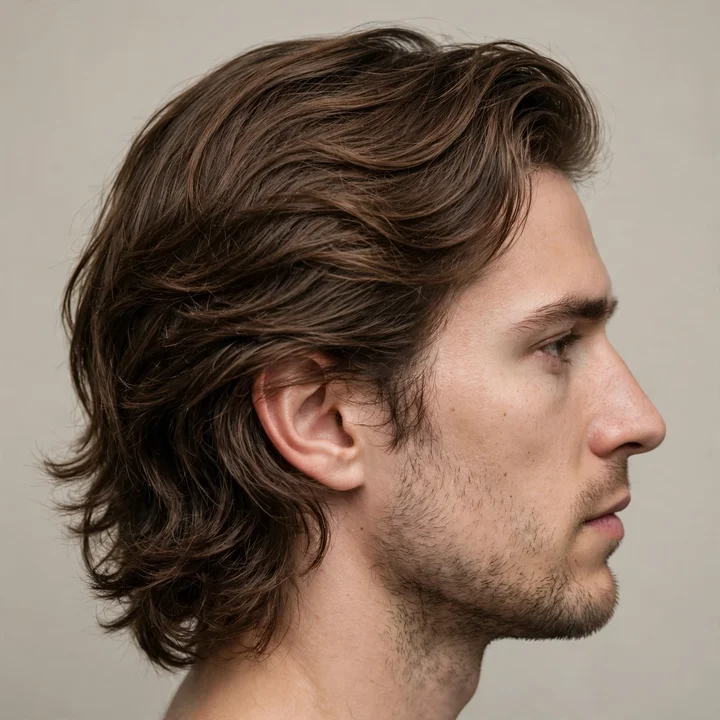
Lifestyle fit: the flow rewards guys who don’t want a daily styling project but do want hair with presence. If you wear hats often, note that the flow and hats are natural allies — it tucks, it survives, it recovers.
Growing Out From Short: The Actual Plan
Most flows start as a decision, not an accident — and the grow-out is the part where most guys quit. Don’t. The timeline from a short cut to genuine flow is 6–10 months, and it’s easier than growing curtains because there’s no part to train and no fringe to manage.
Months 1–3: Let everything grow. Get the neckline and sideburns cleaned up every 4–5 weeks, touch nothing else. You’ll pass through a shaggy phase — this is normal, not failure.
Months 3–6: The top reaches 3+ inches and starts falling instead of sticking up. Ask the barber for light layering through the top to encourage backward movement, and keep the sides trimmed enough to frame rather than puff. This is when it starts looking like a choice.
Months 6–10: Full flow. The hair reaches 4–6 inches, the layers are established, and maintenance shifts to shaping trims every 8–10 weeks. You’re no longer growing it out — you’re wearing it.

The two rules that get you through: never let anyone “even it up” into a bowl during the grow-out (blunt trims reset the clock), and keep the neckline tidy always — a clean neckline is what separates “growing out” from “given up” in every phase.
What to Ask Your Barber
Whether you’re maintaining a flow or shaping a grow-out, the consultation matters:
“I want to keep the length — bro flow, about five inches on top, worn back. Long layers through the top to give it backward movement, sides blended but not tight, tapered neckline. Take weight out underneath so it sits flat at the crown but moves at the ends.”
The critical details: “tapered neckline” (not blocked — a squared nape on flowing hair looks disconnected), “weight out underneath” (removes the triangle effect where the sides puff out), and a number for the sides if you want them controlled (a #4–#6 blend keeps them present but quiet).
Bring photos of flows at your target length on your hair type. “Medium length” spans a wide range, and your barber’s mental image needs calibrating.
Keeping It Out of Your Face
The flow’s eternal battle: hair migrating forward by noon. The fixes, in order of effort:
The blow-dry back (2 minutes). On damp hair, direct everything backward with the dryer, lifting at the roots. This sets the “memory” for the day. A vent brush speeds it up; fingers work fine.
Light cream, roots to ends. A pea-sized amount of light styling cream on damp hair gives grip without stiffness. The flow should move when you shake your head — if it doesn’t, you’ve used too much.
The tuck. Tucking the front sections loosely behind the ears is a legitimate style, not a surrender — it reads relaxed and shows the face. Don’t force it if your length isn’t there yet.

Strategic layering. If the front constantly falls forward, the face-framing layers are too long or too heavy — mention it at your next trim. The curtain haircut for men solves the same problem with a defined part; the flow solves it with direction and layering.
On truly stubborn days — wind, humidity, second-day hair — a small amount of paste on dry hair, worked through the top and pushed back, resets everything in thirty seconds.
The Low-Product Routine
The flow’s grooming philosophy is minimalism. The full routine:
Wash 2–3 times a week. Daily washing strips the natural oils that give medium hair its body and shine. On non-wash days, rinse with water if needed. When you do wash, condition the mid-lengths and ends — that’s where medium hair dries out first. The American Academy of Dermatology advises matching your washing frequency to your hair type rather than defaulting to daily, which is exactly the flow owner’s habit.
One product. A light cream or a salt spray — pick one based on your hair. Cream for control and polish, salt spray for texture and separation. Not both, not three.
Fingers, not combs. A comb pulls the flow into unnatural neatness. Fingers preserve the piece-y, natural separation. Wide-tooth comb on wet hair for detangling only.
Night care. If the flow is long enough to tangle overnight, a loose low ponytail or a silk pillowcase prevents the morning nest. Five seconds at night saves five minutes in the morning.
Quotable: “The bro flow has a one-product rule: if your routine needs a second product, the haircut needs a trim.”

4 Mistakes That Turn Flow Into Flop
1. No perimeter control. The number-one flow killer is a wild neckline and overgrown sideburns. The hair can be free; the edges cannot.
2. Too much product. Heavy product on medium hair equals flat, greasy flow by afternoon. The 2026 flow moves — product should be undetectable.
3. Ignoring the back. The back grows fastest and gets the least attention. If the back grows shaggy while the front is styled, the whole thing reads uneven. Keep it on the trim schedule.
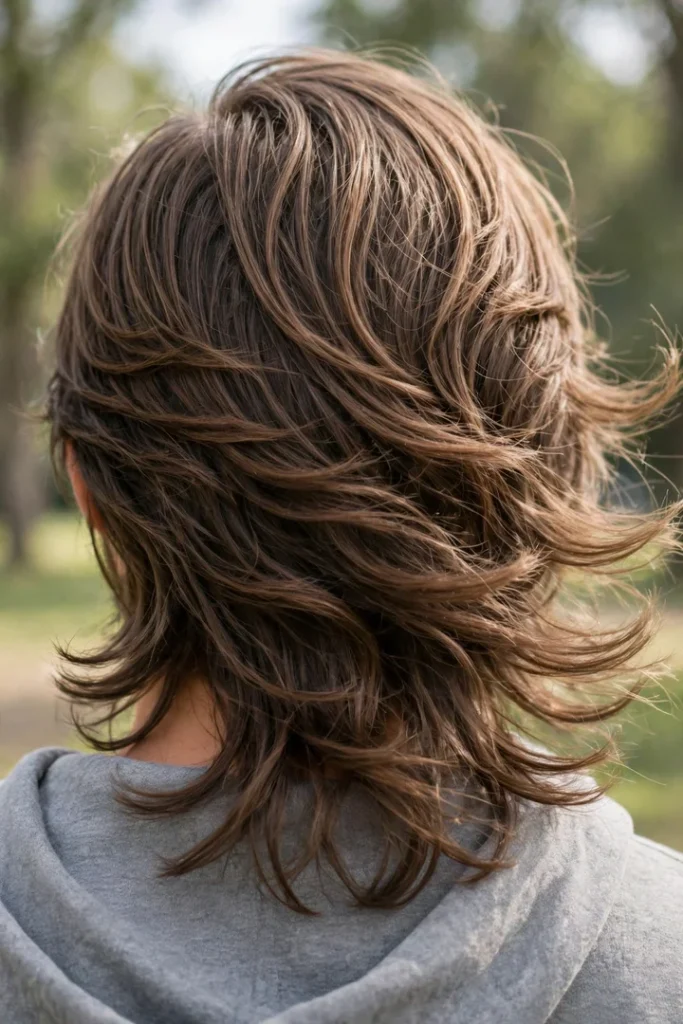
4. The wrong density expectations. Very fine or thinning hair at flow length looks thinner, not longer. The flow needs a certain density to drape well — be honest about what you’re working with, or keep it shorter.
For those who want the texture dialed up, the wolf cut for men is the flow’s wilder cousin — same length family, much more layering attitude.

Frequently Asked Questions
How long does hair need to be for a bro flow for men?
3–6 inches on top is the working range. From a short cut, expect 6–10 months of growing with regular neckline cleanups.
Is bro flow still in style in 2026?
Yes — the refined 2026 version (cleaner perimeter, smarter layering) has matured past the 2010s surf-bro original into a mainstream polished medium cut.
How do I keep my bro flow out of my face?
Blow-dry back on damp hair to set direction, use a pea-sized amount of light cream, and tuck loosely behind the ears. If the front keeps falling, the face-framing layers need adjusting at your next trim.
What hair type is best for bro flow?
Straight to wavy with medium to thick density. Fine or thinning hair tends to look stringy at flow length.
How often should I trim a bro flow?
Every 8–10 weeks for shaping — layer maintenance, perimeter cleanup, weight removal. The grow-out itself is the style, so trims are about shape, not length.
What’s the difference between bro flow and curtains?
Both are medium-length, but curtains use a defined middle part with face-framing layers falling forward, while the flow is worn swept back with no hard part. The flow is lower-maintenance day to day.
Leave a Reply