

What is Friendsgiving? In simple terms, Friendsgiving is a Thanksgiving-style meal shared with friends instead of, or as well as, family. It has the same warm, generous spirit as Thanksgiving — a big table, plenty of food and a chance to be grateful — but without the formal traditions or family obligations. There is no set date, no required menu and no seating plan — friends cook together, everyone brings a dish, and the focus is on good company.
Key Facts
- Definition: a Thanksgiving-inspired meal shared with friends
- When: usually held in November, often the weekend before or after Thanksgiving Day (Thursday 26 November 2026)
- Format: almost always a potluck, with each guest bringing a dish
- Menu: turkey and classic sides are common, but anything goes
- Who hosts: anyone — friends take turns hosting each year
- Key difference from Thanksgiving: no fixed date, no family traditions, and a much more relaxed atmosphere
Where Did Friendsgiving Come From?
Friendsgiving is a fairly new tradition. The word started appearing in the early 2000s and spread quickly through social media, television and word of mouth. One reason it caught on is simple: many young adults live far from their families, and travelling home for Thanksgiving is not always possible or affordable. Instead of eating alone, they gathered their friends — their “chosen family” — and cooked a holiday meal together.
It also appealed to people who love Thanksgiving food but find the family holiday stressful — no arguments about carving, no pressure to follow old family recipes, no formal seating. It is Thanksgiving with the pressure removed.
Friendsgiving vs Thanksgiving: What Is the Difference?
The two share the food, the gratitude and the gathering, but differ in a few ways.
Date: Thanksgiving is always on the fourth Thursday of November. Friendsgiving can be any day in November, and many people hold it the weekend before Thanksgiving so it does not clash with family plans.
Guests: Thanksgiving is usually family. Friendsgiving is friends only, often a mix of people who might not otherwise know each other well.
Food: A Thanksgiving menu often follows family tradition. A Friendsgiving menu is more flexible — some hosts serve a full turkey dinner, others order in, and some skip the turkey for tacos, pizza or a themed menu. The potluck style spreads both the cost and the cooking.
Atmosphere: Thanksgiving can feel formal. Friendsgiving is deliberately casual — guests help in the kitchen, eat off mismatched plates, play music and stay late.
Traditions: Thanksgiving has established rituals. Friendsgiving has few rules, so hosts invent their own, from a gratitude jar to a best-dish award. Many people enjoy both.
When Should You Host a Friendsgiving?
There is no official date, which is part of the appeal. Most people host theirs in the two weeks around Thanksgiving, usually the weekend before the holiday so guests can enjoy both. Some groups pick the weekend after, using leftovers, or an evening in early November.
Check with your guests early — November fills up fast. Send a message or group poll three to four weeks ahead, and once you have a date, stick to it. If your group is spread across cities, consider a virtual Friendsgiving, cooking the same recipe at home and eating together over video.
How to Host a Friendsgiving
Hosting a Friendsgiving is much easier than hosting Thanksgiving, because the work is shared. Here is a simple plan for first-time hosts.
1. Pick a date and send invitations
Choose a date, decide how many people your space can hold, and send a casual invitation. Ask guests to reply with what they would like to bring, so you do not end up with five desserts and no main course.
2. Decide the menu together
As the host, you usually provide the main dish — a turkey, a roast chicken or a vegetarian centrepiece — and the drinks, while guests bring sides, desserts and snacks. Our Friendsgiving menu ideas has dishes that travel well and feed a crowd.
3. Set the table simply
Friendsgiving is not about perfection — a clean tablecloth, candles, autumn leaves or small pumpkins, and mismatched plates are all you need. For more polish, our Friendsgiving decorations has easy, affordable ideas.
4. Plan one fun activity
A Friendsgiving needs one thing beyond food: something to do together. A gratitude jar, a short game, a shared playlist or a group photo are all easy options. Keep it light — the point is conversation, not a schedule.
5. Sort out the food safety basics
Potluck food travels, sits out and gets reheated, so a little care goes a long way. Ask guests to bring dishes in covered containers, keep hot food hot and cold food cold, and refrigerate leftovers within two hours. The official cold food storage chart from FoodSafety.gov lists safe fridge and freezer times for cooked meat, poultry, salads, pies and leftovers.
What to Bring to a Friendsgiving
If you are a guest, bringing the right dish matters more than an expensive one. Choose something that travels well, serves at room temperature or reheats easily, and feeds plenty of people — a hearty side, roasted vegetables, a big salad, a shareable dessert, or a bottle of wine and a non-alcoholic option.
Avoid dishes that need last-minute cooking or oven space the host may not have. Label anything containing nuts or dairy, and bring your own serving spoon. Arriving early to help set up is appreciated, and staying to clean up is the mark of a great guest. Our Thanksgiving potluck ideas has more dishes for a shared table.
Friendsgiving Menu Ideas
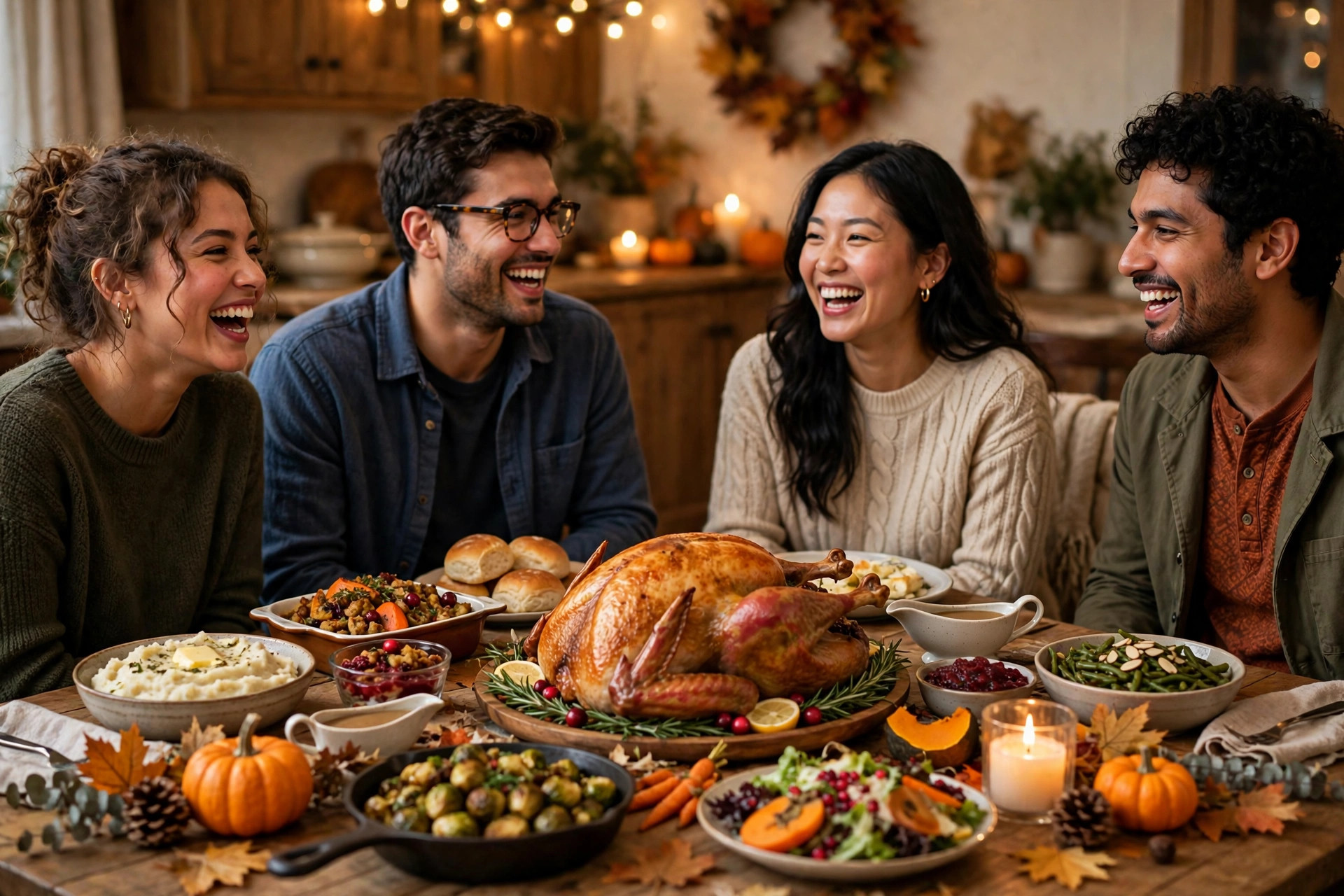
There is no official Friendsgiving menu, which is exactly why people love it. Some hosts serve a traditional turkey with mashed potatoes, stuffing and cranberry sauce; others build the meal around a theme — a taco bar, a pasta night, a brunch, or a vegetarian spread. The only rule is that the food should be shareable.
If your group includes vegetarians, vegans or people with allergies, ask about dietary needs in advance and make sure at least two or three dishes suit everyone. A potluck works best with a mix of mains, vegetables, salads and desserts. If a whole turkey feels like too much, a roasted chicken, a large ham or baked pasta makes a good centrepiece.
Friendsgiving Traditions Worth Starting
Because Friendsgiving is a young tradition, hosts are free to invent their own. The gratitude jar: everyone writes one thing they are thankful for, and the host reads them aloud. The golden spatula award: guests vote for the best dish of the night. A group photo: take the same photo every year. Recipe swap: everyone brings a printed copy of their recipe. The toast: a different guest each year gives a short toast to friendship.
Who Is Friendsgiving For?
Friendsgiving is for anyone who wants to celebrate gratitude with the people they have chosen — young adults living away from home, close colleagues, neighbours, and anyone whose family is far away or small. Many people host one the weekend before the holiday, then spend Thanksgiving Day with family.
It works for groups of four or twenty — the format scales easily, the cost is shared, and the atmosphere stays relaxed. If you have never hosted one, this November is a good time to start.

Frequently Asked Questions
Is Friendsgiving a real holiday?
Friendsgiving is not an official public holiday, but it is a real and widely celebrated tradition in the United States — an informal November gathering where friends share a Thanksgiving-style meal.
When is Friendsgiving celebrated?
There is no fixed date. Most take place in November, often the weekend before or after Thanksgiving Day, on whatever date works for the group.
Do you have to serve turkey at a Friendsgiving?
No. Turkey is traditional, but many Friendsgivings serve chicken, ham, a vegetarian main, or skip a centrepiece entirely in favour of a themed menu. The food is up to the host and the guests.
What is the difference between Thanksgiving and Friendsgiving?
Thanksgiving is a fixed-date family holiday on the fourth Thursday of November, often with established traditions. Friendsgiving is a flexible, informal meal with friends, usually a potluck, with no fixed date or required menu.
How do I host my first Friendsgiving?
Pick a date three to four weeks ahead, provide the main dish and drinks, and ask guests to bring a side or dessert each. Keep decorations simple, plan one fun activity, and refrigerate leftovers within two hours.
What should I bring to a Friendsgiving dinner?
Bring a dish that travels well and feeds a crowd — a side, a salad, a dessert or drinks. Check with the host first so dishes do not double up, label anything containing nuts or dairy, and offer to help clean up.
Leave a Reply