
The best Kwanzaa decorations build on three colors — red, black, and green — plus natural harvest elements like corn, gourds, and woven textures. Start with the kinara display as your centerpiece, then layer table settings, garlands, and DIY crafts through the house. Most of these 15 ideas cost little or nothing, and several double as meaningful family activities for the week of December 26 to January 1.

Key Facts
- The palette: red, black, and green — the Pan-African flag colors — carry every decoration.
- The centerpiece: the kinara display (candles, mat, corn, fruit, unity cup) anchors the whole look.
- Natural materials: straw, wood, dried corn, gourds, and nuts echo the harvest roots of the holiday.
- Budget: 10 of these 15 ideas use things you likely already own or can make for under $10.
- Timing: decorate the weekend before December 26 so the house is ready for the first candle.
Quotable: “Kwanzaa decor isn’t about filling a room — it’s about telling a story in red, black, and green.”
Table & Centerpiece Ideas
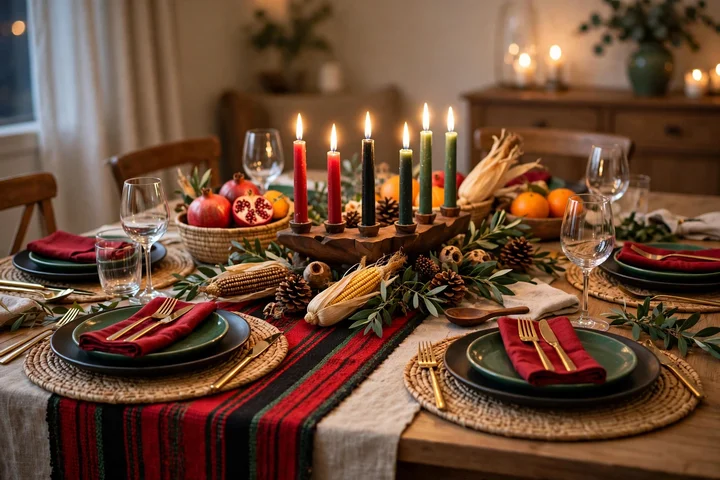
1. The classic kinara centerpiece. Your seven-symbol display — mkeka mat, kinara with seven candles, corn, fruit bowl, unity cup — is decoration and ritual in one. Give it the dining table’s place of honor.
2. African-print table runner. A length of kente, mudcloth, or ankara-print fabric instantly transforms any table. No sewing needed — just drape it. It doubles as the base layer under your kinara display.
3. Harvest bowl. Fill a wide wooden bowl with dried corn, mini gourds, nuts in shells, and red apples. It echoes the mazao (crops) symbol and costs almost nothing from a grocery store’s produce aisle.
4. Unity-cup place settings. Set a small cup at each place for the shared-drink ritual, tied with red-black-green ribbon. Guests keep theirs as a favor.
5. Candle clusters. Group plain pillar candles in red, black, and green (or wrap white ones in colored paper) down the length of the table. Unlit during the day, glowing at dinner.
Wall, Mantel & Room Ideas
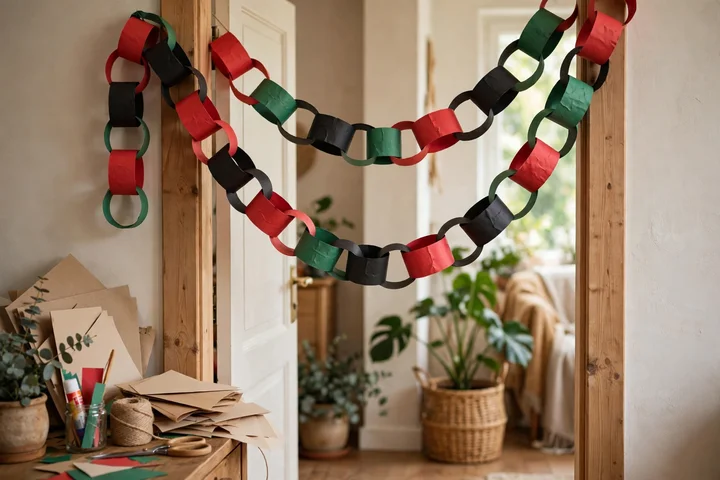
6. Red-black-green garland. String paper chains, fabric strips, or popcorn-and-cranberry strands in the three colors across mantels, doorways, and stair rails. A perfect kids’ craft for the weekend before Kwanzaa.
7. Principle-of-the-day banner. Seven cards — one per principle (Umoja through Imani) — hung on a string. Flip or highlight each day’s card as the week progresses. It becomes a visual countdown to January 1.
8. Gallery wall of heritage. Frame family photos, African art prints, and quotes from Black leaders and artists. Kwanzaa honors ancestors and heritage — your walls can say so.
9. Woven textures everywhere. Straw baskets, woven placemats, and raffia echo the mkeka mat. Cluster them on shelves and side tables for a cohesive harvest feel.
10. The seven-principles tree (alternative). No rule says you can’t have a small tree: decorate a tabletop tree or branch arrangement with red, black, and green ornaments and seven principle tags. Many families who also celebrate Christmas simply extend their existing decor with Kwanzaa colors.

Outdoor & Entry Ideas
11. Pan-African wreath. A grapevine wreath wrapped with red, black, and green ribbon, dried grasses, and small gourds. Hung on the front door, it announces the celebration to the whole street.
12. Lantern-lined walkway. Paper lanterns or mason-jar candles in the three colors lighting the path to your door — especially striking on Karamu night (December 31), when guests arrive after dark.
13. Porch harvest display. Hay bale or crate + corn stalks + pumpkins/gourds + a woven blanket. Harvest-season warmth that reads Kwanzaa without a single store-bought decoration.
DIY & Kid-Friendly Ideas
14. Handprint kinara art. Kids trace their hands on paper, cut out seven “candles” in red, black, and green, and glue them above a drawn kinara. Hang the results as a gallery — grandparents love receiving these.
15. Mkeka placemats. Weave construction-paper strips in the three colors into simple placemats — one per family member. They’ll be used all week, including at the Karamu feast, and kids take genuine pride in eating off something they made.

Decorating Room by Room
A whole-house plan keeps the decorating from bunching up in one room while the rest of the house looks untouched. You don’t need a decoration in every corner — one clear focal point per room is enough.
Living room: this is where the kinara usually lives, so let it own the mantel or a side table and keep the rest of the room supporting it. Drape the garland across the mantel, swap in two or three African-print throw pillows, and set a harvest bowl on the coffee table. That is the whole look — the room reads festive without a single item that has to be stored in a special box later.
Dining room: the table does the work here. Runner, candles, and the unity-cup place settings from the list above are plenty. If the room has a sideboard or buffet, that’s the spot for a second candle cluster and the fruit bowl, so the table itself stays clear enough to actually eat at.
Entryway: first impressions set the tone, and the entry is cheap to dress. The wreath on the door, a lantern by the threshold, and a small basket of dried corn on a console table tell guests the celebration has started before they reach the living room.

Kids’ rooms and shared spaces: let children own a space of their own. Their handprint art and paper chains go on their bedroom door or a hallway wall — not hidden away, and not “corrected” into the main display. When kids see their work in a real place of honor, the holiday stops being something adults do and becomes something the whole family makes together.

One last room-by-room tip: walk the house once with the lights dimmed and only the candles lit, the way the rooms will actually look during the nightly candle-lighting. Anything that disappears in candlelight isn’t pulling its weight; anything that glows — the garland, the brass, the fruit bowl — is exactly where it belongs.
Styling Rules That Keep It Cohesive
- Three colors, one metal. Red, black, green + one metallic accent (gold works beautifully) keeps everything unified.
- Natural beats plastic. Wood, straw, cotton, dried produce, and paper fit the holiday’s harvest roots better than glitter and tinsel.
- Let the kinara lead. Every room’s decor should visually point back to the candle display — it’s the heart of the holiday.
- Meaning over volume. One framed principle card or a single ear of corn with a story behind it out-decorates a room full of generic tricolor items. If you’re new to the holiday, start with what Kwanzaa actually celebrates and let the meaning choose the decor.
Balance the three colors. A useful rule of thumb: let one color lead in each display and the other two support it. A table might be mostly green (runner, leaves, gourds) with red candles and a black unity cup; a mantel might be mostly red (ribbon, candles) with black frames and green garland. Equal thirds of all three colors everywhere at once is what makes a room look busy instead of rich — pick a lead color per surface and the whole house feels intentional. If you want the background behind the symbols, History.com’s Kwanzaa overview is a quick read.
Weekend Prep Checklist
Decorating the weekend before December 26? Work in this order and you’ll be done in an afternoon:
- Morning: set up the kinara display first — it’s the anchor everything else arranges around.
- Midday: hang garlands and the principle banner; lay table runners and harvest bowls.
- Afternoon: kid crafts (paper chains, handprint art, woven placemats) while the adults handle the porch and entry.
- Evening: step back, dim the overheads, light a few candles, and check the whole house glows warm. Adjust anything that looks flat.
Do the shopping the weekend before that — candles, fabric, and craft supplies sell steadily through December, and the specific red-black-green items go first.
After the holiday: pack decorations with next year in mind. Roll fabric runners instead of folding them, wrap candles in tissue so colors don’t transfer, and keep the kids’ paper crafts in a labeled folder — they make wonderful keepsakes and the children love seeing last year’s work come back out. A single labeled box for the whole Kwanzaa set means next December’s decorating starts in minutes, not with a hunt through the attic.
What to Avoid
A few honest cautions keep the decor respectful rather than merely colorful:
- Don’t treat the kinara as a prop. It’s a ritual object, not a centerpiece to be rearranged for photos. Light it, don’t just display it.
- Don’t mix in unrelated holiday symbols by default. A Santa figurine next to the kinara reads as confused, not inclusive — unless your family genuinely celebrates both, in which case give each tradition its own clear space.
- Don’t overcrowd the mkeka. The seven symbols need breathing room; piling extra decorations onto the mat buries the meaning under clutter.
- Don’t buy what you can make. Kwanzaa’s Kuumba (creativity) principle actively favors handmade over store-bought — a paper chain your kids made beats a shipped garland every time.
- Don’t forget the light. Kwanzaa is a festival of increasing light (one more candle nightly). Keep the room’s lighting warm and layered — candles, lanterns, string lights — rather than flat overhead brightness.
Frequently Asked Questions
What colors do you decorate with for Kwanzaa?
Red, black, and green — the Pan-African flag colors. Black represents the people, red the struggle, green hope and the future. Gold is a popular accent.
When should Kwanzaa decorations go up?
The weekend before December 26, so everything is in place for the first candle. Many families take them down after January 1; there’s no fixed rule.
Do you put up a Christmas tree for Kwanzaa?
There’s no traditional Kwanzaa tree — the kinara is the central symbol. But many families celebrate both holidays and decorate for each; a small tricolor tree or branch arrangement is a common blended-tradition choice.
What are cheap Kwanzaa decoration ideas?
Paper chains, handprint art, woven paper placemats, harvest bowls from grocery produce, and printed principle cards — all under $10, several free.
Can decorations include the seven principles?
Yes — principle cards, banners, and tags naming Umoja through Imani are among the most meaningful decorations, because they teach the holiday while dressing the room.
How do you decorate a small apartment for Kwanzaa?
Focus on one surface: the kinara display on a side table or shelf, plus a runner and candles on the dining table. Skip the porch and mantel ideas entirely — a single well-styled corner with the three colors reads more festive than decorations squeezed into every spare inch.
Where can I buy Kwanzaa decorations?
Craft stores and online marketplaces carry red-black-green candles, ribbons, and fabric in December, and Black-owned shops and market stalls often stock kinara sets and African-print textiles. But most of the ideas here are DIY on purpose — paper chains, harvest bowls, and woven placemats cost less and mean more than anything shipped in a box.
How do I store Kwanzaa decorations after January 1?
Roll fabric, wrap candles in tissue so the colors don’t bleed, and keep paper crafts in a labeled folder. One dedicated box for the whole set means next year’s decorating starts in minutes — and the kids’ handmade pieces become keepsakes you’ll want to bring back out.
Leave a Reply