
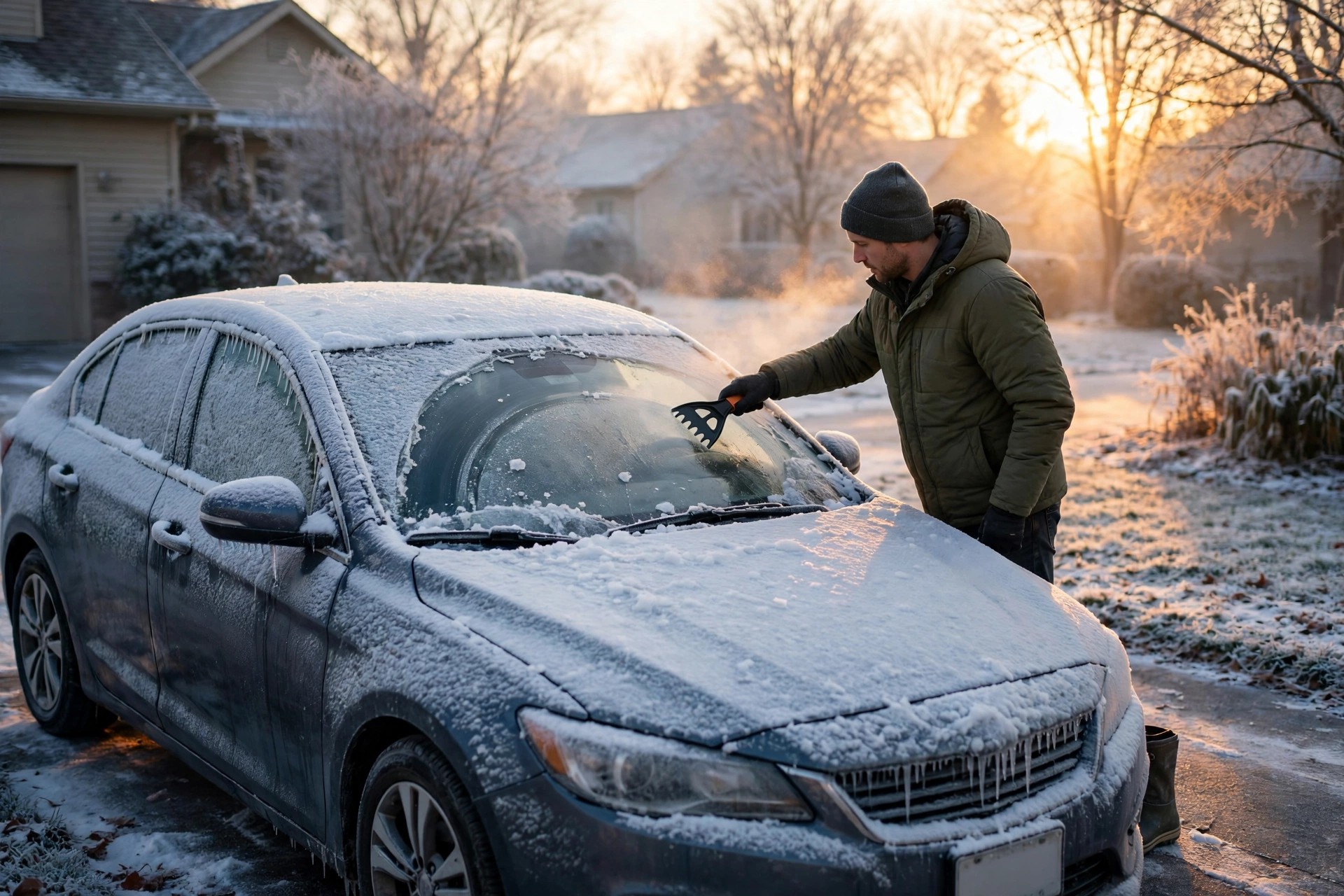
Learning how to winterize your car is one of the most useful things you can do before the cold weather arrives. Winter driving is harder on every part of your vehicle: cold temperatures drain batteries, thicken fluids, reduce tyre grip and make roads slippery. A car that runs perfectly in summer can struggle to start on a freezing morning, and a small problem that you could ignore in October can leave you stranded in January. The good news is that winterizing your car is mostly a matter of simple checks and a little preparation, and most of it can be done in a single afternoon.
Key Facts
- Winterize your car in late autumn, before the first hard frost or snowfall.
- Cold weather reduces battery power, so test the battery and clean its terminals.
- Check tyre tread and pressure regularly, because pressure drops as temperatures fall.
- Top up antifreeze, windscreen washer fluid and oil, using winter-rated products.
- Replace worn wiper blades and check that the heater and defroster work properly.
- Keep an emergency kit in the boot with a blanket, torch, shovel and jump leads.
Check Your Tyres First
Tyres are your only contact with the road, so they deserve first place on any winter checklist. Start with the tread depth. Worn tyres cannot grip snow and ice, and they are far more likely to aquaplane on slush. A simple check is to place a coin into the tread groove: if you can see the top of the coin’s design, the tread is too shallow and the tyre should be replaced. Most safety experts recommend at least 4mm of tread for winter driving, which is more than the legal minimum in many places.
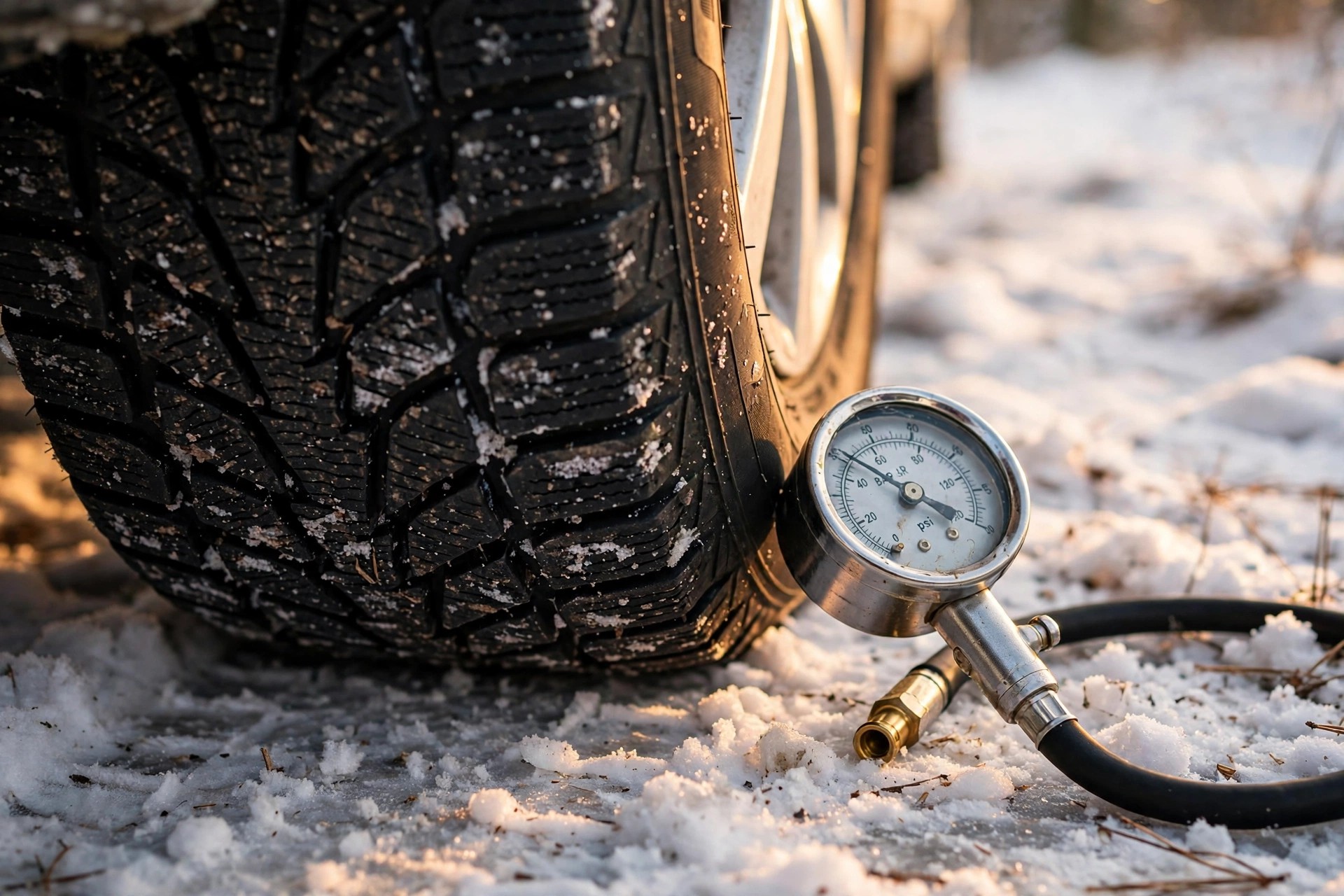
Next, check the tyre pressure. Cold air contracts, so tyre pressure drops as the temperature falls, roughly 1 PSI for every 10 degrees Fahrenheit drop. Under-inflated tyres wear unevenly, reduce fuel economy and handle poorly on slippery roads. Check the pressure when the tyres are cold, and inflate them to the pressure listed on the driver’s door jamb or in your owner’s manual, not the maximum pressure printed on the tyre sidewall.
If you live somewhere with regular snow and ice, consider winter tyres. They are made from a softer rubber compound that stays flexible in cold weather, and their tread pattern is designed to grip snow. Whatever tyres you use, make sure all four match, because mixing tyre types can make the car handle unpredictably.
Test the Battery
Cold weather is hard on car batteries. A battery loses a significant amount of its cranking power as the temperature drops, and the engine needs more power to turn over because the oil is thicker. This is why so many cars fail to start on the first really cold morning of the year.
If your battery is more than three years old, have it tested before winter. Most auto parts shops will test a battery for free, and the test will tell you whether it still holds a proper charge. Look for signs of trouble yourself too: slow cranking, dim headlights, or a battery warning light on the dashboard are all reasons to get it checked. Clean the battery terminals while you are there: corrosion builds up as a white or greenish crust around the terminals and interferes with the electrical connection. Disconnect the terminals, clean them with a wire brush and a mixture of baking soda and water, then reconnect them firmly. Keep a set of jump leads in the boot as a backup, and make sure you know how to use them safely.
Fluids: Antifreeze, Oil and Washer Fluid
Your car’s fluids need attention before winter. The most important is antifreeze, also called coolant, which stops the engine from freezing and overheating. Check the coolant level in the reservoir and top it up if needed, using the type specified in your owner’s manual. The coolant should be a roughly equal mix of antifreeze and water: too much water and it can freeze, too much antifreeze and it will not cool properly. If you are unsure about the condition of your coolant, a mechanic can test its freezing point quickly.
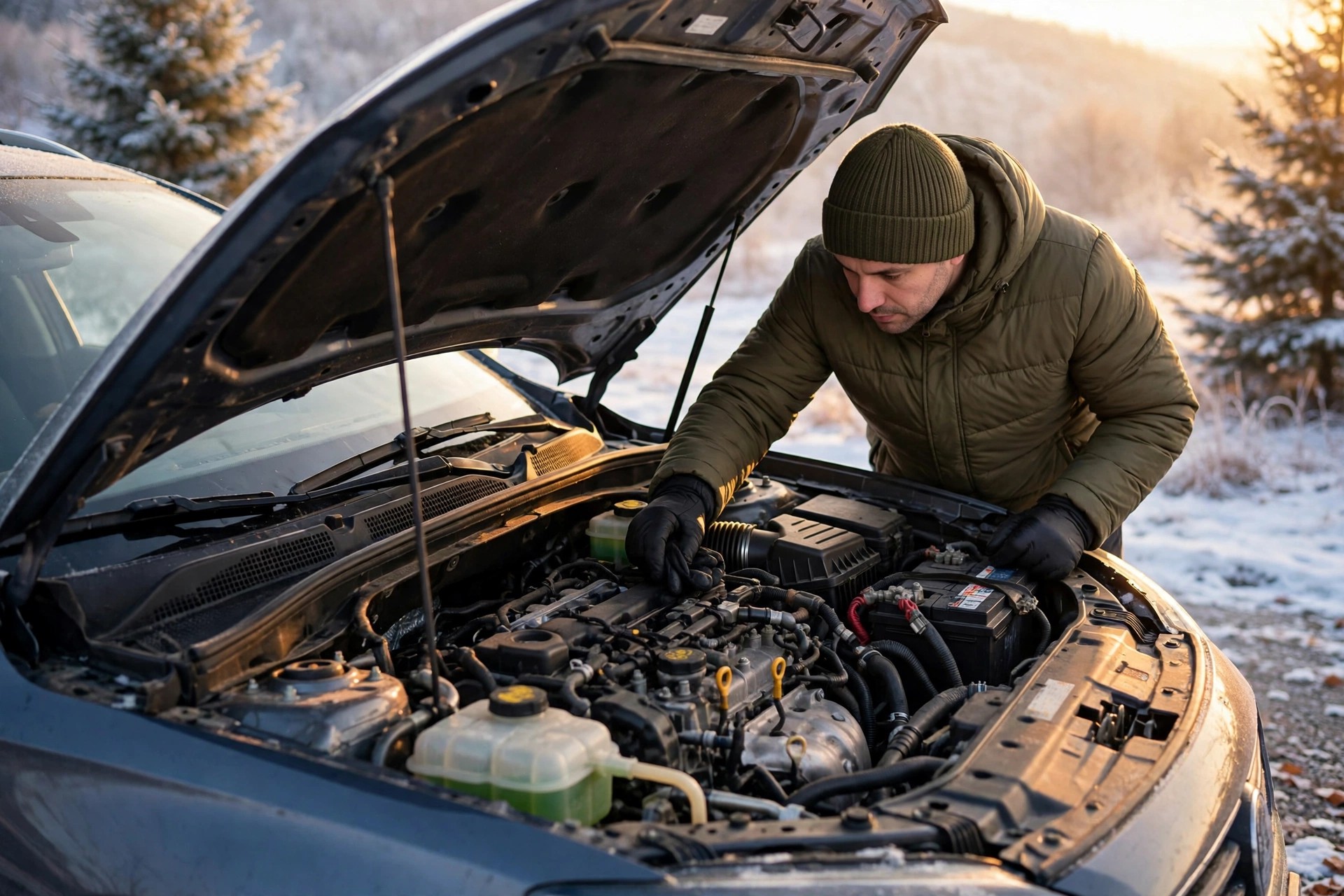
Engine oil also matters in winter. Cold oil is thicker and flows more slowly, which makes the engine harder to start and slower to protect itself. Many cars benefit from a thinner, winter-rated oil in cold climates, so check your owner’s manual for the recommended viscosity. If an oil change is due, doing it before winter is a sensible move. Top up the reservoir with a winter-rated washer fluid that will not freeze, and never use plain water, which can freeze in the lines and crack the reservoir.
Wipers, Lights and Visibility
Good visibility is essential in winter, when daylight is short and the weather is often poor. Wiper blades wear out faster than most people realise, and a blade that worked fine in summer rain may smear and judder across a salty winter windscreen. If your wipers leave streaks, make noise or miss patches, replace them. Winter wiper blades, which have a rubber cover over the frame, resist ice build-up and are worth considering in snowy climates.
Check all of your lights: headlights, brake lights, indicators and fog lights. Walk around the car with someone operating the controls, and replace any bulbs that are dim or dead. Clean the headlight lenses too, because road grime and salt reduce their brightness significantly. Make sure your heater and defroster work properly before you need them: turn the heater on and check that warm air comes through all the vents, and test the rear window defroster. A faulty heater is uncomfortable, but a faulty defroster is a safety problem, because you need a clear rear window to drive safely.
Pack a Winter Emergency Kit
Even a well-prepared car can get stuck in winter, so carry an emergency kit in the boot from late autumn onwards. The essentials are a warm blanket, a torch with spare batteries, a small shovel, a bag of sand or cat litter for traction, jump leads, an ice scraper and a snow brush. Add a first aid kit, a phone charger, some bottled water and a few snack bars, and keep a pair of warm gloves and a hat in the car as well.
If you are stranded in snow, the priority is staying warm and staying visible. Keep the exhaust pipe clear of snow before running the engine, because a blocked exhaust can push carbon monoxide into the car. Run the engine in short bursts for heat, and open a window slightly for fresh air. The National Highway Traffic Safety Administration’s winter driving tips explain what to do if you get stuck and how to prepare for winter driving, and it is worth reading before the season starts. Your home needs the same kind of seasonal preparation as your car: our guide on how to prepare your home for a winter storm covers the household side of winter readiness, and our winter home maintenance checklist is a useful companion to this car checklist.
Winter Driving Habits
Preparing the car is only half the job; how you drive in winter matters just as much. Slow down on snow and ice, and increase your following distance to at least double what you would leave in dry conditions. Brake gently and early, and avoid sudden steering movements, which can break the tyres’ grip. If your car has anti-lock brakes, press the pedal firmly and steadily in an emergency rather than pumping it.
Never use cruise control on slippery roads, because it can cause the car to accelerate unexpectedly if the wheels lose grip. Before a journey, clear all snow and ice from the car, not just a small patch of windscreen: snow left on the roof can slide onto the windscreen when you brake, and ice on the lights makes you invisible to other drivers. For the household side of the same preparation, our how to winterize your home checklist walks through the equivalent steps for your house.
Frequently Asked Questions
When should I winterize my car?
Late autumn, before the first hard frost or snowfall, is the right time. In most cold climates that means October or November.
Do I really need winter tyres?
It depends on your climate. If you regularly drive on snow and ice, winter tyres give significantly better grip and shorter stopping distances than all-season tyres.
How do I know if my car battery is weak?
Warning signs include slow cranking when you start the engine, dim headlights, and electrical accessories that seem sluggish. If your battery is more than three years old, have it tested before winter.
What should be in a winter emergency kit?
The essentials are a blanket, torch, small shovel, sand or cat litter for traction, jump leads, an ice scraper, a first aid kit, bottled water, snacks and a phone charger.
Why does tyre pressure drop in winter?
Cold air contracts, so the air inside your tyres takes up less space as the temperature falls. Tyre pressure typically drops about 1 PSI for every 10 degrees Fahrenheit of temperature drop, so check it regularly through winter.
Is it safe to drive with cruise control in snow?
No. Cruise control can cause the car to accelerate if the wheels lose grip, which can lead to a skid. Switch cruise control off on wet, snowy or icy roads and control your speed manually.
Leave a Reply