
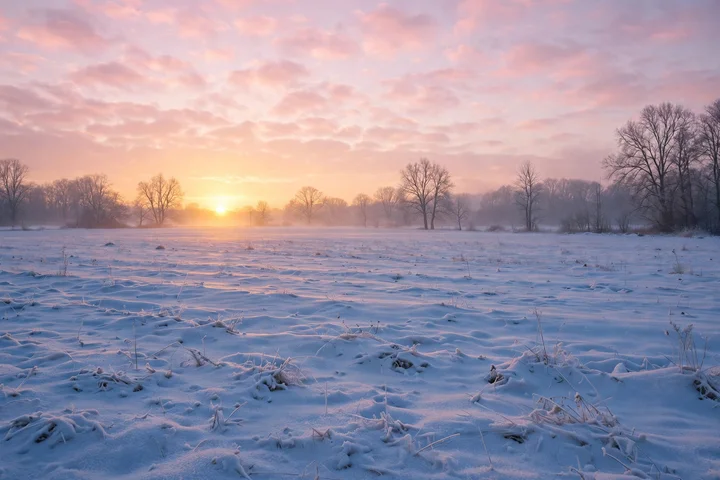
When is the winter solstice 2026? Monday, December 21, 2026, at 3:50 p.m. EST — the shortest day of the year and the first day of astronomical winter in the Northern Hemisphere. At that exact moment the Sun stands directly over the Tropic of Capricorn, as far south as it ever gets, and the Northern Hemisphere gets its fewest hours of daylight all year. After it, the days start getting longer again — slowly at first, then faster as winter turns toward spring.
Key Facts
- Date and time: Monday, December 21, 2026, at 3:50 p.m. EST (20:50 UTC; 12:50 p.m. PST).
- What it is: the moment the North Pole is tilted farthest away from the Sun — the Sun is directly over the Tropic of Capricorn, 23.4° south.
- Shortest day: New York gets about 9 hours 15 minutes of daylight; London gets about 7 hours 50 minutes.
- First day of winter: the solstice marks the start of astronomical winter. Meteorological winter, used by weather services, starts earlier — December 1.
- After the solstice: days lengthen a little each day until the summer solstice on June 21, 2027.
- Southern Hemisphere: December 21 is their summer solstice — the longest day of the year there.
Quotable: “The winter solstice is not the darkest day of winter — it is the turning point, the day the light starts coming back.”
What Is the Winter Solstice?
The winter solstice is an astronomical event, not a weather event. Earth spins on an axis tilted about 23.4 degrees from its orbit around the Sun, and that tilt is what makes the seasons. For half the year the North Pole leans toward the Sun, giving the Northern Hemisphere long days and summer; for the other half it leans away, giving short days and winter. The solstices are the two moments when that lean is at its strongest. As NASA explains it, the winter solstice happens when Earth’s tilt away from the Sun is at its maximum and the Sun is directly over the Tropic of Capricorn.
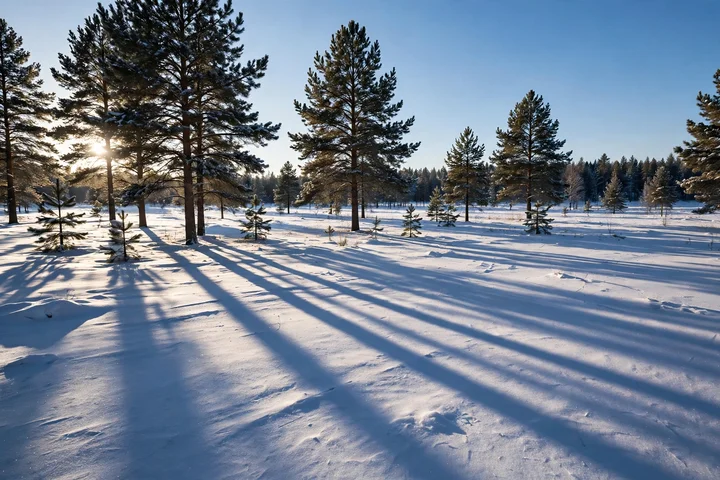
The word itself gives the game away. Solstice comes from the Latin solstitium — sol (sun) and sistere (to stand still). Around the solstice, the Sun’s midday height barely changes from one day to the next, so its yearly path seems to stand still in the sky before turning back toward the north. That is why ancient cultures built monuments to it: Stonehenge, Newgrange and dozens of other sites line up with the solstice sunrise or sunset, marking the moment the light turns.
One thing people often get wrong is thinking of the solstice as a whole day. It is not. It is a single instant — one moment in time, the same second everywhere on Earth. The U.S. Naval Observatory records it in Coordinated Universal Time (UTC), and every local time is just a conversion of that one instant. That is also why the calendar date can differ by place: the solstice lands on December 21 for the Americas, Europe and Africa, but it is already Tuesday, December 22, in East Asia, Australia and New Zealand, where the moment falls after midnight.
When Is the Winter Solstice 2026? Exact Time by Time Zone
The answer depends on where you are, but the moment is the same everywhere: Monday, December 21, 2026, at 20:50 UTC. Here is what that means in local time.
| Time zone | Solstice time, Mon Dec 21, 2026 |
|---|---|
| UTC | 8:50 p.m. |
| Eastern Standard Time (EST) | 3:50 p.m. |
| Central Standard Time (CST) | 2:50 p.m. |
| Mountain Standard Time (MST) | 1:50 p.m. |
| Pacific Standard Time (PST) | 12:50 p.m. |
| London (GMT) | 8:50 p.m. |
| Tokyo (JST) | 5:50 a.m., Tue Dec 22 |
| Sydney (AEDT) | 7:50 a.m., Tue Dec 22 |
The date moves a little from year to year. A year is about 365¼ days long, so the solstice arrives roughly six hours later each year, and the extra day in a leap year pulls it earlier again. That is why the December solstice can fall on December 20, 21, 22 or, rarely, 23 — though it lands on the 21st most often. Time and Date’s winter solstice page keeps the exact times for every year and every location, and it is the quickest way to check the moment where you live.
It is also worth noting how close the solstice sits to Christmas. The solstice is Monday, December 21, and Christmas Day is Friday, December 25 — four days later — so the darkest day of the year falls right in the middle of the holiday week. If you are counting down, our guide to how many days until Christmas has the full 2026 countdown and the key dates around it.
How Short Is the Shortest Day?
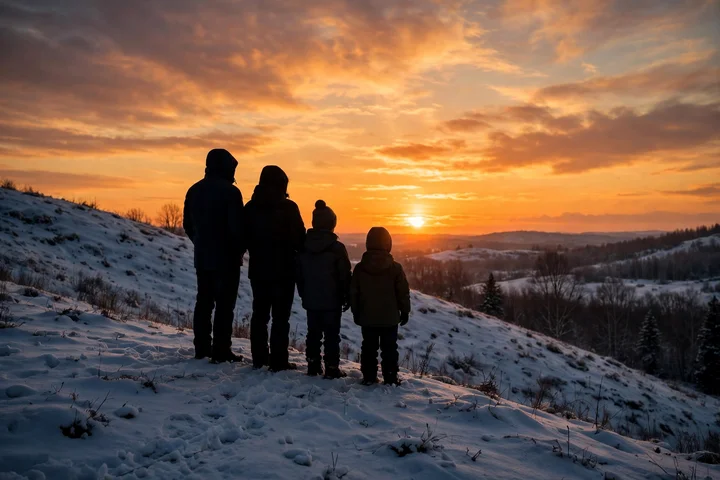
The solstice is the day with the least daylight of the year in the Northern Hemisphere — but how little daylight that means depends on how far north you live. The farther north, the shorter the day. At the equator the change is barely noticeable; in the far north, the Sun does not rise at all around the solstice.
Here is what December 21, 2026, looks like in a few major cities (approximate times, based on U.S. Naval Observatory sunrise and sunset data):
| City | Sunrise | Sunset | Daylight |
|---|---|---|---|
| New York | 7:17 a.m. | 4:32 p.m. | 9 h 15 min |
| Chicago | 7:14 a.m. | 4:21 p.m. | 9 h 7 min |
| Denver | 7:16 a.m. | 4:39 p.m. | 9 h 23 min |
| Los Angeles | 6:52 a.m. | 4:47 p.m. | 9 h 55 min |
| Miami | 7:03 a.m. | 5:33 p.m. | 10 h 30 min |
| London | 8:03 a.m. | 3:53 p.m. | 7 h 50 min |
| Anchorage | 10:14 a.m. | 3:41 p.m. | 5 h 27 min |
Compare that with the summer solstice in June, when New York gets more than 15 hours of daylight, and the swing is dramatic: about six hours of daylight vanish between June and December. That swing is the whole story of the seasons in one number.
One more detail worth knowing: the solstice is the shortest day, but it is not the day of the earliest sunset or the latest sunrise. Those fall on different days, and the reason is a quirk of how our clocks work — which brings us to the most common solstice confusion of all.
Why the Earliest Sunset Is Not the Solstice
If December 21 is the shortest day, you would expect it to have both the latest sunrise and the earliest sunset. It has neither. At 40° north latitude, the earliest sunset falls around December 8 — almost two weeks before the solstice — and the latest sunrise does not arrive until around January 5. The shortest day sits between them.
The reason is the equation of time: the Sun does not run on our clocks. In December, the Sun runs up to half a minute later each day by clock time, because Earth’s orbit is slightly elliptical and the planet moves faster near the Sun. That drift pushes sunsets later even while the days are still shortening, and it pushes sunrises later even after the days have started lengthening. The two effects cancel out only on the solstice itself, which is why the solstice is the shortest day even though neither its sunrise nor its sunset is the extreme.
This is also why the afternoons start getting brighter before the mornings do. After December 21, the sunset gets a little later every day — you can notice it within a week — while the sunrise keeps getting later until early January. By mid-January both are moving in the right direction, and the gain becomes obvious: in New York, daylight grows by more than a minute a day by late January.
Astronomical Winter vs Meteorological Winter
Ask when winter starts and you will get two different answers, and both are correct — they just measure different things.
Astronomical winter begins with the winter solstice, December 21, 2026, and ends with the spring equinox on March 20, 2027. It is based on Earth’s position in space, it has an exact time down to the minute, and it is the definition most people mean when they say “the first day of winter.”
Meteorological winter begins on December 1 and runs through February. Weather services like the U.S. National Weather Service use it because it keeps the seasons in neat whole months, which makes temperature records and climate comparisons much easier. Under this definition, winter is already three weeks old by the time the solstice arrives.
Neither is wrong. If you are planning a party, the solstice is the date that matters; if you are comparing this December with last December, the meteorologists’ version is the useful one. Just do not be surprised when a weather report says winter started on December 1 while your calendar says December 21 — both are describing the same season from different angles.
What Happens After the Solstice?
The good news starts immediately, even if it is hard to feel at first. From December 22 onward, every day in the Northern Hemisphere is a little longer than the one before. The gain is tiny at first — seconds a day around the solstice — but it accelerates. By late January the days are growing by more than a minute a day in New York, and by February the change is impossible to miss.
The key dates after the solstice:
- January 5, 2027 (around): latest sunrise of the winter — mornings finally start getting brighter.
- February 1, 2027: roughly 10 hours of daylight in New York, up from 9 hours 15 minutes at the solstice.
- March 20, 2027: the spring equinox — day and night are nearly equal, and astronomical spring begins.
- June 21, 2027: the summer solstice — the longest day of the year, with more than 15 hours of daylight in New York.
The solstice is also not the coldest day of the year, even though it feels like it should be. The coldest weeks usually come in late January and February, because the land and oceans keep cooling for weeks after the Sun starts returning — a lag scientists call seasonal lag. The shortest day is the turning point of the light, not the bottom of the temperature.
Winter Solstice in the Southern Hemisphere
Everything flips south of the equator. On December 21, 2026, while the Northern Hemisphere has its shortest day, the Southern Hemisphere has its longest — it is their summer solstice. Sydney gets about 14 hours 25 minutes of daylight that day, and the Sun is directly overhead at noon in the tropics.
Their winter solstice comes six months earlier, on June 21, 2026, when the North has its summer solstice. The two hemispheres trade the extremes twice a year, every year, which is why December is beach season in Australia and New Zealand while it is the darkest month in London and New York.
How to Mark the Day
You do not need a stone circle to mark the solstice. The simplest way is the oldest one: go outside at sunset on December 21 and watch the Sun go down, knowing that tomorrow the light starts coming back. A walk at noon shows the other half of it — your shadow at midday on the solstice is the longest shadow you will cast all year, because the Sun is at its lowest point in the sky.
If you want to make more of it, a few easy ideas work well with a family:
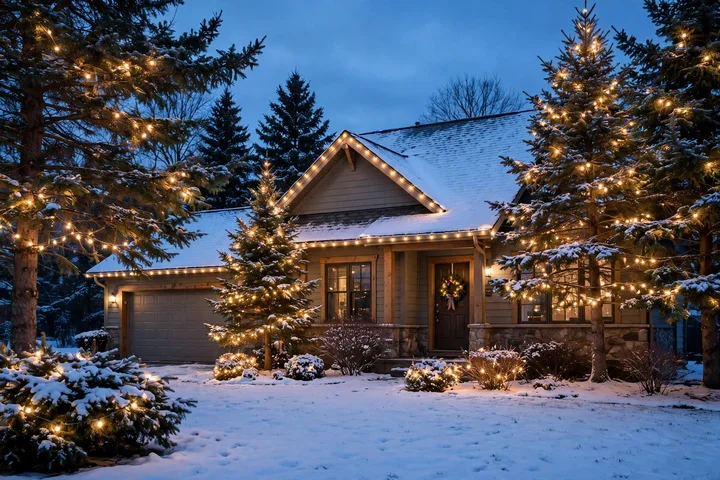
- Light candles at dusk. The solstice is traditionally a festival of light, and a few candles on the table at 4:30 p.m. feel exactly right on the darkest evening of the year.
- Go stargazing. The longest night of the year is the best night of the year for stars — the sky is dark by late afternoon, and you do not have to stay up late to see it.
- Make a winter list. The days are about to lengthen, so it is a good moment to plan what you will do with them. Our winter bucket list ideas for families has 25 activities for January through March, from sledding and ice skating to the quiet indoor ones for the coldest weekends.
- Put up the lights. The solstice week is peak Christmas-lights season, and there is no better night to see them than the longest night of the year. If you still need ideas, our Christmas lights ideas have 30 indoor and outdoor displays to borrow from.
However you mark it, the point is the same one people have celebrated for thousands of years: the dark has peaked, and from here the light returns.
Winter Solstice Dates Through 2030
| Year | Date | Time (EST) |
|---|---|---|
| 2026 | Monday, December 21 | 3:50 p.m. |
| 2027 | Tuesday, December 21 | 9:42 p.m. |
| 2028 | Thursday, December 21 | 3:19 a.m. |
| 2029 | Friday, December 21 | 9:14 a.m. |
| 2030 | Saturday, December 21 | 3:09 p.m. |
The time jumps around because the solstice is a moment, not a date on a calendar, and the leap-year cycle keeps shifting it by hours each year. What never changes is the meaning: the shortest day, the longest night, and the start of winter — and the day the light begins its slow return.
Frequently Asked Questions
When is the winter solstice 2026?
Monday, December 21, 2026, at 3:50 p.m. EST (20:50 UTC; 12:50 p.m. PST). It is the shortest day of the year and the first day of astronomical winter in the Northern Hemisphere.
Is the winter solstice the first day of winter?
Yes, astronomically — winter begins at the solstice. Meteorological winter, used by weather services, starts earlier, on December 1. Both definitions are in common use.
How long is the shortest day?
In New York, about 9 hours 15 minutes of daylight (sunrise 7:17 a.m., sunset 4:32 p.m.). In London, about 7 hours 50 minutes. The farther north you live, the shorter the day.
Why does the solstice date change every year?
Because a year is about 365¼ days long, the solstice arrives roughly six hours later each year, and leap years pull it earlier again. That is why it can fall on December 20, 21, 22 or rarely 23.
Is the winter solstice the coldest day of the year?
No. The coldest weeks usually come in late January and February, because the land and oceans keep cooling after the Sun starts returning. The solstice is the turning point of the light, not the bottom of the temperature.
Does the solstice happen at the same moment everywhere?
Yes — it is a single instant, recorded in UTC. The local clock time and even the calendar date differ by time zone: it is December 21 in the Americas and Europe, but already December 22 in East Asia and Australia.
Leave a Reply