
If you are asking when is Nowruz 2027, the answer is Sunday, March 21, 2027. Nowruz is the Persian New Year, and it begins at the exact moment of the spring equinox, which falls on Saturday, March 20, at 8:24 p.m. UTC. In Tehran that moment comes at 11:54 p.m. on Saturday night, so the first full day of the Persian year 1406 is Sunday, March 21.
More than 300 million people celebrate Nowruz across Iran, Central Asia, the Caucasus, and the global diaspora, and the holiday runs for 13 days, ending with an outdoor picnic on Friday, April 2. This guide covers the exact 2027 date and time, why some calendars say March 20, the full 13-day calendar, the haft-sin table, how the festival is celebrated, and what is open and closed.

Key Facts
| Fact | Detail |
|---|---|
| When is Nowruz 2027 | Sunday, March 21, 2027 |
| Persian year | 1406 (1 Farvardin 1406) |
| Turn of the year (tahvil) | Saturday, March 20, 2027, 8:24 p.m. UTC |
| Tahvil in Tehran | 11:54 p.m., Saturday, March 20, 2027 |
| Spring equinox 2027 | Saturday, March 20, 2027 |
| Chaharshanbe Suri 2027 | Tuesday, March 16, 2027, evening |
| Sizdah Bedar 2027 | Friday, April 2, 2027 |
| Iran public holidays | Sunday, March 21 – Wednesday, March 24, 2027 |
| Holiday period | 13 days, March 21 – April 2, 2027 |
| Meaning | “New day” in Persian |
| Roots | Zoroastrian; more than 3,000 years old |
| People who celebrate | More than 300 million worldwide |
| UN International Day of Nowruz | March 21 (declared in 2010) |
| UNESCO status | Intangible Cultural Heritage since 2009 |
| Shares the day with | Palm Sunday 2027 |
| Next day | Holi 2027, Monday, March 22 |
| Is Nowruz a US federal holiday | No — it is not in 5 U.S.C. 6103 |
| Nowruz 2026 | Friday, March 20, 2026 |
| Nowruz 2028 | Monday, March 20, 2028 |
What Is Nowruz?
Nowruz means “new day” in Persian, and it is the start of the new year on the Persian calendar. It is the first day of Farvardin, the first month of the Solar Hijri calendar, which is the official calendar of Iran. The festival is tied to the spring equinox, the moment when day and night are equal in length and the Northern Hemisphere turns toward spring. That is why the date moves slightly from year to year, landing on March 20 or March 21 on the Gregorian calendar.
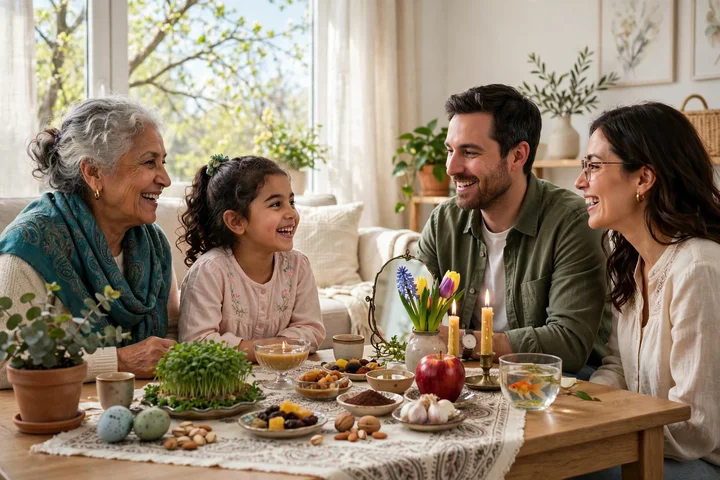
The festival is more than 3,000 years old. It began as part of the ancient Zoroastrian religion, and it has survived every empire, dynasty, and revolution that has passed through the region since. Today it is a largely secular cultural festival. Muslims, Zoroastrians, Christians, Jews, Baha’is, and people with no religion at all sit down at the same table to mark it.
The United Nations declared March 21 the International Day of Nowruz in 2010, and UNESCO placed the festival on its Representative List of the Intangible Cultural Heritage of Humanity in 2009, extending the listing in 2016 to cover 12 countries and again in 2024 to 13, when Mongolia joined. For a fuller account of the festival’s history and its traditions, see Britannica’s guide to Nowruz.
“Nowruz is the one holiday that belongs to no single religion and to every family in the region at the same time.” That is the simplest way to understand its staying power. It is a new year that is measured by the sun, not by a scripture, so anyone can celebrate it. Families clean the house, buy new clothes, cook special food, visit their elders, and give money to children. The holiday is about renewal in the most literal sense: the old year is swept out of the house, and the new one is welcomed with green shoots on the table.
When Is Nowruz 2027?
The short answer to when is Nowruz 2027 is Sunday, March 21, 2027. That is the day to put on the calendar, and it is the first day of the Persian year 1406. But the new year itself begins a few hours earlier, at the exact instant of the spring equinox. That instant, called tahvil, or the turn of the year, falls on Saturday, March 20, 2027, at 8:24 p.m. UTC. Families gather around the haft-sin table to count down to that moment, watching it on television or listening for it on the radio, and then they greet each other with “Nowruz mobarak” — happy new year.
The time of the equinox is the same instant everywhere on Earth. What changes is the clock time in each place, and in some places the date itself. Here is when the turn of the year happens around the world.
| City | Local time of the equinox | Day |
|---|---|---|
| Tehran | 11:54 p.m. IRST | Saturday, March 20 |
| London | 8:24 p.m. GMT | Saturday, March 20 |
| New York | 4:24 p.m. EDT | Saturday, March 20 |
| Los Angeles | 1:24 p.m. PDT | Saturday, March 20 |
| Sydney | 7:24 a.m. AEDT | Sunday, March 21 |
In the United States, the equinox falls on Saturday afternoon, so American families who celebrate Nowruz will gather on Saturday, March 20, for the turn of the year and then celebrate the first full day on Sunday, March 21. In Australia and New Zealand, the moment falls on Sunday morning, so the turn of the year and the first day of the new year are the same day. The date of the holiday never changes for the family celebrating it; only the clock time of the countdown does.
Nowruz usually falls on March 21, but it can fall on March 20, and the pattern for the next few years shows how the date shifts. The equinox moves about six hours later each year, then jumps back after a leap year, so the date stays within a narrow band.
| Year | Nowruz Day | Day of the week | Equinox (UTC) |
|---|---|---|---|
| 2027 | March 21 | Sunday | Sat Mar 20, 8:24 p.m. |
| 2028 | March 20 | Monday | Mon Mar 20, 2:17 a.m. |
| 2029 | March 20 | Tuesday | Tue Mar 20, 8:01 a.m. |
| 2030 | March 20 | Wednesday | Wed Mar 20, 1:51 p.m. |
| 2031 | March 21 | Friday | Thu Mar 20, 7:40 p.m. |
The 2031 date follows the same pattern as 2027: the equinox falls late in the evening in Tehran, so the first full day of the new year is the next day, March 21. In 2028, 2029, and 2030 the equinox falls earlier in the day, so Nowruz falls on March 20 itself.
Knowing when is Nowruz 2027 helps families plan the whole fortnight.
The first full day of the Persian year is the day people mean when they ask when is Nowruz 2027.
Why Some Calendars Say March 20
That is why a search for when is Nowruz 2027 can return two different dates, and both of them are honest answers to slightly different questions. Some calendars list March 20, 2027, because that is the date of the equinox instant. Other calendars list March 21, 2027, because that is the first day of the Persian year. The confusion comes from the way the Iranian calendar works, and it is worth understanding, because the same split appears every year.
The rule is simple. The Persian year begins at the moment of the equinox, and the first day of the new year is the calendar day that begins after that moment in Tehran. When the equinox falls early in the day in Tehran, the new year starts that same day. When it falls late in the evening, as it does in 2027 at 11:54 p.m., the new year starts the next day. The turn of the year happens on Saturday night, and families stay up to mark it, but the first full day of 1406 — the day of visiting, feasting, and celebration — is Sunday, March 21.
The same thing happened the other way around in 2026. The equinox fell on Friday, March 20, 2026, at 6:15 p.m. in Tehran, and Iran observed Nowruz on March 20 itself. A few algorithmic calendars that compute the date from a 33-year cycle list March 21, 2026 instead, which is why you may still see both dates for last year. The observed date in Iran is the one that matters, and for 2027 every major source agrees: the holiday is Sunday, March 21.
There is one more reason the date can look different. The United Nations marks March 21 as the International Day of Nowruz every year, whatever day the equinox falls on. So the UN observance is always March 21, while the festival itself moves between March 20 and March 21. In 2027 the two line up exactly, which makes this year one of the easy ones.
The Full 13 Days of Nowruz 2027
Planning around when is Nowruz 2027 means planning around the whole fortnight, not just the single day. In Iran the holiday lasts 13 days, and the whole country travels, visits family, and eats together for most of them. The four days from March 21 to March 24 are official public holidays, and the rest of the period is a mix of school holidays, annual leave, and family time. Here is the full calendar for 2027.
| Date (2027) | Persian date | What happens |
|---|---|---|
| Tue Mar 16, evening | 25 Esfand 1405 | Chaharshanbe Suri, the fire festival |
| Sat Mar 20 | 29 Esfand 1405 | Last day of the old year; tahvil at 11:54 p.m. Tehran time; public holiday in Iran (Oil Nationalization Day) |
| Sun Mar 21 | 1 Farvardin 1406 | Nowruz Day — the Persian New Year |
| Mon Mar 22 | 2 Farvardin | Second day of Nowruz; family visits begin |
| Tue Mar 23 | 3 Farvardin | Family visits continue |
| Wed Mar 24 | 4 Farvardin | Last of the four public holidays in Iran |
| Thu Mar 25 – Thu Apr 1 | 5–12 Farvardin | Visiting, travel, and time with family |
| Fri Apr 2 | 13 Farvardin | Sizdah Bedar — picnics outdoors, end of the holiday |
The rhythm of the fortnight is easy to follow. The first four days are for the closest family: parents, grandparents, and the eldest relatives, who are visited first out of respect. The middle days are for everyone else — aunts and uncles, cousins, friends, and neighbors. The last day is for the outdoors. On Sizdah Bedar, the 13th day, families pack a picnic and spend the whole day in a park or in the countryside, because tradition says that staying indoors on the 13th day brings bad luck.
The Haft-Sin Table: Seven Symbols
The heart of Nowruz at home is the haft-sin, a spread of seven items whose Persian names all begin with the letter “s”. Families set it up days before the new year, and they gather around it at the turn of the year. Each item carries a meaning, and together they are a wish list for the year ahead: health, love, beauty, patience, and plenty.

| Item | What it is | What it symbolizes |
|---|---|---|
| Sabzeh | Sprouted wheat or lentils | Rebirth and the return of green to the earth |
| Samanu | Sweet wheat pudding | Affluence, fertility, and strength |
| Senjed | Dried fruit of the oleaster | Love |
| Sir | Garlic | Health and medicine |
| Sib | Apple | Beauty and youth |
| Somaq | Sumac berries | The color of sunrise; light over dark |
| Serkeh | Vinegar | Patience and the wisdom of age |
The table holds more than the seven “s” items. A mirror and candles stand for reflection and light. Painted eggs stand for fertility and new life, one for each member of the family. A bowl with a goldfish stands for life and movement, and many families now use an orange or a toy fish instead, out of concern for the fish.
A holy book sits on the table — the Quran in Muslim homes, the Shahnameh or the poems of Hafez in others — along with a pomegranate, coins for prosperity, and a hyacinth for the arrival of spring. The sabzeh, the sprouted wheat, is the centerpiece, and it is grown at home in the weeks before the holiday, watered every day until it is green and tall.

How Nowruz Is Celebrated
Knowing when is Nowruz 2027 is only half the planning; the celebrations start the Tuesday before and run for two full weeks. The first event is Chaharshanbe Suri, the fire festival, on the evening of Tuesday, March 16, 2027. Families light small bonfires in courtyards and streets, and people jump over the flames while saying “zardi man az to, sorkhi to az man” — give me your redness, take my paleness. The idea is simple and old: the fire takes the sickness and bad luck of the old year, and gives back health and warmth for the new one. Firecrackers, music, and sweets fill the night, and in many cities the streets stay crowded until late.

Before the new year arrives, the house gets a deep cleaning called khaneh tekani, which means “shaking the house.” Every room is cleaned, rugs are washed, curtains come down, and anything broken or useless is thrown out. New clothes are bought, especially for children, and the house is filled with fresh flowers. The cleaning is practical, but it is also symbolic: the old year is swept out of the house so the new one has room to enter.
On Nowruz Day itself, the family gathers at the haft-sin table for the turn of the year. After the greeting, the visiting begins. The eldest relatives are visited first, and the younger ones go to them, not the other way around. Guests are offered tea, sweets, fruit, and nuts, and children receive eidi, small gifts of money in envelopes or new banknotes. The days fill up with long meals, and the table rarely looks the same twice: rice with herbs, fish, and sweets such as baklava and nan-e berenji, the rice-flour cookies that appear in almost every home.
Two old characters walk the streets in the days before the holiday. Haji Firouz is a troubadour with a soot-blackened face and red clothes who sings and dances in the streets, and Amu Nowruz, or Uncle Nowruz, is an older gentleman who brings gifts to children and reunites with his beloved wife, Nane Sarma, or Lady Frost, on Nowruz itself. Children wait for them the way children elsewhere wait for Santa Claus.
The holiday ends on Sizdah Bedar, the 13th day, which falls on Friday, April 2, 2027. Families pack food and leave the house for the whole day, because the number 13 is considered unlucky indoors. They picnic in parks and in the countryside, play games, and throw the sabzeh from the haft-sin table into running water, carrying the year’s misfortune away with it. Unmarried girls knot blades of grass together while making a wish for a partner in the coming year. By nightfall the holiday is over, and the new year has properly begun.

Where Nowruz Is Celebrated
Nowruz is a national holiday in Iran, Afghanistan, Tajikistan, Azerbaijan, Uzbekistan, Kazakhstan, Kyrgyzstan, Turkmenistan, and Albania, and it is widely celebrated in the Kurdish regions of Iraq and Turkey, in Georgia, in India among the Parsi community, and in Pakistan among Shia, Ismaili, Hazara, and Baloch communities. The United Nations counts more than 300 million celebrants around the world, and the festival is inscribed as shared heritage across 13 countries.

The diaspora celebrates it too, and in some cities the celebrations are as big as they are back home. Los Angeles has the largest Iranian community outside Iran, and its Nowruz events fill concert halls, parks, and community centers for the whole fortnight. New York and Washington, D.C. hold large public events, with haft-sin tables on display in museums and libraries, and universities with large Iranian and Central Asian student bodies mark the day on campus. In Canada, Toronto and Vancouver host some of the biggest Nowruz festivals outside the region, with concerts, food fairs, and family events that draw tens of thousands of people.
The Baha’i faith also begins its year at the equinox. Naw-Ruz, as Baha’is spell it, is the first day of the Baha’i calendar and one of its nine holy days, so the festival’s reach extends beyond the Persian-speaking world into communities that have no connection to Iran at all. That is part of why the day keeps growing: it is a new year measured by the sun, and the sun belongs to everyone.
Is Nowruz a Public Holiday?
In Iran, Nowruz is the biggest holiday of the year. The four days from Sunday, March 21, to Wednesday, March 24, 2027 are official public holidays, and schools close for about two weeks. Government offices, banks, and most businesses shut for the first four days, and many stay closed or run short hours for the rest of the fortnight. Travel peaks in the first days, as millions of people drive to their hometowns or to the Caspian coast, and hotel rooms in the north of the country are booked months in advance. March 20 is also a public holiday in Iran, as the anniversary of the nationalization of the oil industry, so the break effectively starts a day early.
Other countries mark it differently. Afghanistan, Tajikistan, Azerbaijan, Uzbekistan, Kazakhstan, Kyrgyzstan, and Turkmenistan all treat Nowruz as a public holiday, usually for one to five days. In Pakistan it is a restricted holiday, observed mainly by the communities that celebrate it, while schools, banks, and most offices stay open. In Turkey and Iraq it is a public holiday in the Kurdish regions. In India it is a holiday in some states and a community festival everywhere else.
In the United States, the question of when is Nowruz 2027 is a matter for community calendars, not the federal holiday list. Nowruz is not a federal holiday, and it is not in 5 U.S.C. 6103, the law that sets the federal holidays. Schools and offices stay open, and no government office closes for it. Celebrations happen in the evenings and on the weekend, in community centers, restaurants, and family homes, and many Iranian-American families take the day off work themselves to be with family. The same is true in the United Kingdom, Canada, and Australia: the festival is a community celebration, not a day off.
Nowruz 2027 and the Spring Festival Weekend
Nowruz 2027 lands on one of the busiest weekends of the spring festival season. Sunday, March 21, 2027 is also Palm Sunday 2027, the first day of Holy Week, so two of the world’s great spring traditions share the same Sunday. The day before, Saturday, March 20, is the spring equinox itself, and the day after, Monday, March 22, is Holi 2027, the Hindu festival of colors. Three major festivals in three days, all tied to the same turn of the season, is the kind of coincidence that happens only when the calendar lines up just right, and in 2027 it lines up exactly.
The wider spring is crowded too. Ramadan 2027 runs from Monday, February 8, to Monday, March 8, and Eid al-Fitr falls on Tuesday, March 9, twelve days before Nowruz. Good Friday follows on March 26, and Easter Sunday on March 28. Anyone planning a spring trip, a family gathering, or a school holiday in March 2027 should look at the whole cluster at once, because the weekends around the equinox are the busiest of the season.
Frequently Asked Questions
What day is Nowruz in 2027?
The date everyone asks about when is Nowruz 2027 is Sunday, March 21, 2027. That is 1 Farvardin 1406, the first day of the Persian year. The turn of the year happens a few hours earlier, at the spring equinox on Saturday, March 20, at 8:24 p.m. UTC, which is 11:54 p.m. in Tehran and 4:24 p.m. EDT in New York.
Is Nowruz on March 20 or March 21 in 2027?
Both dates appear on calendars, and both are correct in their own way. The equinox falls on March 20, 2027, so calendars that list the astronomical event say March 20. But the first full day of the Persian year is March 21, because the equinox falls at 11:54 p.m. in Tehran, late on Saturday night. If you are booking travel, planning a party, or marking the holiday on a calendar, use Sunday, March 21, 2027.
What is the haft-sin table?
The haft-sin is a spread of seven items whose Persian names all begin with the letter “s”: sabzeh (sprouted wheat), samanu (wheat pudding), senjed (dried oleaster fruit), sir (garlic), sib (apple), somaq (sumac), and serkeh (vinegar). Each one symbolizes something the family wishes for in the new year: rebirth, affluence, love, health, beauty, light, and patience. The table also holds a mirror, candles, painted eggs, a goldfish, and a holy book.
How long does Nowruz last?
The holiday lasts 13 days. In Iran, the four days from March 21 to March 24, 2027 are official public holidays, and the celebration runs through Sizdah Bedar on Friday, April 2, 2027, when families spend the day outdoors at a picnic. The 13th day marks the end of the new year festivities, and normal life resumes the next day.
Is Nowruz a religious holiday?
No, not in the way most people mean it. Nowruz began as part of the ancient Zoroastrian religion, and it is still a holy day for Zoroastrians and Baha’is, whose new year also begins at the equinox. But for most of the more than 300 million people who celebrate it, Nowruz is a cultural festival, not a religious one. Muslims, Christians, Jews, and people with no religion celebrate it side by side, and the United Nations and UNESCO recognize it as shared cultural heritage.
Is Nowruz a public holiday in the United States?
No. Nowruz is not a federal holiday in the United States, and it does not appear in 5 U.S.C. 6103, the law that lists the federal holidays. Schools, banks, and government offices stay open on March 21, 2027. Iranian-American and Central Asian communities celebrate it in the evenings and on the weekend, with public events in Los Angeles, New York, Washington, D.C., and other cities with large diaspora communities.
Leave a Reply